



A Humorous Guide to Types of Snow in New England
Good for snowmen? Easiest to shovel? Everything you’ve ever wanted to know about the many types of snow (and more) in New England.
By Yankee Magazine|Dec 22 2021|

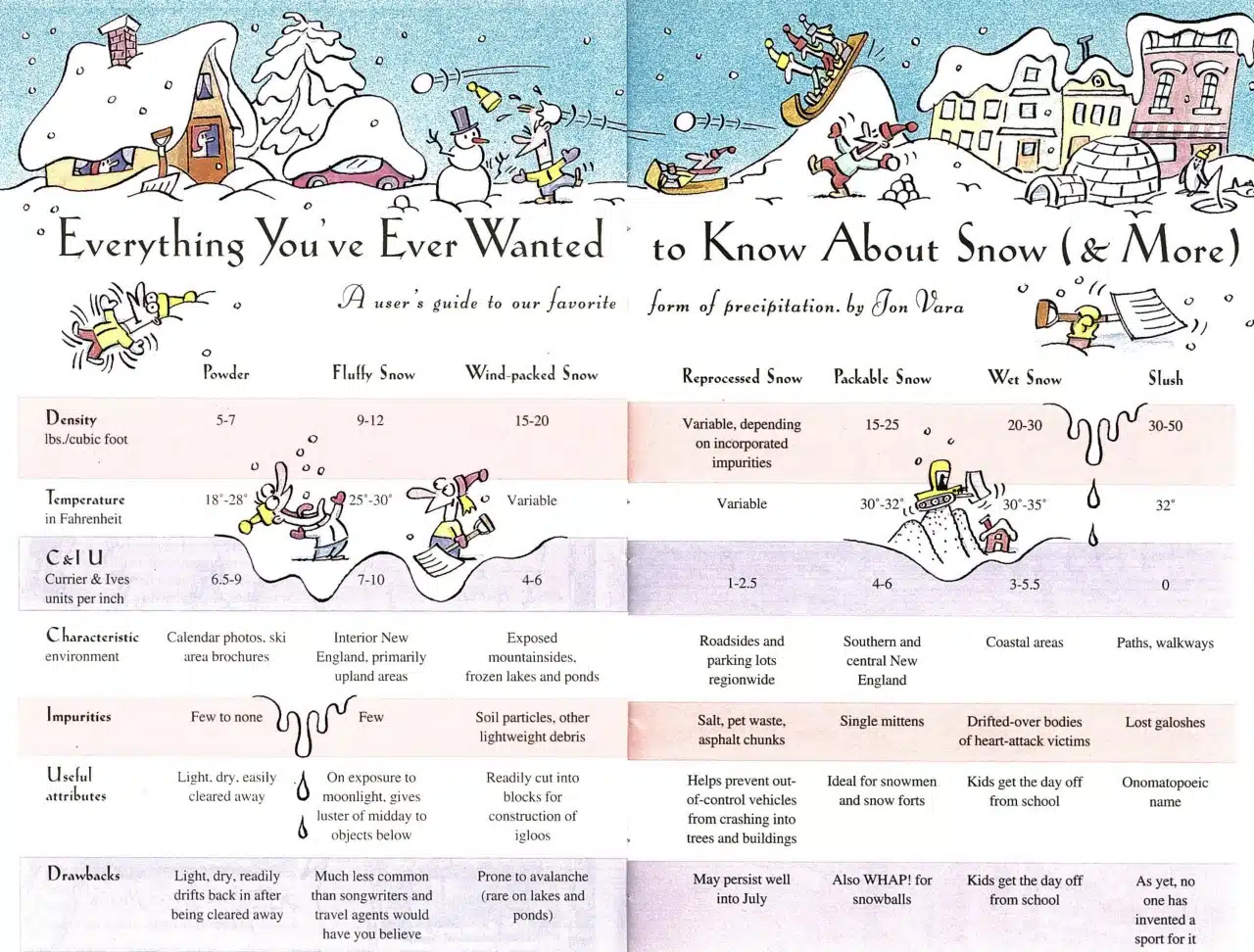
"Everything You've Ever Wanted to Know About Snow (& More)" by Jon Vara was first published in the January, 1998 issue of Yankee Magazine.
Credit: Illustration by Jack DesrocherWe see many types of snow here in New England, from fluffy, twinkly dreams to icy, slushy nightmares. In this humorous chart of seven common types of snow in New England, author Jon Vara breaks down the good and bad for each, including something he refers to as “Currier & Ives units per inch.” Hint: Slush is a zero.
Credit: Illustration by Jack Desrocher
Types of Snow in New England
Powder Snow
Density (lbs./cubic foot): 5-7
Temperature (in Fahrenheit): 18°-28°
C & IU (Currier & Ives units per inch): 6.5-9
Characteristic (environment): Calendar photos, ski area brochures
Impurities: Few to none
Useful Attributes: Light, dry, easily cleared away
Drawbacks: Light, dry, readily drifts back in after being cleared away
Fluffy Snow
Density (lbs./cubic foot): 9-12
Temperature (in Fahrenheit): 25°-30°
C & IU (Currier & Ives units per inch): 7-10
Characteristic (environment): Interior New England, primarily upland areas
Impurities: Few
Useful Attributes: On exposure to moonlight, gives luster of midday to objects below
Drawbacks: Much less common than songwriters and travel agents would have you believe
Wind-Packed Snow
Density (lbs./cubic foot): 15-20
Temperature (in Fahrenheit): Variable
C & IU (Currier & Ives units per inch): 4-6
Characteristic (environment): Exposed mountainsides, frozen lakes and ponds
Impurities: Soil particles, other lightweight debris
Useful Attributes: Readily cut into blocks for construction of igloos (see How to Build an Igloo in 10 Steps)
Drawbacks: Prone to avalanche (rare on lakes and ponds)
Reprocessed Snow
Density (lbs./cubic foot): Variable, depending on incorporated impurities
Temperature (in Fahrenheit): Variable
C & IU (Currier & Ives units per inch): 1-2.5
Characteristic (environment): Roadsides and parking lots regionwide
Impurities: Salt, pet waste, asphalt chunks
Useful Attributes: Helps prevent out-of-control vehicles from crashing into trees and buildings (see How to Drive in Winter)
Drawbacks: May persist well into July
Packable Snow
Density (lbs./cubic foot): 15-25
Temperature (in Fahrenheit): 30°-32°
C & IU (Currier & Ives units per inch): 4-6
Characteristic (environment): Southern and central New England
Impurities: Single mittens
Useful Attributes: Ideal for snowmen and snow forts
Drawbacks: Also WHAP! for snowballs
Wet Snow
Density (lbs./cubic foot): 20-30
Temperature (in Fahrenheit): 30°-35°
C & IU (Currier & Ives units per inch): 3-5.5
Characteristic (environment): Coastal areas
Impurities: Drifted-over bodies of exhausted shovelers
Useful Attributes: Kids get the day off from school
Drawbacks: Kids get the day off from school
Slush
Density (lbs./cubic foot): 30-50
Temperature (in Fahrenheit): 32°
C & IU (Currier & Ives units per inch): 0
Characteristic (environment): Paths, walkways
Impurities: Lost galoshes
Useful Attributes: Onomatopoeic name
Drawbacks: As yet, no one has invented a sport for it
Do you have a favorite (or better yet, a least favorite) of these many types of snow? Have another type to add to the list? Let us know!
Originally published as Everything You’ve Ever Wanted to Know About Snow (& More) by Jon Vara, in the January 1998 issue of Yankee.
You may also like…
· Does Snow Have a Smell?
· Sugar On Snow | Recipe
· How to Drive in Winter



After I send this I’ve got to dig out my car from a snow bank. Oh, goodie.
I guess “Snow Rollers” are not that common. Maybe only in Vermont. Anyone have a take on “Snow Rollers”???
You’re wrong about slush not having a sport. It’s called skiing. The resorts like to call it quaint names like “corn” or even “packed powder” rather than slush.
Graupel looks as if little balls of Styrofoam are falling from the sky. We had some a week ago.
I’d like to know where to get a copy of this “snow chart”.
“Feather snow” is from a warmer part of a storm. It looks as if a few flakes have gathered together and waft down softly like feathers or down.