



Best of New England Seafood Recipes: How to Cook Scallops, How to Make Clam Chowder, Cooking Lobster Tails, Cod Fillet Recipes, Haddock Recipes and More.
Best of New England Seafood Recipes: How to Cook Scallops, How to Make Clam Chowder, Cooking Lobster Tails, Cod Fillet Recipes, Haddock Recipes and More. [easy-social-share buttons=”facebook,twitter,pinterest,google,mail,print,more” sharebtn_style=”icon” counters=0 style=”icon” point_type=”simple”] Table Of Contents: New England Seafood The Best Chowder in New England Seafood Recipes Haddock Recipes Cooking Lobster Tails Cod Fillet Recipes How to […]
By Yankee Magazine|Mar 22 2019|

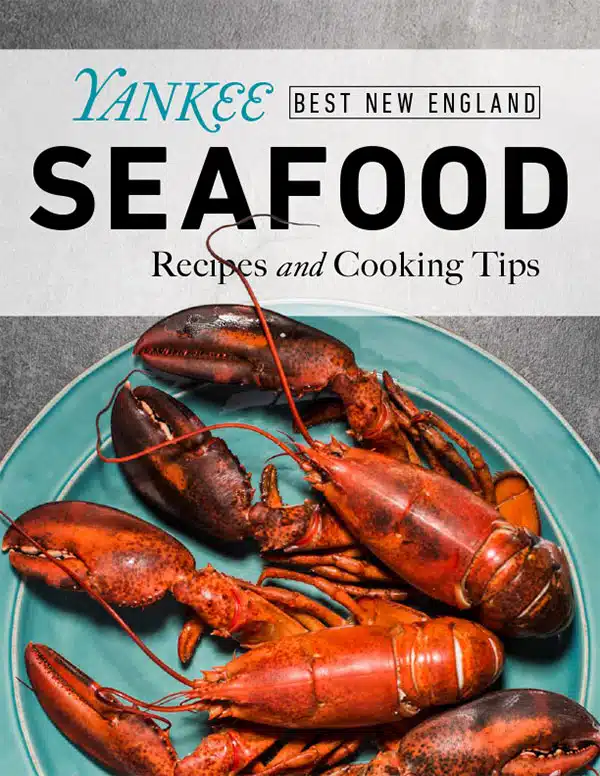
 Best of New England Seafood Recipes: How to Cook Scallops, How to Make Clam Chowder, Cooking Lobster Tails, Cod Fillet Recipes, Haddock Recipes and More.
 Best of New England Seafood Recipes: How to Cook Scallops, How to Make Clam Chowder, Cooking Lobster Tails, Cod Fillet Recipes, Haddock Recipes and More.
Table Of Contents:
New England Seafood The Best Chowder in New England Seafood Recipes Haddock Recipes Cooking Lobster Tails Cod Fillet Recipes How to Cook ScallopsNew England Seafood
How to Cook Lobster
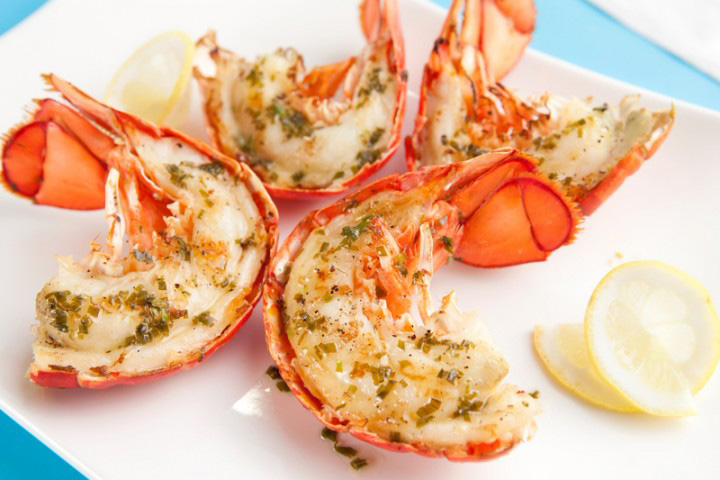
Here’s how to cook lobster that tastes perfect every time by steaming rather than boiling. In 1979, we brought you the story of Bertha Nunan, owner of the Lobster Hut in Cape Porpoise, Maine, and arguably America’s most famous lobster cook. We stepped inside the Hut’s cramped kitchen, where Nunan shared with us her secrets for how to cook lobster that’s perfect every time. The lobster was great then, and it’s great today. 2013 marked the Hut’s 60th season, and shows no sign of slowing down. During summer, the Hut serves as much as 700 pounds of lobster a night. It seems a Nunan lobster is something no one’s taste buds can forget. To make your own great-tasting crustacean, here again are Nunan’s tips on how to cook lobster. “When you buy lobsters,” she says, “you should know that from winter to summer the lobsters are hard-shelled. They’re packed full of meat then, and you need fewer lobsters for a pound of meat if you’re making stew. But I prefer them when they’re soft-shelled. They’re sweeter then.” “The secret to cooking lobsters is not to murder them. Give them a nice, slow, respectable way out. Don’t put them in boiling water, and don’t drown them in too much water. “Boiling them in a lot of water just boils their flavor out, and too much water waterlogs them. I put in two inches of water, whether I’m cooking two lobsters or 14. I take a salt container and with the spout open I pour it three times around the pot, then, plop! at the end (about three teaspoons). When the water is boiling, put in the lobsters, put the lid on, and steam them for 20 minutes. Not a minute less or a minute more. “When they’re done, draw up your butter and serve the lobster with a dish of vinegar as well. Now the next step is what a lot of people, and practically all restaurants, ignore. It’s why people tell me our lobsters taste the best of any they ever had. “I always wash the pot after cooking each lobster. Lobsters are scavengers, and they can get pretty greasy from the bait. Look in the pot the next time you cook them and you’ll see a sediment from the shell. So I always put in fresh salted water for every batch of lobsters. “I’ll never stop being surprised at what some people will do to a lobster. Some folks, to save time, precook their lobsters. When people arrive, they throw them in boiling water for a minute. That’s the worst thing you can do. The lobster just fills with water. If you’re eating lobster in a restaurant and when you crack it open water spurts everywhere, you can bet they just threw a precooked lobster in boiling water.Guide to New England Steamed Clams
Few summer seafood traditions in New England are as anticipated as the first batch of steamers. Sitting down to the two bowls — one heaped with steamers, the other to collect the discarded shells — plus a few carefully arranged cups of broth and hot butter for swishing and dunking, is a time-honored tradition surpassed only by the lobster that sometimes follows them.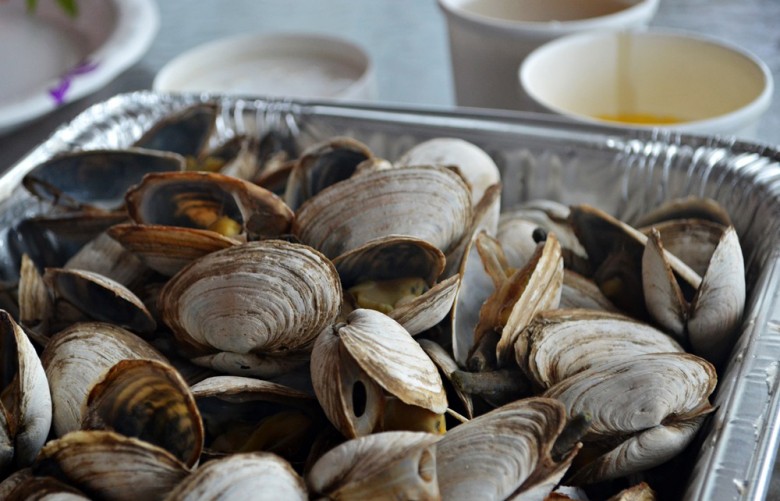
Steamers with broth and hot butter.
Credit: Aimee SeaveyCredit: Aimee Seavey Steamers are one of two kinds of clams commonly eaten in New England, and if you’re sometimes confused about the different clam varieties and their various sub-groups, not to mention how you’re supposed to eat them, don’t worry, you’re not alone. Let’s see if we can break it down, shall we? Soft-shell clams, also called “steamer clams” or “long-neck clams,” are oval in shape with an often protruding dark neck, or siphon. Small and tender, soft-shell clams are what we use for frying, but they’re also (as the name implies) fantastic steamed or in chowder. These guys like to burrow 6-12 inches deep, and you can spot their location by looking for a tiny hole in the wet sand at low tide. This is made by the siphon as it waits to feed. Hard-shell clams, better known as quahogs, are rounder than soft-shell clams, keep their neck safely on the inside, and don’t burrow as deep in the sand. When small, quahogs are referred to as “littlenecks” (the smallest) or “cherrystones” (medium), and both small varieties are a favorite raw or in chowder. The largest, simply referred to as quahogs, can be as big as a fist, and their tougher texture makes them a good choice for chowder or stuffies (which are baked stuffed clams, of course). Basically, any clam can be used to make chowder. Just choose your variety based on how tender or toothsome you want the chowder to be. To make steamers, live soft-shell clams are rinsed and soaked carefully to remove sand and grit and then cooked in a large kettle of water with salt added. They’re served with the hot broth left over from steaming and melted butter for dipping. If you want to add some color and flavor to your steamers, you can add lemon juice, beer, herbs, garlic, or white wine to the broth. To eat steamers, select a lucky clam and remove it from the shell by the siphon (or neck). Pull off the turtleneck-like covering of black skin, then dunk a few times in the reserved broth to swish away any lingering sand before the final dip in melted butter. Repeat, repeat, repeat! Steamed Clams Recipe The New England seashore is known for its fresh food, and shellfish is an enticing treat for locals and vacationers alike. One of the region’s best dishes is steamed clams, and when prepared with this butter and broth combination, it is all the more desirable. Many of our readers recommend the seafood be steamed with beer, but even if you choose to use the traditional method of water, these steamed clams will burst with the taste of a New England summer. Ingredients: 6 dozen clams water butter, melted Instructions: One hour before serving, scrub 6 dozen softshell clams with vegetable brush in cold water; rinse with water until free of sand. Place clams in steamer or on rack in large kettle with 1 cup boiling water (or enough to cover bottom). Cover kettle with tight-fitting lid and steam over low heat just until clams open, about 5 to 10 minutes. Serve steamed clams in soup bowls with individual cups of butter. Pour broth into mugs and sprinkle with a little chopped parsley. To eat: With fingers, pull clams from shells by the neck; dip first in broth to remove any sand, then into butter. Everything except the tough skin of the neck may be eaten. The broth can be drunk when the sand settles to the bottom.
How to Have a Stovetop Clambake
A traditional beachfront clambake is a signature New England experience, but it’s an effort reserved for only the most special occasions (unless you’re in possession of a stretch of private beach and ample free time to dig a pit and build a fire). You can, however, reproduce the flavors at home with a stovetop clambake—all you need is a large pot, some seafood, and aromatics like fennel and lemons. What’s the secret to a stovetop clambake? It’s all about easy layering. Step 1: Add the fennel, white wine, celery, lemons, garlic, leeks, and seasonings to 4 quarts of water. Bring to a boil; then add the lobsters, followed by the clams and seaweed. Step 2: After the lobsters and clams have cooked 6 minutes, add the mussels. Step 3: Six more minutes of cooking: The shellfish should open and the lobster’s done. Stovetop Clambake Recipe Ingredients: 1 fennel bulb, with stalk 1 bottle (750ml) dry white wine, such as Pinot Grigio 4 celery stalks, cut into 1-inch lengths 2 lemons, halved lengthwise, then thinly sliced 1 head of garlic, cloves separated 2 leeks, white parts only, finely diced 1 1/2 tablespoons kosher or sea salt 1 teaspoon paprika 1 teaspoon chili powder ½ teaspoon cayenne pepper 8 live lobsters, about 1 1/4 pounds each 4 pounds littleneck clams Fresh seaweed (optional) 2 pounds mussels, scrubbed and debearded 1 cup melted salted butter Instructions: Remove the stalk and fronds from the fennel bulb and chop roughly. Cut the bulb into ½-inch-thick rings. Put the chopped fennel and fennel rings into a lobster pot with 4 quarts of water. Add the wine, celery, lemons, garlic, leeks, salt, paprika, chili powder, and cayenne. Bring to a boil. Add the lobsters and clams to the pot with the seaweed, if using. Cover and cook 6 minutes. Add the mussels and continue cooking 6 more minutes. When all the shellfish is open, the lobsters will be done. Remove the seafood from the pot and serve hot with the cooking liquid and melted butter.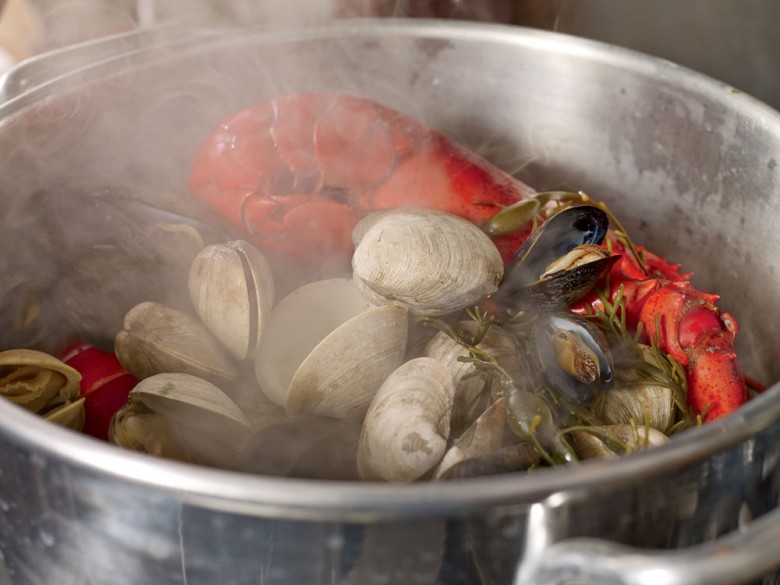
Step 3: Six more minutes of cooking: The shellfish should open and the lobster’s done.
Credit: Heath RobbinsCredit: Heath Robbins
The Best Chowder in New England
Love chowder? We scoured the region to find the best chowder in New England — one from each state — from classic clam to creamy corn. Just as Southerners bicker about barbecue, New Englanders are choosy about their chowder. Setting aside the issue of regional variations (creamy in Massachusetts, clear broth in Rhode Island), the very philosophy of what makes chowder chowder is subject to debate. This stew-like dish has been around for centuries, so its precise historical roots are hard to peg. While the name is thought to derive from the French chaudière, referring not only to the “cauldron” but the ingredients within, the earliest published recipe comes from the September 23, 1751, edition of the Boston Evening Post. A layered “chouder” of onion, potatoes, salt pork, and fish (milk came later) was seasoned with salt, pepper, and herbs such as thyme, and served with hard crackers or “Biscuit.” Later, flour or cracker crumbs were added as a thickener. Over time, that evolutionary tree split further, yielding lobster chowder, Manhattan clam chowder, corn chowder, chicken chowder—enough variations to make an old salt sputter in indignation. Chowder was never meant to be fancy. But it does evoke community: a shared bowl on a blustery day, a warm and savory meal, a taste of the seaside. We’ve scouted some of the best chowders in New England, honoring tradition while favoring local flavors (and giving vegetarians reason to celebrate as well).Corn & Sweet Potato Chowder | Connecticut
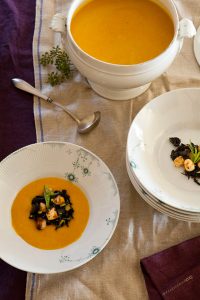
Metro Bis at The Simsbury 1820 House. 731 Hopmeadow Street, Simsbury, CT. 860-651-1908; metrobis.com Historically, corn has been a major crop for the farms that lie along the fertile floodplain of the Connecticut River Valley. So while this version of chowder breaks from the usual potatoes and salt pork, its New England and Native American roots are solid. Chef Christopher Prosperi of Metro Bis, an innovative bistro tucked inside an elegant country inn in Simsbury, strips the sweet kernels and simmers the cobs in water to make a wholesome corn broth. In August, when the corn is at its peak, he says the broth is so sweet “you want to bathe in it.” He even freezes bushels of corn so that he can serve the stew year-round. Some added sweet potatoes, a little garlic, and cream turn this chowder from sultry to sassy. Corn & Sweet Potato Chowder Recipe Yield: 8 servings Ingredients: 8 ears corn, shucked and silks removed 6 cups plus 1 tablespoon water 1 tablespoon unsalted butter 1 tablespoon canola oil 1 medium-size onion, cut into ¼-inch cubes 1 rib celery, cut into ¼-inch cubes 2 teaspoons kosher salt, plus more to taste ½ teaspoon chopped fresh thyme 2 large cloves garlic, chopped ½ cup dry white wine ½ cup heavy cream 2 cups diced peeled sweet potatoes (cut into ¼-inch cubes) 1 tablespoon white vinegar Freshly ground black pepper, to taste 2 tablespoons chopped fresh parsley Instructions: Use a knife to cut the corn kernels from the cobs and set aside. Place the cobs in a 5- to 7-quart pot and cover with 6 cups of cold water. Bring to a simmer and cook 30 minutes. Strain the cobs and discard them, reserving the water, which is now your corn broth. It should equal about 4 cups. Set it aside. Return the pot to the stove over medium-low heat. Add the butter and let it melt; then add the oil. Add the onion, celery, salt, and remaining 1 tablespoon of water. Cook, stirring, until the vegetables are soft and translucent, 6 to 8 minutes. Stir in the thyme and chopped garlic; cook for an additional minute. Increase the heat to medium-high and add the wine. Bring to a simmer, and cook, stirring continuously, until it reduces down to almost dry. Add the reserved corn broth, cream, and sweet potatoes. Bring to a simmer and cook 20 to 30 minutes, or until the potatoes are tender. Add the corn kernels and simmer until just cooked, about 5 minutes. Add the white vinegar, a couple of grinds of black pepper, and parsley. Season to taste with kosher salt. Serve hot.Fish Stew | Maine
Helen’s Restaurant. 111 Main Street, Machias, ME. 207-255-8423; helensrestaurantmachias.com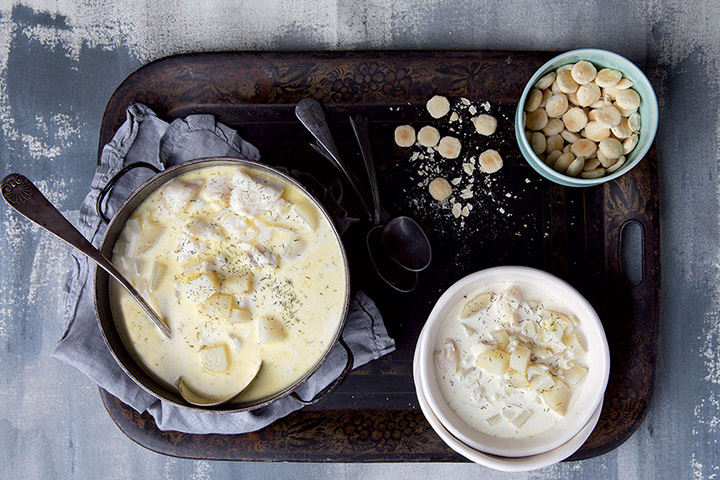
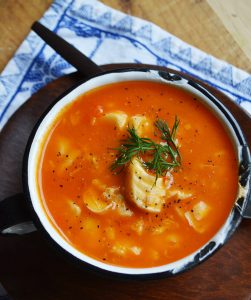
Fish Stew from Helen’s Restaurant.
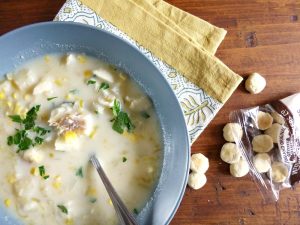
Credit: Kristin TeigCredit: Kristin Teig When Helen and Larry Mugnai opened Helen’s Restaurant in Machias, Maine, in 1950, their fish chowder—made with North Atlantic haddock—was served only on Fridays. So you can thank current owners Julie and David Barker, who made some slight alterations (let’s call them improvements) to the “wildly popular” chowder, for making it a daily item. Its simplicity and resourcefulness are all Down East ingenuity: The haddock is cooked in the potato water, and that broth becomes the basis of the chowder. When a devastating fire last summer forced the Barkers to rebuild their restaurant, they upgraded the design by relocating a fireplace and adding small conference rooms and a bar, but they knew where to draw the line: They wouldn’t dream of changing the menu, which means that the haddock chowder is here to stay. Diners will once again enjoy a hearty bowl overlooking the Machias River when the restaurant reopens, which the Barkers say is sometime early this spring. Fish Chowder Recipe Yield: 8-10 servings Ingredients: 4 tablespoons unsalted butter 1 medium-size onion, cut into 1/4-inch cubes 4 cups water 2 medium-size russet potatoes, peeled and cut into 1/4-inch cubes 2 1/2 – 3 pounds skinned fresh haddock, cut into 1 1/2-inch chunks 2 cups heavy cream 2 teaspoons kosher salt 1/4 teaspoon white pepper 1/4 teaspoon dried dill Instructions: In a 5- to 7-quart pot over medium-low heat, melt the butter. Add the onion and cook, stirring often, until translucent, 6 to 8 minutes. Set aside. Pour the water into a 3- to 4-quart pot and add the potatoes. Bring the water to a boil, then reduce to a simmer and cook until just tender, about 10 minutes. Remove the potatoes with a slotted spoon and set aside. Add the fish to the potato liquid and simmer until the fish begins to flake, about 10 minutes. Remove the fish with a slotted spoon and add it and the potatoes to the cooked onions in the larger pot. Stir. Slowly add the potato/fish broth and the heavy cream to the onion/fish/potato mixture. Stir well. Add the salt and white pepper; then add the dill. Simmer gently over low heat for at least 15 minutes, stirring occasionally. Serve hot.
Classic New England Clam Chowder | Massachusetts
Chatham Pier Market. 45 Barcliff Avenue Extension, Chatham, MA. 508-945-3474; chathampierfishmarket.com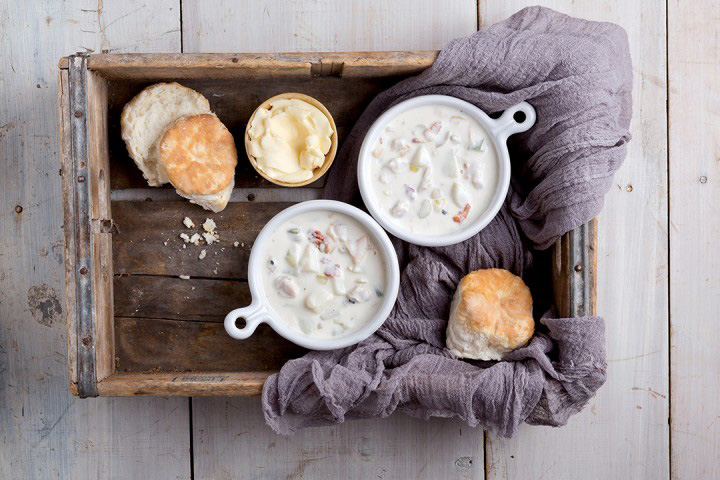
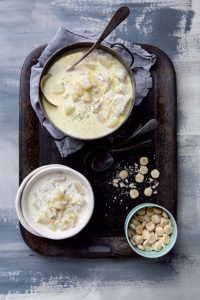
New England Clam Chowder from Chatham Pier Fish Restaurant.
Credit: Kristin Teig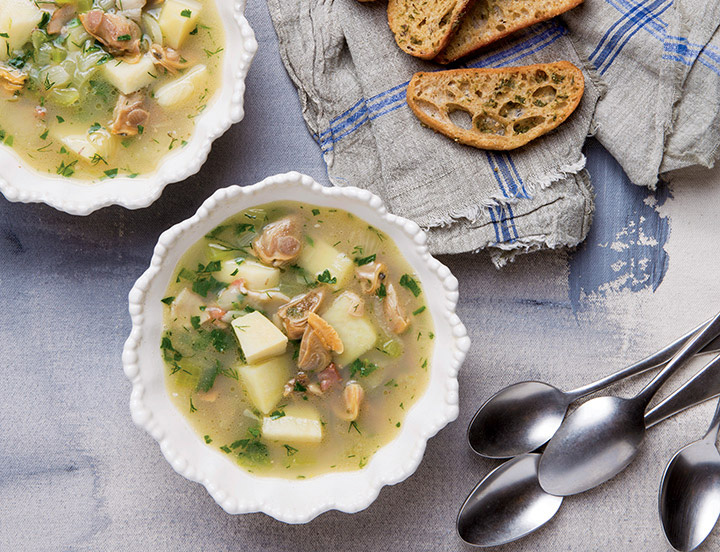

 Foil-Roasted Cod with Herbed Vegetables
Yield: 4 servings
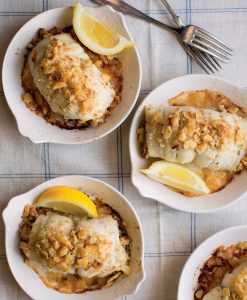
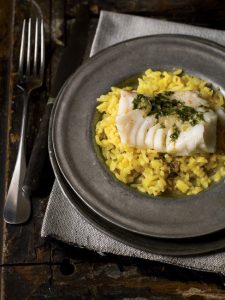
Handy aluminum packets keep this Foil-Roasted Cod tender while it bakes alongside fresh veggies and flavorful herbs.
Ingredients:
1 medium zucchini, halved lengthwise and cut into thin half moons
1 fennel bulb, trimmed, halved, cored, and sliced thin
2 garlic cloves, minced
6 scallions, sliced thin
1/4 cup chopped fresh basil
1 teaspoon dried thyme
1/4 cup dry white wine or dry white vermouth
Table salt and ground black pepper
4 boneless, skinless cod fillets (about 2 pounds)
4 tablespoons unsalted butter
Instructions:
Adjust oven rack to lowest position and heat oven to 450 degrees. Combine zucchini, fennel, garlic, scallions, basil, thyme, wine, 1/4 teaspoon salt, and 1/8 teaspoon pepper in large bowl. Lay four 14-inch-long pieces of foil on work surface. Place 1 fillet on lower half of each piece of foil and season with salt and pepper. Top each fillet with one-quarter of vegetable mixture and 1 tablespoon butter. Fold foil over fish and vegetables and crimp edges together to form 4 packets. Arrange packets in single layer on rimmed baking sheet and cook until vegetables are tender and fish is just cooked through, 15 to 20 minutes. Transfer packets to individual plates and carefully cut open with scissors, being careful to avoid steam. Serve.
Foil-Roasted Cod with Herbed Vegetables
Yield: 4 servings
Handy aluminum packets keep this Foil-Roasted Cod tender while it bakes alongside fresh veggies and flavorful herbs.
Ingredients:
1 medium zucchini, halved lengthwise and cut into thin half moons
1 fennel bulb, trimmed, halved, cored, and sliced thin
2 garlic cloves, minced
6 scallions, sliced thin
1/4 cup chopped fresh basil
1 teaspoon dried thyme
1/4 cup dry white wine or dry white vermouth
Table salt and ground black pepper
4 boneless, skinless cod fillets (about 2 pounds)
4 tablespoons unsalted butter
Instructions:
Adjust oven rack to lowest position and heat oven to 450 degrees. Combine zucchini, fennel, garlic, scallions, basil, thyme, wine, 1/4 teaspoon salt, and 1/8 teaspoon pepper in large bowl. Lay four 14-inch-long pieces of foil on work surface. Place 1 fillet on lower half of each piece of foil and season with salt and pepper. Top each fillet with one-quarter of vegetable mixture and 1 tablespoon butter. Fold foil over fish and vegetables and crimp edges together to form 4 packets. Arrange packets in single layer on rimmed baking sheet and cook until vegetables are tender and fish is just cooked through, 15 to 20 minutes. Transfer packets to individual plates and carefully cut open with scissors, being careful to avoid steam. Serve.

They all sound GOOD !
Thank you for these great recipes !
Wonderful recipe. Obviously written “before” sea scallops were selling for $19.99/lb.
All are fantastic recipes as I remember from my mom’s cooking, Fall River, Mass….I Now live in The Great North Woods of NH, and enjoy cooking all those recipes the way she did similar to those published here in Yankee Magazine ….MF
It’s like a cookbook, I will certainly try several of these recipes. Thanks
So many great recipes. Now have to find the time to try them.
Great recipes.just like my mother taught me to cook
Lobster recipe lacking instructions for large lobsters. Though we don’t get the 25 pound + monsters I remember as a kid, occasionally we do get large beasts in the 10 lb. range. I remember a basic formula something like 10 minutes for the first pound and maybe 7 min. per lb. thereafter. I would like authoritative confirmation in case I should ever encounter a feast sized animal again.
Great seafood recipe collection. Thank you.