Blend the Past with the Present | 5 Ways to Love Old Houses
A designer’s 1745 Connecticut farmhouse is a master class in bringing modern-day flair to an antique home.
By Yankee Magazine|Dec 15 2016|

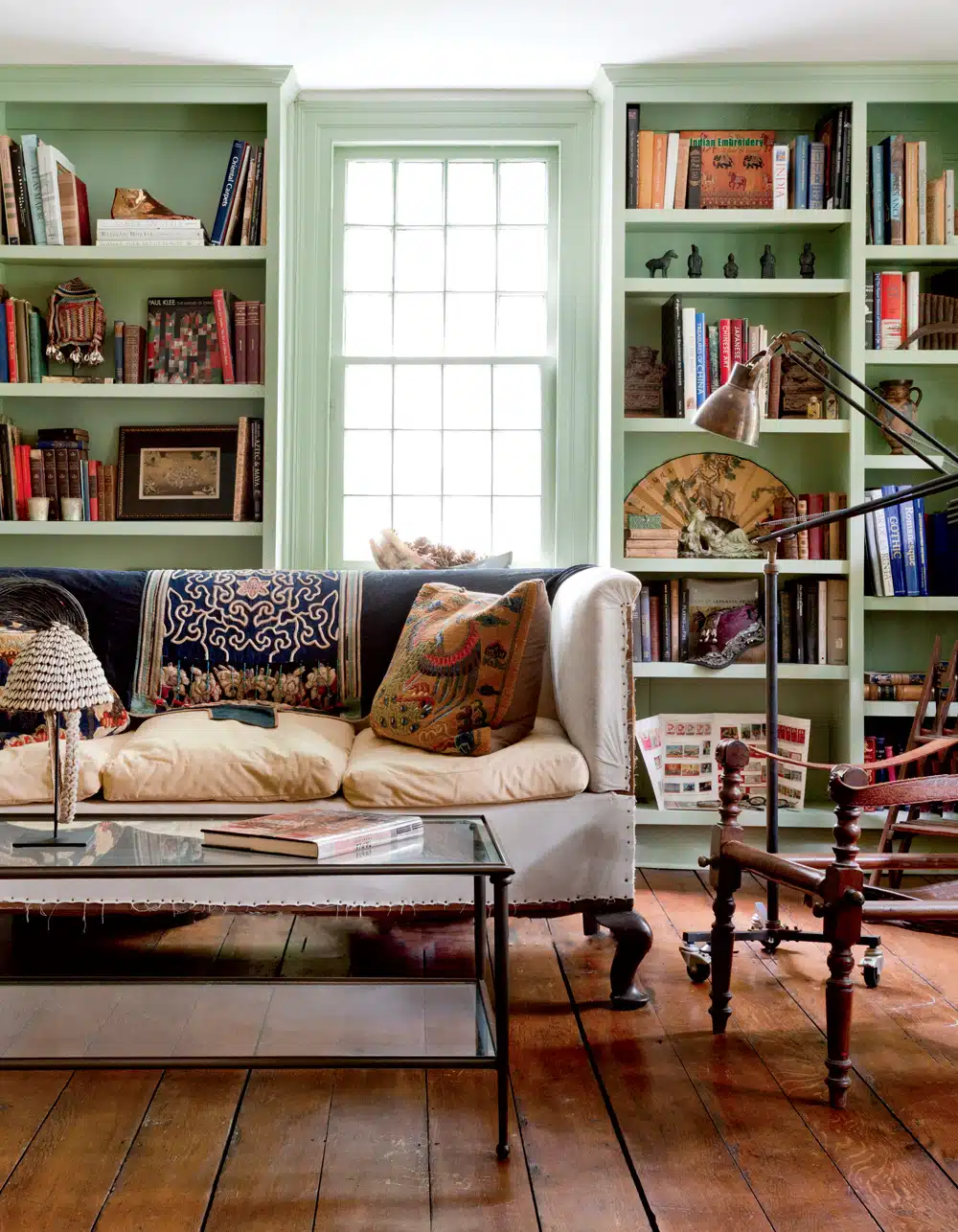
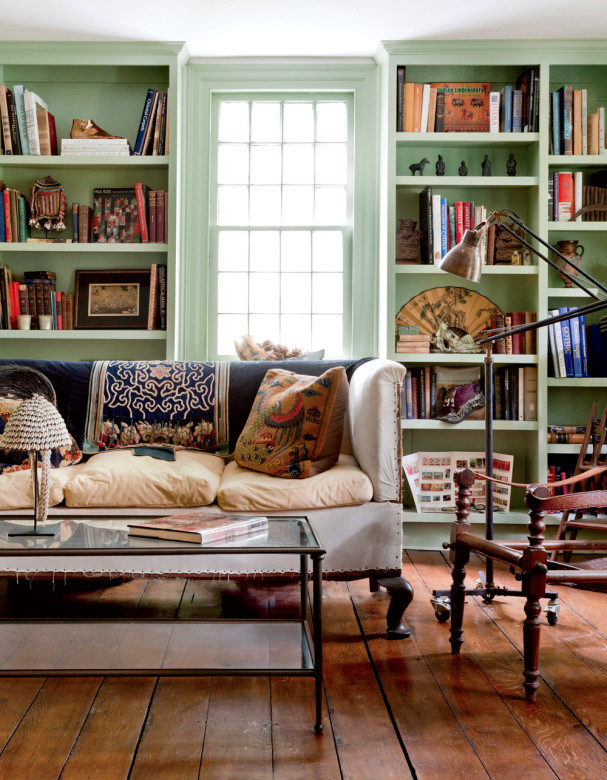
Built-in bookcases showcase Allen’s global inspirations.
Credit: Rikki Snyderby Alexandra Hall
The enclosed porch jutting out from Ellen Allen’s 1745 farmhouse in Woodbury, Connecticut, is a crossroads of many sorts: between indoor life and the organized pandemonium of nature; between private and shared space; between New England simplicity and global sensibility; and, finally, between the home’s historic past and its ever-evolving future.
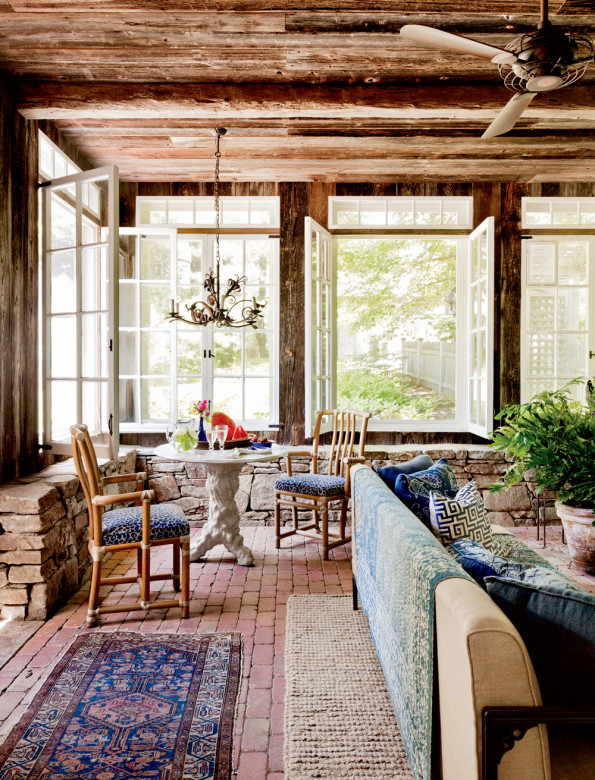
The porch features a bold mix of handmade brick, recycled barn wood, and granite.
Credit: Rikki SnyderCredit: Rikki Snyder
On late afternoons, the porch is where you’ll find Allen, a designer of decorative rugs and a figure in the Manhattan textile industry. She might be curled up on the sofa with Mr. Peabody, her Maltese, reading to the rhythmic pattering of rain on the roof (deliberately built flat with that exact sound effect in mind). Or she might be napping to the whir of crickets, next to the porch’s Victorian coal-burning stove, which she converted to gas when building the room eight years ago. Just as easily, she might be entertaining friends and family, throwing open the French doors beyond the kitchen’s gleaming island so that guests can take in views of the peony gardens and poolside patios.
“The porch is my most private space in the house,” says Allen. “My favorite childhood feeling was a summer bunk, and this room just feels like camp to me.”
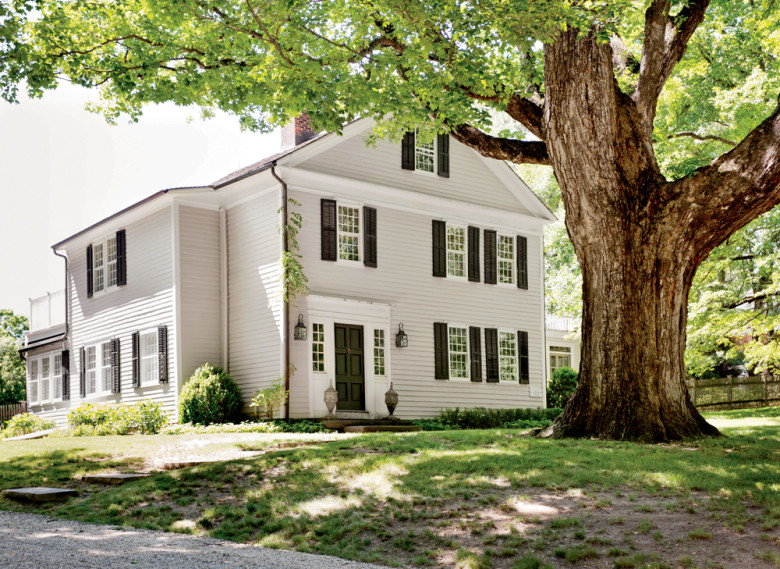
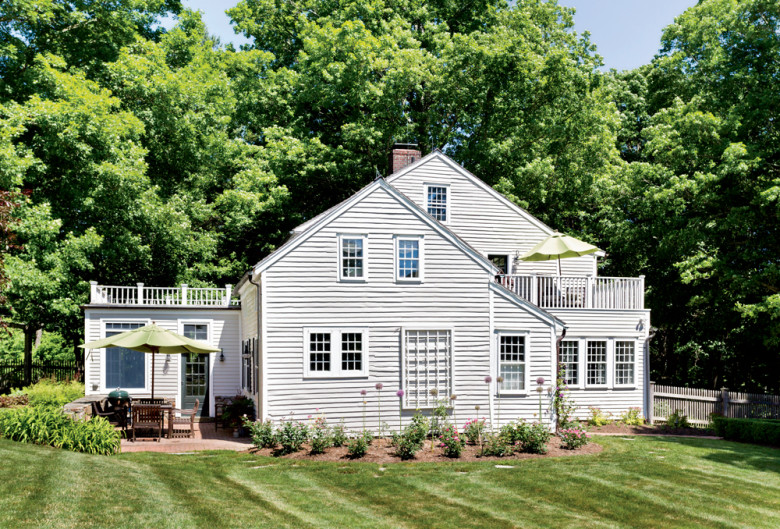
Ellen Allen’s 1745 farmhouse, shaded by a 250-year-old maple.
Credit: Rikki SnyderCredit: Rikki Snyder
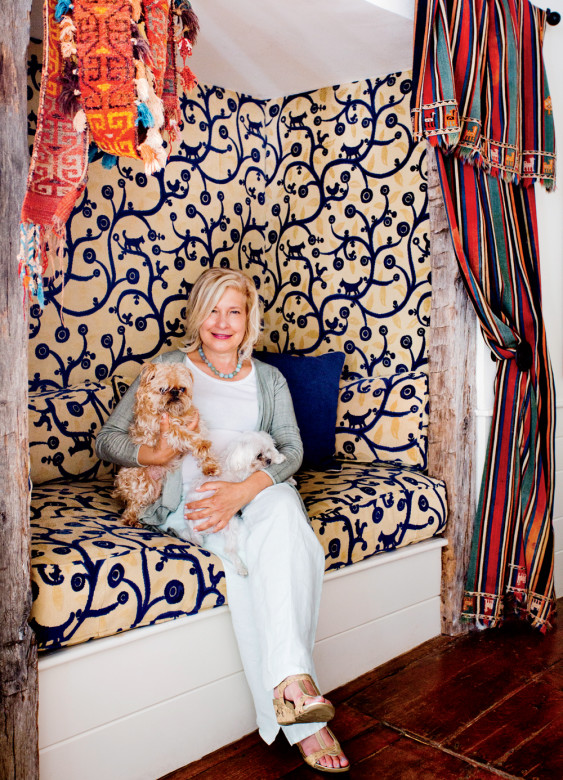
Allen and her dogs in the textile-rich living room nook.
Credit: Rikki SnyderCredit: Rikki Snyder
It’s a delicate balancing act, updating a historic home to our personal and modern-day tastes—a dance between preserving the integrity of the home’s past lives and giving it new life. To Allen, the fulcrum of that balance is remembering to think outside any particular time period, culture, or aesthetic genre while embracing the original home’s authentic qualities and unique quirks.
That came naturally, given her own diverse aesthetic influences. Besides designing rugs and owning a vintage-textile business that sells to the fashion industry, Allen has worked in interior design for the past 20 years. Blending influences is a fundamental part of her work. Sometimes that means importing designs from around the globe—art and furnishings picked up while traveling in China, India, Turkey, and Europe. Sometimes it means pulling inspiration from her family’s antique-textile archive, a pre–World War I trove from which she sells exquisite fabric patterns to the likes of J.Crew and Ralph Lauren for use in their collections.
Her work, in fact, is what led Allen to Woodbury, a town in the Berkshire foothills with an unusual share of colonial homes and buildings. “I live in New York City during the week and wanted to get a train easily here in my off time, to make sure I could really use the house and enjoy it,” Allen says. And when she stumbled across the 3,000-square-foot, four-bedroom home originally owned by the Judsons, a prominent local family, she “fell in love with it for so many reasons.” She was delighted by the abundance of texture and light throughout the home. “As a rug designer, I long for that. For things that look handmade in these techie times. I wanted to look at the floors and see that they were made by a real human.”
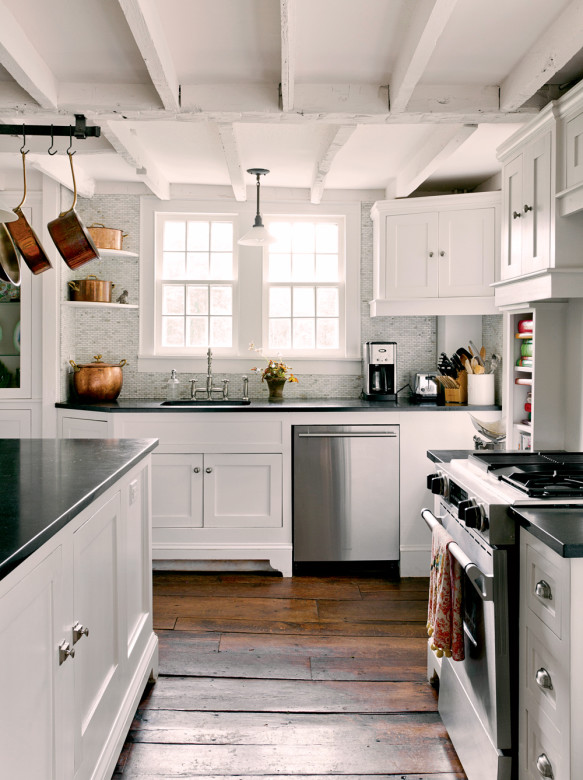
The thoroughly modern kitchen with its original wood floors.
Credit: Rikki Snyder