Homing Instincts: Renovating a 1960s Fixer-Upper in Woodstock, Vermont
In a town that felt like their perfect fit, a DIY-minded couple takes on a house that’s anything but.
By Yankee Magazine|Dec 29 2025|


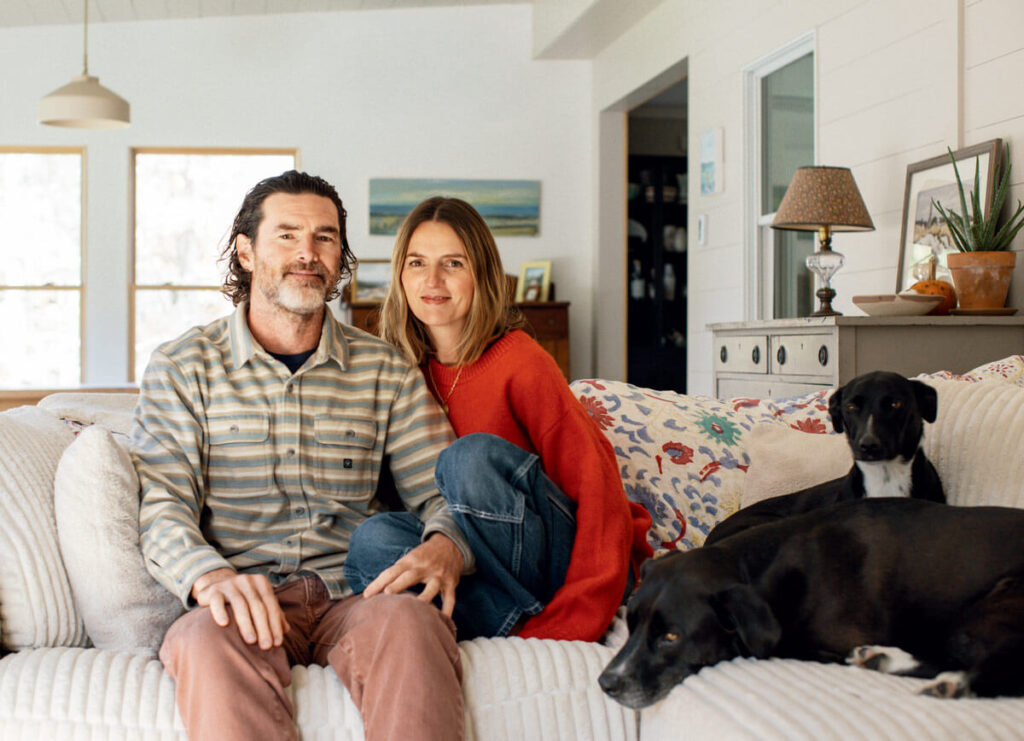
The makeover of the front living room included hiding a dated popcorn ceiling with classic beadboard and using eco-friendly Clare Paints’ “Beigeing” to create a warm, neutral backdrop.
Credit: Craig MackayBy Jess Kirby
As we drove up the steep hill toward our new home, I could feel my heart sinking into my stomach. How would we ever get up this road in winter? It was only the second time my partner Craig and I had made the drive, the first time for the home inspection two months earlier.
The house had no furniture, and even though it was September, Vermont had an early cold snap. Craig and I set up an air mattress on the floor, where we covered ourselves in a pile of blankets. The temperature dipped down to below 30 degrees, and neither of us slept that night. We didn’t say much, but there was tension in the air. Was this the biggest mistake we’ve ever made?
Two years earlier, Craig and I had been invited on a press trip to Woodstock, Vermont. At the time, I was a travel and lifestyle blogger and Craig was a photographer, and as native Rhode Islanders, both of us were eager to experience a charming mountain town during the fall.
Credit: Craig Mackay
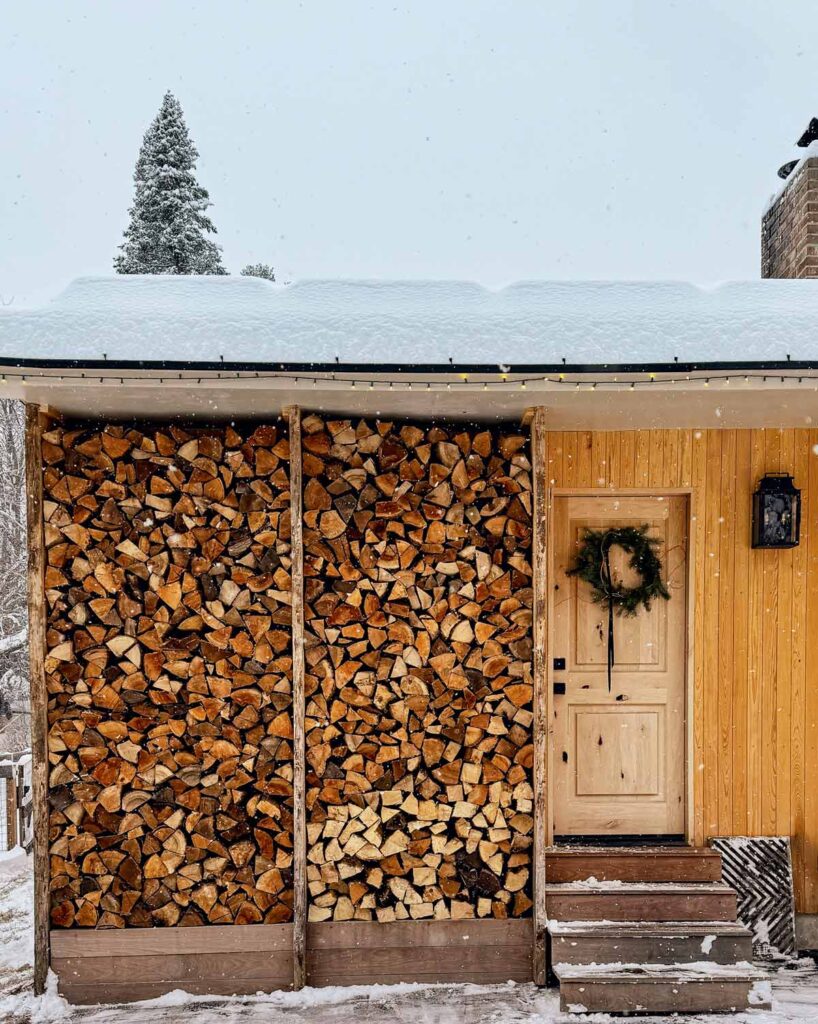
Credit: Craig Mackay
Growing up within minutes of the ocean, I’d always considered myself a “beach girl” and never thought I’d live anywhere but the coast. But as we biked around the village that first day, we crossed over a covered bridge, looked at each other, and said almost in unison, “Should we move here?” The history, the architecture, the farms, the quaint downtown, the proximity to nature—I couldn’t get over how quickly this little Vermont town had gotten a hold on me.
Back home in Rhode Island, we would casually look at places in Vermont, going to a few showings and even making an offer on one property. But it wasn’t until I had my first baby at 35, and the pandemic hit soon after, that the idea of moving took on new urgency. We had just spent years painstakingly renovating our first home; now, we weren’t sure we wanted to stay.

Credit: Craig Mackay
During our time quarantined at home, Craig spent a lot of hours looking around on Zillow (didn’t everyone?) and ultimately found a small 1960s ranch-style house in Woodstock that was within our admittedly tight budget. There was nothing particularly special or charming about it—and it needed work—but that was OK. It was something we could make our own. By that point we’d had seven years of experience renovating, between our Rhode Island house and the apartments we’d lived in previously. We had done everything from refinishing floors and adding doors to replacing siding and renovating a kitchen.
This time around, though, we had a baby in tow, no family nearby, no childcare. And over the next four years of nonstop work on the Woodstock house, that would make things interesting, to say the least. Social media and HGTV shows give the illusion that DIY projects are simple before-and-afters, but so much of renovating a fixer-upper is the challenging and messy in-between: living in a constant construction area, doing dishes in the tub, sleeping in the basement while you refinish floors, keeping a toddler from touching freshly painted walls.
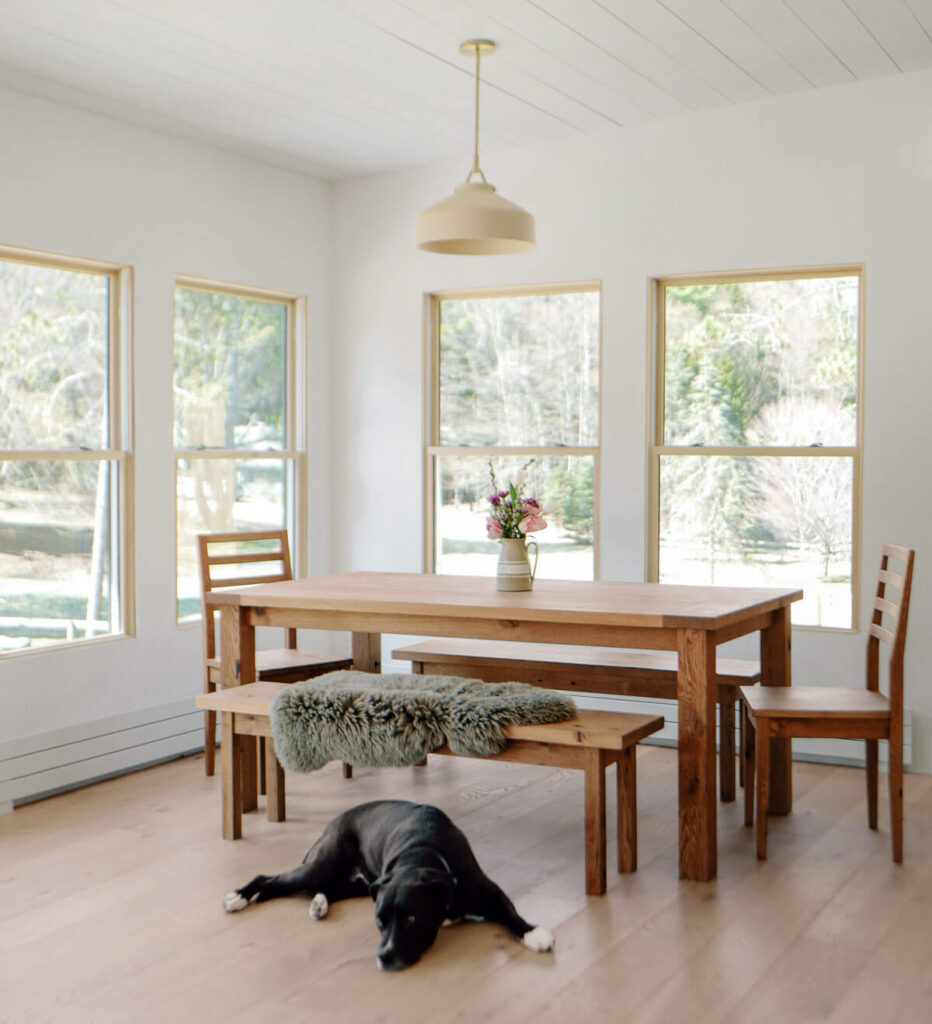
Credit: Craig Mackay

Credit: Craig Mackay
The more time we spent in the house, the more our vision for what was possible grew. With no unique finishings or historical charm, the 1960s builder-grade materials gave us a mostly blank canvas. Wanting a space that would be cozy and functional for a family with a child and three pets, we settled on a mix of modern farmhouse and Nordic style that featured wide wood floors, earthy neutral paint colors, textured plaster walls, and shiplap, plus a mix of contemporary and traditional furnishings to make the space feel bright and airy.
One of the biggest challenges was space—starting with the living room, which was cramped and dark, and failed to provide room for more than the three of us. On a hot summer day while sitting on our back deck, Craig turned to me and said, “We should make this our living room.” I had plenty of questions, yet after he drew his initial idea on some scrap paper, I knew there was no turning back: We would bring the outdoors inside. Tons of natural light with windows and sliding glass doors. Wood floors, plaster and shiplap walls, a wood-burning stove. A space where we could cozy up on the couch for a movie or host holiday dinners. It was a massive project, but Craig did everything top to bottom—from building a roof to pouring a concrete landing for the stove—and he learned a lot.
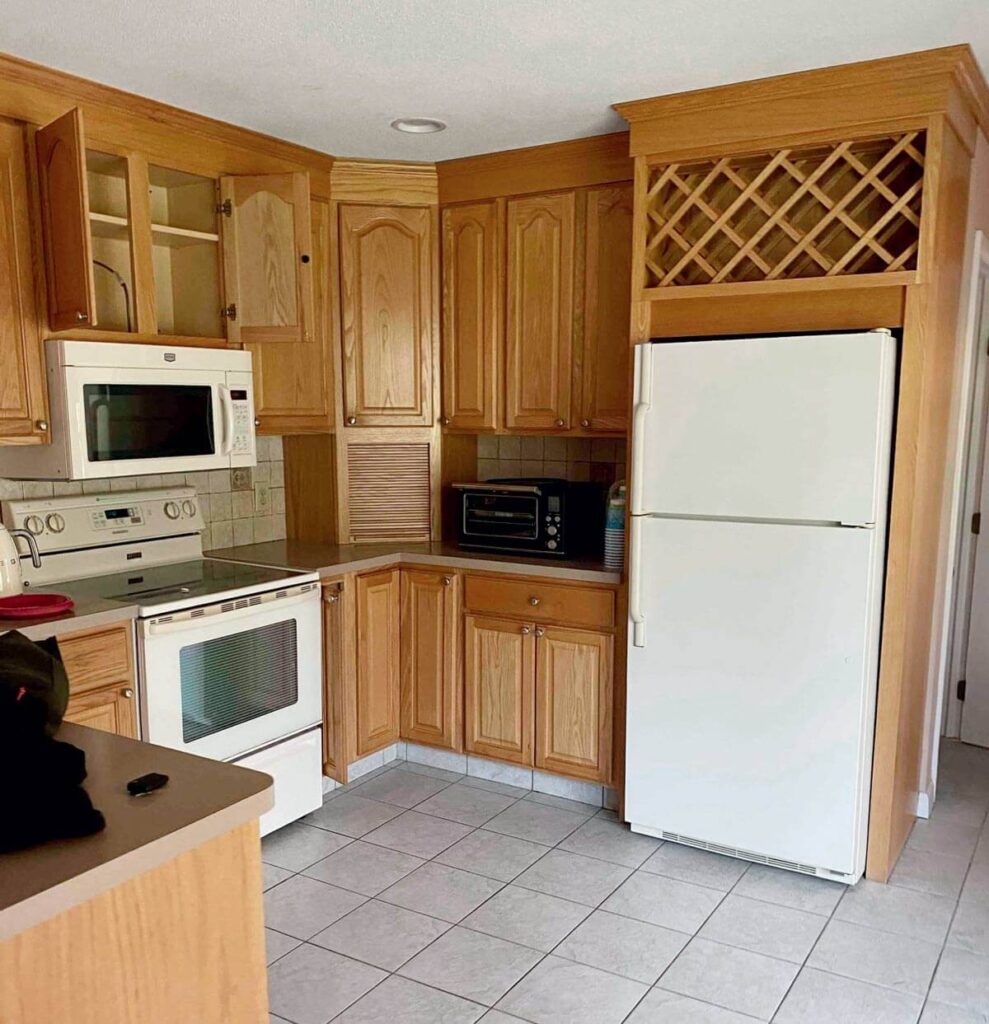
Credit: Craig Mackay
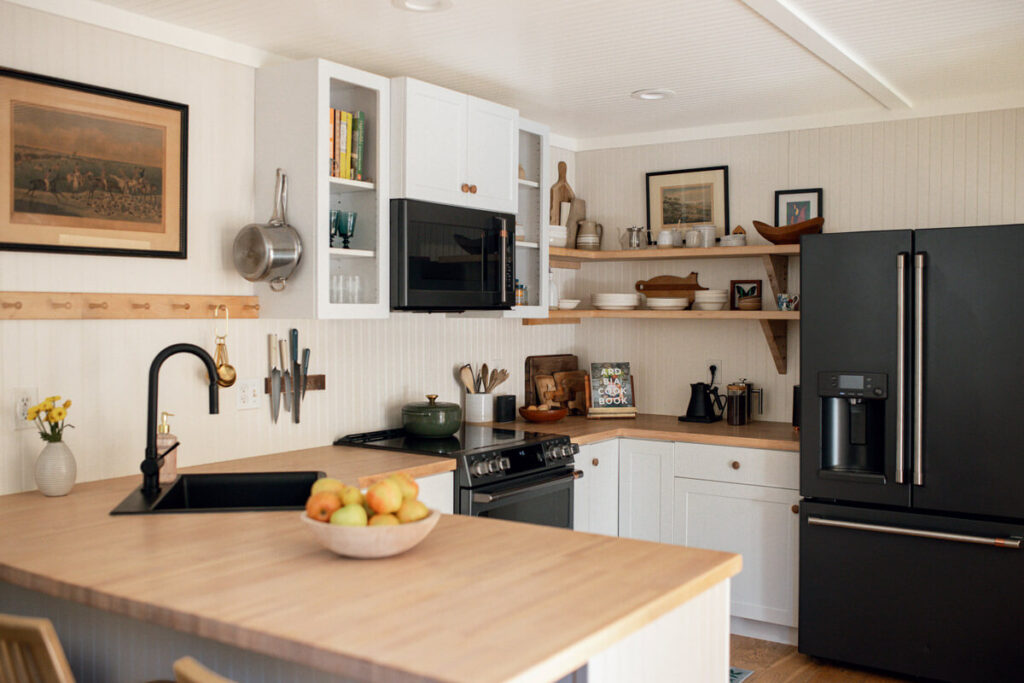
Credit: Craig Mackay
But we weren’t done. The three existing bedrooms were small and situated right next to one another, which meant little space or privacy. Adding square footage to the house wasn’t an option, so we decided to do something we’d already done at our Rhode Island fixer-upper and convert the garage into a bedroom and bathroom. This time the space was tighter and the ceiling was already finished; still, we were determined to make it work.
Figuring out how to connect the plumbing when it was halfway across the house, adding closets to an already small space, determining where to fit a bathroom, and making enough room for a king bed made the garage conversion our most demanding project yet. But we found a way, and as I look around it now—plastered ceiling and walls providing lightness and texture, wood finishes and details lending warmth—it’s one of my favorite projects we’ve ever done.

Credit: Craig Mackay

Credit: Craig Mackay

Credit: Craig Mackay
They say you should accept that your house is “never quite finished.” After living through a decade of renovation projects, I couldn’t agree more. That not a bad thing, though. We change as we go through life, and so do our needs. It’s a wonderful thing to know you can tackle projects on your own, even if it takes a little longer that way.
Looking at the “before” photos, it’s actually hard to believe this the same house. And it’s almost as hard to believe that when we were driving up the steep hill that fateful September day, I felt such trepidation. Because now when I open the door and step inside, there’s nothing but a massive sense of relief. I’m home.