



OK, Where is the Birthplace of the American Navy? | New England History
Lots of places claim the honor of being the birthplace of the American Navy and, surprisingly, each one makes a pretty convincing argument in its favor…
By Yankee Magazine|Nov 02 2018|

Where is the birthplace of the American Navy?
Well, to start with, the two Massachusetts towns that have argued with each other for years over this question are Marblehead and Beverly.
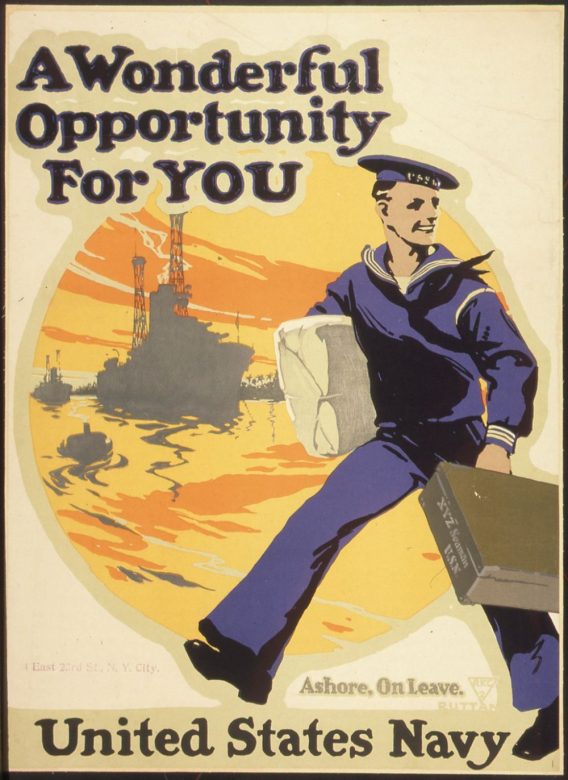
Credit: Public Domain/Wikimedia Commons
Marblehead’s claim: On September 2, 1775, George Washington commissioned a Marblehead man, Captain Nicholas Broughton, a Marblehead ship, the Hannah, and a Marblehead crew into the service of the United Colonies of North America.
Sounds like an open-and-shut case for Marblehead, right?
Wrong.
You see, when Washington’s order came through, the Hannah was tied up in Beverly harbor. She therefore sailed forth from Beverly on her first mission as a U.S. Navy ship.
Back in 1935, the two towns asked the Secretary of the Navy, then a man named Charles Swanson, to come to Massachusetts, investigate the claim of both towns and settle the question once and for all. Secretary Swanson, obviously not experienced in New England ways, naively accepted what he considered to be merely a simple matter of looking up a few historical facts.
Within several days of his arrival from Washington, he found Marblehead’s claim to be true. Then he discovered that Beverly’s was also true.
About this time, word of the Secretary’s investigation began to get around and it wasn’t long before he received a letter from the governors of South Carolina and Georgia, saying that as early as July of 1775, naval forces created by both of those states had jointly captured a British supply ship carrying powder and had then delivered this powder to the Continental Congress for the use of the United Colonies. Both therefore claimed to be the birthplace of the American Navy.
Then he discovered that on August 1, 1775, Commodore James Smith had taken command of the sloop Enterprise at Crown Point, Lake Champlain, “for the service of the United Colonies.” Even today, anyone traveling through Whitehall, New York, has seen the large sign proclaiming that town as the birthplace of the American Navy.
Rhode Island inserted its oar, too. On August 4, 1775, General Washington had requested the governor of that state to send ships to Bermuda to capture British powder stored there. The Rhode Island sloop Katy did just that, the Secretary was told in no uncertain terms by a group of Rhodes Islanders sent to speak to him. In their minds, he should designate Little Rhody as the birthplace of the American Navy.
Finally, the now harried and thoroughly confused Secretary learned that five days before the Battle of Bunker Hill, a Captain Jerry O’Brien had sailed out of Machias, Maine, and with a crew of farmers armed with pitchforks, sabers and axes, had boarded a British naval sloop of four guns, the Margaretta, and forced it to surrender. Machias, Maine, strongly claimed–and still claims–to be the true birthplace of the American Navy.
It was at this point in his investigation that the Secretary was heard to mutter to one of his aides, “Oh, to hell with it!” That evening he boarded a train and returned to Washington.
And so, like many such historical squabbles here in New England, the various claims continue to this very day. Frankly, I don’t think the matter will ever be settled. At least I hope not.
This post was first published in 2012 and has been updated.
SEE MORE:
New Englanders Don’t Really Believe in Bad Luck
Why We Celebrate Thanksgiving on the Fourth Thursday in November
Where in the United States Does the Sun Shine First?





The issue does not clear two main historic facts.
A) There was only a Continental Army in 1775 when all these towns claim a Navy was present
B) George Washington was encamped in Cambridge, Massachusetts, on The Cambridge Green (a triangular plot, bordered. by Massachusetts Avenue and Harvard College, on one side and Garden St. o.n the other. His headquarters were in a nearby mansion, during the Spring of 1775. He ordered the Schooner Hannah, a Marblehead built schooner to be outfitted with cannons to chase the British Privateers away from the Northeastern, coast that were sacking our merchant sailing vessels. The true Navy was founded as the, SECOND military branch, the Continental Navy in Philadelphia, later that year. That is, truly the birthplace of the predecessor of the United States Navy. The other claimants do not have legal claim to anything other that they acted on the bidding of General Geo. Washington.
Newburyport Massachusetts claims to be the birthplace of the U. S. Coast Guard true/ false
Hmmmm. I would have guessed Provincetown.
~Semper fi.
the birth of the navy was in beverly, MASS , Sir Issach Hull manned the USS Constitution salem and marblehead were close and very important.
hull st in beverly massachusetts was named after sir issach hull…captain and commander of the uss constitution