



Property Values: The Legacy of Yankee’s ‘House for Sale’ Column
For seven-plus decades, Yankee’s wide-roving “House for Sale” column offered readers the chance to dream about moving to the country.
By Bruce Irving|Aug 26 2025|

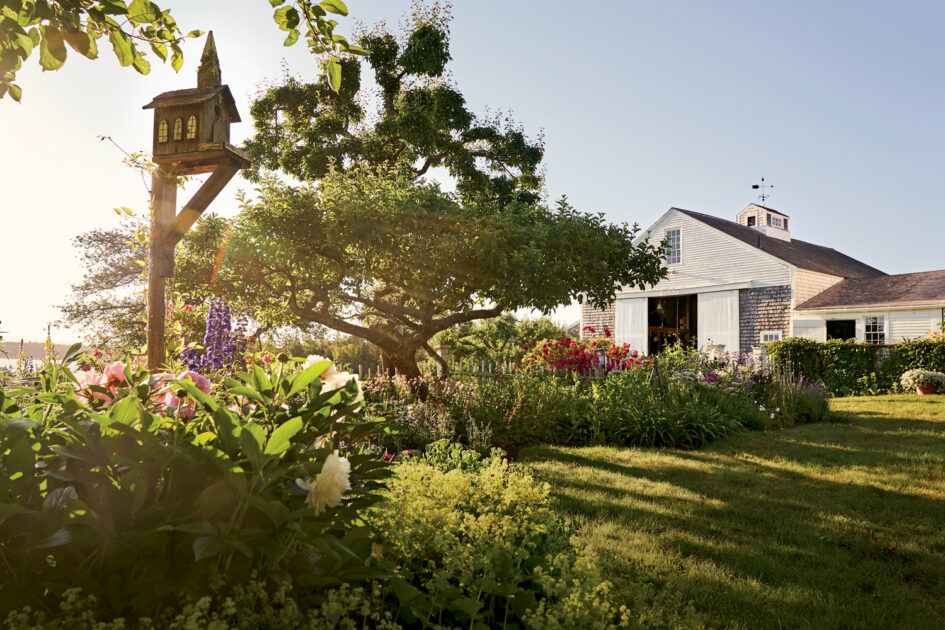
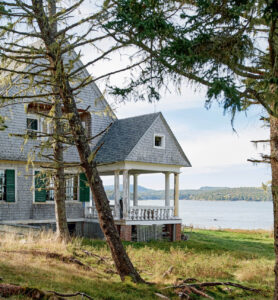
When the Maine saltwater farm formerly owned by E.B. White was about to go on the market, Yankee’s “House for Sale” scored an exclusive sneak peek at the property and garnered national media coverage.
Credit: Mark FlemingA Starbucks on every corner, a new car in the driveway, an embarrassment of entertainment options out on the town—the pleasures of urban and suburban America are hard to ignore or resist. But every so often, the heart longs for a dirt road and a star-filled night, and one partner turns to the other and says, “Honey, have you ever thought of chucking it all and moving to the country?”
That’s how the “House for Sale” column got its hooks into Yankee readers, sinking deep into this kind of blacktop discontent. It was a part of the print magazine from the early days up until 2023, with hundreds of editions churned out over its long run. That’s a lot of dreams fanned.
The basic concept has been in Yankee’s DNA from the very start. Founder Robb Sagendorph, though he may have looked the part of “a tall, lean Yankee,” as his New York Times obituary put it, was no rural character himself. He was born in Newton Centre, Massachusetts, the son of a Boston steel manufacturer. After graduating from Harvard, he spent seven years in the steel business in Boston and New York, until moving to Dublin, New Hampshire, to become a farmer and freelance writer. As the Times reported, “He succeeded at neither.” Instead, he started a magazine in 1935 dedicated to limning the rural life.
Even before the column began, Yankee advertised rural properties: In 1939, for example, a “Handsome Home, Equipt Farm” located 55 miles outside Boston came with 110 acres and “13 cows, heifers, bull, machinery, 1½-ton truck, milk route, etc.” for $4,400. For a time in the ’90s, an ad repeatedly exhorted readers to “Escape to an island off the coast of Maine.” But “House for Sale” took all that country dreaming to another level. In the May 1981 issue, the column featured nine acres, a store with an apartment, and eight sporting camps, all under the name Kokad-jo, “up in Maine’s moose country.”
Credit: Heather Marcus
Who were the seekers, these aspiring escapees, that responded to such descriptions? A 1985 update on the Kokad-jo property reported there had been 93 inquiries from 26 states, including seven from California. The first person to call—the day the magazine hit newsstands—was apparently inebriated, according to the seller. A pair of folks from Washington, D.C., said they wanted to move to Kokad-jo because “we are a couple of burnt-out executives.” The man who ultimately bought it had bicycled through the area with his son a year before and thought how wonderful it would be to live there. The day before he arrived in Maine to buy Kokad-jo, he walked into his boss’s office at the Con Edison plant where he’d spent decades working on public relations, and he quit. “You don’t just sever yourself from a corporation after 25 years like this,” said his boss. “You don’t, huh?” he replied. The man and his son embraced and danced for 10 minutes after the papers were signed—the best he’d felt in 48 years. “Free,” he said. “Free at last.”
Through the years, “House for Sale” featured a number of properties that had already been through round one of dreamer-occupation, the sellers’ descriptions of how they found it and what they did to it serving as inspiration, almost daring the next owner to continue the dream. In the July 1990 column (“Chasing Sunbeams at ‘Hidden Wells’”), we meet Bill and Betty Noble at their 1729 Rhode Island Colonial, which, when they first saw it in 1958, was full of cats and had a first-floor ceiling so sagging that a chandelier was within a foot of the floor. They bought it, and 22 acres, for $10,000 and proceeded to fix it up, more or less by themselves, in a process they describe in harrowing detail (digging silt out of the bottom of the well; dodging snakes; pulling down plaster; modernizing the heating, electrical, and plumbing systems; restoring the grounds; working in the first year “until midnight or beyond”). They even put in a pool. Did they have any advice for young couples thinking of restoring an old house? the writer asked. “Do it!” they said. Unspoken but implied: Or just buy our place for $499,000 and avoid all the grunt work.
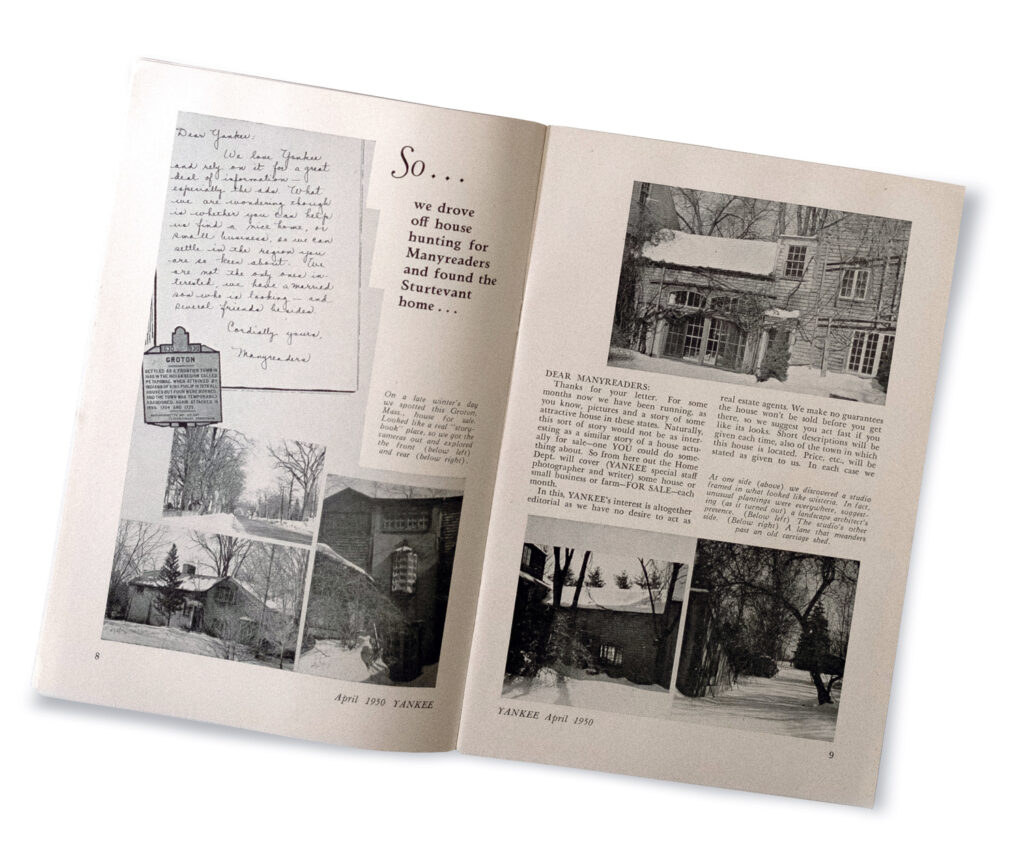
“Do it!” was not the answer the magazine got when it paid a follow-up visit to the first-ever “House for Sale,” published in April 1950. In that earlier article, the not-yet-christened Moseyer (as the column writer would come to be known) observed a house in Groton, Massachusetts, that was “a dwelling with rooms blithely located at five different levels” and concluded, after chronicling its many more quirks, “If you’re an imaginative family, this house could be fun.” Returning in 2010, Yankee found the latest owners (it had sold several times since 1950) ensconced in a home they’d spent seven years straightening out, among other improvements. Would they have taken on the house if they’d known the time and money involved? “Never,” the owner said. “I would have been scared off.”
Credit: Heather Marcus
While the Moseyer stayed incognito, the column bore the firm imprint of longtime Yankee editor Judson Hale. The Moseyer’s pen would go on to change hands a few times, but the basic tone of piqued curiosity—leavened with a touch of Yankee skepticism—remained. Every so often, you can tell he or she is just as tempted to chuck it all as their readers are.
In a rare bylined “House for Sale” in 2017, Mel Allen, then Yankee’s editor, stepped in to write what would result in the magazine’s closest brush with virality. E.B. White’s house in North Brooklin, Maine, was being put on the market, and Allen was given a tour for the September/October issue. The resulting column drew attention from The New York Times, Town & Country, and other media outlets, and went on to be the most-read “House for Sale” in the magazine’s history.
Credit: Mark Fleming
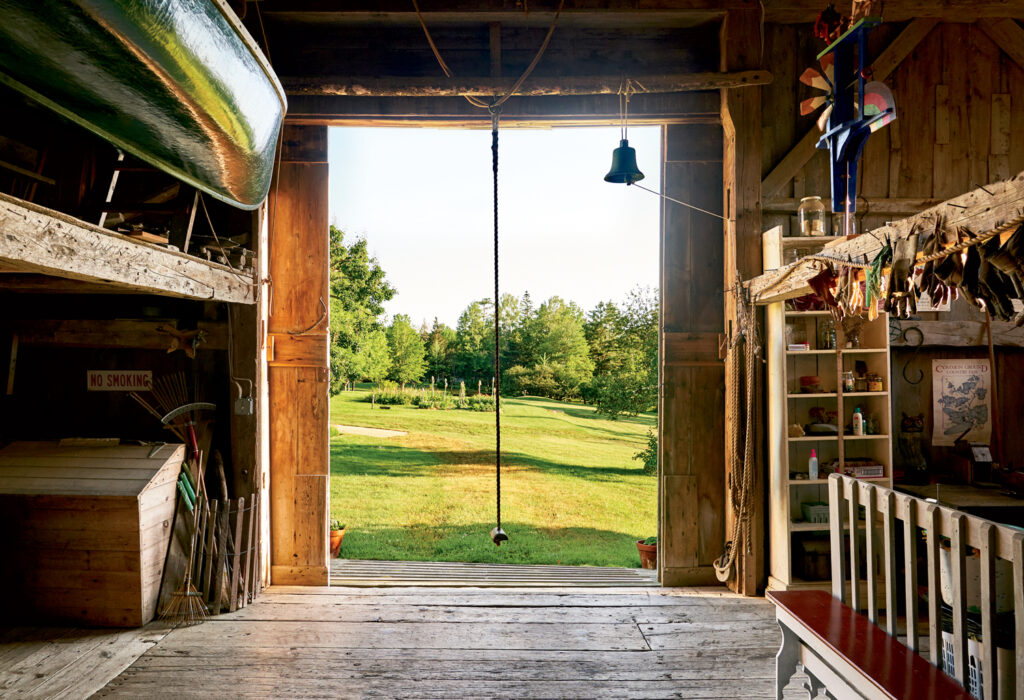
The Charlotte’s Web author had purchased the 44-acre saltwater farm in 1933, doing his own version of chucking it by leaving New York City and moving to Maine permanently four years later. The latest owners were a couple who’d purchased the property on a handshake from White’s renowned boatbuilder son, Joel, in the early 1980s. They, too, were escapees, seeking a quiet life of gardening and sailing, away from their business life in South Carolina. The tour included the barn where Charlotte may have spun her web, complete with Fern’s rope swing, and “the trim boathouse where, when the weather was right or there was too much going on in the house, E.B. White would retreat with his black Underwood typewriter,” Allen wrote. “There he built a simple table and bench, placed a barrel for waste and an ashtray by his side, and with the sea breezes for company typed some of the most elegant and memorable sentences in the English language.”
The listing agent was Martha Dischinger of Downeast Properties. “I must have gotten 35 to 40 inquiries a day back then,” she says. “The farm sold for full asking price a week after it came to market, but the phone just kept ringing. I probably got five or 10 calls a year for five or six years afterward.” The phone still rings occasionally, and schoolchildren sometimes write, asking about Charlotte and the barn. The new owners are a family from the Philadelphia area who spend time year-round at the farm. “They’re great people, well integrated into the community, and the husband sometimes writes down in the boathouse,” Dischinger reports.
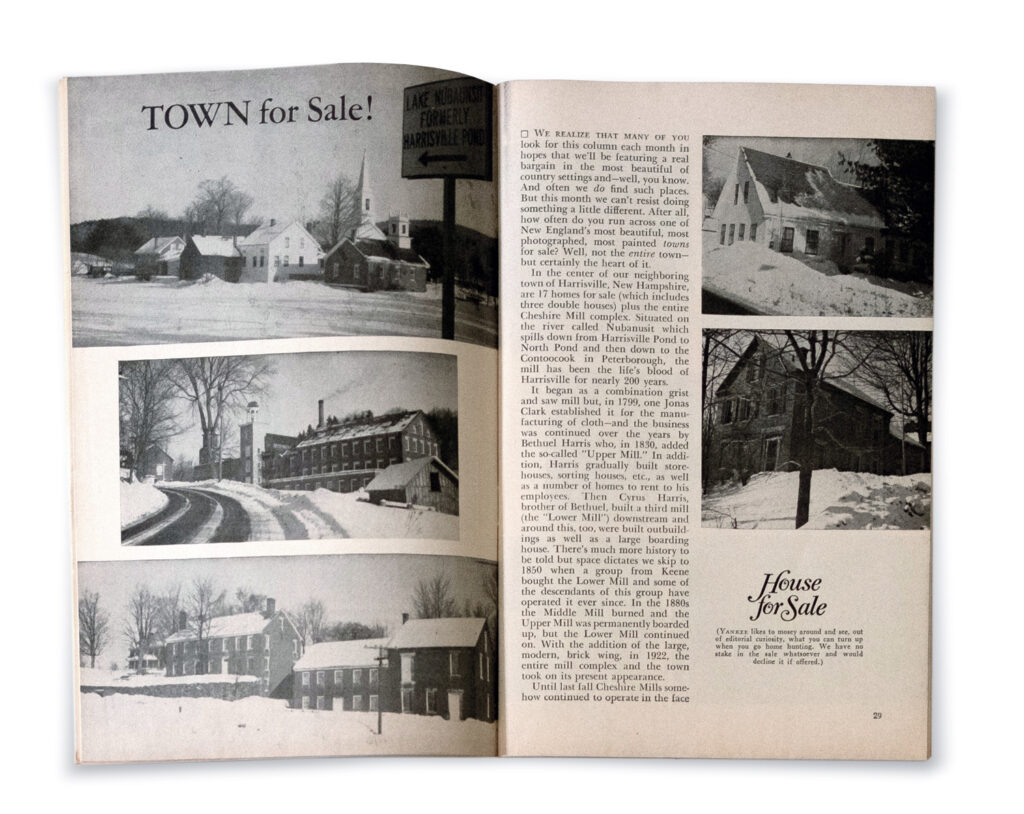
Over the decades, “House for Sale” has highlighted stores, inns, and once even a whole town (the brick mill village of Harrisville, New Hampshire, was ultimately acquired by a nonprofit that now hosts living and work spaces in its store, church, and mill buildings). Each sale is someone’s dream come true—and I’ll bet Robb Sagendorph smiles down each time a new owner packs up and, ahem, steals away.
This feature was originally published as “Property Values” in the September/October 2025 issue of Yankee.
Keep Reading: ‘House for Sale’ Classics We Can’t Forget


Please bring it back! I have read Yankee for over 30 years, it that was always my favorite column!