



New England Historic Paint Colors | Shades of an Era
Curious about historic paint colors? Learn more about period paint colors in New England, from Colonial paint colors to Victorian paint colors.
By Annie Graves|Mar 04 2015|

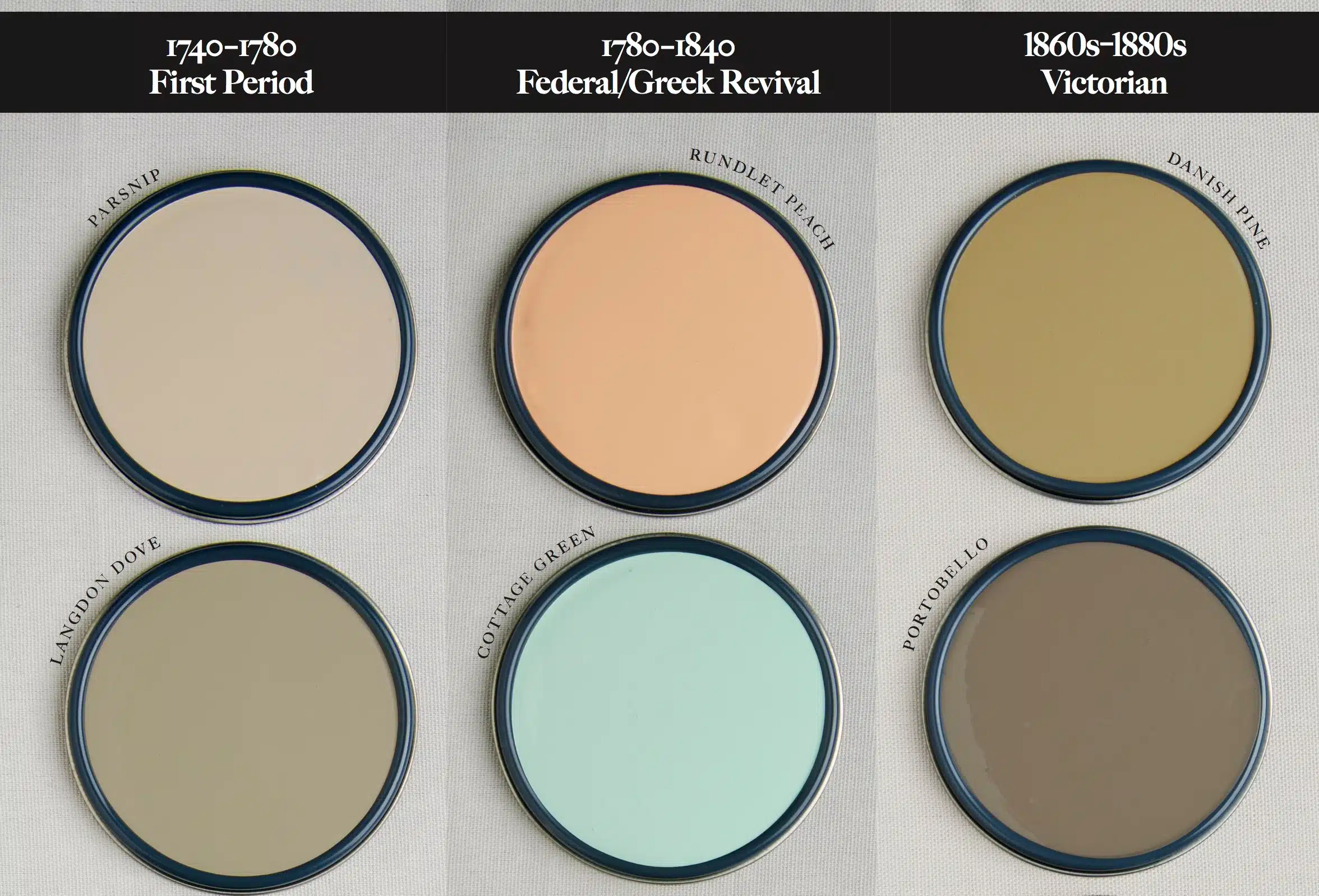
New England Historic Paint Colors | Shades of an Era
Credit: Melissa DiPalmaDespite its Puritan underpinnings, New England’s first years were not colorless. Yes, the earliest homes often went without a coat of paint, but hidden in the dirt floors of those humble structures was a hint of colorful things to come: minerals that would form the basis of early pigments. And by the 1800s, synthetic dyes would open a peacock’s fan of bold choices for homeowners.
Much has changed since then. Where the bodies of houses once used to be light, trimmed with dark, today the reverse is true. And yet we can’t seem to let go of the past. Every paint company worth its palette has a “historic” collection, attesting to our ongoing fascination with period color.
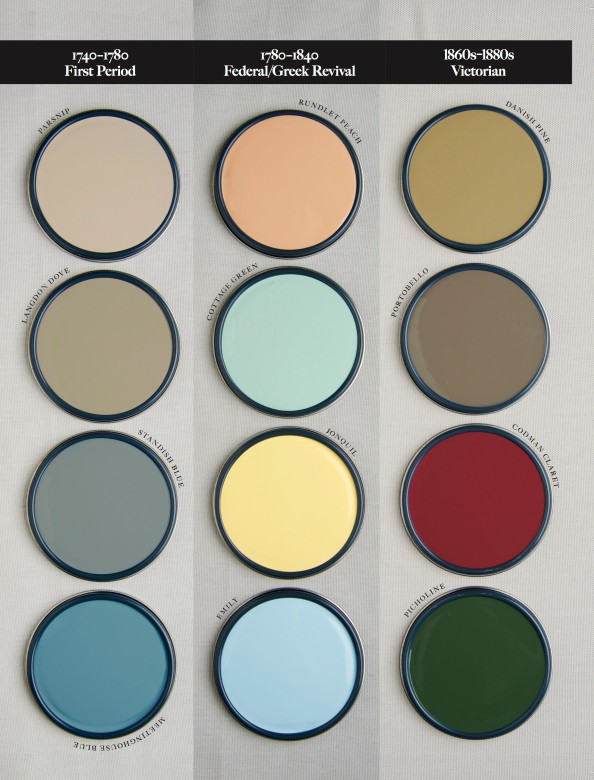
Credit: Melissa DiPalma
We asked Sally Zimmerman, senior preservation-services manager at Historic New England and co-author of Painting Historic Exteriors, to take us on a colorful journey through time.
About These Colors:
In 2010, Historic New England partnered with Andover, Mass.–based California Paints to design the Historic Colors of America collection, with 149 authentic shades used from the 1600s to 1895. All paint names mentioned in this story refer to that collection.
Guide to New England Historic Paint Colors
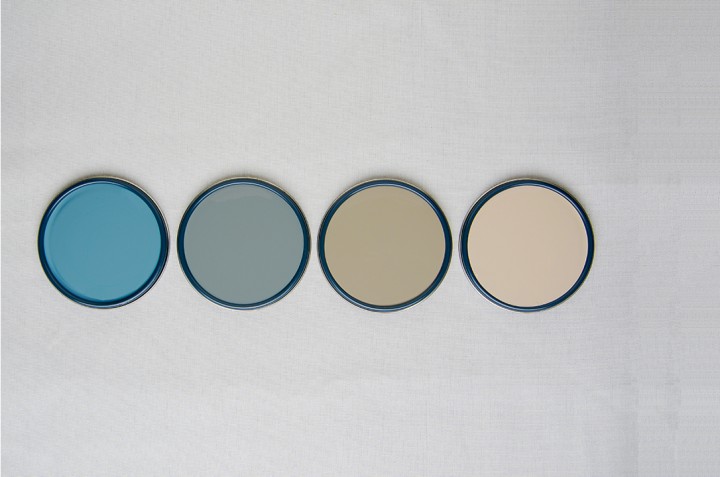
Left to Right: Meetinghouse Blue, Standish Blue, Langdon Dove, Parsnip
Credit: Melissa DiPalma
1740–1780 | FIRST PERIOD COLONIAL HISTORIC PAINT COLORS
Colonial Exterior Historic Paint Colors: Many early houses were left unpainted to weather the elements, Zimmerman says. If exterior color was used at all, it was often a simple yellow ochre and iron oxide (the “barn” red we know so well) mixed with white lead and linseed oil, and applied on site. Window sashes and trim were painted in lighter, contrasting colors. Sash windows (which slide up), though an improvement over earlier casement windows, had to be painted to protect glazing putty from the weather; otherwise the glass would fall out.
Colonial Interior Historic Paint Colors: Neutral “drabs.” The colors of doves and oysters were popular, as were Prussian blues.
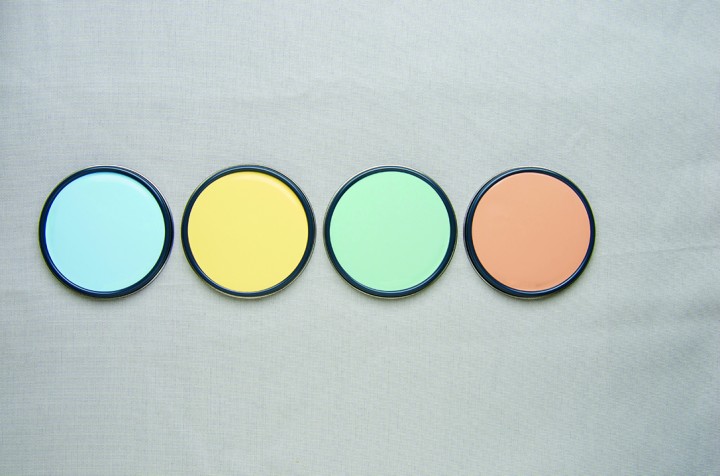
Left to Right: Emily, Jonquil, Cottage Green, Rundlet Peach
Credit: Melissa DiPalma
1780–1840 | FEDERAL/GREEK REVIVAL HISTORIC PAINT COLORS
Federal/Greek Revival Exterior Historic Paint Colors: With American independence, colors went lighter, with the most common shades being white and creamy white. However, these colors were quite different from today’s “bright” whites; the linseed oil used as a binder in early oil paints lent a yellowish tint to the palest colors. Today, paint manufacturers use titanium dioxide to create pure-white shades, but that technique came into commercial use only in the 1920s. Trim tended to be light in color, often the same or almost-same color as the siding. Dark colors, like black or dark green, were used for window sashes, doors, and shutters.
Federal/Greek Revival Interior Historic Paint Colors: Soft colors were all the rage, including peaches and brighter pastels in shades of green, yellow, and blue.
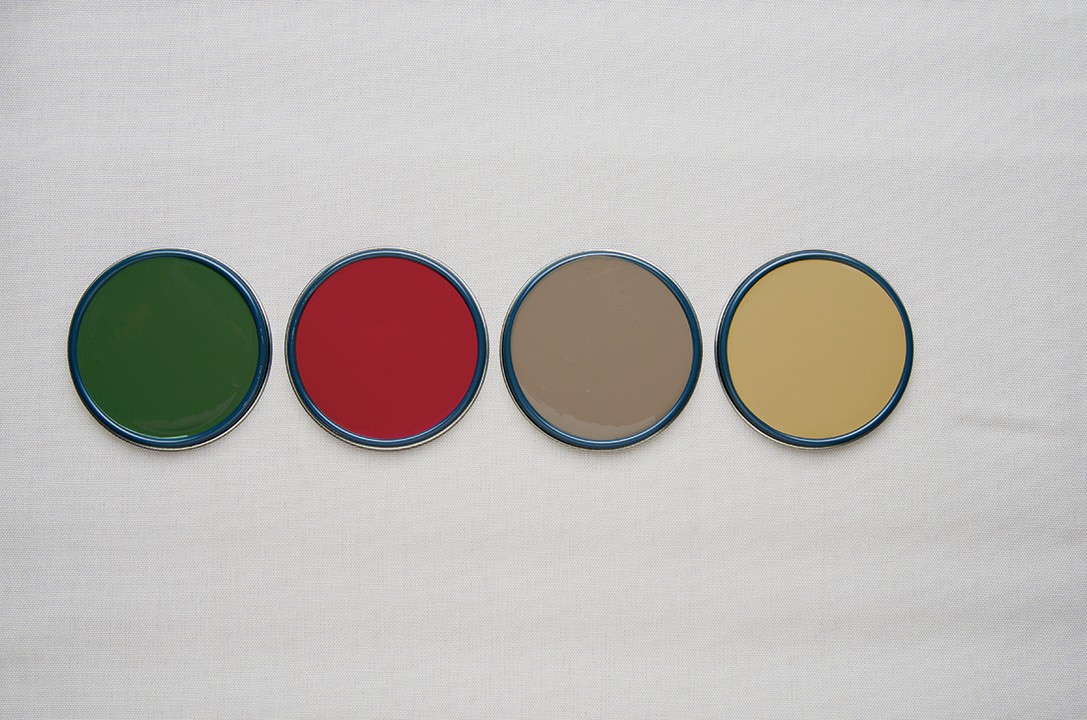
Left to Right: Picholine, Codman Claret, Portobello, Danish Pine
Credit: Melissa DiPalma
1860s–1880s | VICTORIAN HISTORIC PAINT COLORS
Victorian Exterior Historic Paint Colors: After the Civil War, synthetics were introduced to the nascent paint industry, opening up a wider range of pigments and greater saturation. Color was used to play up exterior architectural elements, such as columns, dentils, and cornices. Often three to five colors would be used on a single house; for example, chocolate-brown trim paired with golden-yellow siding and a brighter accent, such as turquoise, on a porch ceiling. (Today’s aesthetic often pairs lighter trim and sashes with a darker house color.)
Victorian Interior Historic Paint Colors: Rich, velvety clarets and deep, woodsy greens were fashionable novelties, while strong neutrals such as dark gold and warm brown balanced busy Victorian interiors.
SEE MORE:
New England Architecture | Guide to House Styles in New England
New England Historic Holiday Home Tours
Historic Downtown Salem | Art, Architecture, and Attractions

Thoroughly enjoyed the historic paint colors article. No manufacturer names mentioned. Do you have preferred suggestions? I’ve been A Yankee subscriber for decades. Thank you.
Re-read the article. Manufacturer is California Paints.
I agree with Katharine, I would like to know who makes these wonderful paints ??
It’s stated in the article. California Paints. Made in Massachusetts as the article states.
California Paints makes these colors, and they are as pure and beautiful as they look here. There is a much larger selection than is shown here. I have used them in my 17thc house.
Also it is the highest quality paint as well as beautiful.
Try Golden Artist Colors New Berlin N.Y. They manufacture historic colors
I am quite sure jonquil is made by shereon Williams as that is the color of our front door.
California Paints also has a paint called Jonquil .
I have a 1798 cape cod style home built in 1798. The shutters since I bought it 30 yrs ago have been painted black, and for how many yrs previous to that , who knows. When scraping, I discovered underneath is dark green. Before repainting it green, (which I would prefer) I would like to know if the green would be historically correct.
I was recently in the Cape and noticed natural shingle houses have only the fronts painted The sides are unpainted why is this done?
Historically, paint was expensive so only the front cladding (usually clapboards) were painted. The cedar or pine shingles (or shakes) quickly weather in the salt air to that quintessential silver/gray. If a shingle is damage it’s easier to replace (and re-weather) than trying to touch up paint to match.
I have Montclair marble and I need a creamy white paint!!!
I enjoy your articles of New England. I’m a ‘damn yankee’ myself.
If you re-read the section “About These Colors” you’ll see it mentions California Paints. Here’s their link
https://www.californiapaints.com/find-my-color/
Looking for Cobb’s Bridge Blue from the Province of Maine Collection purchased from Maine Line Paint @ 1989
Very useful information on the colours. Historically, these paints were linseed paint, not any plastic film-forming paint. We still produce these historic paints, in the historically accurate colour palette, so you can protect timber with the same paint that would have been used originally. Check us out on linseedpaint.com
As we have traveled these 50 states, the New England homes
are the most beautifully painted and craftsmanship existing. Love them….
Benjamin Moore has got some wonderful historical colors for exterior/interior
I am up for suggestions for the exterior color of my historical school house in Lyndeborough. South school, built 1859. 45 Putnam Hill Rd