The Restorers | Special Spring Home Guide 2015
Renovating an old home is a hero’s quest, a test of stamina and means. Whether you do it yourself or employ a battalion of workers, there’s no getting away cheap. And yet, in the realm of costly hobbies it stands apart as a noble pursuit, a labor of love. Restoration contractors understand the love and […]
By Bridget Samburg|Jul 20 2016|

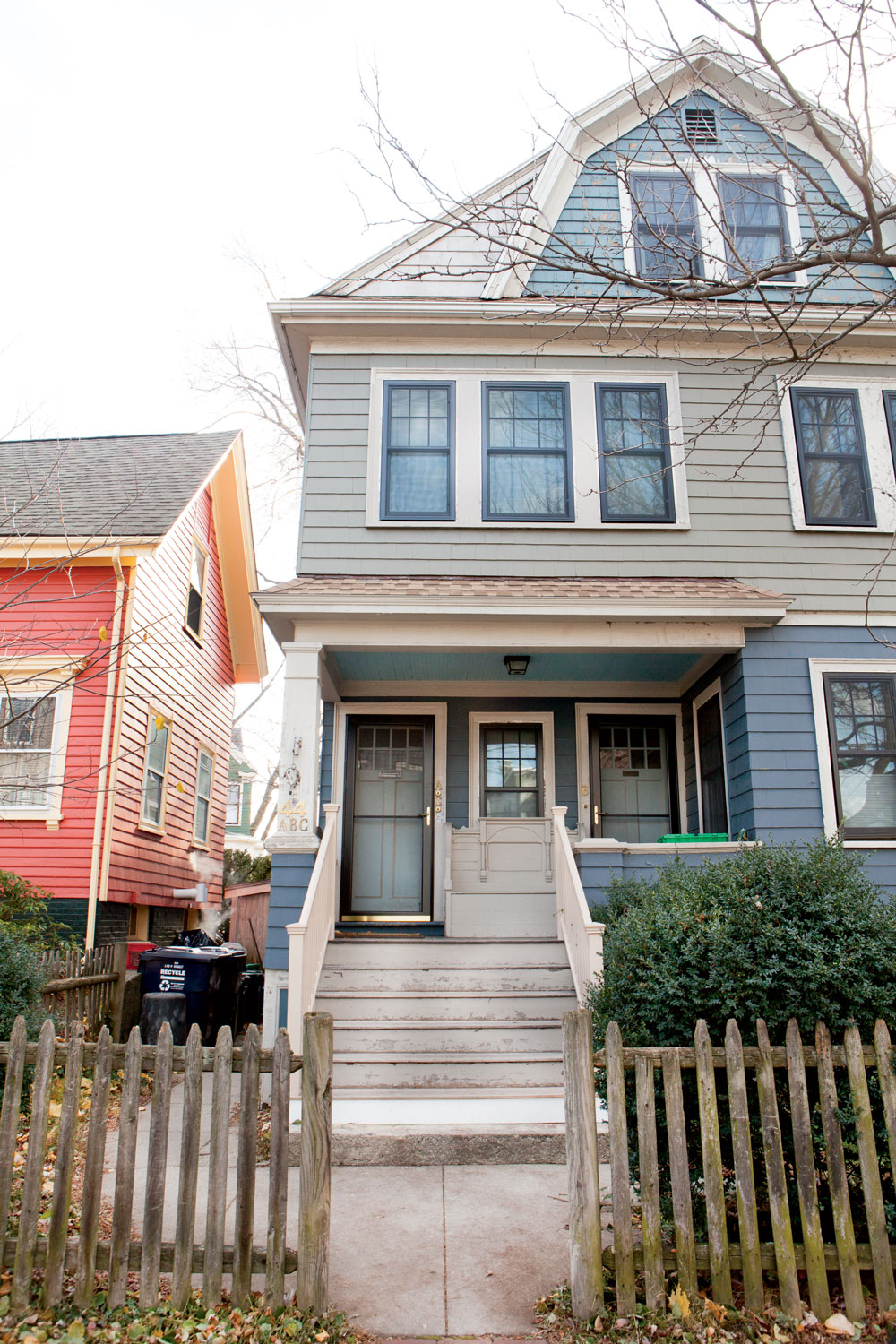
This classic Cambridge triple-decker has been updated for 21st-century living.
Credit: Alex Gagne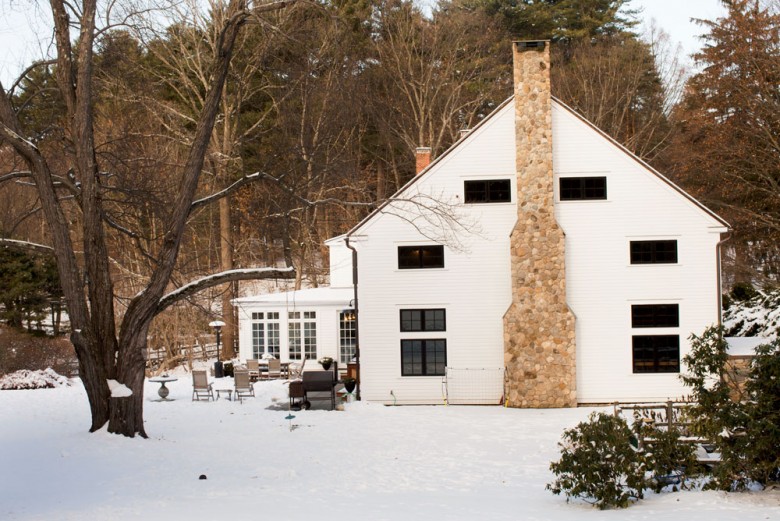
Credit: Alex Gagne
Renovating an old home is a hero’s quest, a test of stamina and means. Whether you do it yourself or employ a battalion of workers, there’s no getting away cheap. And yet, in the realm of costly hobbies it stands apart as a noble pursuit, a labor of love.
Restoration contractors understand the love and the lure of historic preservation. The best ones expertly combine old and new, melding historic character and elements with modern usage. They know when to save and when to replace. They come armed with skills and mental Rolodexes of the best artisanal plasterers or master woodworkers (less romantically known as subcontractors, or “subs”) to hire for each job.
Here, we bring you four of the best contractors who have been working with old homes for decades, along with a guide to restoration specialists with expertise in floors, plumbing, period rugs, stained glass, plaster, and more. In this field, they’re artists, trusted with the architectural heritage that is a cornerstone of our identity as New Englanders.
Each of the men shown here brings a singular passion to their projects, everything from grand manses to humble condominiums. We asked each one to share a particular favorite with us and to offer his thoughts on what makes it special.
The 1700s Farmstead: Brian Cooper
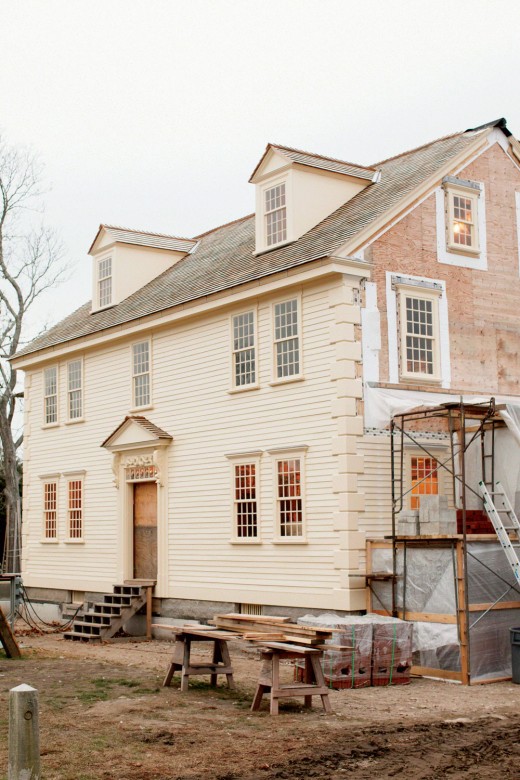
Brian Cooper, of Early New England Restorations has been buying and dismantling old homes for years. He has trailers full of buildings waiting to be resurrected as additions or used for their antique components. His current assignment: a projected four-year-long effort to restore the Pendleton–Chapman House at Avondale Farm, built around 1740 in Avondale, Rhode Island. Multiple buildings—including one brought in from a site in Connecticut—are part of this historically unusual undertaking.

Credit: Alex Gagne
What’s the most unique piece of this restoration?
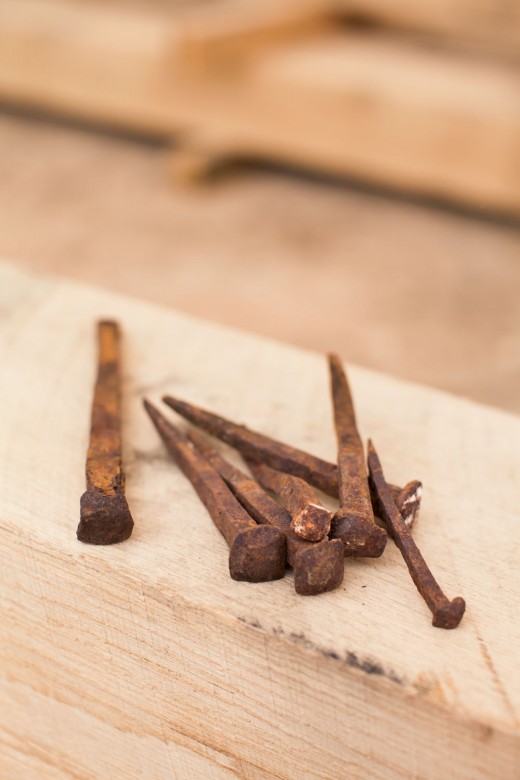
“We built a kiln to burn oyster shells for lime putty, which was once used to create mortar and plaster. We’ve used 3,500 pounds of oyster shells so far. The result is a historically accurate, beautiful, white lime putty. This is probably the first lime-kiln burn built in Rhode Island in the past 200 years. We’re also making all of the nails, all from repurposed wrought iron.”
Credit: Alex Gagne
What about this early-period home speaks to you?
“The owners are focused on the historical accuracy of the house, the quality of the craftsmanship, and the recycling of various materials. With these early, early homes—the 17th- and 18th-
century ones—you can see how hard life was back then. And everything you had in your home was made by a person. Our group does a tremendous amount of research on each house to find out how that influenced their architectural decisions. Making a historically accurate antique house comfortable is a difficult task. We recycle old house parts, but we also add geothermal heating elements or radiant heat.”
Credit: Alex Gagne
Are you using antique tools for this project?
“Our carpenters have a mix of old and new, from 150-year-old chisels and mallets to the latest power tools. Our craftsmen value quality handwork. A lot of the preparation work is done with modern equipment (a chain mortise machine and circular saws) for safety and efficiency. But the finish work integrates traditional methods with antique tools, such as slicks, chisels, mallets, and hand planes.”
Early New England Restorations, Stonington, CT. 860-599-4393; werestoreoldhomes.com
The Converted Barn: Ian Harper
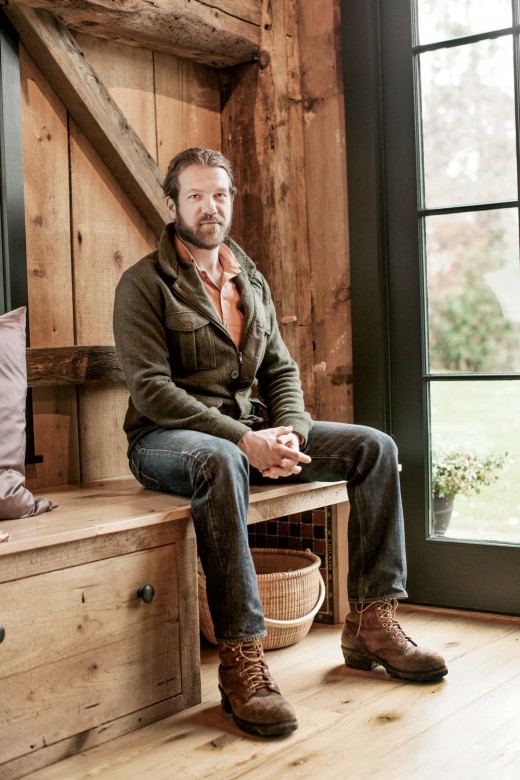
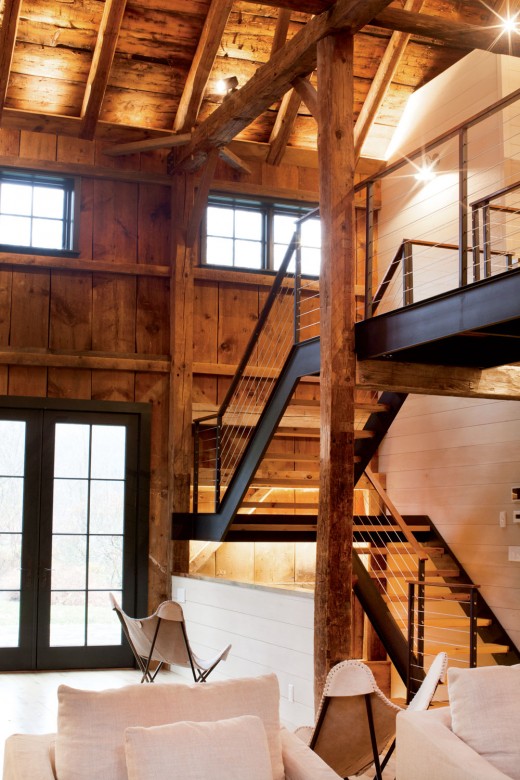
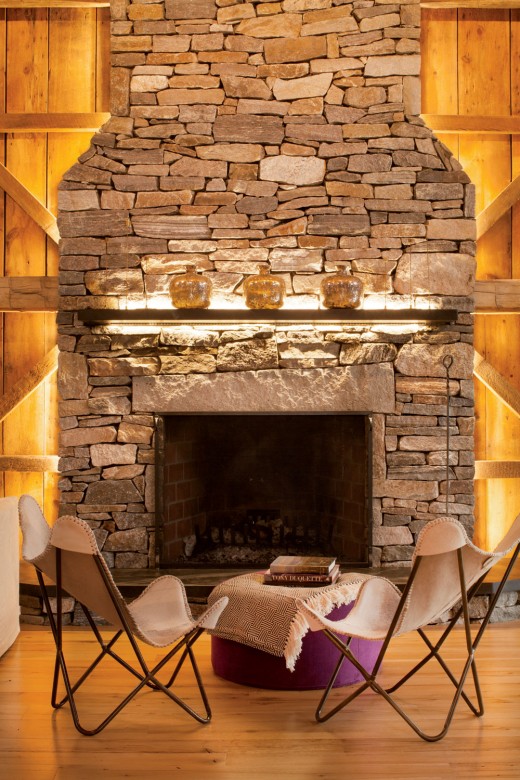
New England barns are given second lives at Colonial Barn Restoration in Bolton, Massachusetts, where Ian Harper has spent the past decade saving barns that would otherwise be among the thousands lost each year. This particular project in Lincoln, Massachusetts, turned an underutilized 1800s structure into an addition, complete with family room, fireplace, guest room, and passage to the main house.
— Ian Harper
Credit: Alex Gagne
What was most interesting to you about this project?
“If you have an old barn on your property, the upkeep and maintenance can be a burden if you can’t get some use out of it. So updating is a good way to extract real value, since you don’t have to tear down the barn and build an addition. I love the blend of old and new in this Lincoln project—the dovetailing of history and antique aesthetic with modern function and design, all while maintaining the barn vernacular.”
Credit: Alex Gagne
Do you have a particular way you approach these barn restorations?
“We survey the barn to determine what we can salvage. During demolition, we preserve a lot of material and look for places to reuse it later. In this particular barn, the majority of the original frame was intact—posts, beams, and roof structure as well. We used salvaged material for benches on either side of the fireplace and found additional wood from another barn to match.”
Credit: Alex Gagne
Colonial Barn Restoration, Bolton, MA. 978-779-9865; colonialbarn.com
The Starter Home: Charlie Allen
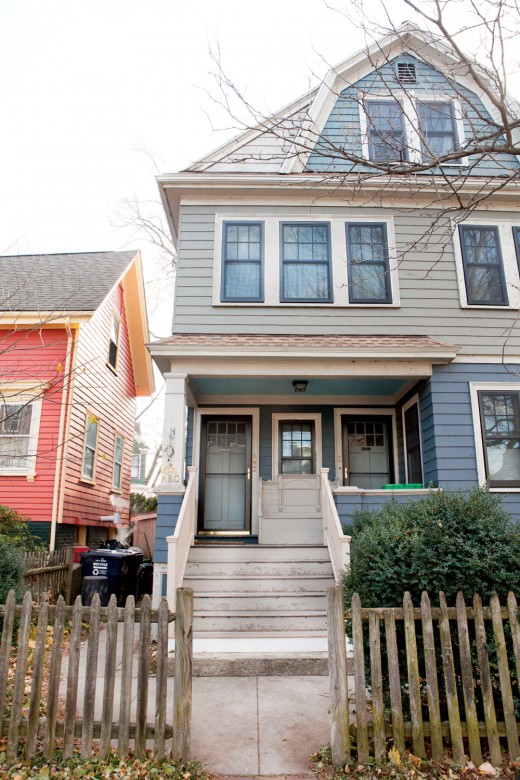
The triple-decker is a symbol of turn-of-the-century urban New England architecture. Neither grand nor visually stunning, these homes typically survive as aluminum-clad eyesores planted in long rows down treeless city blocks. But they do have their charms. Charlie Allen, of Cambridge-based Charlie Allen Restorations, has worked extensively on large-scale preservation projects, but he has a special fondness for more modest homes. This particular triple-decker in Cambridge, Massachusetts, had been reconfigured into two living spaces. Allen was brought in to return the property to its three-unit origins, creating a modern first-floor living space while retaining the house’s character.
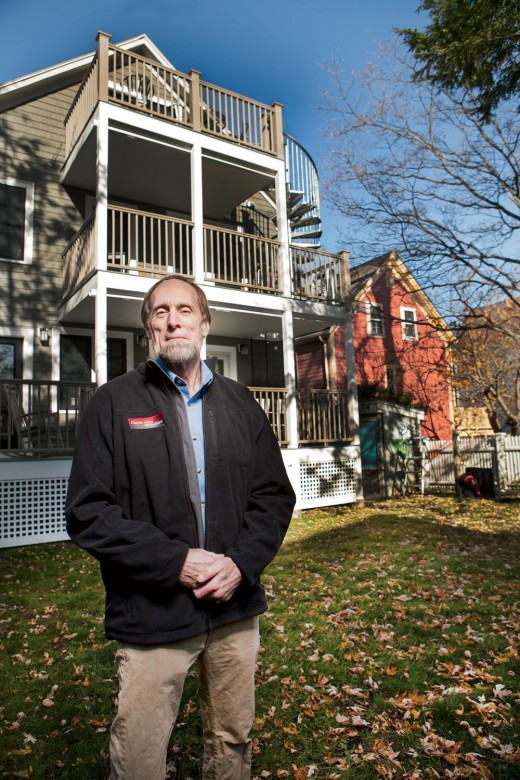
Credit: Alex Gagne
What was special about this project?
“This was about a couple falling in love and coming together to create their first home together. So we wanted to add space and function. We wanted to make it a home and maintain the aesthetic. The baseboard, rosettes, doors, and moldings were all maintained.”
Credit: Alex Gagne
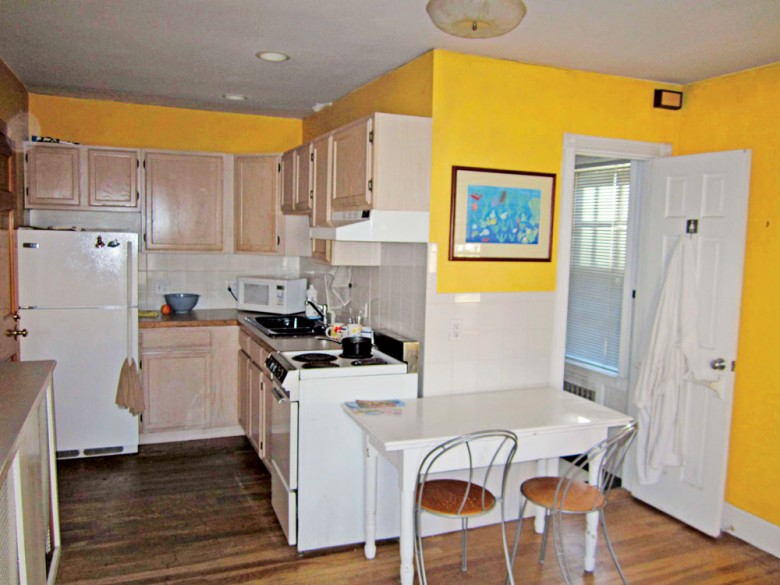
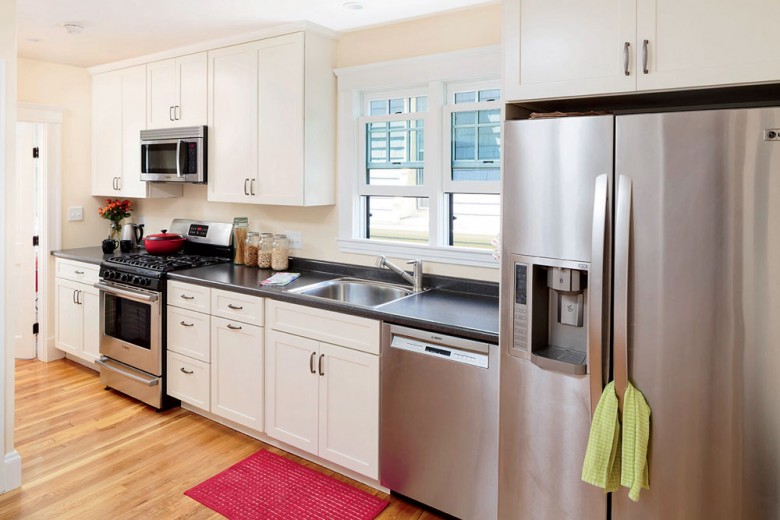
What about the kitchen? How to improve that room while maintaining antique charm?
“People love their old homes, but they don’t love their old homes’ kitchens. That isolated, low-ceilinged room in the back of the house is no longer acceptable. They want the kitchen integrated into the rest of the home. We were able to redo counters and paint cabinets to refresh it while staying within budget.”
Why bother keeping the old radiators?
“I love remodeling old houses because it can be very green. Old radiators work very well, and they look better than baseboard heaters. They can be sandblasted and painted; we can move them and resize them. And we can convert a steam system into a water system.”
What’s your philosophy when it comes to combining old and new?
“I’m not a purist. But what might be most satisfying for me is when people can’t tell whether some fixture or element is original or not, so that there’s a sense of symmetry. That’s how we keep these old houses functioning for families.”
Credit: Alex Gagne
Credit: Alex Gagne
Charlie Allen Renovations, Cambridge, MA. 617-661-7411; charlie-allen.com
The Classic Cape: Richard Mecke
A 1970s remodeling job had left few hints that this modest 1750s Cape in Plympton, Massachusetts, was brimming with historically interesting architectural elements and character. Richard Mecke uncovered beautiful exposed frame ceilings, did extensive work on the home’s three fireplaces, and restored original walls.
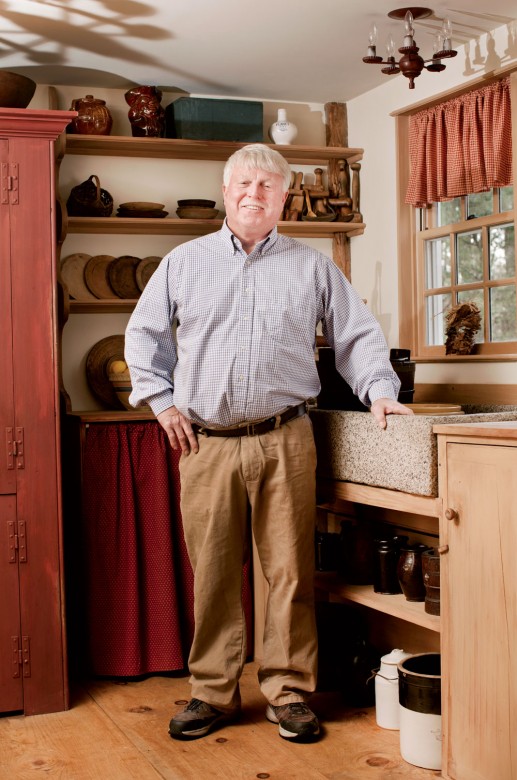
— Richard Mecke
Credit: Alex Gagne
What was intriguing to you about this project?
“When I looked at this house, there was no real evidence of when it was built other than the location of the domed brick oven within the fireplace. I could date it from that. And then I started to realize that it had other elements. The ceilings had been lowered, so we exposed the framing of the original kitchen. The framing used to be a decorative element, but after the 1730s the exposed framing wouldn’t have been fashionable. Yet this house still had that.”
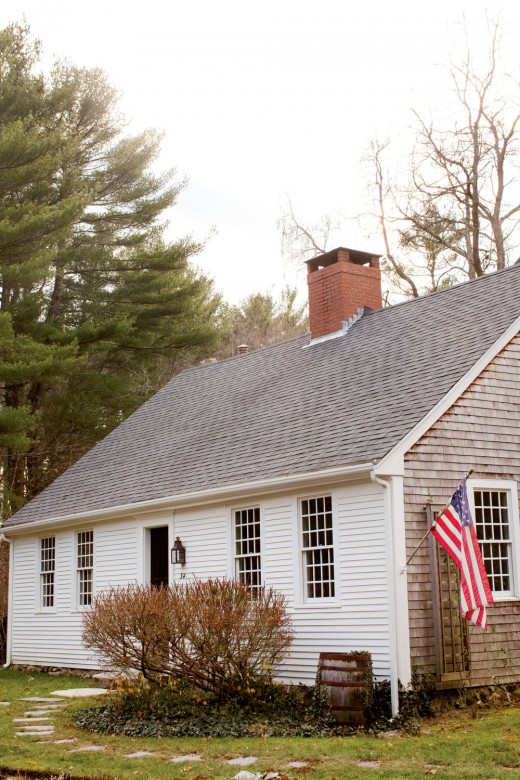
Credit: Alex Gagne
Were there other surprises in store for you?
“We discovered that the beehive oven was still working; usually they’re not usable. One fireplace lintel was warped. We jacked up the chimney and redid all of the brickwork, repaired the lintel, and used actual lime mortar. Two other fireplaces had been filled in with modern bricks in 1970. We removed the new brickwork and exposed the wonderful, intact, original fireboxes.”
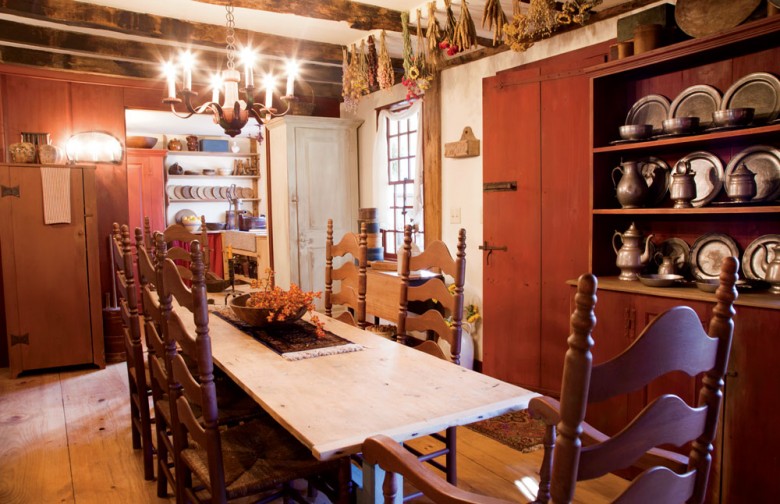
Credit: Alex Gagne
What about the walls of this home?
“We found a lot of evidence of feather-edged wallboard [a technique where vertical boards are tapered on each side to the edge]. We reestablished the walls using what we found. And we used some of the remnants of the paneling to make a firewood box for the homeowner. It’s the handmade aspect of these projects that appeals to me.”
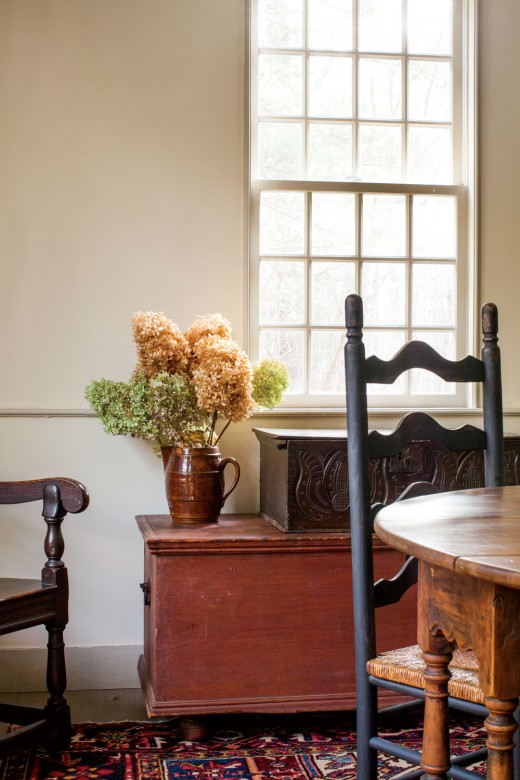
Credit: Alex Gagne
Historic Homes by Richard Mecke, Laconia, NH. 603-393-2932; rsmecke.com
See photos of Bridget Samburg’s home at: YankeeMagazine.com/House-Tour