



The Great Molasses Flood | Footnote to History
On January 15, 1919, a giant molasses tank in Boston’s North End exploded, resulting in the “Great Molasses Flood.”
By Robert Stanly|Jan 15 2021|

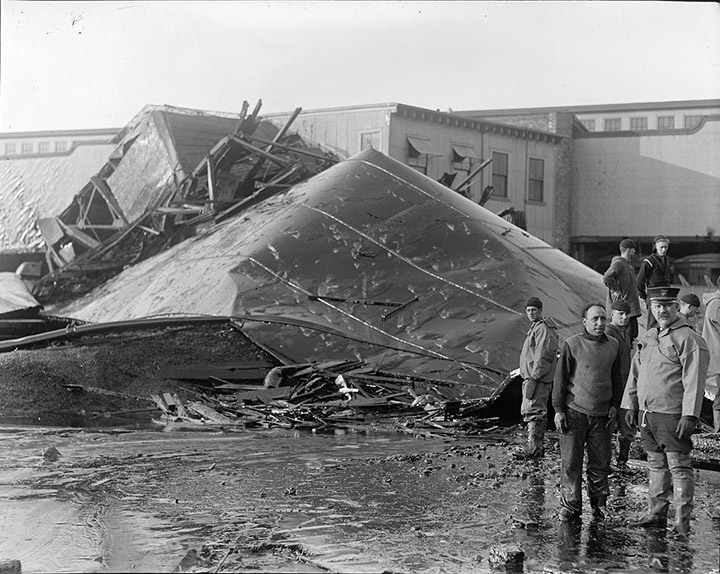
Section of tank after Great Molasses Flood explosion. 1:00pm
Credit: Courtesy of the Boston Public Library, Leslie Jones Collection.In January of 1919, Purity Distilling Company of Boston, maker of high-grade rum, was working three shifts a day in a vain attempt to outrun national Prohibition. The company’s huge iron tank along the water’s edge at 529 Commercial Street in the North End was filled with more than two million gallons of molasses. Pipes entering the tank were heated to aid the flow of the dense liquid. A solitary vent was the only outlet for the fermenting gases.
It was just after noon on January 15 when the great molasses tank exploded with a ground-shaking blast. Those nearby who survived the ensuing catastrophe reported strange noises coming from the tank just before it let go. “It was like someone was on the inside hammering to get out,” said one witness.
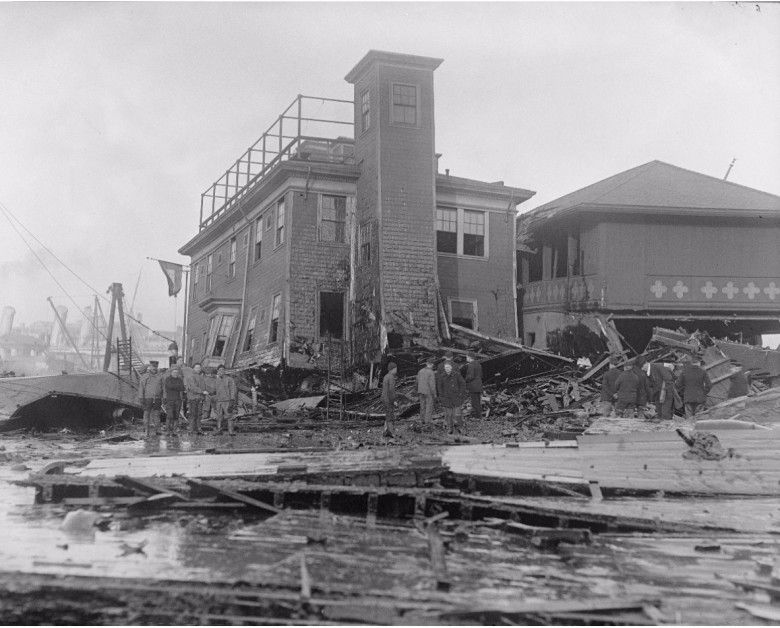
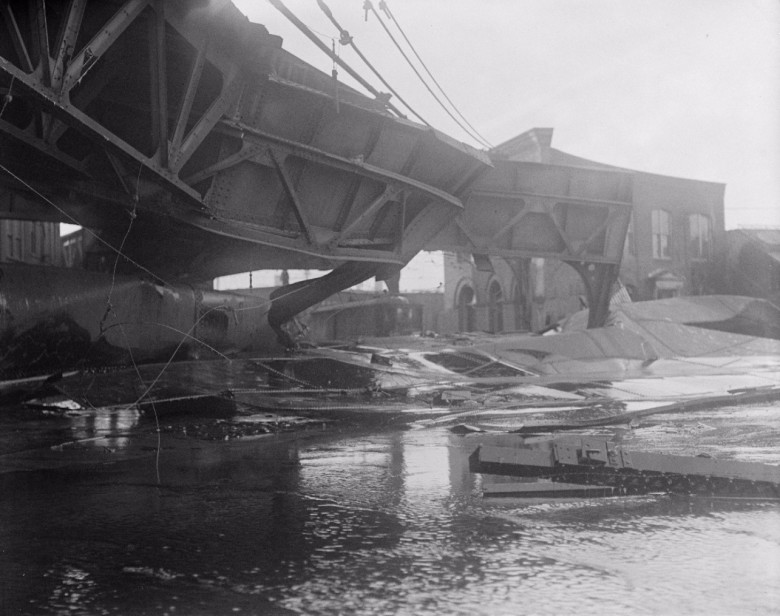
A massive tidal wave of molasses swept across Commercial Street, smashing into a house at 6 Copps Hill Terrace, demolishing the building, and killing Mrs. Bridget Clougherty. The metal latticework of the Boston Elevated Railway Company’s Altlantic Avenue line, running above Commercial Street, was struck by a large chunk of the shattered tank. A section of the El collapsed. A quick-thinking motorman, seeing the rail disappear ahead of the train, dashed to the rear car and, with the steel wheels spinning, managed to get it headed in the opposite direction.
Credit: Public Domain
Credit: The Bostonian Society/Old State House/Public Domain
Credit: Courtesy of the Boston Public Library, Leslie Jones Collection.
Credit: Courtesy of the Boston Public Library, Leslie Jones Collection.
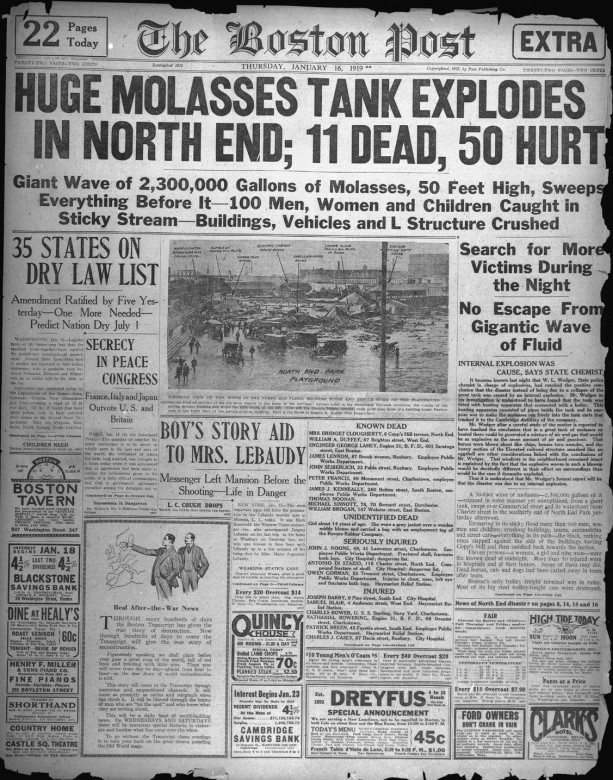
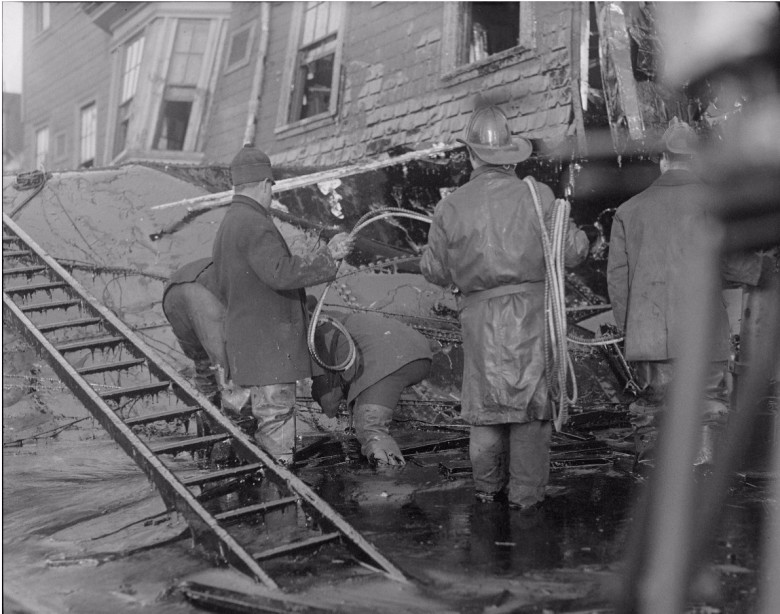
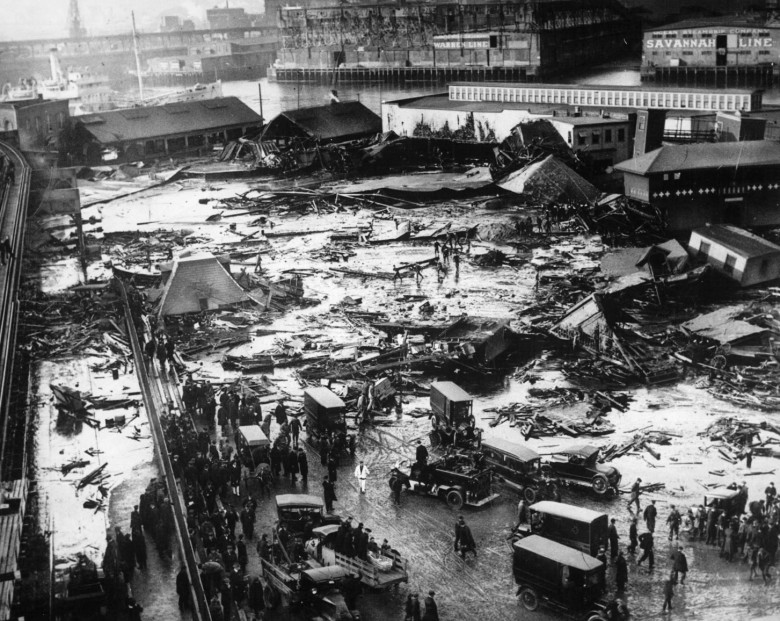
The Bay State Street Railway freight depot and several motorized boxcars were destroyed. On the waterfront, Boston Fireboat #31 was sunk at its dock with loss of life. A five-ton Mack truck was picked up by the wave of molasses and slammed into a building. The city paving department office and stable were erased within seconds, killing five men and a number of horses. Scores of buildings, vehicles and bystanders were swept away. In all, 11 people were killed and more than 50 injured by the initial explosion.
A playground and baseball field presently occupy the site of the blast. Local residents claim that on a steamy summer night you can still smell the sweet aroma of molasses.
Credit: Courtesy of the Boston Public Library, Leslie Jones Collection.
Credit: Boston Public Library/Public Domain
GREAT MOLASSES FLOOD | FAST FACTS
Gallons of molasses that flooded the North End on January 15, 1919: 2.3 million
Estimated height of the wave of molasses: 30 feet
Estimated speed of the wave of molasses: 25 miles per hour
Number of people who died of drowning or suffocation in the molasses flood: 21
Number of people injured: 150
Sum that the Purity Distilling Company paid in damages to the 125 people who filed suit: Over $1 million
Length of time that Boston Harbor ran brown with molasses: Six months
Excerpts from “How Slow is Molasses in January?,” Yankee Magazine, January 1989 and 1994. The title was so spot-on, we’ve used it (at least) twice, and probably will again.



I was told that a marker was placed near the site of the molasses flood. The last time I was in Boston, I searched for the marker. I could not find it.
Does such a marker exist now in the North End of Boston?
yes it does. If you find the bocce ball court, there is a stone fence between it and the sidewalk. and there is a little plaque on there commemorating it. Difficult to find unless you know what you’re looking for.
Yes, the marker exists! http://www.hmdb.org/marker.asp?marker=40677
Years ago I read “Dark Tide” about the Great Molasses Flood and though I’m from NH I thought everyone in Massachusetts must know about it, right? Wrong! Now we’re living here on the North Shore and I haven’t met anyone who knows about this. I love mentioning it just to see their faces react to the idea of molasses flooding Boston!? It’s a fascinating story. Thank you for sharing. I’m sure NOW more people will know about it.
Never have heard of this before! Thanks! Would have liked to se 2 things that were not included in the article – What did the tank look like before the explosion, and At the top of the email i received it says 21 were killed, but the article, including the newspapaer headline says, “11 killed” how were the other 10 killed?
Hi there. Happy to share the history! Unfortunately, there doesn’t seem to be any photo on record of the tank before the explosion (if you find one, let us know!). The initial death total from the explosion was 11 (as reported in the paper the next day), but reached 21. We assume it’s from injuries that worsened in the days following the explosion.
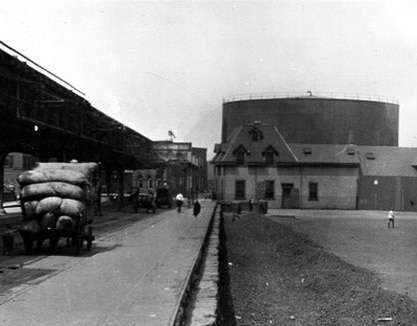
In the book, “Dark Tide”, by Stephen Paleo, there is a photograph of the tower before it exploded. It’s credited to “The Bostonian Society/Old State House”. Hope this helps!
Hi Marti! It does! Thanks! I’ll get it added into the post. It’s amazing to see the before photo, knowing what was to come.
Great read thank for sharing
My grandfather was born in 1900. He grew up in Charlestown. When we little he tolkd us about the great molasses flood. He ended the story with the statement “and til this day on a hot day you can still smell the molasses”. I’m glad you ran this story as no one would ever believe when I told the story.
How did they clean up the mess and how long did it take?
Very interesting article. A picture of the tank before the collapse is on page 17 of the paperback of “Dark Tide”. I think the only book on the subject.
There is a children’s book about this disaster, it is called I Survived the great Molasses flood of 1919
I grew up and went to school in Boston in the 60’s & 70’s. I can’t tell you how many field trips we took learning local history. Never a mention of it. I didn’t learn of the Great Molasses Flood until 2015 when I read the book! It was a really good read.
At the bottom it says 21 killed, over 150 injured. In the article it says 11 killed, over 50 injured. Which is accurate?
Hi Chris. As with most disasters, the numbers for the dead and injured rose in the days following the event as new injuries came to light and existing ones worsened. The first set of numbers were reflected the “initial explosion” – the final numbers were 21 dead and over 150 injured.
I was recently visiting with my Aunt and she told me about this story. I grew up in Massachusetts and had never heard about this until just the other day. And now today, I am reading all about it here! Thank you for all the pictures and facts! I always enjoy reading the articles here.
Fascinating story. How long did it take to clean up the debris?
I attended high school in the North End during the mid 60’s. On hot days you could still smell the molasses remnants.
I was told about this on my first visit to Boston years ago. Supposedly they have attributed the saying, “slow as molasses” to this horrific event of how the molasses lazily flowed through the streets of Boston.
Yes-the book Dark Tide by Stephen Puleo is a must read! Fantastic! What a wild story!
I read this book, “Dark Tide” along with my granddaughter. Very interesting and informative for sure.
“Dark Tide” was a great read; sad episode that so few know about.
I live in Texas and on one of my trips to Boston, my husband and I took a hop on hop off bus tour. Our bus driver shared the story of the molasses flood. He did an outstanding job. I was especially excited to read this article and to see the pictures.
My family has lived in Maine our entire lives. When young, I remember my mother talking about the “molasses flood”. It was hard for me to believe but at such a young age, I thought it was funny as I imagined people trying to walk in the gooey, thick molasses. After reading this amazing article, I no longer find anything about the sorrowful event funny.
Thank you for remembering this sad event. I believe, some time ago, every Bostonian of a certain age could recall the Great Molasses Flood. My mother, who was born in 1911, and lived on Point Shirley at the time, had vivid memories of the tragedy. I think her grandfather’s (my great-grandfather) office, although unaffected by the flood, was somewhere near “ground zero.” On a hot August day in 1959, Mom took me to see the historical marker and explained the path of the flood in detail. And, yes, indeed, 40 years after the flood, the sweetly charred scent of molasses hung in the air.