Photographer of a Lost Valley | Timeless New England
Photographer Burt Vernon Brooks found inspiration in the rural villages along the Swift River in Massachusetts.
By Mel Allen|Dec 17 2016|

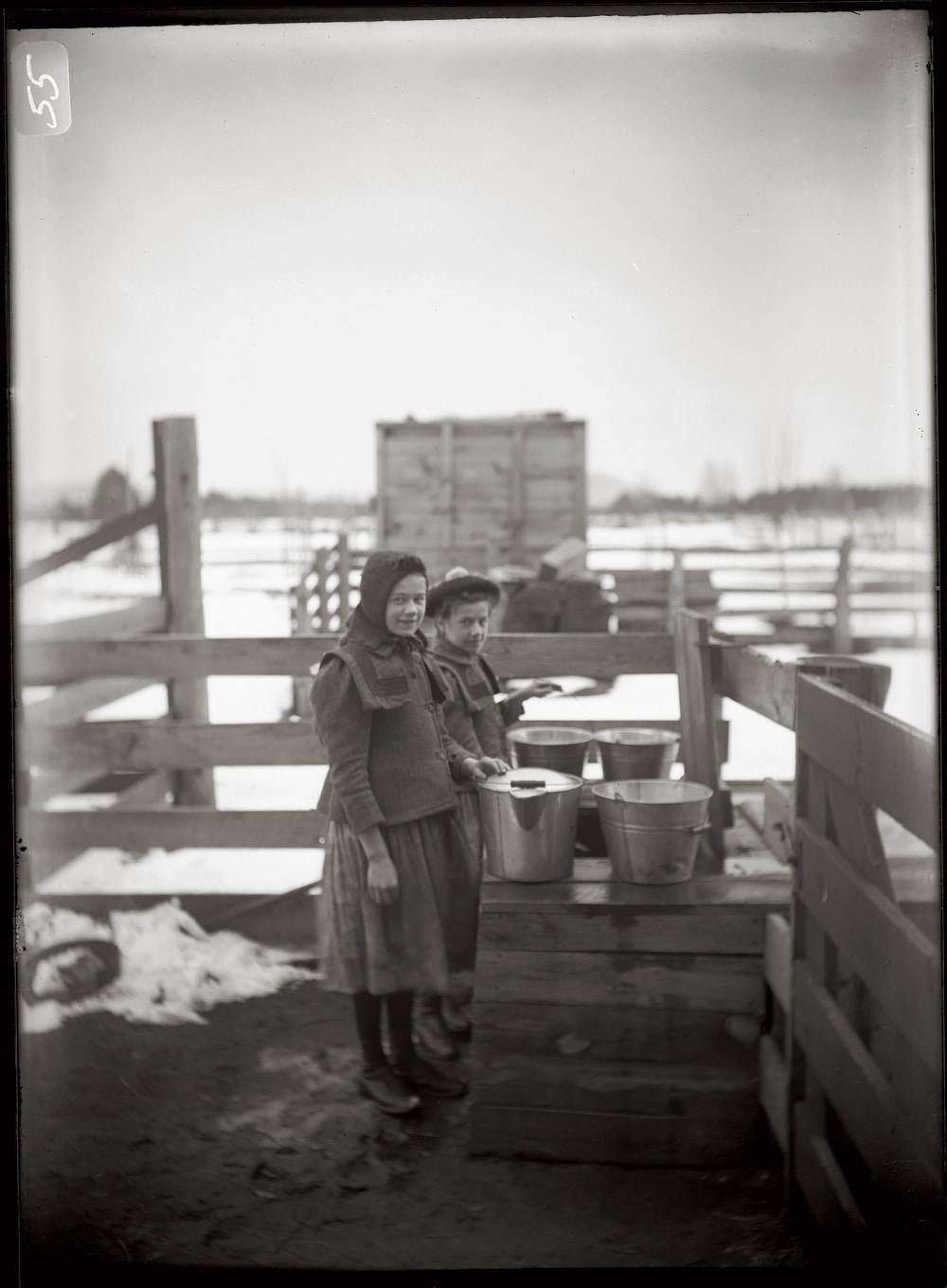
Dozens of photographs by Burt Vernon Brooks, including Billings Sisters with Milk Pails, have been collected and preserved by the University of Massachusetts Amherst. Included in the collection are images of people and places in the four Massachusetts towns that would be flooded in the 1930s to create the Quabbin Reservoir: Enfield, Dana, Prescott, and Greenwich.
Credit: courtesy of Burt v. Brooks Photograph Collection, Special Collections and University Archives, University of Massachusetts Amherst Libraries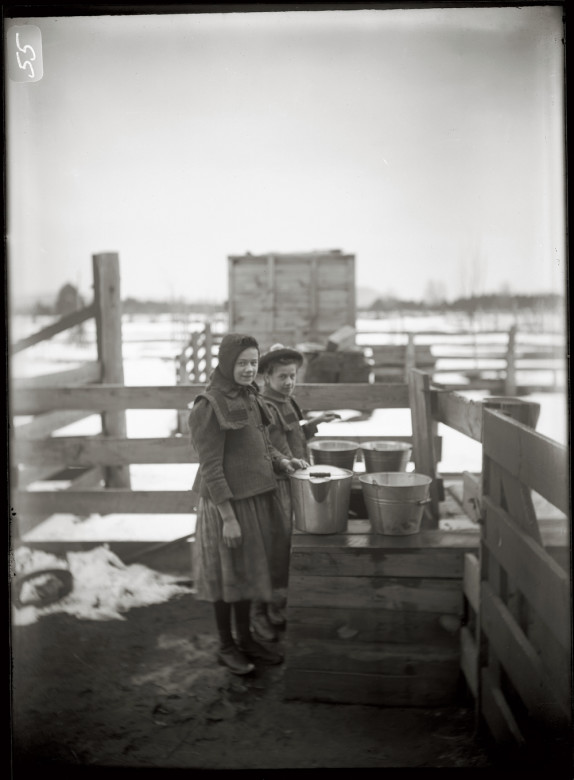
Credit: courtesy of Burt v. Brooks Photograph Collection, Special Collections and University Archives, University of Massachusetts Amherst Libraries
At first glance, this photograph of the Billings sisters, Emma and Margaret, collecting milk pails on a winter day sometime between 1905 and 1910 in Greenwich, a village in western Massachusetts, seems to be just an ordinary farm chore frozen in time. The photographer was Burt Vernon Brooks. Born in 1849 in Brimfield, Massachusetts, Brooks grew up in the hardscrabble farm life, but in middle age he discovered his calling as a photographer. Finding his eye drawn to the simple tasks of country people going about their lives, he spent his days in the rural villages of the Swift River Valley, where he was “hardly ever seen without a camera strapped to his back,” writes Donald Howe in Quabbin: The Lost Valley. Brooks died in 1934, five years before the Swift River was dammed and the villages he had known were lost to history. Of the four villages that were drowned, Greenwich was the oldest. What Brooks did not know when he took this photo of the Billings sisters, and so many others, was that he was creating a visual epitaph for the valley. Today, his images remind us not only that people once lived where there is now only water, but also that a photograph sometimes preserves more than memory. Sometimes, it also becomes a memorial.
—Mel Allen