



The Haskell Free Library and Opera House | A Landmark with Dual Citizenship
Straddling the border of Canada and the United States, the Haskell Free Library and Opera House is a tangible symbol of the bond shared by the neighboring nations.
By Chris Burnett|Aug 02 2016|

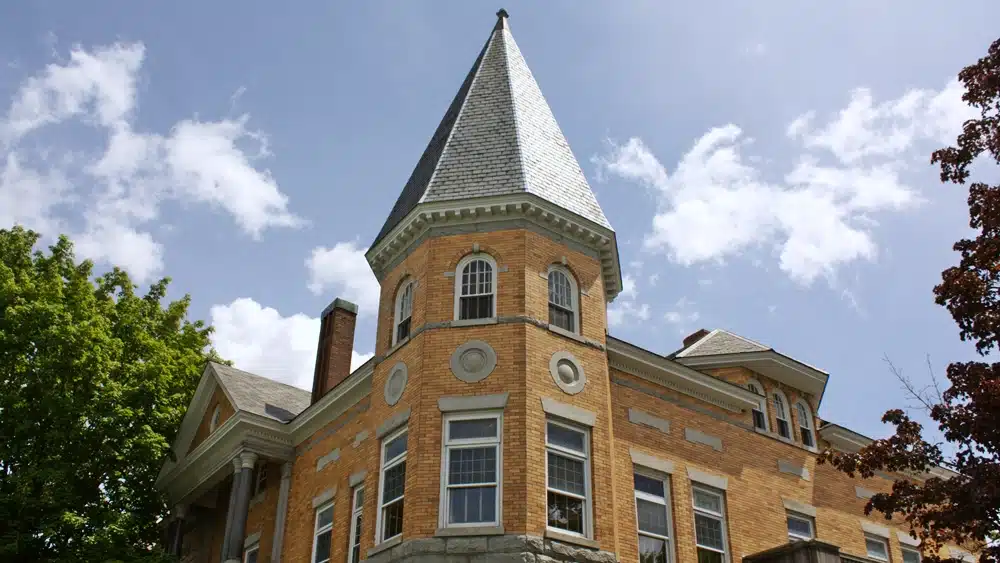
This summer, I paid a visit to the Haskell Free Library and Opera House, a building in Derby Line, Vermont, and Stanstead, Quebec, that happens to be split down the middle by the Canada–United States border.
Credit: Chris Burnett
Divided We Stand
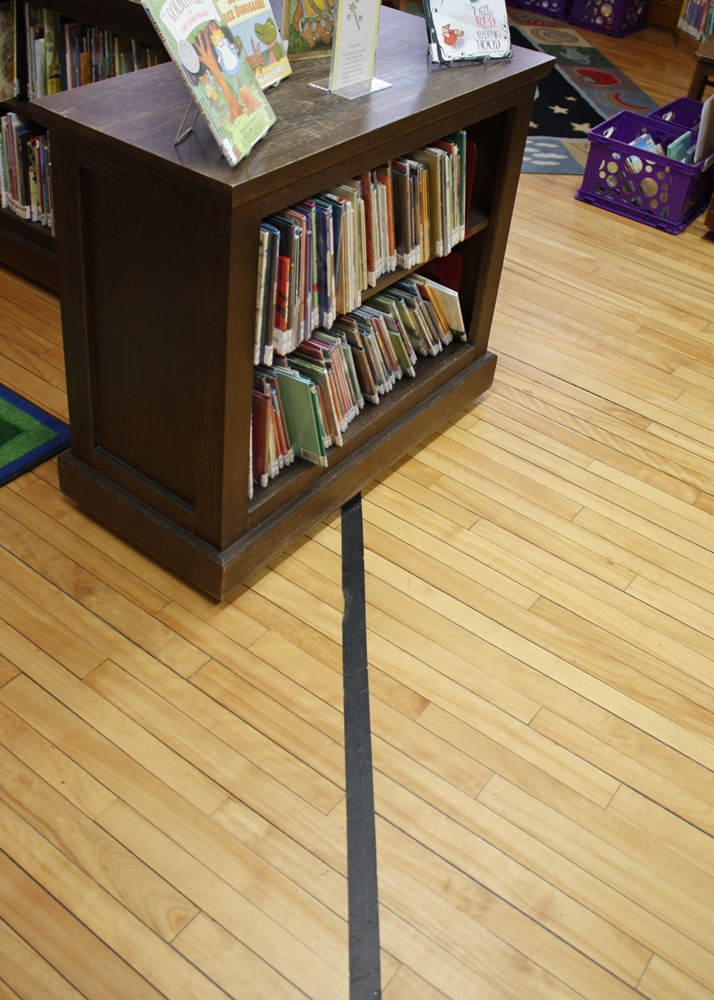
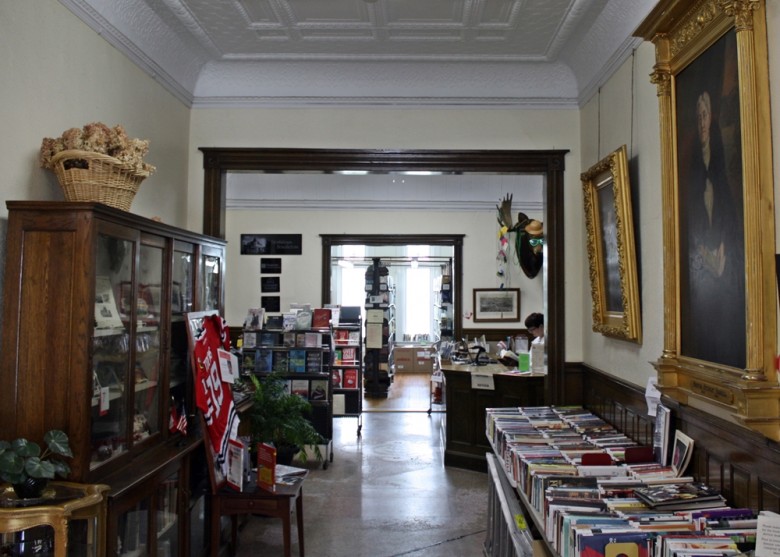
Signs of the Haskell’s predicament can be seen throughout the building: A thin, black line runs diagonally across the floor, dividing the library almost in half and marking the 45th parallel — the international border. The circulation desk and books live on the Canadian side of the building, while the Children’s Reading Room and main hallway are considered international. Canadian and American memorabilia line the walls and signs throughout the building are written in both French and English.
[text_ad]
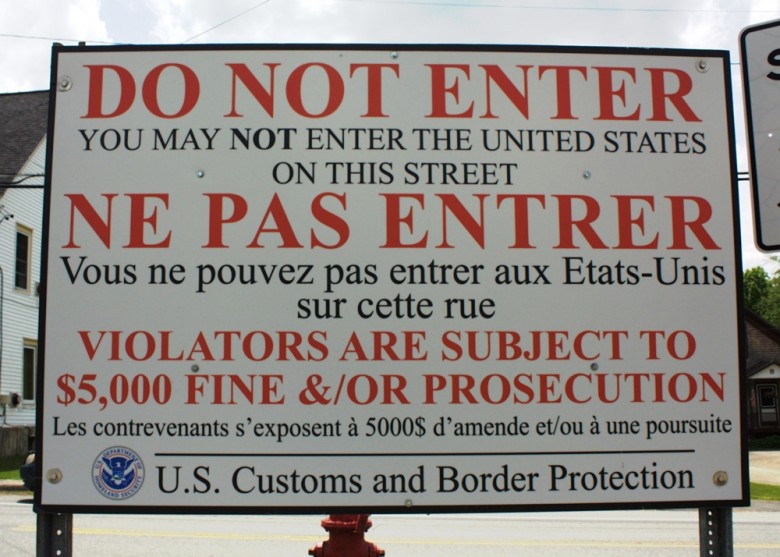
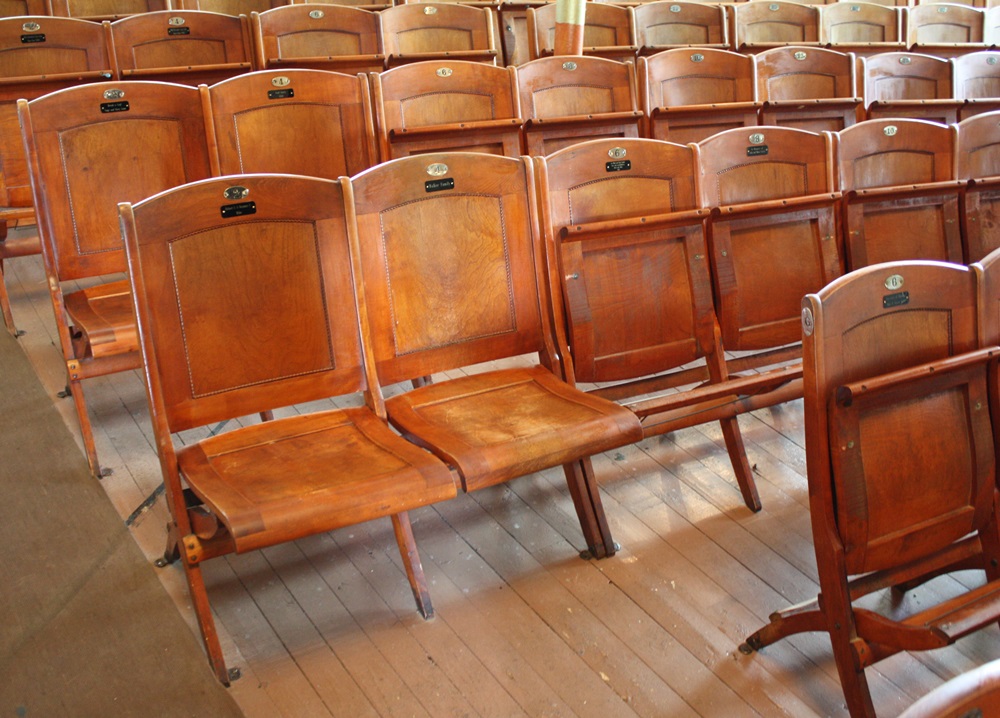
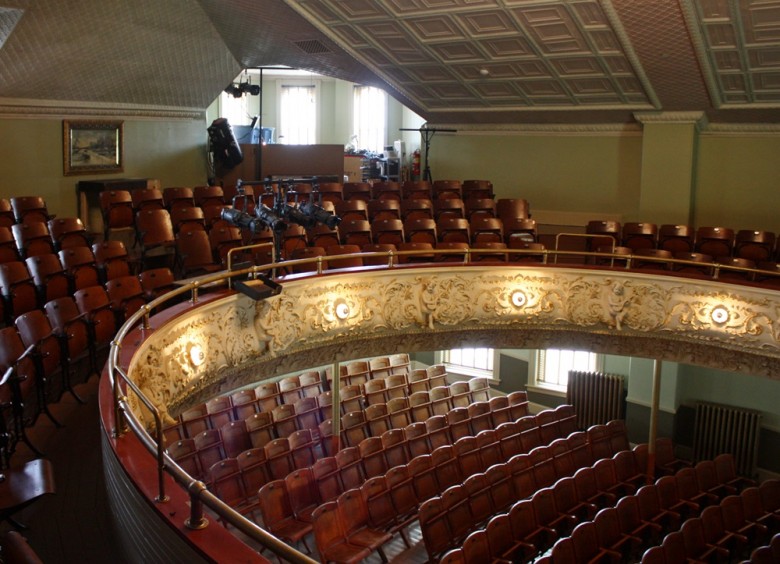
Upstairs, in the opera house, another black line runs underneath the seats, separating the stage and some of the audience from the rest and ensuring that there will be international crowds at every performance. Just outside the building, a small, granite marker with “UNITED STATES” on one side and “CANADA” on the other designates the official border, as does the more aggressive “DO NOT ENTER” sign just a few feet away.
Credit: Chris Burnett
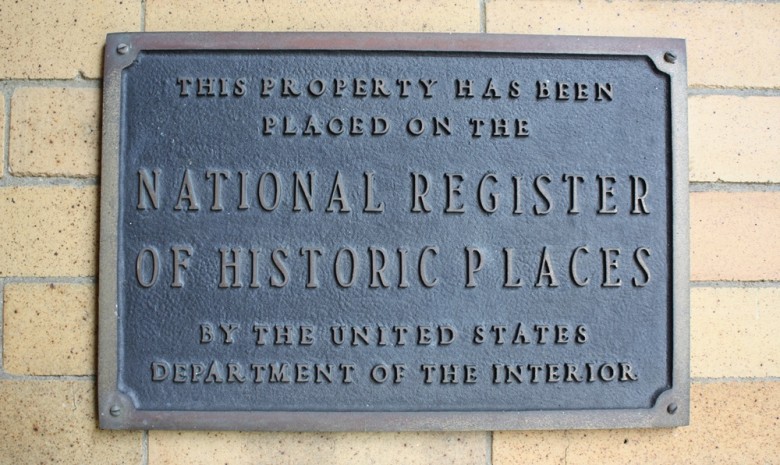
This divided library isn’t the result of a failed Québécois coup or a massive zoning error — it’s a purposefully built structure shared by the border communities of Derby Line and Stanstead, and it was created more than a century ago to serve both towns’ citizens. Construction of the library began in 1901 and was completed in only three years, costing a rather hefty sum of $50,000. In June of 1904, the Haskell put on its first show in the opera house upstairs, and four years later, the Treaty of 1908 permanently solidified the Canada–U.S. border, making any further construction in the area illegal and ending any hope of future expansion of the Haskell.
Credit: Chris Burnett
Credit: Chris Burnett
Origins of the Haskell Free Library and Opera House
The idea of creating this international space came from a wealthy local, Martha Stewart Haskell, and her son, Colonel Horace Stewart Haskell. The two dedicated the building to their late husband and father, Carlos Haskell, who had been a prominent merchant in the area. Since Martha was Canadian and Carlos was American, you can say that the Haskells had a truly international relationship — something that likely helped inspire Mrs. Haskell to open the library and opera house to the two border communities, both of which it serves to this day.
Credit: Chris Burnett
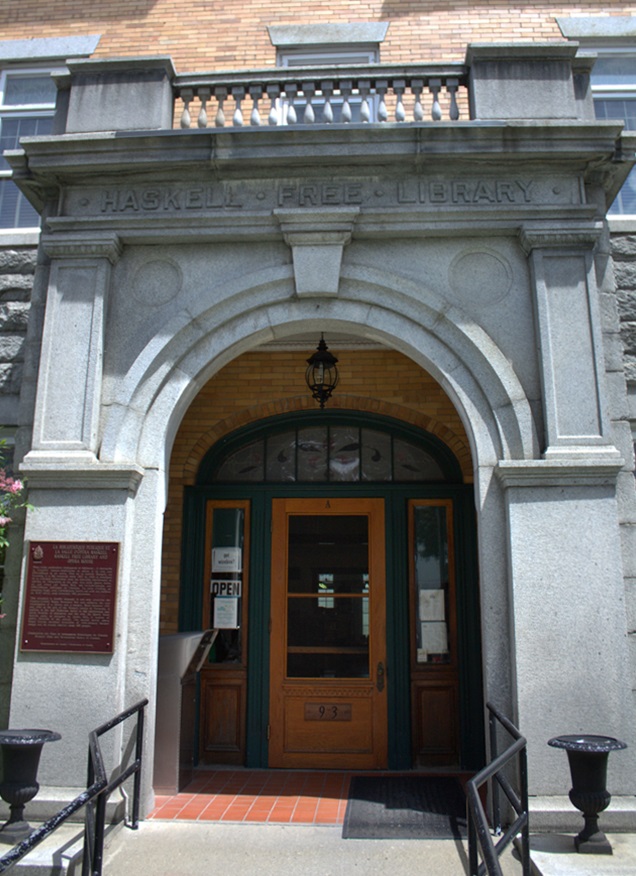
Although the Haskell technically inhabits two separate countries, the only public entrances are located on the Vermont side of the building, which means that you can’t just walk through the library from one country to the other. And don’t make the mistake of parking in the wrong place — you could end up with some unwanted attention from both countries’ authorities!
Since the mid-2000s, border security has had more of a presence in the area, and the side street that once had only a white line painted across it is now blocked off by a series of large planters. None of this affects the day-to-day operation of the library, though, and if you aren’t looking for these signs of division, they’re borderline invisible (literally).
Outside the Haskell Free Library and Opera House
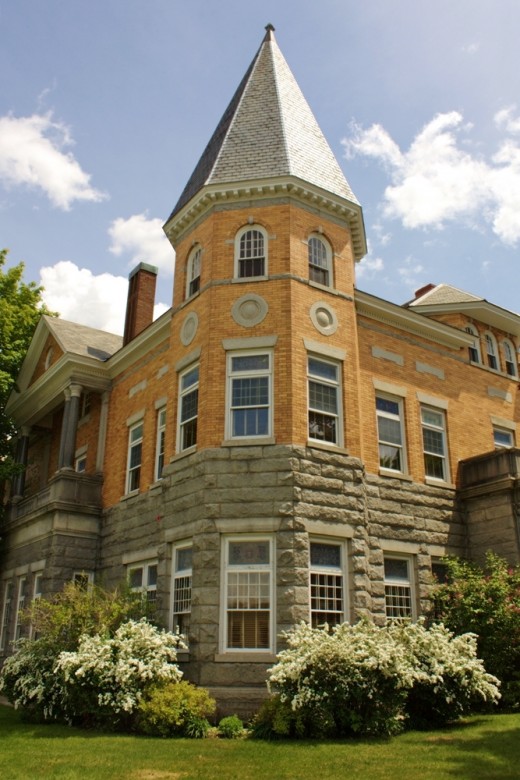
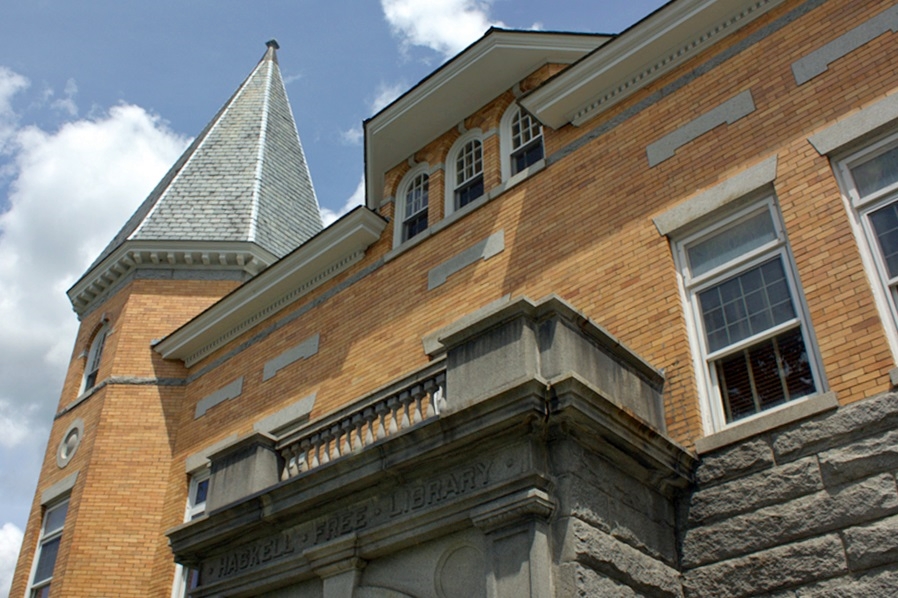
Something that will surely stand out to you is the Haskell’s decadent exterior. The building’s foundation and first story are made up of granite blocks, while its second and third stories are of yellow brick and are accented by stained-glass windows and more granite. With its prominently-placed tower, arches, and pillars, the building incorporates at least two architectural styles (Queen Anne and Renaissance Revival) into its exterior design, which come together to create an eye-catching landmark for both sides of the border.
Credit: Chris Burnett
Inside the Haskell Free Library
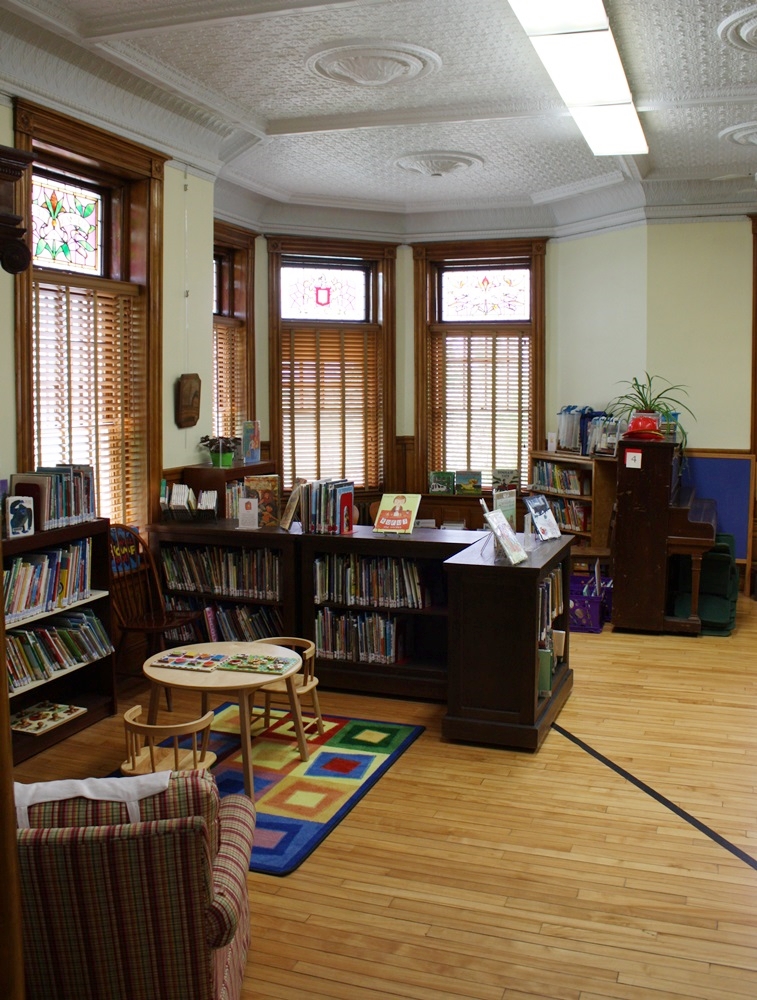
On the inside, the Haskell isn’t any less remarkable. The library portion has three main reading rooms (though one is now the librarian’s office), which each incorporate a different type of wood into their detailing. Particularly enjoyable to look at were the intricately-carved designs on the fireplaces that are found in each of the reading rooms. The original circulation desk is also still in use, as are most of the bookshelves, and the ceilings are embellished with decorative patterns. Walls throughout the building are lined with portraits of the library’s founders, as well as artifacts relating to its long and unique history.
Credit: Chris Burnett
Credit: Chris Burnett
Inside the Opera House
The opera house side of the building, which occupies the two floors above the library and has its own separate entryway, has been kept in flawless condition and is still adorned with much of the same décor it had when it was built. The theater is said to have fantastic acoustics, which is something I can attest to — the resident theater company happened to be having a rehearsal when I visited and they sounded great.
Other than during official performances, the opera house is not open to the public, though you can take a guided tour of the whole building, as I did, for only a small suggested donation (of either Canadian or American dollars, of course). You will be taken through the entirety of the building and its history by one of the library’s staff, who will know all the intricacies of the Haskell’s past. I would recommend taking the tour if you can, as my traveling companions and I found the experience to be very informative and interesting.
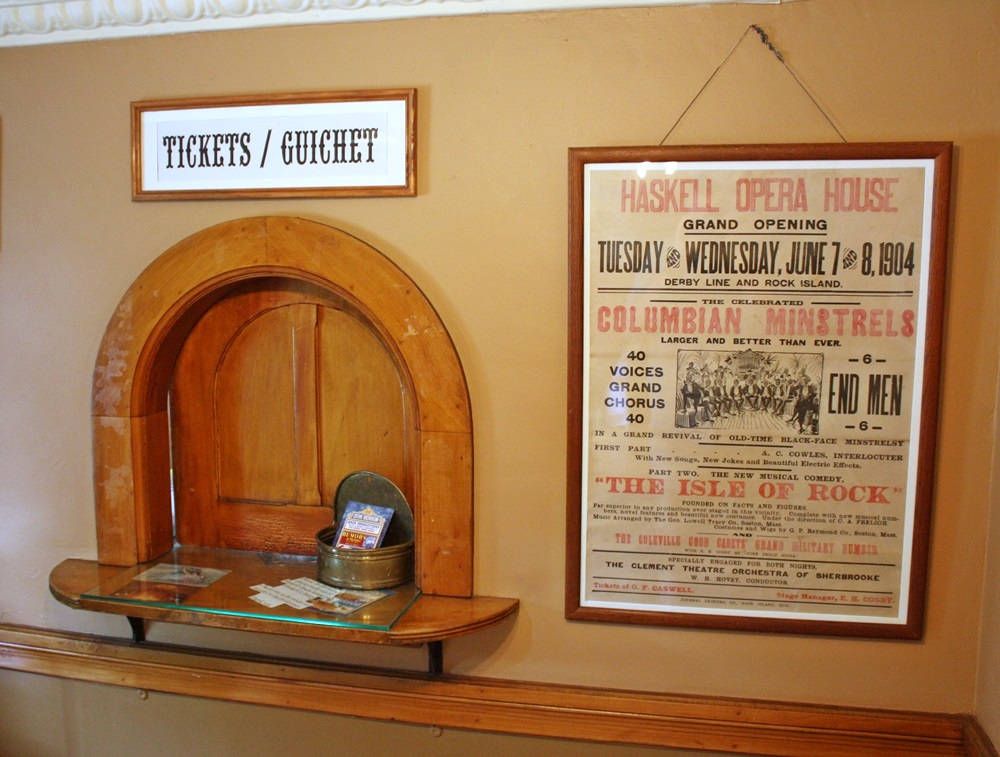
Credit: Chris Burnett
Credit: Chris Burnett
Credit: Chris Burnett
Bilingual Benefits
Something that adds yet another layer of complexity to the Haskell’s existence is the fact that the province of Quebec is primarily French-speaking, meaning that the library offers books in both French and English so that speakers of either language can use of them. The library is very conscious of its multilingual requirements and tries to have at least one fluent speaker of each language on staff at all times. As yet another way to ensure linguistic fairness, the Haskell’s Board of Trustees includes a mix of French- and English-speaking Canadians and Americans.
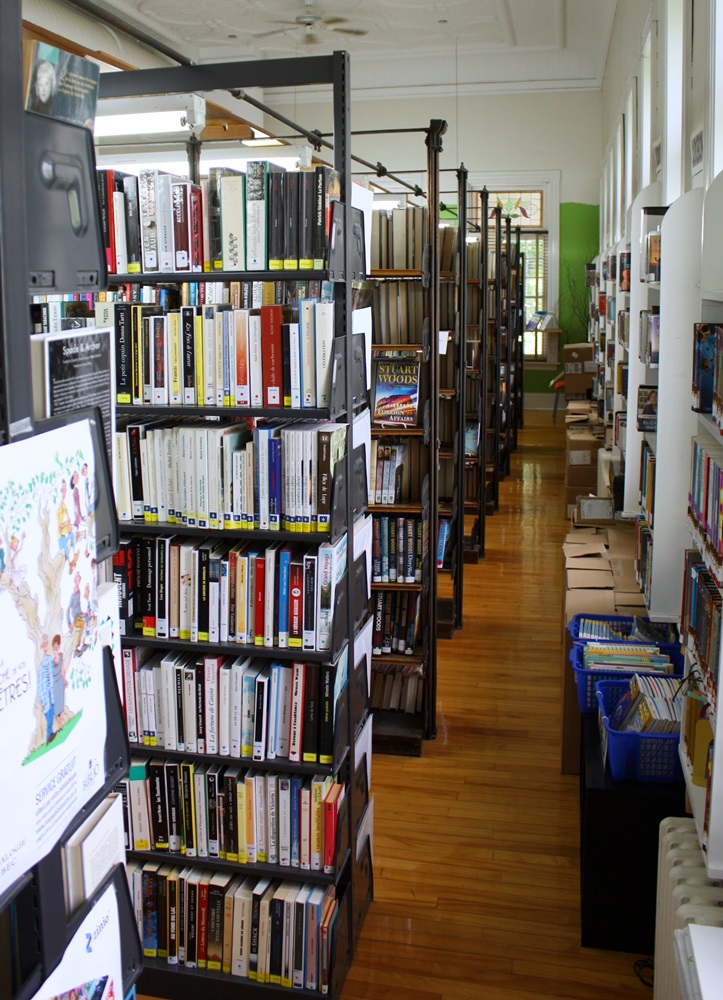
Credit: Chris Burnett
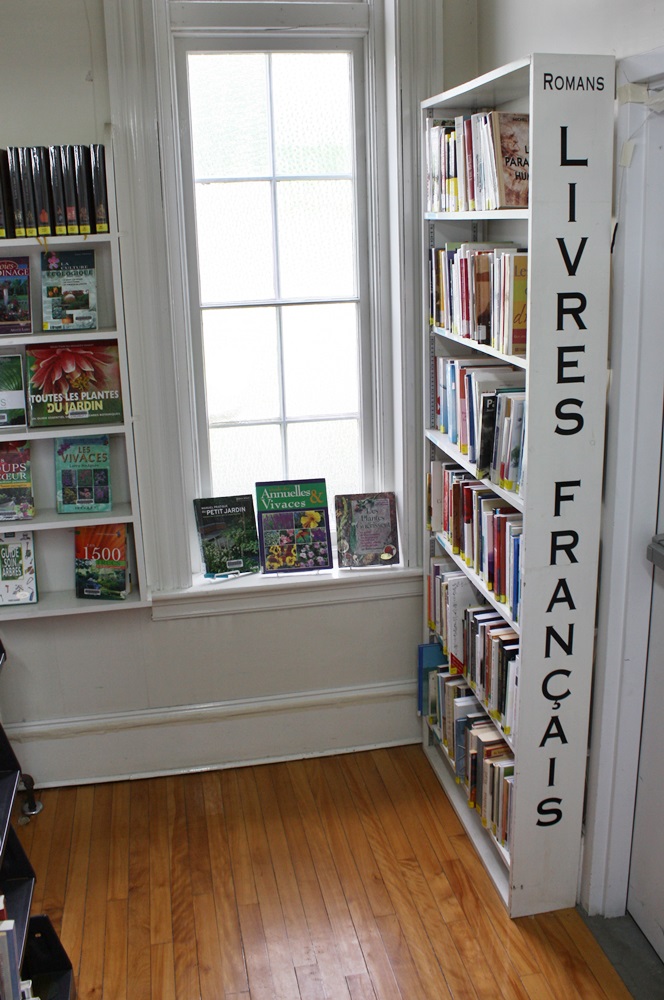
Inside the library, you’ll hear and see signs of both languages. As I stood in the main hall, I heard whispers in French and English, and when I later wandered through the bookshelves, I turned a corner and found myself among the Livres français — the French book section. This bilingual experience is not uncommon in Canada, where both English and French are official languages. Here in New England, on the other hand, it allows for a rare insight into a language and culture that maybe aren’t so foreign after all.
Credit: Chris Burnett
A Worthwhile Stop
If you find yourself passing through Vermont’s Northeast Kingdom, a visit to the Haskell Free Library and Opera House is certainly well worth your time, especially if you consider yourself a theater or history buff. While you’re there, take a guided tour of the building or catch one of the opera house’s summer performances. Just be sure to put the right street address into your GPS, as the library has a separate address and phone number specific to each country it occupies. And don’t forget your passport, just in case!
Visit the Haskell Free Library and Opera House:
The Haskell Free Library and Opera House
USA: 93 Caswell Avenue, Derby Line, VT. 1-802-873-3022.
Canada: 1 Church Street, Stanstead, QC. 1-819-876-2471.
haskellopera.com
SEE MORE:
Yankee Classic: US/Canadian Border Crossings 25 Years Ago
Traveling the United States/Canada Border
US/Canadian Border Crossings in New England


I love to read everything in “New England Today” and am learning so many things I never knew. Thank you so much. I haven’t lived in New England for 63 years, but will always be a New Englander.
I am planning a trip to New England in the fall of 2017 and am looking forward to visiting the Haskell library.
WOW this is most likely the only place in the United States that we could visit at this time and get away from all this political nonsense without technically leaving the country