Autumn on Vermont’s Route 100
Starting just shy of Canada and unspooling down the length of Vermont, Route 100 drops leaf peepers into the heart of fall foliage.
By Bill Scheller|Aug 26 2025|

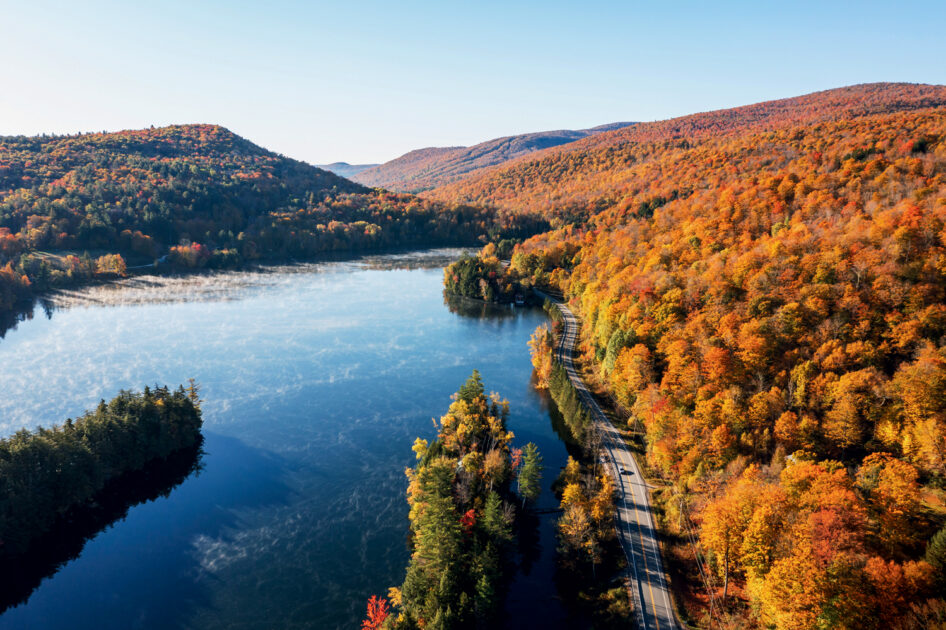
Route 100 offers prime viewing of the hillside fall colors surrounding Woodward Reservoir in Plymouth, Vermont.
Credit: Oliver PariniI wanted to drive south through Vermont, the same direction the autumn colors were taking as they trickled down from Canada. Yes, they travel slower than I do; they take longer to get to the Massachusetts border. Still, it seemed the right way to take in the great chromatic event. And there’d be bright surprises here and there. Southbound color sends an advance guard, especially at higher elevations.
Along the way, I’d also travel in another direction, back in time, past places that were part of my own Vermont, in all seasons.
I’d make the trip, border to border, along a single road, and there are three such options in Vermont. There’s Route 7, in the west. There’s the twin set of U.S. 5 and I-91, along the Connecticut River Valley. And then there’s Vermont 100. It’s the longest state highway, and the twistiest; the old telegraph cables that ran alongside it used to “travel each bend,” per the lyrics to the state’s unofficial state song, “Moonlight in Vermont.” It goes through the fewest big towns, and through no cities at all. If Route 66 is America’s “mother road,” as John Steinbeck claimed, Route 100 is Vermont’s.
For some reason, 100 doesn’t quite nick the Canadian border; instead, it begins inconspicuously near Newport Center. Close enough. As I set off, Jay Peak rose to the west, its tram house giving the summit its distinctive bent-beak look. The southern shores of Lake Memphremagog were just east. Canada was right over my shoulder.
Route 100 starts off low and lonely, by way of farm country; the first Technicolor forests are a few miles south. The road doesn’t reach settlements of any size till Troy and Westfield, where there’s little more than a Benedictine abbey where the nuns still wear wimples. It would have been nice to start my drive with Gregorian chant, but it was the wrong time of day.
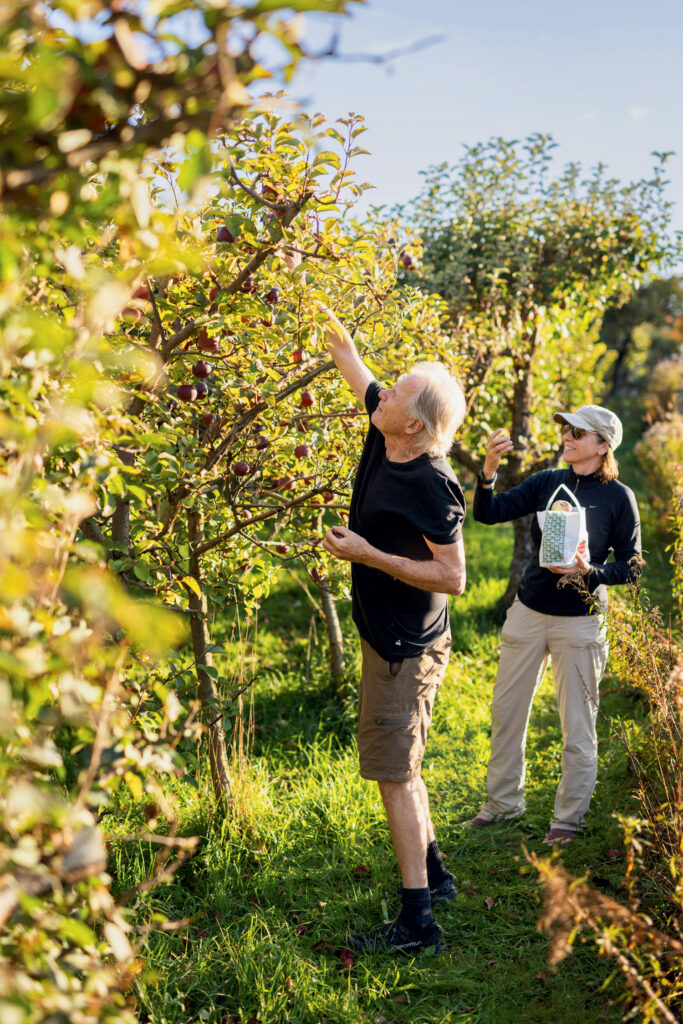
Credit: Oliver Parini
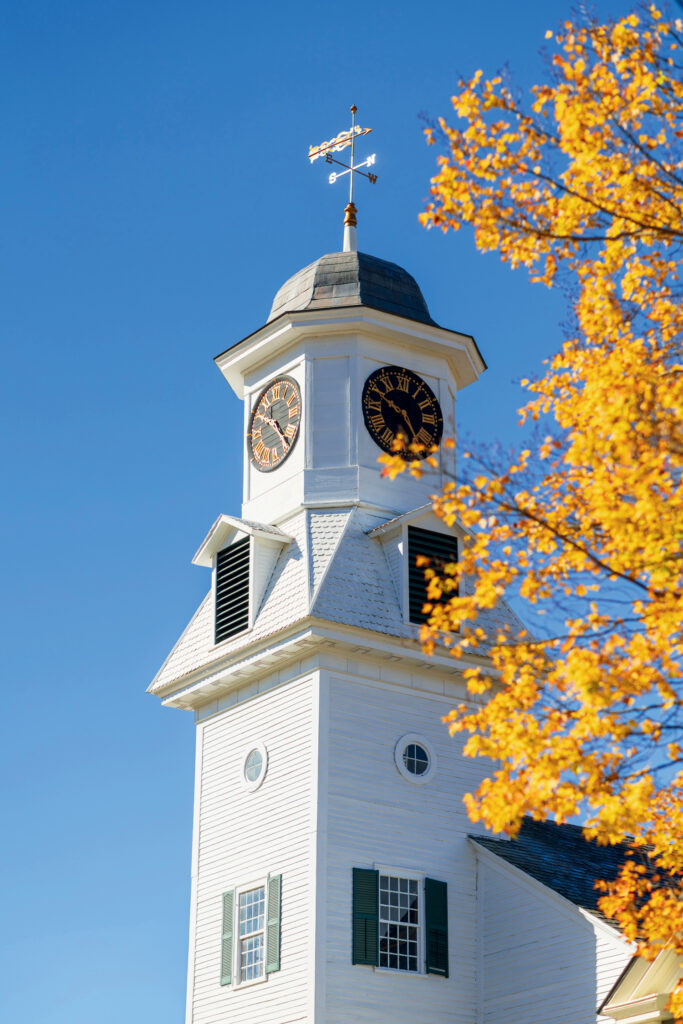
Credit: Oliver Parini
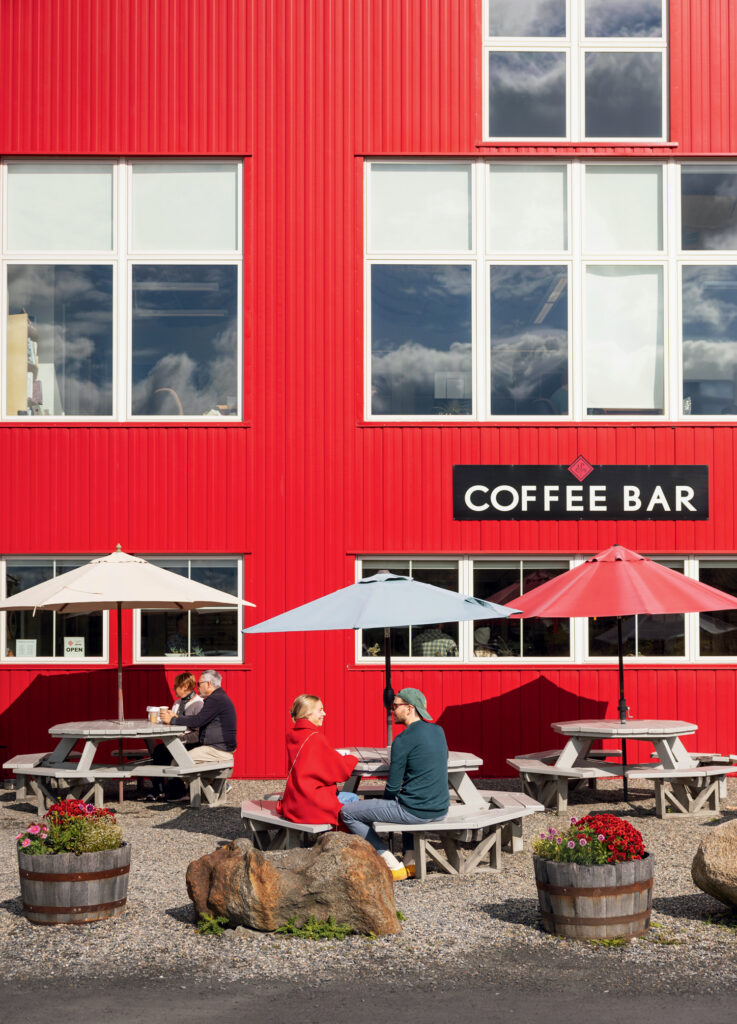
Credit: Oliver Parini
Lowell, which reveals itself on 100 as a gas station and a bowling alley that looks more like a faceless country roadhouse, was where I took a short side trip into the bright autumn woods. A fragment of the Bayley-Hazen Road—a Revolutionary-era military route into Canada that was abandoned when someone realized it went both ways—wanders off as Route 58 from the town green; I drove it for a few miles and headed back to 100, having had my first good taste of color. There was plenty more to come just south in Eden Notch, a pass in this starkly rumpled stretch of the Green Mountains. It brought me to the western shores of fork-shaped Lake Eden, where I met a man with what must be one of Vermont’s loneliest jobs.
He sat on a folding chair next to the boat launch, shaded by a big beach umbrella and drinking coffee from a thermos. I knew he was some sort of state worker, as he’d opened a locked kiosk to get the chair and umbrella. I asked him what he was there for. “To make sure people with boats don’t bring milfoil into the lake,” he replied. It was the tail end of the boating season—no watercraft were in sight—and I hoped he’d brought something to read.
Morrisville, which used to be a railroad stop between Portland, Maine, and Lake Champlain, is now the principal junction along the Lamoille Valley Rail Trail, the longest such trail in New England. This may be the best place to blend a leaf-peeping drive with a leaf-peeping walk or bike ride, and there’s even a trailside brew pub.
If roads could have inferiority complexes, Route 100 between Morrisville and Stowe would be a candidate. It’s a decent enough stretch, but utilitarian: People who want dramatic scenery scoot west on Route 15 to Jeffersonville, where they can approach Stowe by way of Route 108 through Smugglers’ Notch and its hairpin turns.

Credit: Oliver Parini
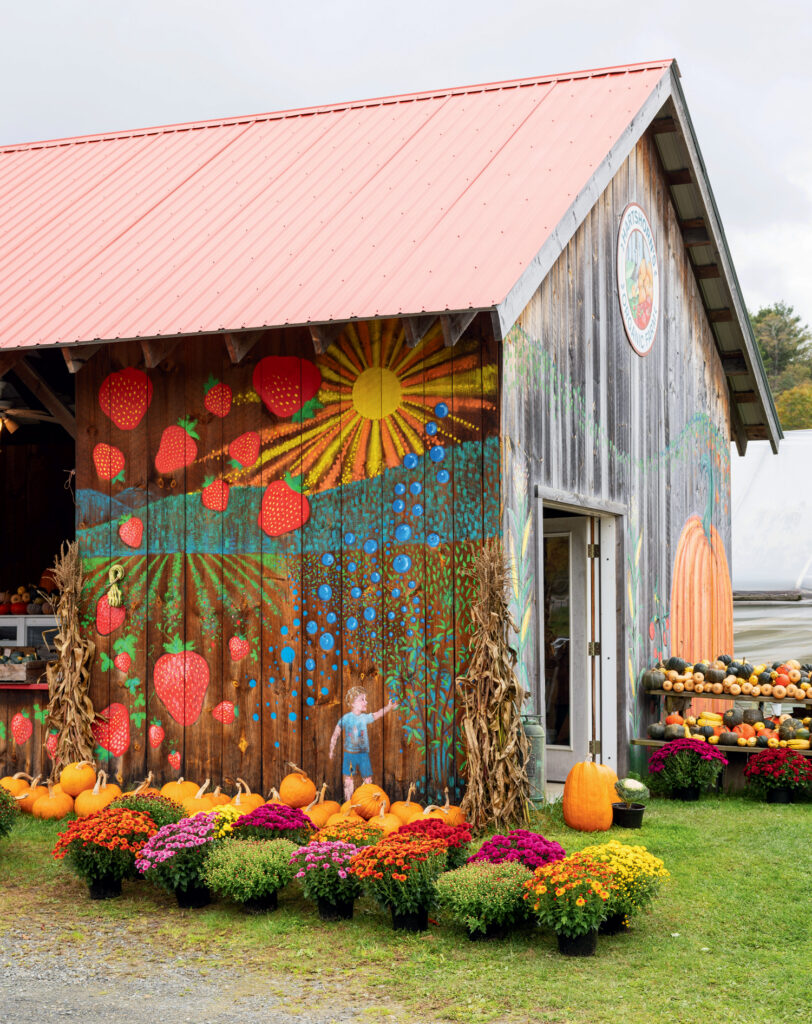
Credit: Oliver Parini
Much of commercial Stowe lies along the final southerly miles of the Notch Road, leaving downtown a pleasant if busy few blocks of compact Stoweness. Although the place where I used to buy yellow legal pads is now a hip little restaurant, most of what I remembered when I lived just over the Notch is the same. There’s The Green Mountain Inn; Bear Pond Books, where we’d buy all 28 pounds of the Sunday New York Times; and the Vermont Ski and Snowboard Museum. What I most wanted to see at the museum was a donation I’d made a few years back—a pair of wooden Northlands with cable bindings, and leather Henke boots I’d used in my 20s—but they weren’t on display. As with most museums, the collections here have to rotate.
I never travel 100 from Stowe to Waterbury without thinking about how nice the fall colors must have looked from the electric trolley that connected the two towns until 1932. And no one passes this way without encountering two Vermont tourism heavyweights: Cold Hollow Cider Mill, where they press 140,000 apples a day in season (and sell everything you’d ever want to bring back home), and a certain temple of ice cream founded by two guys named … oh, you know who they are.
Leaving Waterbury Village, with its craft brewpubs and a train station that must have seen some of the gear at the ski museum when such equipment was new, I swung due south toward the Mad River Valley. The valley is ski country, lorded over by the mountains that give Sugarbush and Mad River Glen their treasured vertical drop, but autumn offers its own rewards in the twin towns that lie along the river, Waitsfield and Warren. Great gulps of color in secluded countryside are wonderful, but fall foliage can be a seasoning as well as a main course, in village counterpoint.

Credit: Oliver Parini

Credit: Oliver Parini

Credit: Oliver Parini
Best of all, I found both towns much the same as they were on my last visit, a decade ago. “People here like slow change,” I was told by Melanie Leppla, who, with her husband, David, crafts the exquisite pieces they sell at their Mad River Glass Gallery on Waitsfield’s Main Street. Just down the road, though, I learned of a surprising new trend in valley tourism from Rick Rayfield, who presides over his bookshop, the Tempest, at a desk nearly hidden by towers of volumes, new and used. “People from New York City will drive up here just to have lunch,” he told me, “and then drive back the same day.” The thought made three days of meandering down Route 100 seem like a trip around the block.
South of Warren, south of the pools and cascades of Warren Falls where the river is mad in both senses of the word, I drove a stretch of 100 that had always struck me as somber in all seasons but fall. In Granville Gulf, the forest walls hemming in the road are so high and steep that little light gets through. Here, it seems, it is never summer, even on the brightest day beyond. But in autumn the gulf glows from within, as hardwoods brighten those forbidding slopes.
South of Rochester, with its village green almost as big as the village, 100 follows the West Branch of the White River, past lovely high hillsides that keep a bit more distance. Where the route takes a sharp right at Stockbridge, I did a double take at a Ford dealer’s sign that read, “Since 1913.” The boast, I later learned, was true, and Henry himself came for the launch. But that was on the Fourth of July. It was too bad, I thought, that the Model T maker didn’t get to see Stockbridge and environs in autumn glory. He might’ve moved here from Dearborn.

Credit: Oliver Parini

Credit: Oliver Parini
After a brief tangle with U.S. Route 4, at Killington, 100 strikes south again, to where I took a short side trip east to the home of another icon of the century past, a man who didn’t have to move here but left to go a lot further. At the President Calvin Coolidge State Historic Site in Plymouth Notch, I found the president’s birthplace, a working revival of the store his father ran, and the house where the elder Coolidge, a justice of the peace and public notary, administered the oath of office to his son by kerosene lamplight after word arrived of President Warren Harding’s death. “What about the cheese factory?” I asked the lady running the store, remembering a more prosaic aspect of the Coolidge family story. “Yes, the president’s father started that,” she answered. “It’s still in business, just down the road.”
As I drove the 12 miles from Plymouth Notch to Ludlow, I thought of young Calvin traveling that then-unpaved stretch to attend Black River Academy in Ludlow, where he boarded during the week. At the September beginning of the school year, it must have been a walk through autumnal beauty, part of what he harked back to in his 1928 “Vermont is a state I love” speech.
My own sentiments along those lines date back to days spent in Weston, my next Route 100 town. Rolling in on a long-ago winter evening at the start of a family ski trip, I found a room at a homey B&B called the Markham House. My parents became fast friends with the owners, and after college I rented an apartment they’d fixed up from a garage out back. Then as now, Weston’s two big institutions were the Weston Theater Company and The Vermont Country Store, and one of my sharpest memories from those days is of standing on the porch of the latter as its proprietor, Vrest Orton, told me stories about walking the midnight streets of New York City with H.P. Lovecraft. There we were, the ur-Vermonter and me, the kid from Jersey, sharing an interest in one of America’s darkest authors while looking out over the autumn cheer of Weston’s village green.
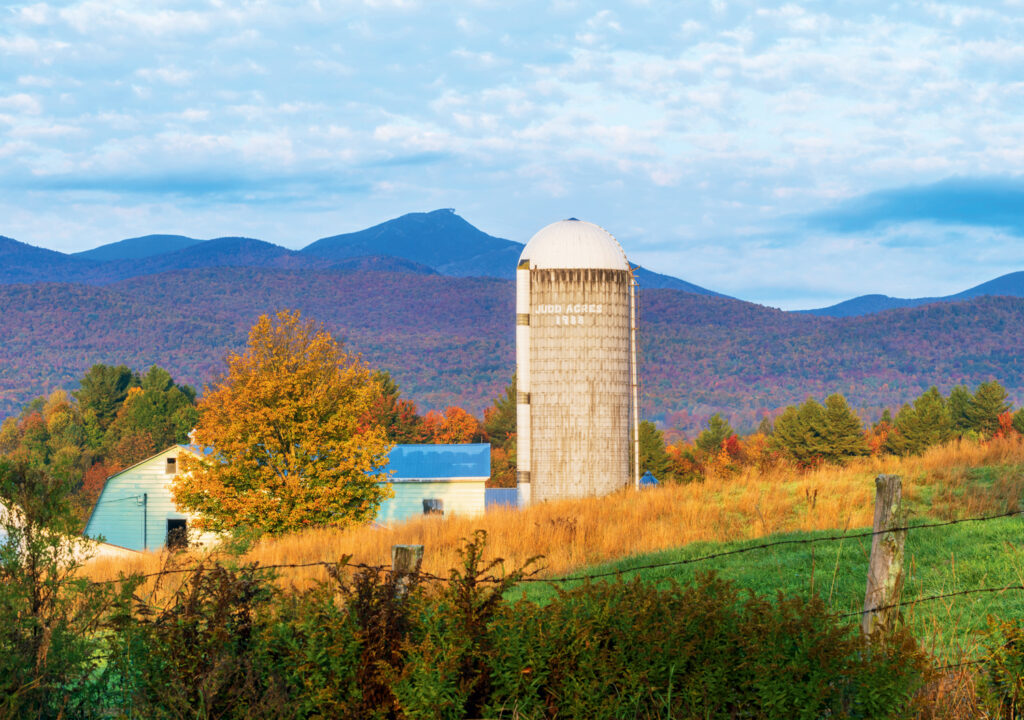
Credit: Oliver Parini

Credit: Oliver Parini
On the last of my three days along 100, I traveled down through South Londonderry, across the West River, and through Jamaica and Wardsboro, along the eastern border of the Green Mountain National Forest. Aside from pockets kept seasonally lively by ski resorts Stratton and Mount Snow, this stretch along the national forest and the North Branch of the Deerfield River belies the notion that Vermont’s emptiest quarters are way up north. There are a couple of roads in Wardsboro that underscore the point: Both contain the name “Podunk.” In fairness to Wardsboro, though, I should note that there are a good half dozen other American places with the name. And none of them are, like Wardsboro, the birthplace of the sweet Gilfeather turnip, Vermont’s state vegetable. There’s a festival here in the Gilfeather’s honor each October, and I was sorry to be just a bit early to sample turnip soup.
A bowl of soup to take off the early-autumn chill was certainly in order at Dot’s Restaurant, in Wilmington, which I reached in time for lunch. Dot’s is the quintessential village eatery, the kind of place where it seems anyone in town is likely to show up on any given day. On the wall behind the counter here are photos of happy people holding big fish, and I got the feeling that half the customers this afternoon knew who they were. The diner sits on the Deerfield River’s North Branch, which glimmers and flows below the bridge by the statue of Molly Stark. Molly Stark? This is where 100 crosses her highway, Route 9, the Molly Stark Trail. Her husband, General John Stark, passed through here on his way to the Battle of Bennington, where he said he would beat the British “or Molly Stark sleeps a widow tonight.” He did; she didn’t.
South of Wilmington, I traveled a Route 100 that meanders so perversely that it even turns west for a while, as if it doesn’t want to leave Vermont. But it finally gave up and dropped into Massachusetts, along with that advance guard of color that had set out, ahead of the spectacular main event, from the border country three days past.
This feature was originally published as “Autumn from the Top” in the September/October 2025 issue of Yankee.
Keep Reading: Things to Do on Route 100 in Vermont: Where to Eat, Stay, and Play