



Strawbery Banke Museum | Portsmouth, New Hampshire
In the vibrant coastal city of Portsmouth, New Hampshire, the “living history” Strawbery Banke Museum offers a glimpse into centuries of Portsmouth’s past.
By Aimee Tucker|Jul 12 2018|

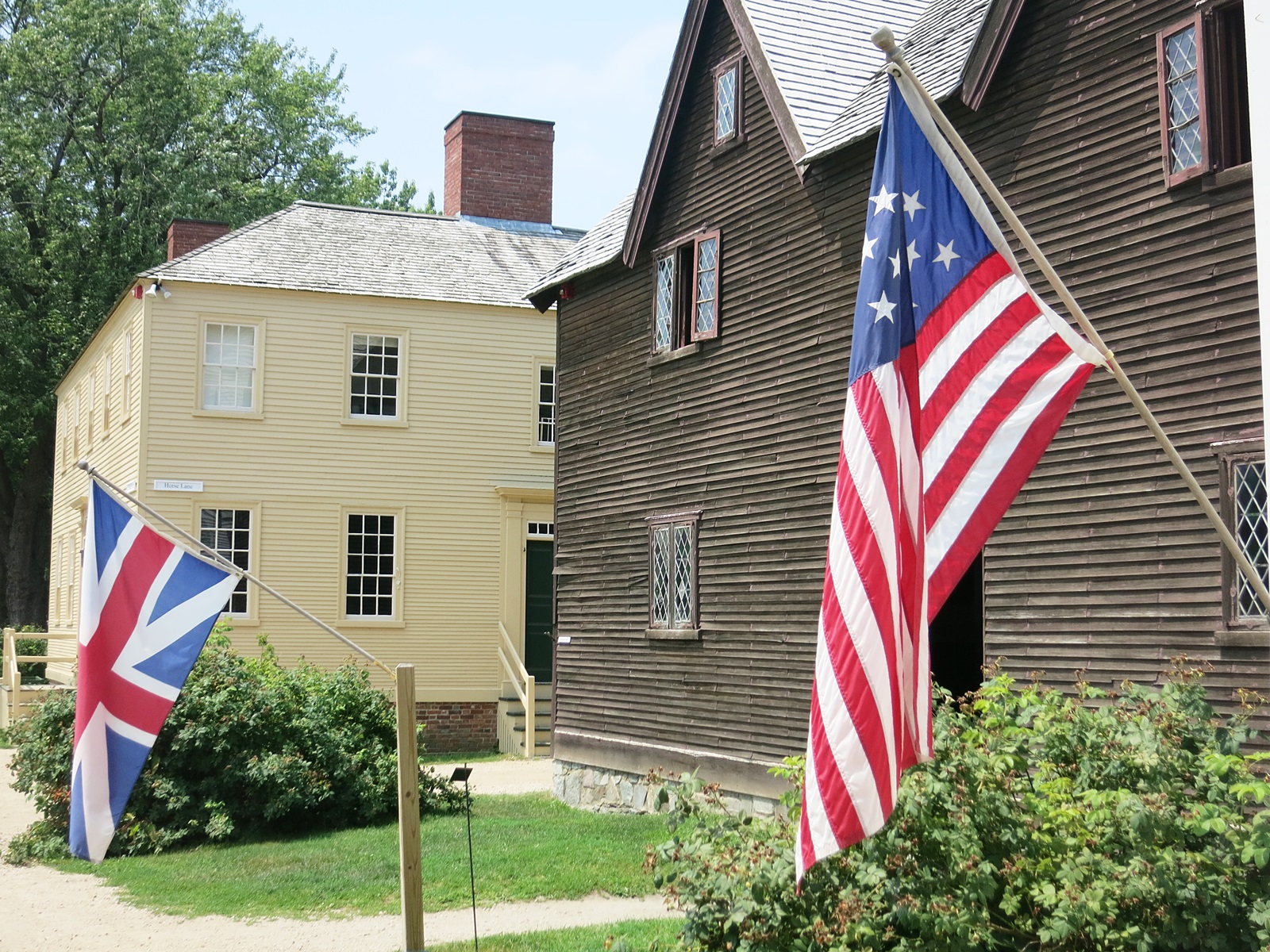
Museum Grounds
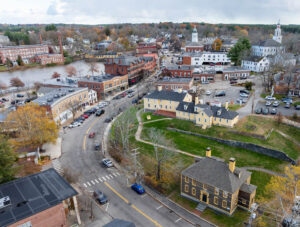
Credit: Aimee SeaveyThere’s a lot to love about the hip, charming coastal city of Portsmouth, New Hampshire, but for history and architecture buffs, it’s pretty hard to top the excellent Strawbery Banke Museum. Located on the site of the town’s original seaport, known as Puddle Dock, Strawbery Banke (the original 1600s name for the settlement, it’s not a typo for “Strawberry Bank”) is an indoor-outdoor living history museum depicting local life from the late 1600s until the 1950s.
Credit: Aimee Tucker
A Visit to Strawbery Banke Museum
Strawbery Banke was founded in 1958 by a diverse group of local residents who were determined to save the city’s “physical evidence of history” from being bulldozed and paved over in the name of urban renewal. In 1964, they purchased the ten-acre redevelopment parcel from the city and began the long and worthwhile task of historic preservation. Nearly forty buildings were demolished, but thankfully, about thirty were saved. Strawbery Banke opened as a museum in 1965.
Today, forty years later, their efforts are enjoyed by many in the form of a historic “village” just steps from bustling downtown Portsmouth. Some of the buildings (houses, really) are furnished and staged as residences, but others are dedicated to historic demonstrations, education, or activities for children. Others still are awaiting restoration under the Heritage House Program. But no matter your interests (crafts, architecture, food, furniture, textiles, gardening), Strawbery Banke is sure to have something for you.
To be honest, there was so much to see (and photograph) at Strawbery Banke that if I showed you everything I wanted to you’d be scrolling for an hour. To keep it manageable for everyone involved, I’ll focus on my favorite buildings and rooms, but please know that when you make your own visit, you can expect to see even more!
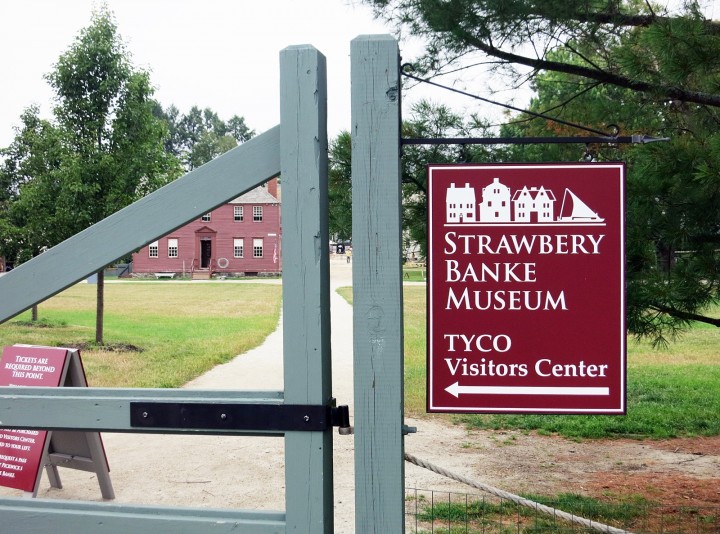
As you leave the Tyco Visitor’s Center (where a brief video helps set the scene before you stroll), a guide hands you a map with the day’s scheduled events, and you step out into the Goodwin Gardens.
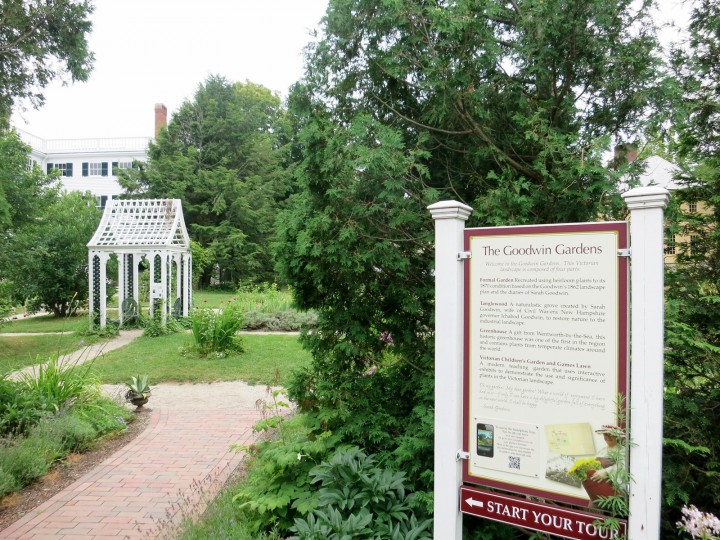
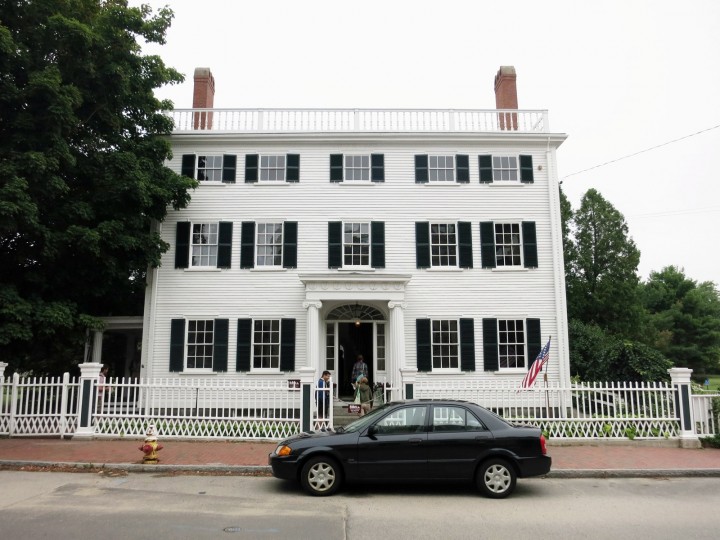
They lead you to one of the furnished houses at the museum, the grand c. 1811 Federal-style Goodwin Mansion. The mansion is one of the few buildings moved to Strawbery Banke because of its historical significance. Ichabod Goodwin, the former owner, served as Governor of New Hampshire for two years at the beginning of the Civil War.
Credit: Aimee Seavey
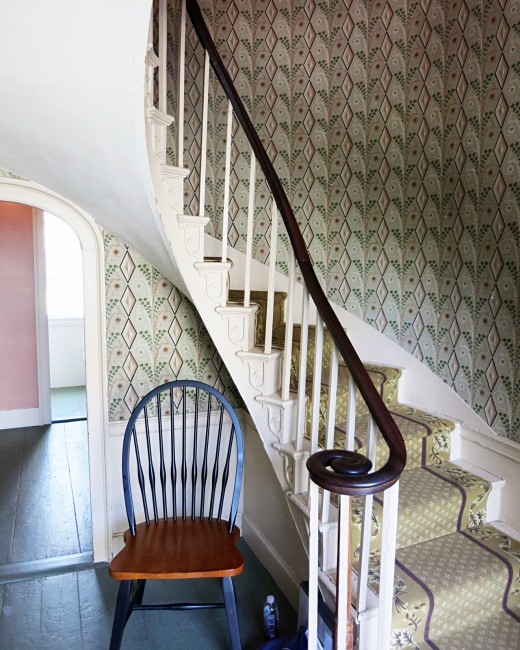
My favorite spot in the Goodwin Mansion was right inside the entrance. Can you believe this amazing narrow spiral stairway? No doubt its graceful curves helped show off many a fancy dress skirt.
Credit: Aimee Seavey
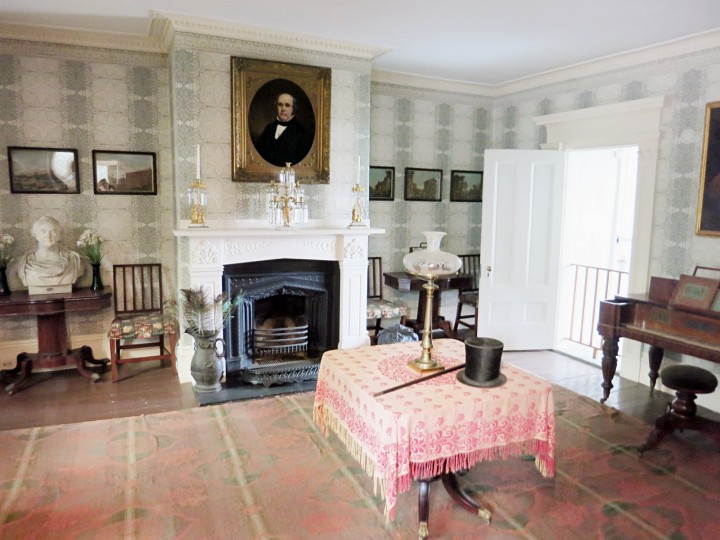
The formal parlor is also noteworthy for its white marble fireplace and other period details.
Credit: Aimee Seavey
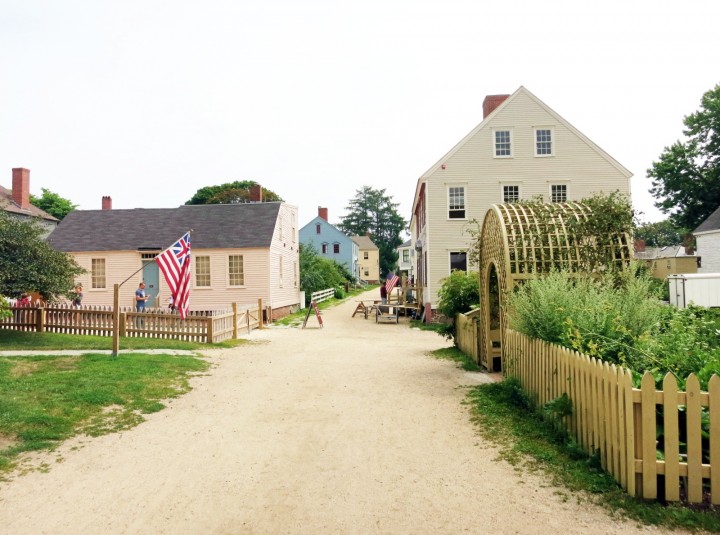
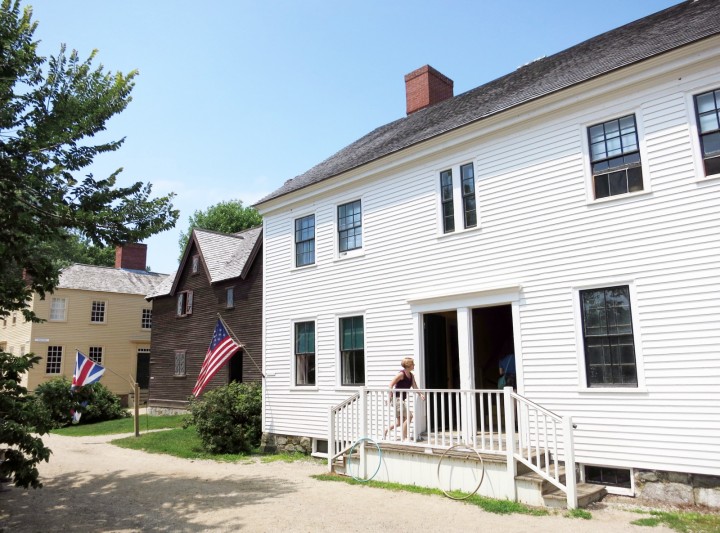
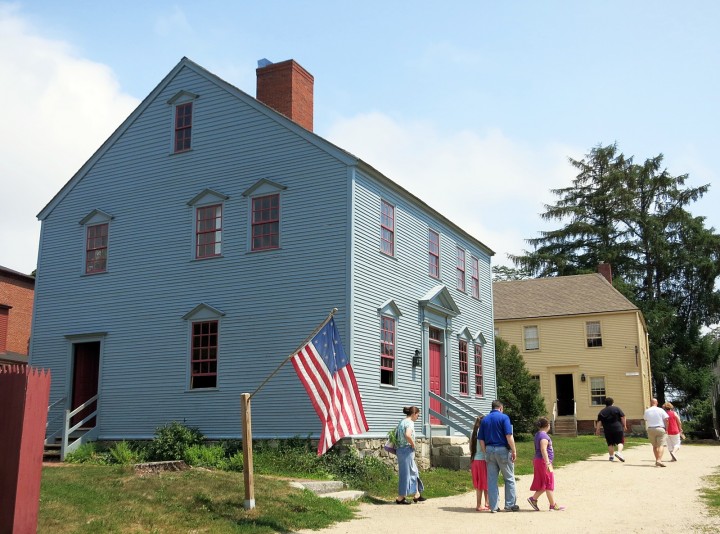
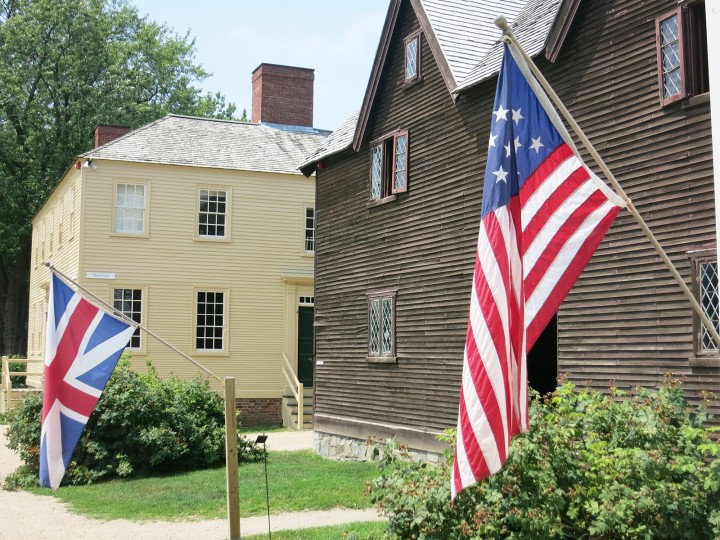
Continuing to stroll around the “village,” I noticed that the flags hanging outside the museum’s houses (a sign that the house was “open” for visitors) were different. It turns out the flag matches the era of each historic house. What a colorful bit of visual trivia!
Credit: Aimee Seavey
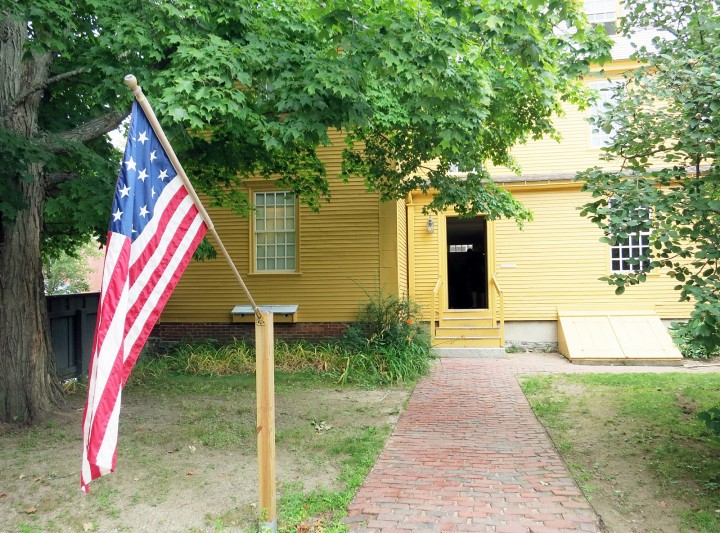
Next up is the home of Stephen Chase, an early 19th-century merchant. A beautiful, deep mustard color, this house (c. 1762) is a Georgian dream.
Credit: Aimee Seavey
The museum entrance is the one shown above, but don’t miss feasting your eyes on the street-side view outside the museum proper. What a beauty! Strawbery Banke says the building’s most unusual features are its gambrel roof, quoined corners, and beautiful doorways.

Credit: Aimee Seavey
Inside the house, I don’t think there was a room I didn’t love.
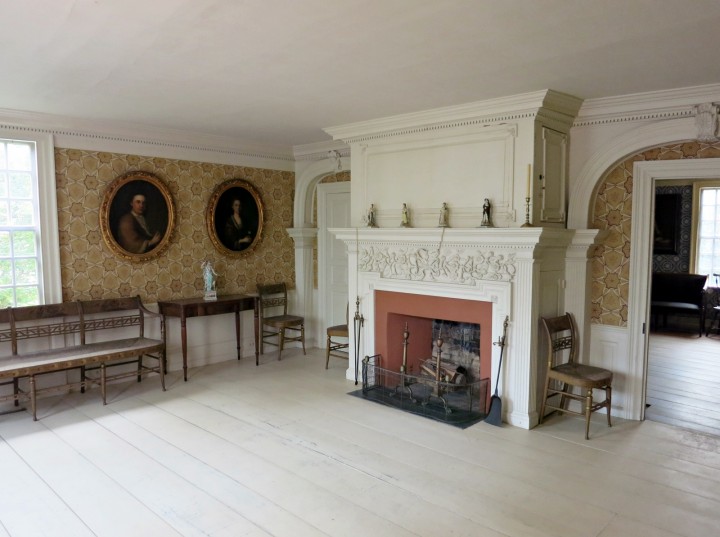
Of special note is the parlor. “Most remarkable is the intricately carved frieze over the fireplace in the parlor, the front room to the east. This panel, carved from white pine, shows the painstaking work of a master craftsman.”
Credit: Aimee Seavey
The room seems oddly empty, with rows of straight-back chairs bordering the sides with nothing in the middle. It turns out this was normal for the time period. The room was primarily used for entertaining and special occasions, so there was no need to fill it up.
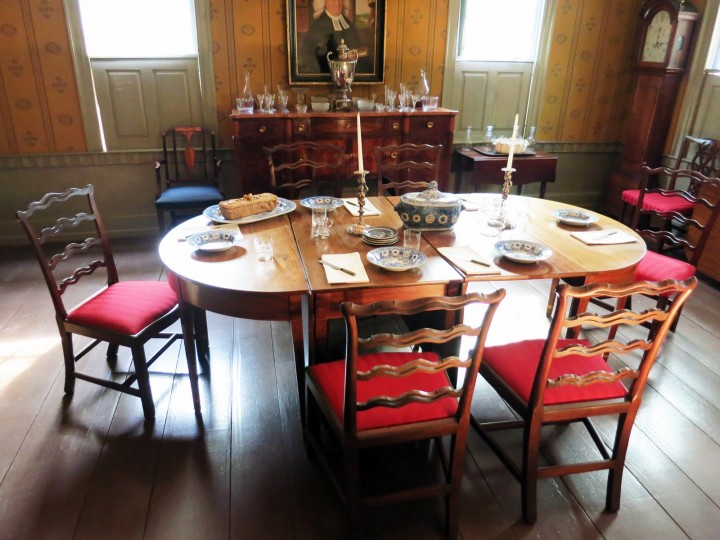
There’s also an interesting story about the dining room. From Strawbery Banke:
“In 1807 James Nutter, a joiner who was at that time ‘the head of his craft’ in Portsmouth, boarded at Chase House. Nutter appears to have exchanged labor for rent, for it was at this time that the dining room was remodeled in the newer Federal style. The chaste simplicity of the reeded wainscoting, shallow cornice, and mantelpiece contrasts sharply with the bold and elaborate Georgian woodwork in the parlor, and provides an excellent chance to compare taste before and after 1800.”
Credit: Aimee Seavey
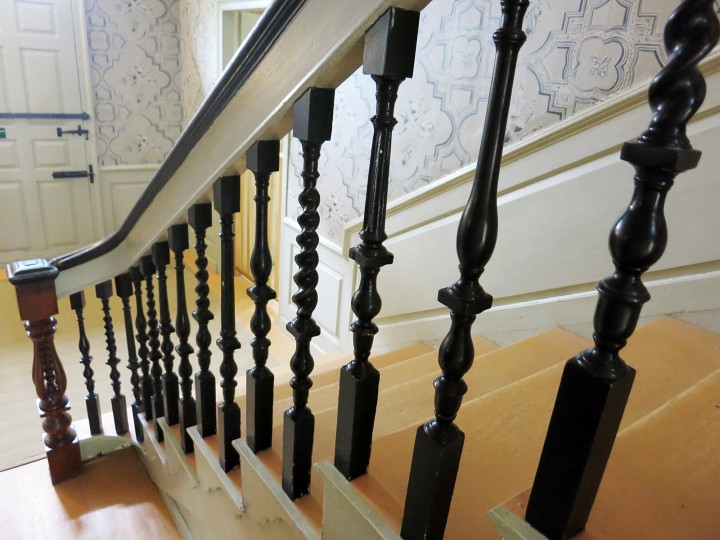
Fascinating, too, is the stairway balustrade and its beautifully carved newel post. The repeating pattern of three baluster styles, I was told, was an official Portsmouth pattern.
Credit: Aimee Seavey
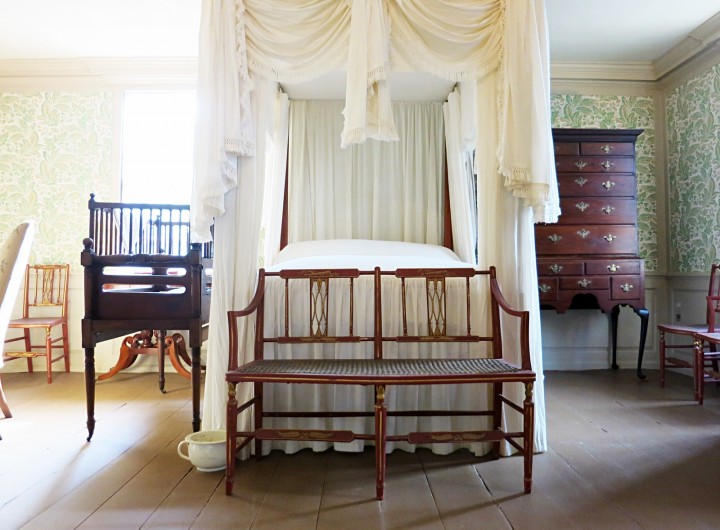
Upstairs, I found a series of sun-filled bedchambers. This one, with its draped canopy and elegant bench at the foot of the bed (and is that a cradle alongside the bed?), was my favorite. Don’t you just want to crawl into that bed and take a nap?
Credit: Aimee Seavey
Next is Aldrich House, the first house in Portsmouth, and one of the first in the nation, to be restored to a specific period in its past. Strawbery Banke says that even Mark Twain, a friend of Thomas Bailey Aldrich, whose family originally owned the house and whose widow restored it, came to Portsmouth for the dedication. Marked with lovely gardens and a festooned trellis, the house became part of Strawbery Banke in 1979.
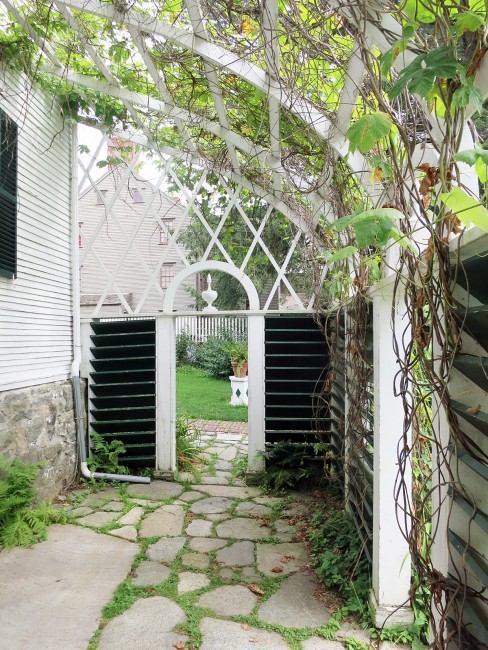
Credit: Aimee Seavey
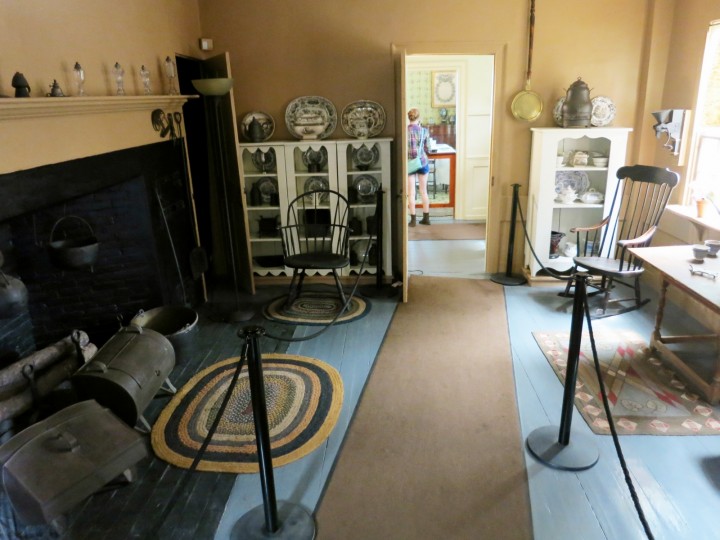
Credit: Aimee Seavey
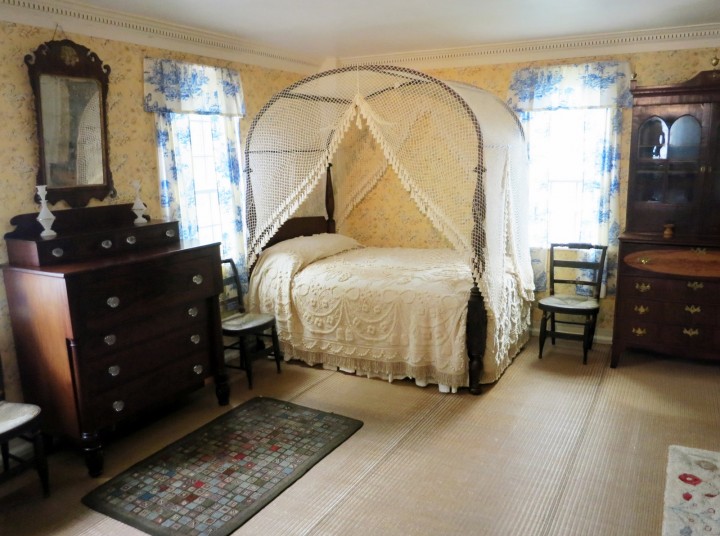
Credit: Aimee Seavey
Then there’s Pitt Tavern, “a 1766 Revolutionary War-era tavern visited by many dignitaries, including George Washington, John Hancock and the Marquis de Lafayette.”
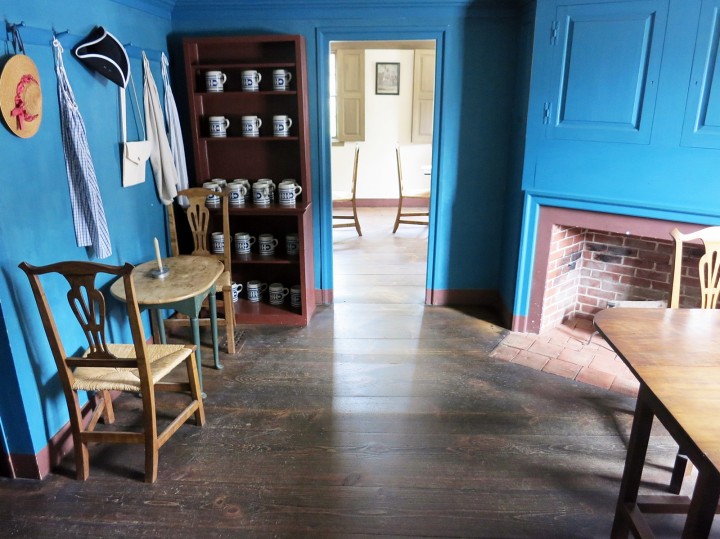
Credit: Aimee Seavey
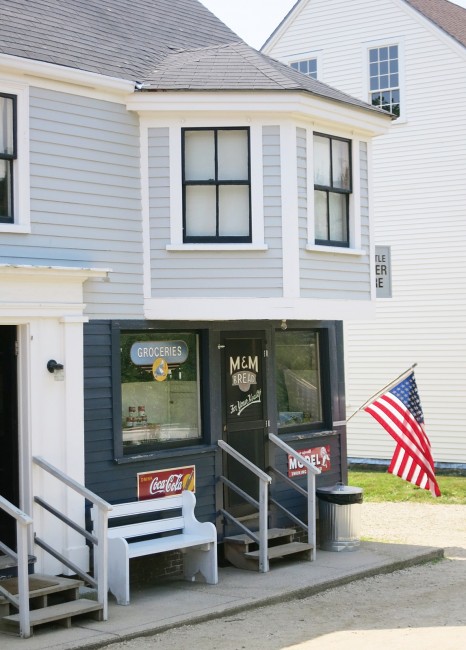
And a favorite stop at Strawbery Banke, the Marden-Abbott House and Store, formerly owned by Walter and Bertha Abbott. This spot depicts life in the wartime 1940s with a kitchen, store, victory garden, and even a chicken coop.
“Mom and pop stores like theirs were threatened with extinction by the development of supermarkets,” says Strawbery Banke, “but received a new lease on life in World War II when there was a local population explosion and wartime rationing imposed sharp limits on travel.”
Credit: Aimee Seavey
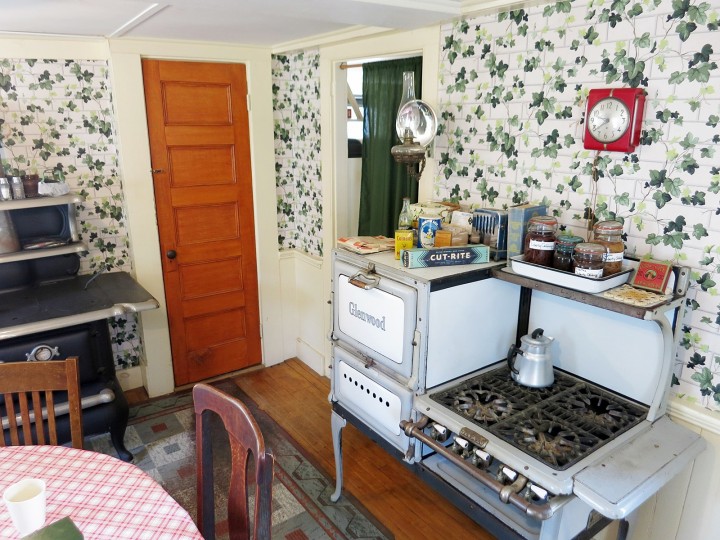
Inside, on the left, is the cheerful 1940s-era kitchen of Bertha Abbot, complete with radio, wartime photos, and period appliances.
Credit: Aimee Seavey
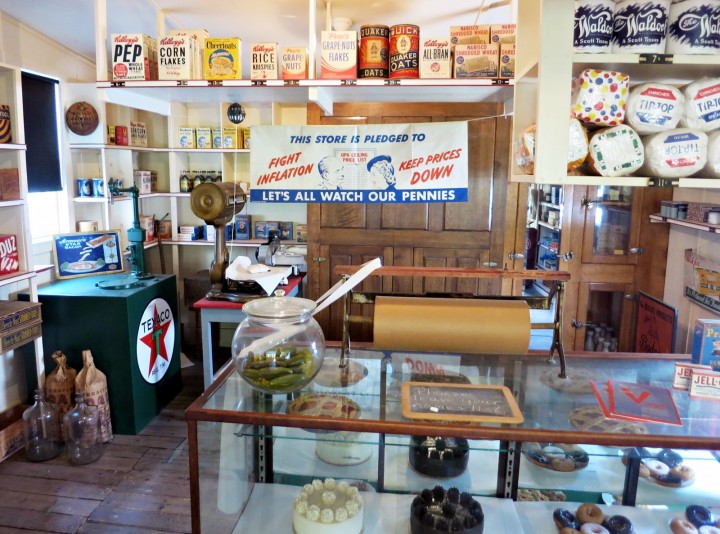
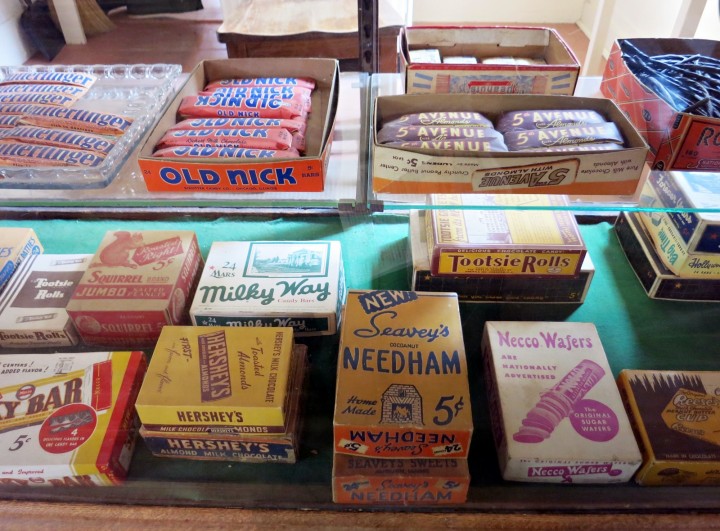
On the right, you’ll delight in the wonderfully visual general store. Lining the walls and shelves are wartime posters and 1940s staples like soup, cereal, flour, bread, pickles, and candy – many of which are still around today, some even with nearly identical packaging.
Credit: Aimee Seavey
Credit: Aimee Seavey
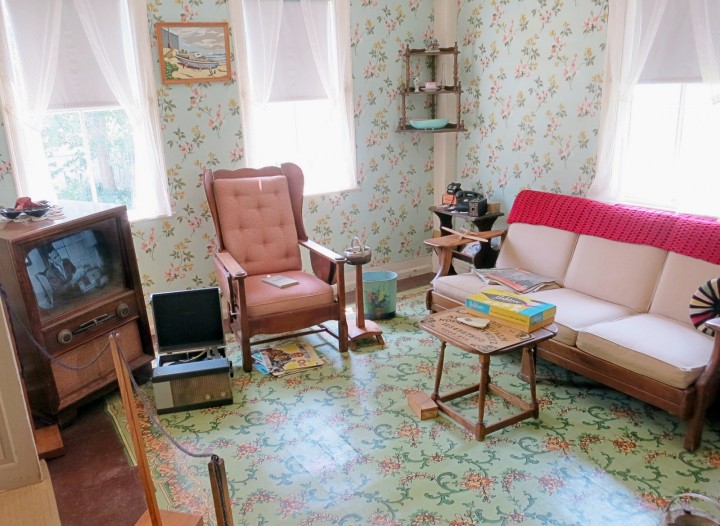
1940s not recent enough for you? At the Shapley-Drisco House, they manage to squeeze two very different time periods into one home. It dates back to c. 1790, but was later converted into apartments, which added an extra front door.
Credit: Aimee Seavey
Today, the museum takes advantage of the double layout to depict how the home would have looked (on the right-hand side) in the 1790s and (on the left-hand side) in the 1950s, when it was last occupied before the city stepped in.
Credit: Aimee Seavey
Credit: Aimee Seavey
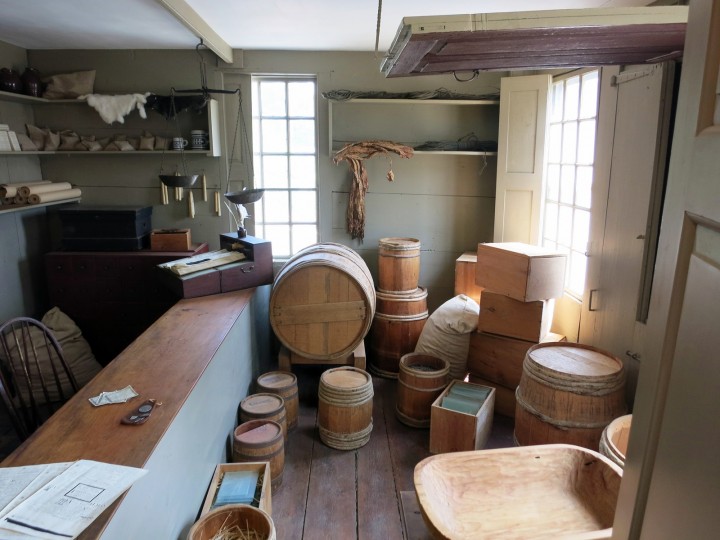
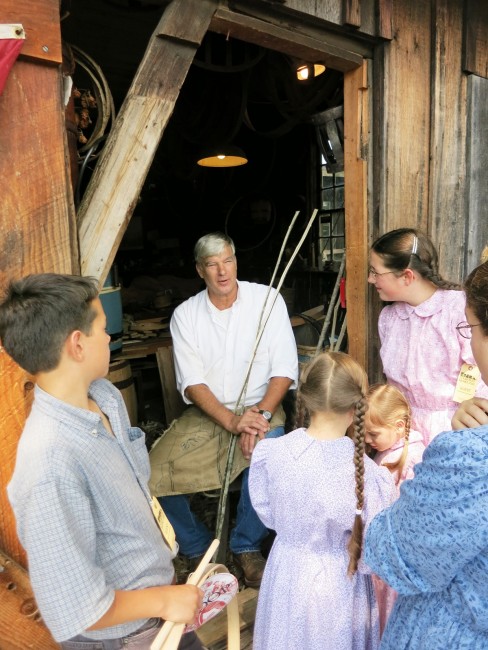
Fans of the arts will appreciate the many trade demonstrations at Strawbery Banke. Here, you’ll find buildings dedicated to authentic cooking, weaving and spinning, and coopering.
Credit: Aimee Tucker
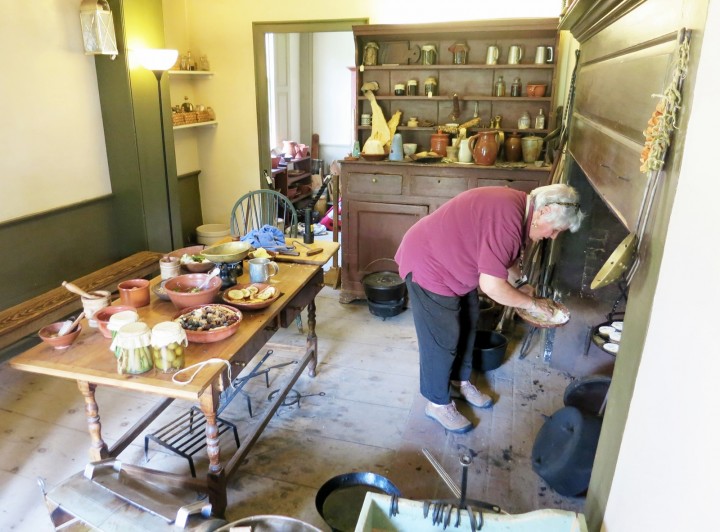
Credit: Aimee Seavey
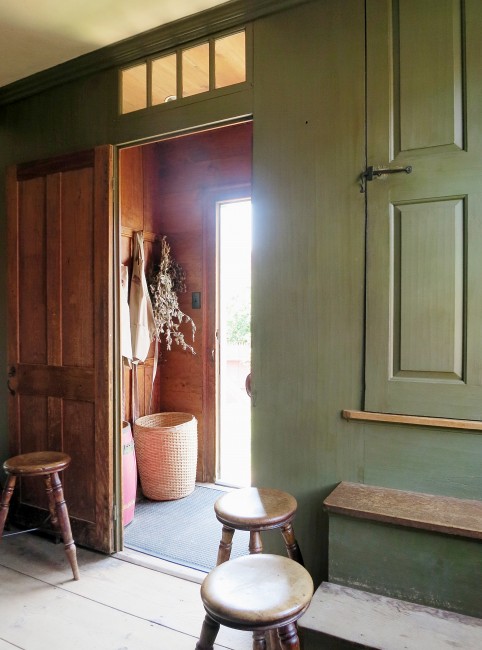
Credit: Aimee Seavey
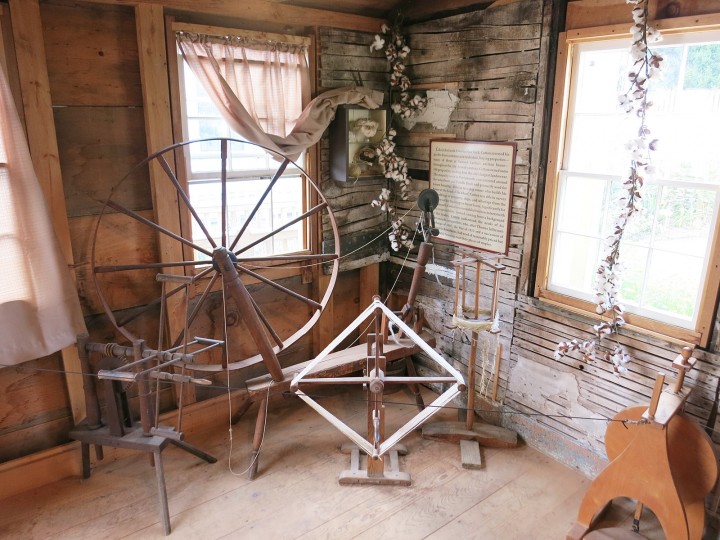
Credit: Aimee Seavey
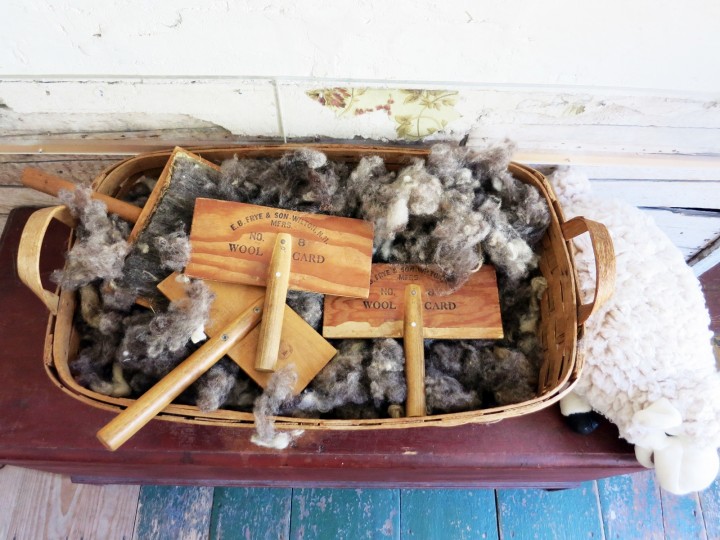
Credit: Aimee Seavey
Credit: Aimee Seavey
And there’s plenty of good stuff for architecture buffs, too. At Strawbery Banke, both the art of historic architecture and the ongoing process of restoration are celebrated.
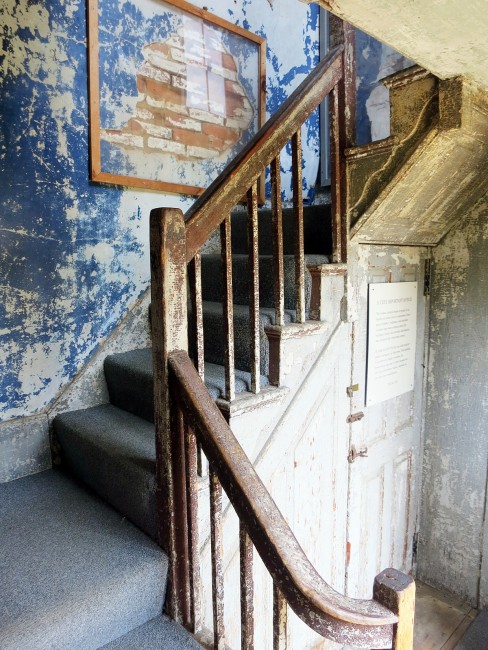
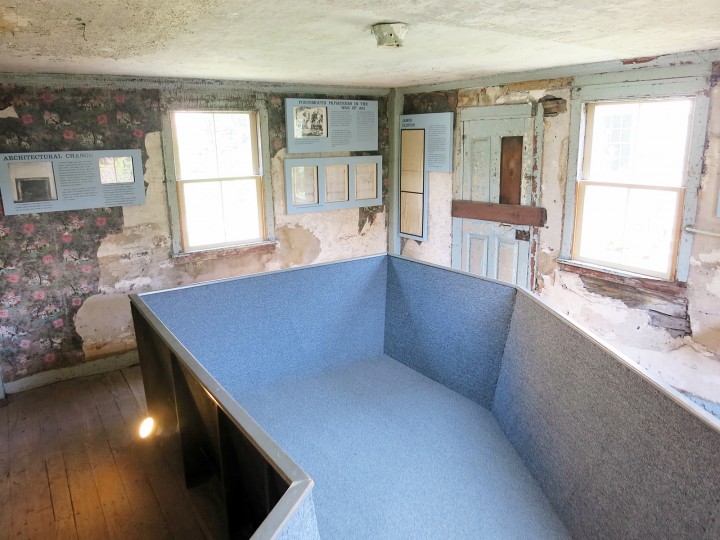
My favorite example of this was Jackson House, a small house deliberately preserved without restoration “to teach about the nature of the evidence of change in architecture and decoration, and the process of research.”
Credit: Aimee Seavey
Bordered walkways guide you through the bare walls, crumbling brick, and peeling paint to see the true bones of the house, while helpful panels illustrate more information about the neighborhood’s history.
Credit: Aimee Seavey
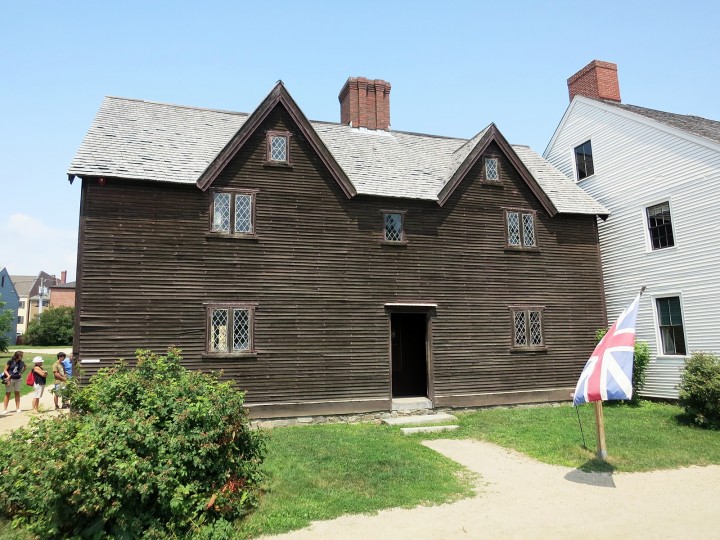
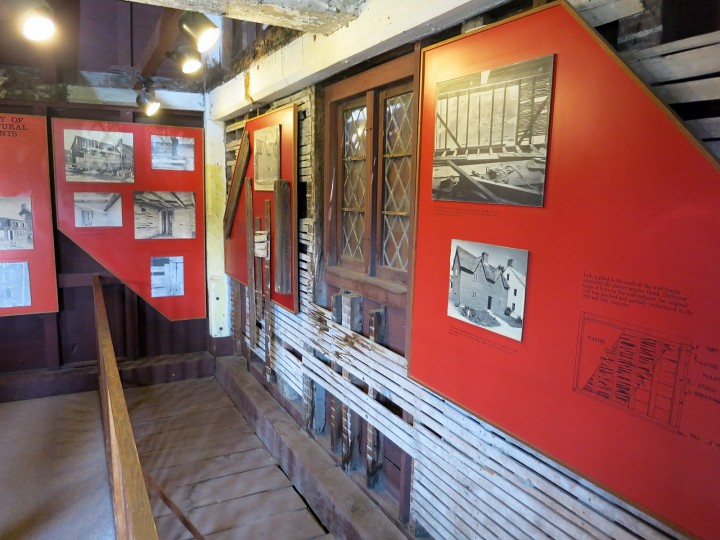
Another building dedicated to teaching is Sherburne House (c.1695-1703), the sole existing building from that time period remaining at the Puddle Dock site. Built at a time when the influence of late 16th century English architectural style was being blended with new American innovations, it sticks out with its Salem-esque tiny windows.
Inside, you’ll find information, diagrams, and actual examples of the architectural bones required to build houses like these.
Credit: Aimee Seavey
Credit: Aimee Seavey
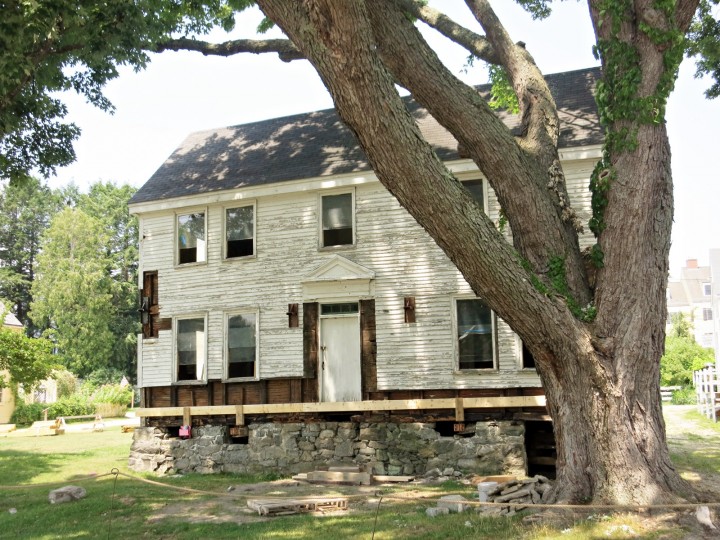
And finally, as you stroll Strawbery Banke you’ll notice a few houses being renovated or awaiting renovation. This is an active historic restoration site, my friends, and it’s a joy to see. How can you appreciate a finished product if you don’t understand where it’s come from?
One example is Yeaton-Walsh House, which sits like one of the toys from the Island of Misfit Toys, awaiting its forever home, but its time will come. Hang in there, Yeaton-Walsh!
Credit: Aimee Seavey
Honestly, I could stroll around Strawbery Banke all day, but eventually I ran out of time.
Credit: Aimee Seavey
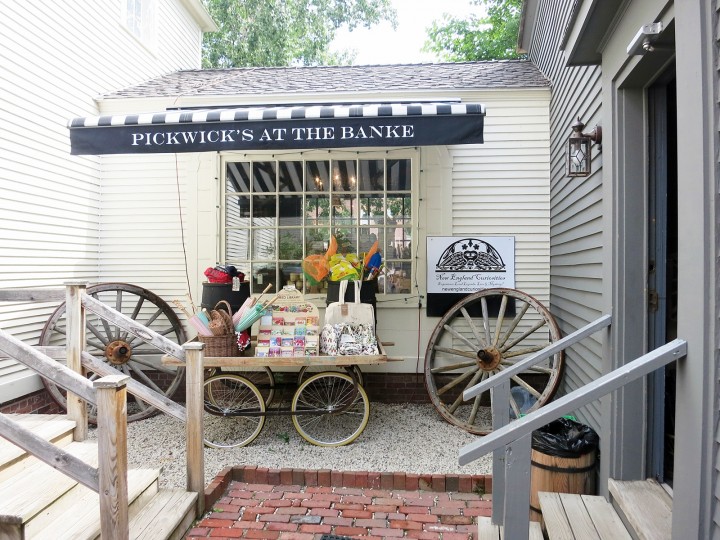
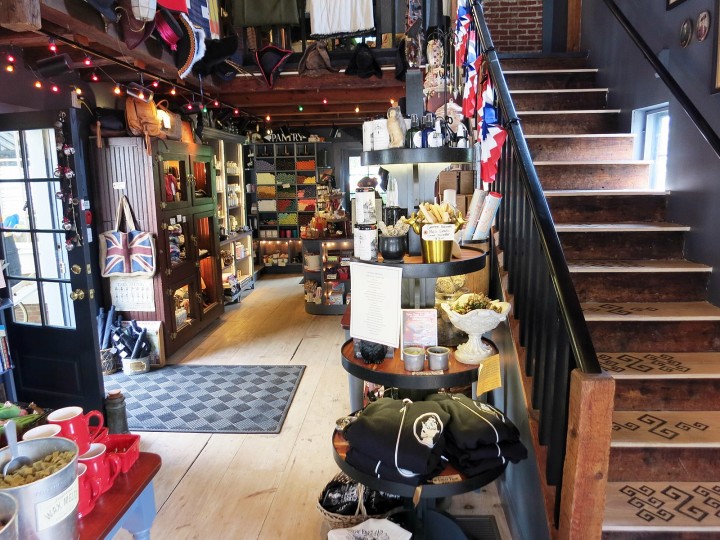
Fortunately, the museum allows visitors to come back for free the next day, so I did. This let me take another 200 photos and do some extra browsing in the fun on-site gift shop, Pickwick’s at the Banke. The shop borders a public street, so you can pop in while you’re in Portsmouth, even if you don’t have time to tour the museum.
Credit: Aimee Seavey
Inside are two floors of local and history-themed gifts, including books, children’s toys, and candles. There’s also an excellent gourmet foods room that’s not to be missed.
Credit: Aimee Seavey
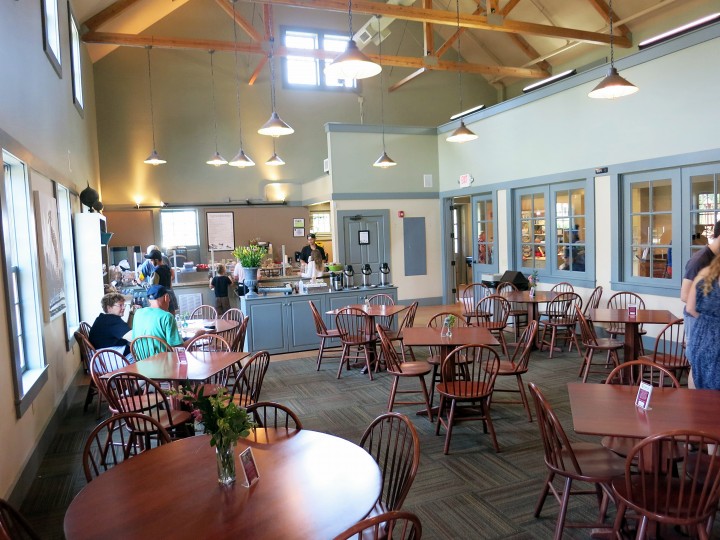
And finally, if you require a little sustenance, the museum’s own Figtree Kitchen has you covered.
Credit: Aimee Seavey
What a wonderful visit to a gem of a museum in one of my favorite small New England cities! I’m already planning a return visit to enjoy the museum’s annual holiday Candlelight Stroll.
Have you ever visited Strawbery Banke? Which “house” was your favorite?
Strawbery Banke Museum. 14 Hancock Street, Portsmouth, NH. 603-433-1100; strawberybanke.org.
Note: Strawbery Banke is generally open 7 days a week from May through October, but the admission to the grounds is free each evening, and there are many times during the off-season – especially during the holidays – when they offer special and seasonal programming, so be sure to check the website for up-to-date information.
In fact, we had a chance to enjoy their new outdoor winter ice skating last year!
Check out Puddle Dock Pond | Ice Skating at Strawbery Banke
This post was first published in 2015 and has been updated.
SEE MORE:
Things to Do in Portsmouth, NH | Coastal Weekend Getaways
Favorite Portsmouth, NH, Hotels & Inns
A Fall Visit to Downtown Portsmouth, New Hampshire


Great job reporting on this! Felt like I was walking around with you. Loved all your photos. Can’t wait for the Candlelight Stroll either!
Great Place! My grandmother was born in the Yeaton- Walsh house around 1890. I know it’s one of the last to be fixed in the Heritage house program. She also lived in Pitt tavern for a while. She was a yeoman at Portsmouth Navy Yard. Can’t wait to get back for another visit.
been there many times ,, love the Christmas stroll.. shop and café are new… heard there was flooding is it all OK/?
Love it when someone gives a personalized recap of a visit, like this one!