New Hampshire’s Spirit of Revolution: Exeter
The past lives on in New Hampshire’s Revolutionary War capital.
By Yankee Custom Editors|Apr 09 2026|

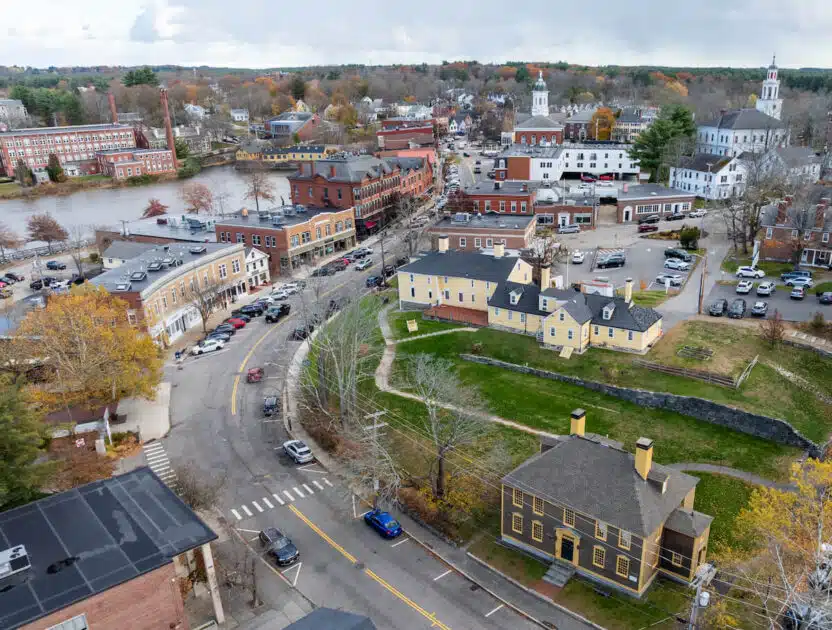
An aerial view of Exeter showing the American Independence Center’s historic Ladd-Gilman House (center) and Folsom Tavern (foreground).
Credit: Windwood ProductionsSponsored by VisitNH.
Whether you are planning your first visit to New Hampshire or—like so many generations of travelers—returning year after year, 2026 is a special time to experience the Granite State. With our nation marking its 250th birthday, there is no better place to connect with the independent spirit of this milestone anniversary than the state that has enshrined the words “Live Free” in its motto. So in this year of American celebration, take a trip to the Granite State and discover the places where the revolutionaries of New Hampshire began their quest for freedom.
If you read a history of the American Revolution, you’ll find no mention of a Battle of Exeter. No armies ever clashed on its town green. No cannons shook the timbers of its meetinghouse. And yet Exeter was a battleground all the same. Taking a fort or a city is one thing, but in a war for independence, the true prize is capturing the hearts and minds of the people. That was the battle waged here. Exeter is where New Hampshire began the hard work of being free.
After the British governor fled Portsmouth in June 1775, Patriots established a new capital here. The choice made sense, says Joe Pace, executive director of the American Independence Center. “The rebel energy was in Exeter.”

Credit: Mark Fleming
Like Lexington and Concord in Massachusetts, Exeter was a rural stronghold of the Patriot cause. At a distance from the centers of British power on the coast, Americans here could openly defy imperial rule with relative safety. The Patriots who seized the powder from Fort William and Mary knew this well: They stashed part of their prize in Exeter’s Powder House, an unassuming brick building that still stands on the shore of Clemson Pond. The British never even attempted to reclaim it.
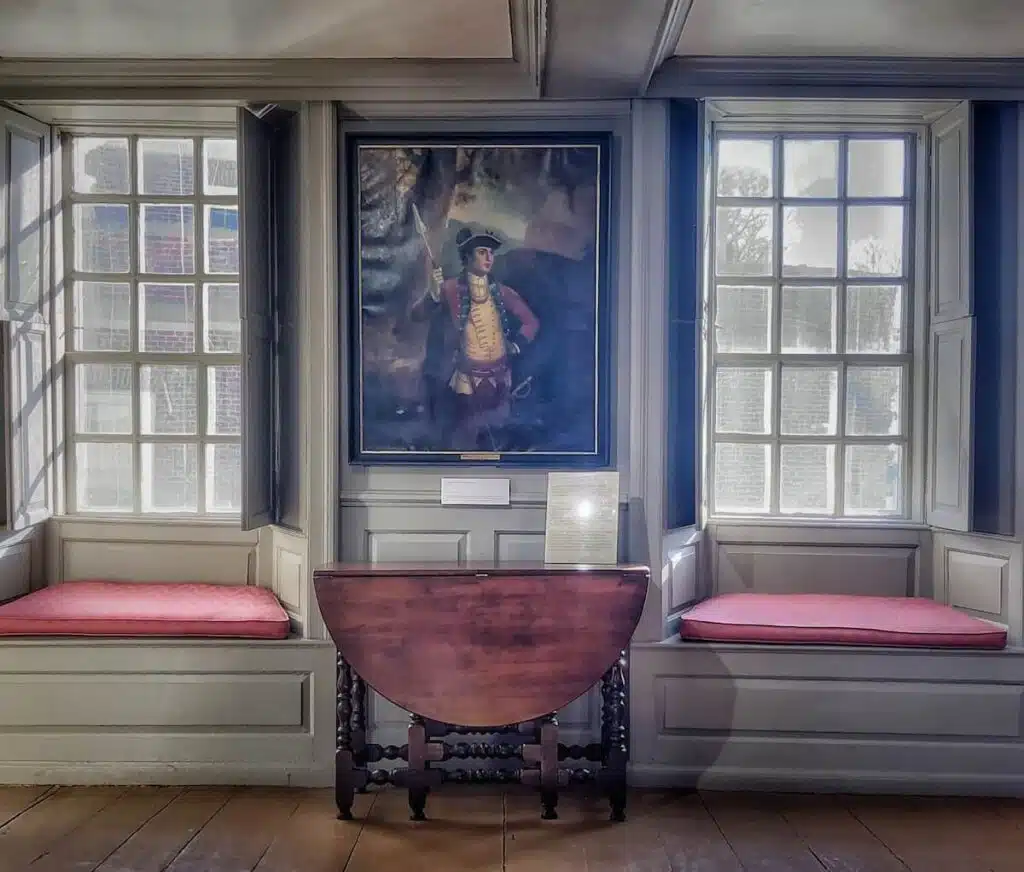
In December of 1775, delegates from across the state met in the new capital to replace the old royal charter. These newly independent citizens debated how they would like to be ruled, what powers the government should have, and what freedoms the people would hold. They worked quickly, and New Hampshire’s first constitution was ratified on January 5, 1776.
Credit: American Independence Center
This is one of many stories told in Exeter’s American Independence Center. Pace wants visitors to leave thinking of the Revolution in the present tense. “Independence isn’t something we did; it’s something we do,” he says.
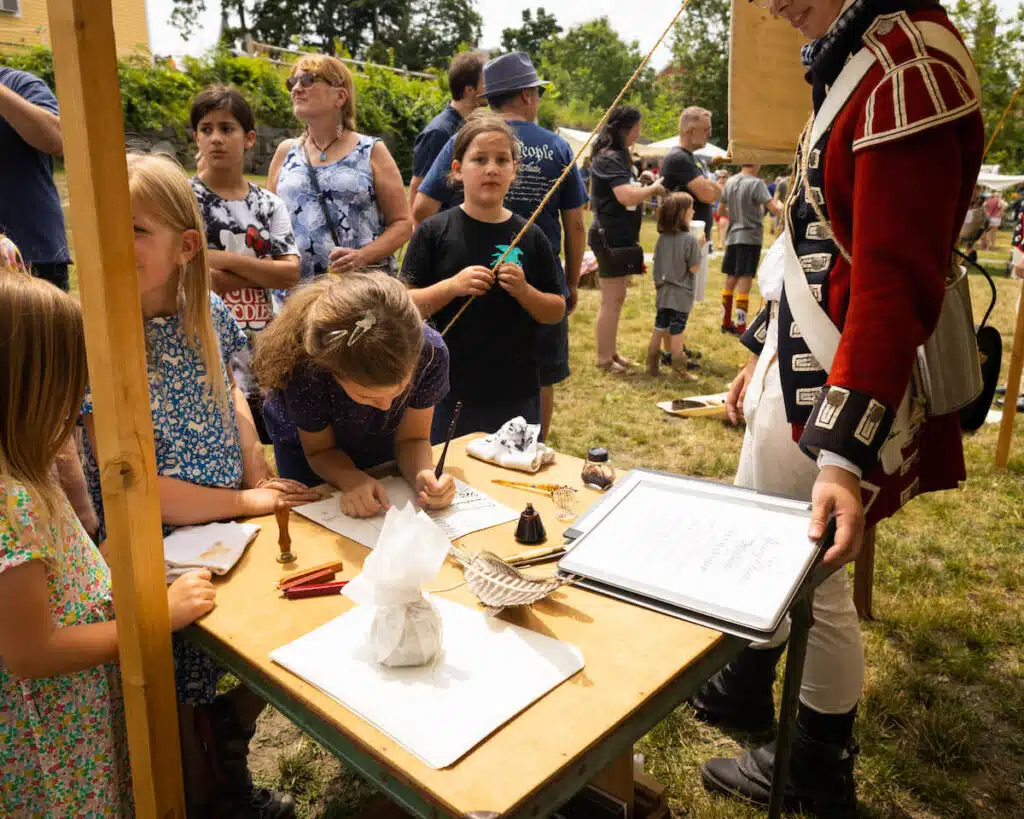
The center’s most treasured artifact is a Dunlap broadside of the Declaration of Independence, which is among the first copies of that document ever made. Every July, the center hosts its American Independence Festival, in which actors reenact the moment when the words “We hold these truths to be self-evident” were first spoken in New Hampshire before a crowd on the streets of Exeter.
Credit: American Independence Center
For the nation’s 250th anniversary, this year’s festival—set for Saturday, July 11—will be larger than ever and accompanied by all-new exhibits examining the Constitution and how the freedoms enshrined in the Bill of Rights have evolved over time. Pace hopes the exhibit will remind people that the work of freedom is never over, adding, “It’s our responsibility as citizens to see that this experiment continues.”
To learn more about New Hampshire’s role in the Revolutionary War and to start planning your trip to the Granite State during this special anniversary year, download the brand-new guide New Hampshire 250: A Celebration of America’s 250th and the Granite State. For even more travel inspiration—from unexpected adventures and local events to hidden gems and unforgettable places—go to VisitNH.