Keeler Tavern Museum | Local Treasure
Come for the cannonball, but stay for the stories. In Ridgefield, Connecticut, three centuries of stories are told at the Keeler Tavern, but it’s the cannonball that visitors usually want to see first. A gambrel-roofed building on Main Street, the Keeler Tavern celebrates 50 years as a living-history museum in 2016. “We’re known for the […]
By Joe Bills|Jun 13 2016|

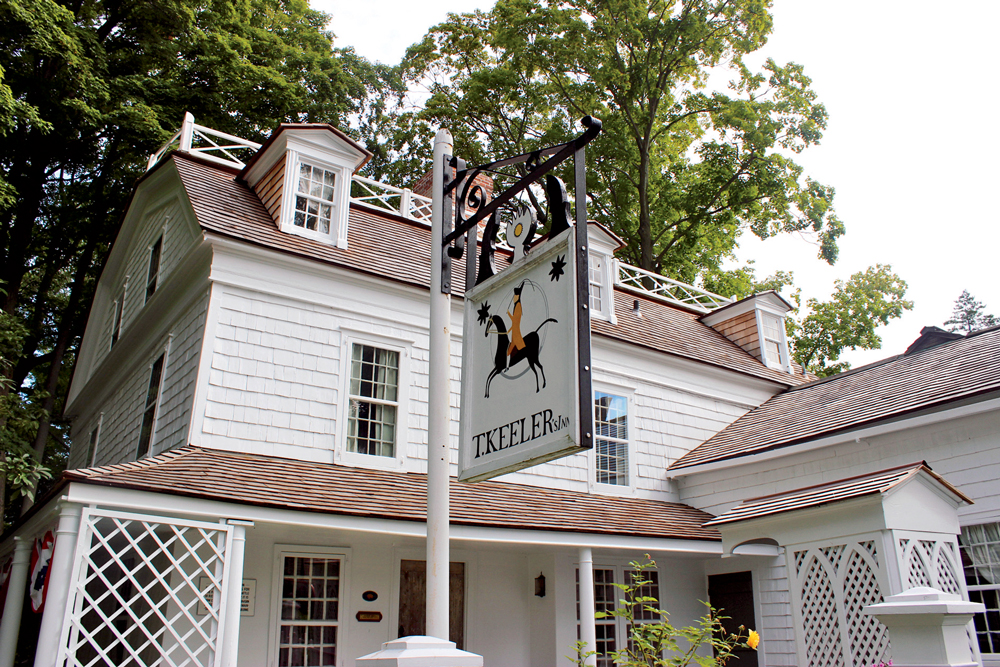
The property dates from 1713 and became an inn in 1772.
Credit: Courtesy Keeler Tavern MuseumCome for the cannonball, but stay for the stories.
Credit: Courtesy Keeler Tavern Museum
In Ridgefield, Connecticut, three centuries of stories are told at the Keeler Tavern, but it’s the cannonball that visitors usually want to see first.
A gambrel-roofed building on Main Street, the Keeler Tavern celebrates 50 years as a living-history museum in 2016. “We’re known for the cannonball, but this property has amazing stories from every era of its existence—local narratives that provide a window on national events,” says Hildi Grob, Keeler’s executive director. “Our challenge is determining how best to tell them.” To tell those other stories, the museum has expanded its educational offerings, re-interpreted its displays, and deployed costumed guides-. But ever since a fateful day back in 1777, this has been “the Cannonball House.”
Ridgefield had been a town for just five years when Ben-jamin Hoyt—who as a child had survived the 1704 French and Indian raid on Deerfield, Massa-chusetts—built his home here in 1713. The door of Hoyt’s home, now displayed at the entrance to the taproom, was reinforced with vertical and horizontal boards, a design known as an “Indian door,” intended to withstand tomahawk attacks.
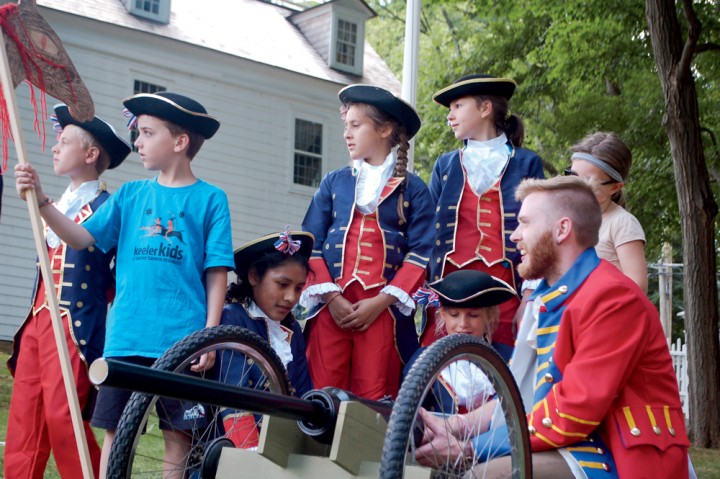
a reenactment of the Battle of Ridgefield.
Credit: Macklin Reid/The Ridgefield Press
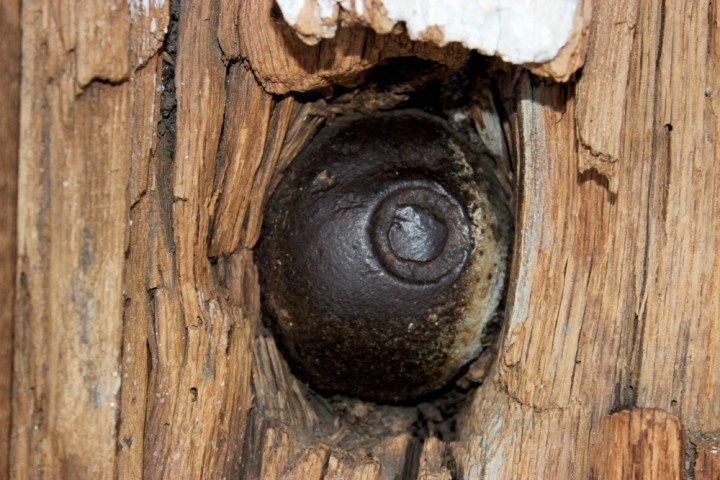
In the early 1770s, Hoyt’s grandson, Timothy Keeler, and his wife, Esther, expanded the house and opened it as T. Keeler’s Inn, creating what quickly became a true town center: an inn for travelers (Ridgefield was 14 hours by stagecoach from Manhattan), a bar for locals, and, before long, a rallying point for Revolutionary sentiment. Political loyalty in Ridgefield was divided in the 1770s, but Keeler was a staunch proponent of American independence and was rumored to be forging musket balls in his basement. Perhaps reacting to those rumors, British troops returning from a raid in Danbury fired their cannons on the inn on April 21, 1777, ripping into the building with enough velocity to move it on its foundation. One of those shots wedged itself in a corner beam, where it remains to this day, hidden beneath a removable square of siding, the defining exhibit.
This bit of history, and everything that followed, would have been lost had the Brits followed through on their plan to torch the inn. Some fast talking by Keeler’s uncle, a Tory sympathizer who lived next door—and downwind—saved it. “Later, his uncle expected thanks,” says local historian Charlie Pankenier. “But Keeler was reportedly having none of that, replying that he’d be damned if he’d ever thank a Tory for anything. He gave thanks to God and the north wind instead.”
In 1805, Keeler became the town’s second postmaster. The tiny post office that served the town for 50 years remains intact in what is essentially a cupboard under the taproom stairs. Upstairs, travelers’ bedrooms give a feel for the accommodations of the period, which included shared space on rope beds with reed-stuffed mattresses. Not all of the items in the museum are from the inn itself, but they’re typical of the furnishings it would have contained.
Passing from one generation of the family to the next, the business became W. Keeler’s Hotel, and then the Resseguie Hotel. During some restoration work, the journals of Anna Marie Resseguie, Timothy Keeler’s granddaughter, were discovered behind the kitchen’s beehive oven, a state-of-the-art innovation when it was added to “Esther’s Kitchen” in the 1790s. The Keeler Tavern Preservation Society published Resseguie’s journal in 1993. Her accounts of life during the Civil War are full of insight. “Her descriptions of battles and people are in many cases better than the news-papers’,” Pankenier says. “They’re a treasure.”
Credit: Courtesy Keeler Tavern Museum
When the railroad came to Ridgefield in 1870, the town was “discovered” by wealthy New Yorkers. Among the new arrivals was architect Cass Gilbert, whose work included the U.S. Supreme Court in Washington, D.C., and the Woolworth building in New York. In 1907, Gilbert and his wife bought the old Keeler Tavern. The Gilberts were the embodiment of the Gilded Age in Ridgefield, modernizing and expanding the house and gardens to accommodate larger, and more elegant, social gatherings. The house remained in the Gilbert family until 1957 and opened as a museum 10 years later.
Come for the cannonball—but stick around for the rest of the story.
Keeler Tavern Museum 132 Main St., Ridgefield, CT. 203-438-5485; keelertavernmuseum.org. See our picks for the best five sites of this period in New England history: YankeeMagazine.com/Revolutionary-War