A Fall Escape to Connecticut’s Litchfield Hills
In Connecticut’s Litchfield County, autumn is the invitation—the rest is the surprise.
By Ian Aldrich|Aug 17 2026|

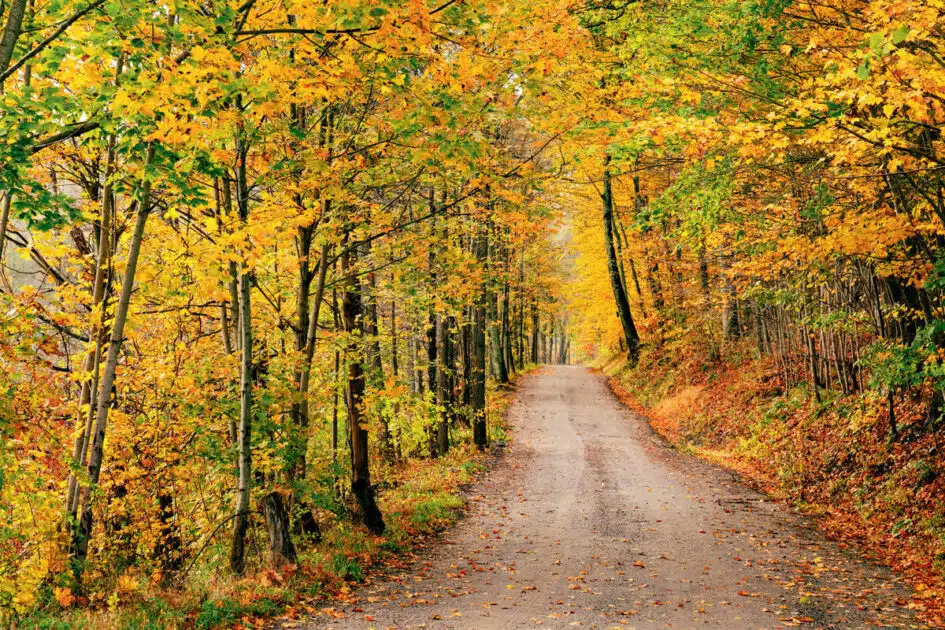
Near the Lake Waramaug Country Club, yellow foliage blazes along Ash Swamp Road in New Preston.
Credit: Gabriela HermanI was just 20 minutes from the trailhead at Mohawk Mountain when the sign for Wright’s Barn & Café in Torrington popped into view. It was a bluebird Sunday morning in mid-September, and I had ventured into Connecticut’s Litchfield Hills for an early-autumn escape. Oh sure, the region was still a few weeks away from full-blown color, but already the air had a mild bite, and my fall itinerary had filled up without much effort. I had nature preserves to visit, farm stands to explore, and some of the prettiest small-town centers in New England to mosey through. Who had time for diversions?
But something about that sign called to me. I swung a U-turn and pointed my car down a quiet country lane that dead-ended in front of a farmhouse overlooking a pretty scene of fields and outbuildings. Inside an enormous retired dairy barn, owner Jim Wright manned a café counter, leafing through a newspaper as a couple of regulars nursed coffees and traded gossip. Just beyond, arrayed across two long floors, were 40 stations for vendors hawking all manner of secondhand goods, from grandfather clocks and china sets to autumn tchotchkes and toy cars.

Credit: Gabriela Herman
Credit: Gabriela Herman
Soon enough, the big building was reverberating with activity. Rounds of customers and sellers took up their positions, Wright’s wife emerged with fresh-baked muffins and pastries, and the stream of classic rock playing in the background cranked up a little bit louder. It was the kind of scene made for lingering, if you gave yourself permission to discover it in the first place.
“It’s off the beaten track,” Wright said, “but I think that’s what people love about coming here.”
He might as well have been talking about the region itself, most of which lies within Litchfield County. Bounded by Massachusetts’s Berkshire County to the north and New York state to the west, Litchfield packs the one-two punch of being the state’s largest county and its least populated one. Free of major highways and big-box stores, this was the last part of Connecticut to be settled, and the area has never shed its back-roads identity. It is precisely that quality that makes Litchfield County a refuge for locals like Wright who are committed to staying on family land, and for A-listers like Meryl Streep who’ve long appreciated the easy anonymity that comes with rural living.
And while an influx of newcomers has helped fuel the opening of several chic businesses here in recent years, there’s something reassuringly unchanging about the Litchfield Hills, where many of the pretty pastures, town centers, and meticulously restored homes predate the nation’s founding. It’s also a reminder that for all the silly talk about Connecticut hewing a little too closely to its neighbor to the west, this area—come autumn, especially—offers as fine and beautiful a New England experience as anything you’ll find in the states to its north.
*****
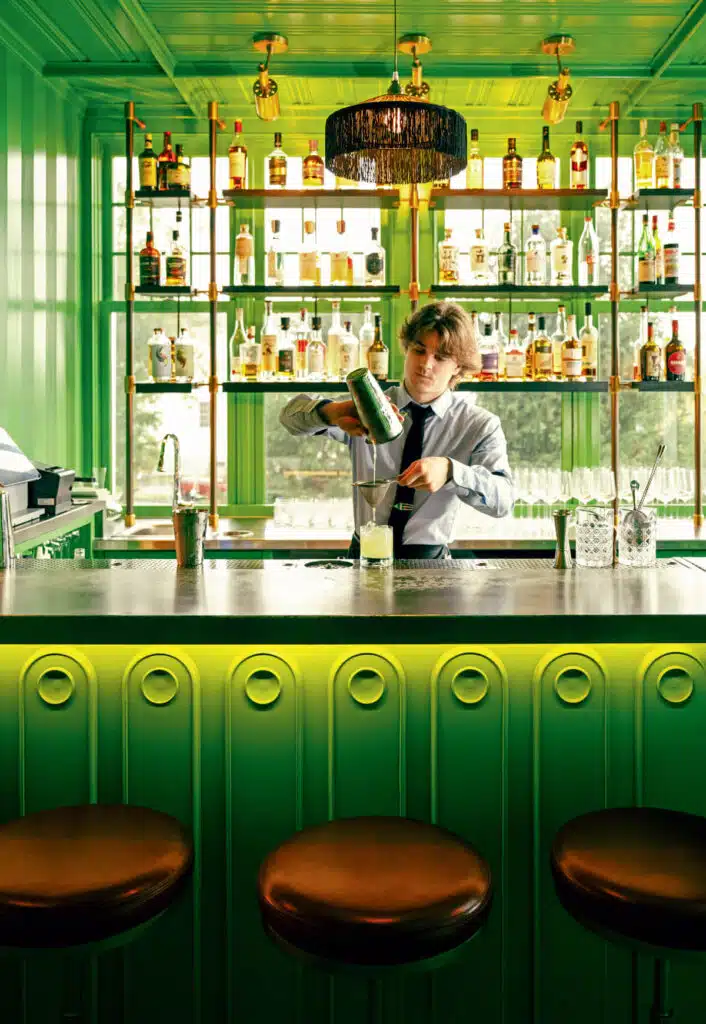
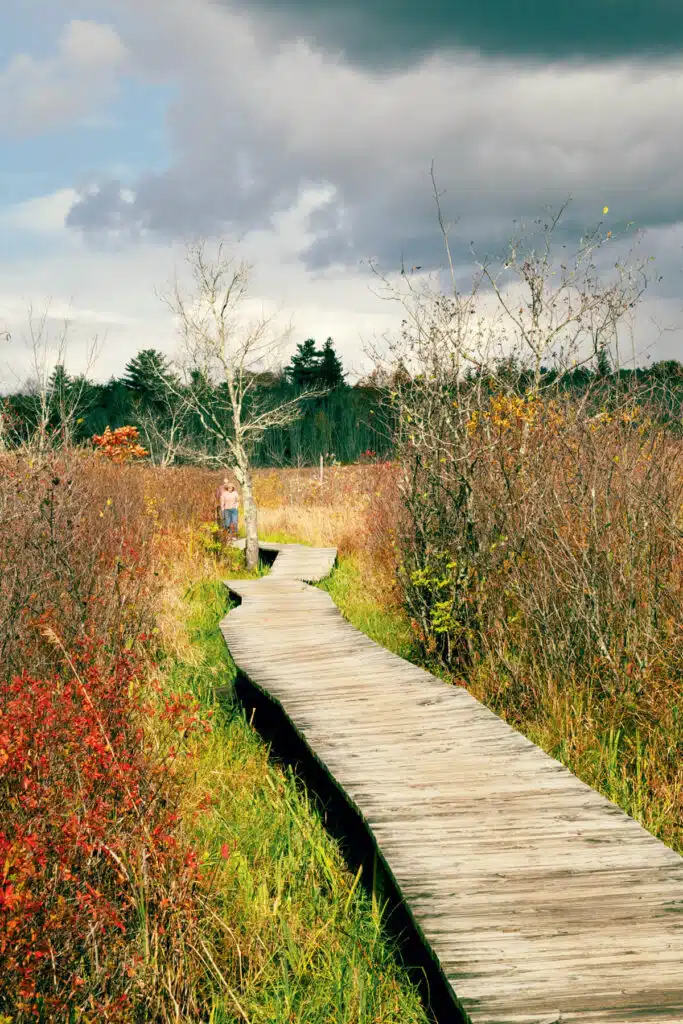
Having managed to escape Wright’s Barn without blowing a small fortune on vinyl records, I returned to my original mission and made it to the top of Mohawk, a few miles up the road, well before lunch. I’d hiked to the summit, but others had efficiently motored up the auto road. Around me was a scattering of scenes: a young family playfully chasing their toddler around, a pair of 20-somethings sunning themselves on a rock as one of their phones pumped out a tinny Eagles tune, a trio of Harley riders enjoying a late morning snack.What Mohawk lacks in elevation—the mountain rises a mere 1,600 feet—it makes up for in views, which extend deep across the Taconic and Berkshire peaks. It’s also the centerpiece of its namesake state forest, a 4,000-acre swath of oaks and maples that stretches through the towns of Cornwall, Goshen, and Litchfield. As spectacular as that forest is, however, it’s just a small piece of the vast collection of conserved properties that blanket the region. The bucolic appeal of the Litchfield Hills owes to the fact that so much of the land here is available for public use—more than in any other part of the state. There’s Bear Mountain, the state’s highest peak (as well as part of the Appalachian Trail, which runs more than 50 miles through the county). There’s the White Memorial Conservation Center, a sprawling nature preserve laced with hiking and biking trails. There’s Kent Falls State Park, whose frothy main attraction tumbles 250 feet in under a quarter mile. And on it goes.
Credit: Gabriela Herman

Credit: Gabriela Herman
By midafternoon I was on foot again, marching with determination from my car to the cider doughnuts awaiting me at Averill Farm, a longtime family-owned fruit orchard in Washington Depot. It was a fall day in full Kodachrome. Families were picking out pumpkins and mums. Others were laden with bulging totes of pears and apples, while still more hoisted gallon jugs of fresh cider across the grassy parking lot.
A woman struggling with a wagonload of fruit caught my attention. “Do you mind giving me a hand?” she asked, before passing me the handle with a sigh of relief. “I probably picked more than I needed,” she said with a small laugh, “but I’ve been looking for Jonathans, and this is really the only place that has them.” She paused and looked at me. “Have you ever had them? They are hands-down the best pie apple, and you have to get them here.”
After helping my new friend to the checkout table, I ducked inside the farm stand, where co-owner Tyson Averill was giving a master class in multitasking. Clutching his 1-year-old son in one arm, he shuttled to and from the kitchen with fresh batches of cider doughnuts. It was all he could do to keep pace. On a prime fall weekend, as many as 5,000 doughnuts fly into the hands of eager customers, along with the orchard’s jellies, cider, granola, and apple butter. Near the checkout, goat-milk soaps were neatly stacked in a display of wooden apple boxes.
It’s all vastly different from the farm that Tyson’s ancestors established in 1746. But like the Litchfield Hills region itself, the Averills have adapted to the times without straying too far from their roots: The farm still produces local food, and family still tends the land.
“There are people who call up wanting the whole agritourism thing and ask, ‘What else do you have?’” he told me. “And I always tell them that while we may not have things like a playground, we do have more than 100 different kinds of apples, and the orchard is a little more open, so people can walk around. It’s simple in that sense, and I think people like that about us.”
*****
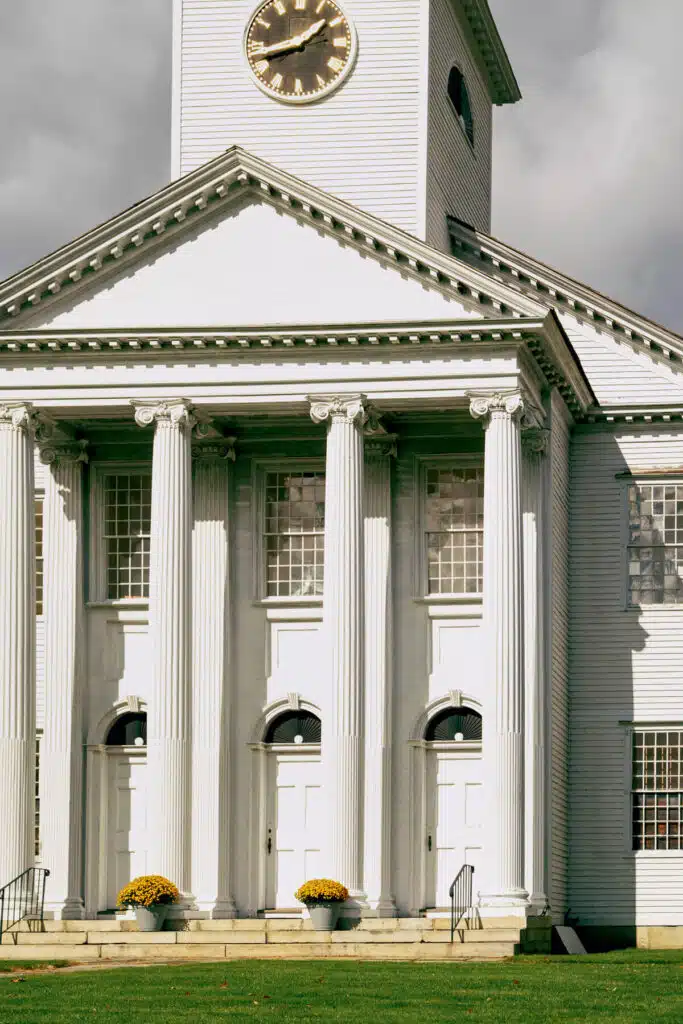
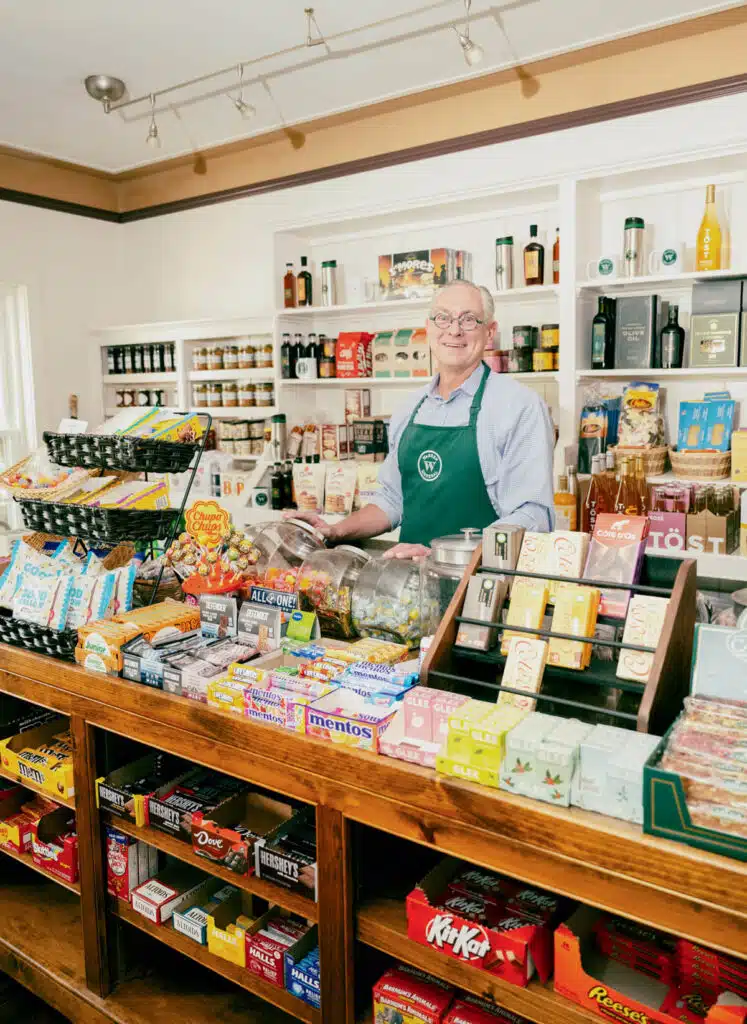
A quiet dot in the center of the Litchfield Hills, Warren is rural even by local standards. Perched above its neighboring towns, it’s more a constellation of farms and weekend houses than a village in any traditional sense. But there is civic life here, anchored by a 208-year-old Congregational church and, directly across the road, a cluster of pristine white historic buildings whose recent reinvigoration is largely the work of John Favreau, owner and operator of the Warren General Store.
I met with Favreau at his store on a warm, cloudy weekend day, as his crew simultaneously recharged from a busy lunchtime crowd and prepared for a catering job that evening. Having climbed the corporate ladder to a fairly high altitude in his previous life, Favreau today wore a baker’s apron and briefly paused before sitting down with me to patiently explain the intricacies of baking focaccia to a young staffer.
“It’s nonstop,” he said with a touch of pride, sliding into a seat across the table from me.
Credit: Gabriela Herman
Credit: Gabriela Herman
Favreau’s path to Warren was a happy accident. On a rainy weekend in 2004, he came up from New York City to visit an old friend. On previous trips, he’d become enamored with how Warren evoked the same small-town spirit as the western Massachusetts village where he’d grown up, so on a whim the friend suggested they look at some houses for sale. Before Favreau was back at work in New York on Monday, he’d made an offer on one.
Over the next decade, Favreau watched with curiosity as the small group of buildings that served as Warren’s commercial district shuttered and didn’t reopen. “Everything just kept looking more decrepit and depressing,” he said. “One guy owned all the buildings, and at some point he listed the entire town center on eBay.”
Favreau’s curiosity eventually turned into action, and by 2018 he’d bought the buildings with the idea of finding entrepreneurs who wanted to fill the storefronts. When nobody stepped up, he did it himself. The now-revitalized town center is home to a clothing retailer, a liquor shop, and several more businesses. Anchoring the scene is the Warren General Store, which, on top of serving up sandwiches and coffee, reflects Favreau’s own personal tastes. There are specialty pastas and sauces from Philadelphia; the croissants are made from dough that comes in from Paris; a lineup of specialty nonalcoholic wines hails from Vermont. The store roasts all its own meats. Come the holidays, Favreau hosts a special caviar program.
“I’m fussy, and I don’t want to carry anything I wouldn’t eat,” he said.
Favreau, who has lived in cities around the globe, has found something unique in Warren—something he didn’t have in places like London, Paris, and Sydney. “Ninety percent of the customers who walk through the door, I know by name,” he said. “Whether it’s one of the local contractors, a hedge fund manager, or a federal judge, we’ve got all walks of life here, but it’s a real community.”
*****
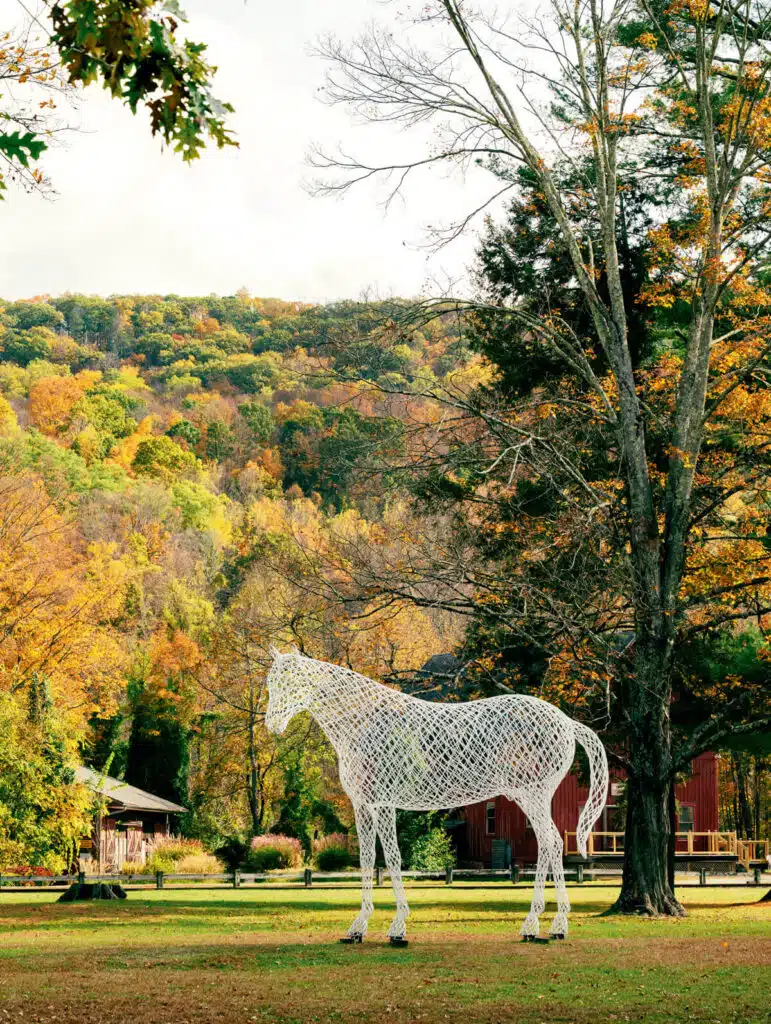
In some places, you have to go hunting for scenic drives. In Litchfield County, they’re just part of the commute. Driving through Sharon, I meandered past stately farms and rolling pastures. On my way into New Preston (after stopping for an impromptu glass of wine at Hopkins Vineyard), the road led me around beautiful Lake Waramaug, the second-biggest natural lake in the state. In the woodlands of Roxbury, I took my time on a winding road that brought me past the family home of Arthur Miller, where he and Marilyn Monroe escaped after announcing their engagement in 1956; from there it was a short jog to a quiet four-way intersection, site of a wide-open stretch of meadow and big sky that looked like something in the Midwest.
Credit: Gabriela Herman
Credit: Gabriela Herman
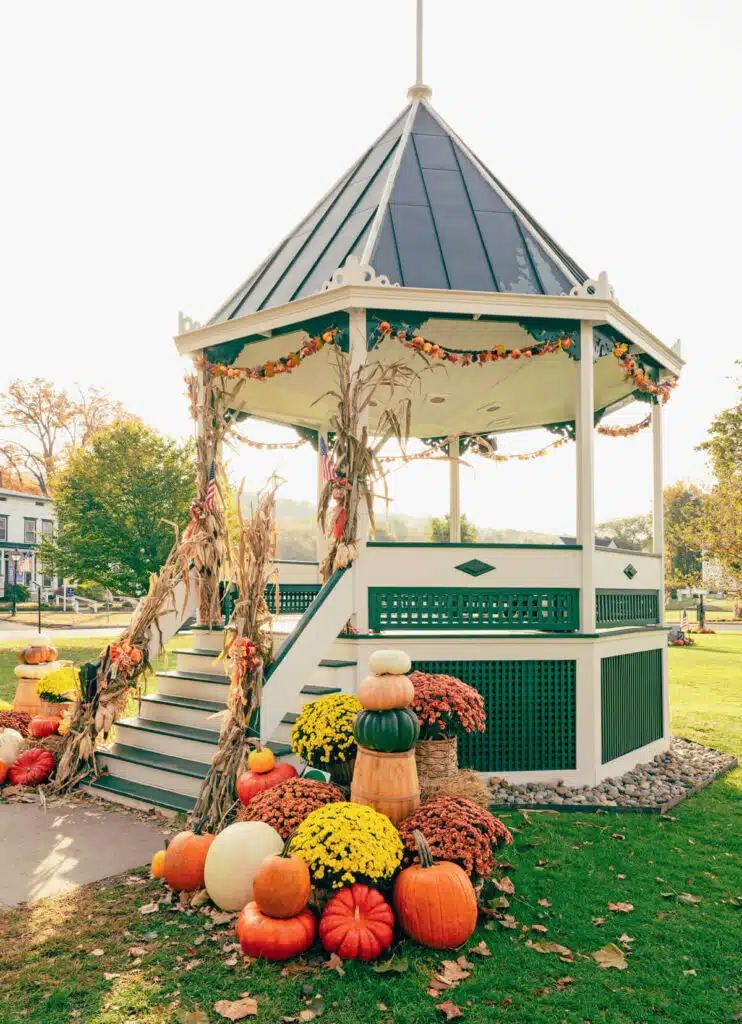
It seems all roads in the Litchfield Hills lead to somewhere worth stopping—and notably, many of them lead to the town of Litchfield, the county seat. History’s spotlight shines bright here. Formerly the home of the Potatuck tribe, Litchfield was incorporated in 1719 and quickly became an important stopping point between New York and greater New England. It served as a supply depot for the Continental Army during the Revolutionary War, and in 1780, after meeting with French allies in Hartford, George Washington spent the night here. The country’s first independent law school was established in Litchfield, which is also the birthplace of Harriet Beecher Stowe.
But even while anchored by such history, Litchfield has never been afraid of a little updating.
Walk down West Street on a Saturday morning and you’ll see places like R. Derwin, which has been draping its clientele in Scottish and Italian cashmere since the 1980s, and Jeffrey Tillou Antiques, whose three floors of 18th- and 19th-century Americana has drawn serious collectors to Litchfield’s town green for more than 30 years. Alongside them, though, is an ambitious wave of newcomers: Westerlind, offering Nordic-inflected apparel from Swedish designer Andrea Westerlind; Milton Market, which House Beautiful named one of the best 25 home stores in the country; and Sister Parish Design, the legendary interior brand that dressed the Kennedy White House, which in 2022 chose Litchfield for its first brick-and-mortar location anywhere in the world.
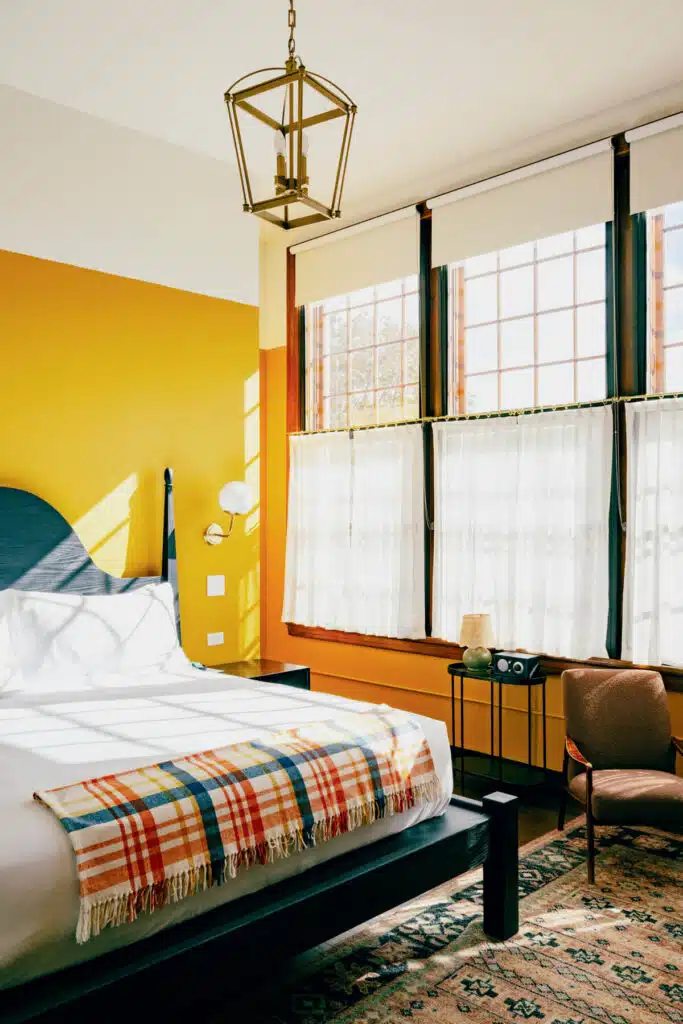
The lodging scene has enjoyed its own revival, with three boutique hotels opening in just the past two years. There’s the intimate Lost Fox Inn, the design-forward Belden House & Mews, and then perhaps the most ambitious of the trio: The Abner, a 20-room downtown hotel in the historic Litchfield County Courthouse, which was shuttered in 2017. When questions arose about the 1890 building’s next chapter, David Bowd and Kevin O’Shea, the forces behind the Provincetown-based Salt Hotels collection, provided the answer.
Credit: Gabriela Herman
Credit: Gabriela Herman
The result for travelers is a welcoming, one-of-a-kind landing spot. The in-house restaurant (The Courtroom) packs a bistro vibe; the rooftop bar (Verdict) serves up specialty cocktails and sweeping views of its hometown. During my first night at the hotel, I rode the elevator with an older man who had worked as a local sheriff’s deputy for years. “It’s strange to be back,” he said, chuckling softly. “I’m gonna guess the clientele is a little nicer these days.”
Yet beyond all that recent polish, Litchfield remains in its bones a delightful small town. Beneath the First Congregational Church on the green, I discovered a used bookshop that sprawls through the basement and easily spent a couple of enjoyable hours there. On my final night I had a memorable last-minute dinner at The Village Restaurant, where I chowed down on mac and cheese to the sounds of ’80s rock as the serving crew wrapped up the night with a skip in their step.
I couldn’t leave the Litchfield Hills, though, without stopping in the town that Yankee has more than once crowned New England’s best fall foliage town: Kent. Here, the heart of the leaf-peeping experience lies beyond the leaves—in farm stands and covered bridges, waterfalls and antique stores. Kent packs these things in abundance.
Credit: Gabriela Herman
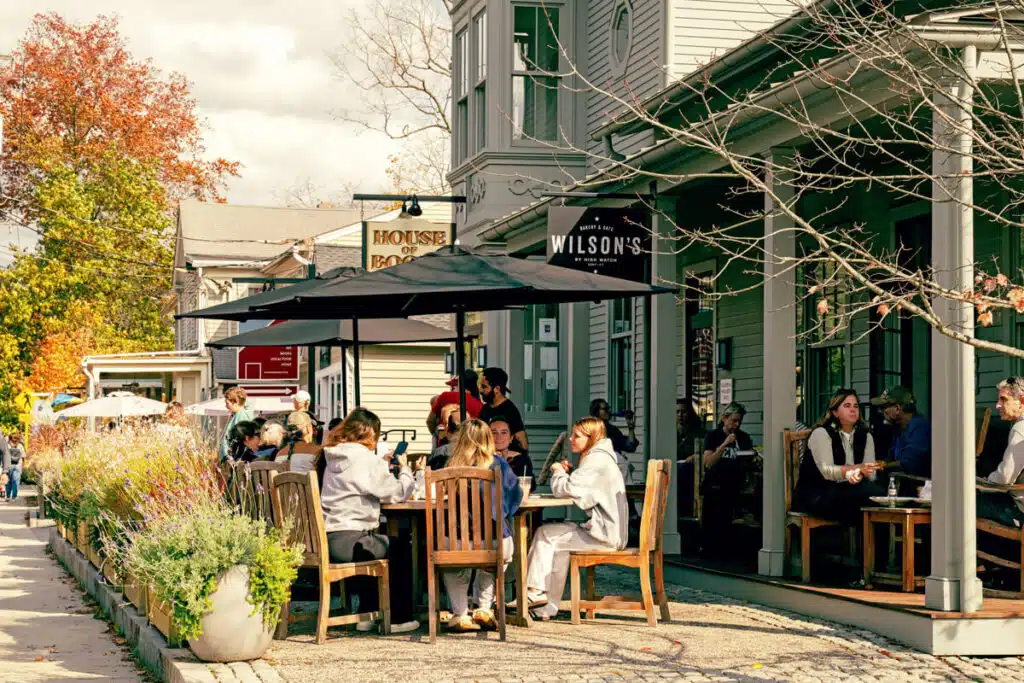
After an early-morning scamper up the trail along Kent Falls, I landed downtown and settled into a table at Wilson’s by High Watch, where I savored a double-shot iced dirty chai and a thick serving of avocado toast. Beneath Wilson’s hipster vibe is a unique core mission: Founded by the nearby High Watch Recovery Center, the bakery-café employs recent alumni to help them relaunch their lives, free of substance addiction. The coffee is excellent, the breakfast sandwiches are robust, and there’s a generous spirit to the place that makes you want to linger long after you’ve finished your order.
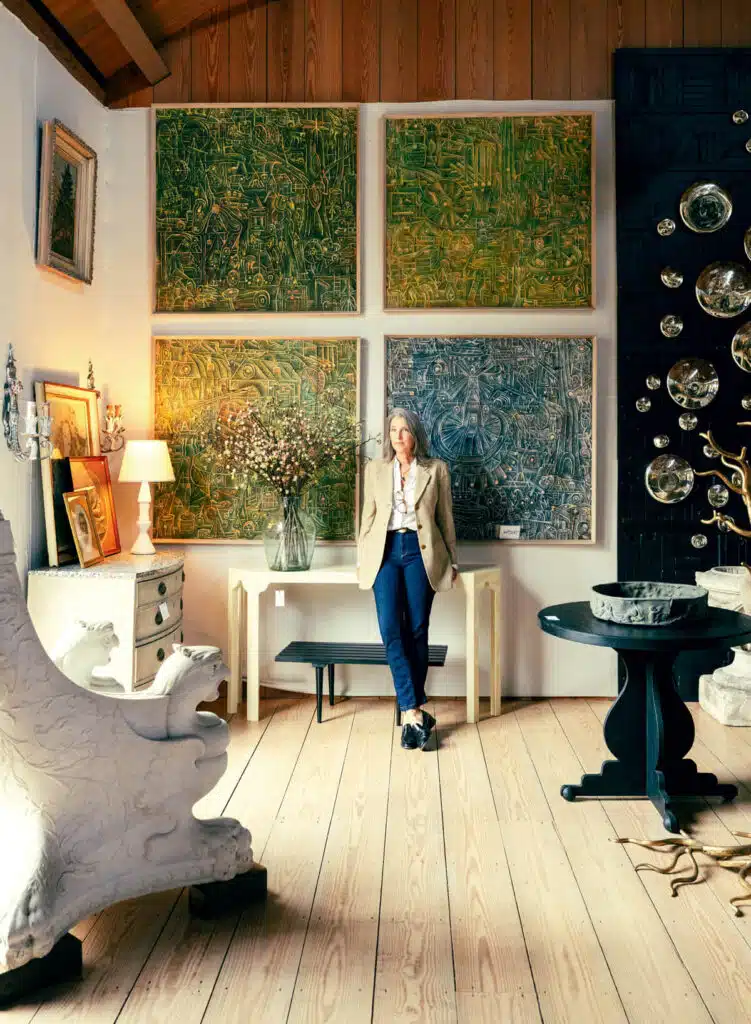
When I finally did leave, I headed to Kent Barns, an outdoor mall that manages to do the near-impossible work of appealing to even a nonshopper like me. I eventually made my way into RT Facts Design & Antiques, where owners Natalie and Greg Randall oversee a large showroom that beautifully displays a rotating lineup of reclaimed and remade furniture from their manufacturing studio down the road.
The Randalls’ story is a familiar one around here. They’d poured sweat and time into making a life in New York City, then fell in love with the possibility of a different, quieter reality in this part of Connecticut. “This is where a lot of designers end up,” Natalie told me. “There’s a real intellectual crowd here with sophisticated tastes. But it’s also real country—you really can’t get here from there.”
And yet every fall, leaf peepers find their way here anyway. In a few weeks, when the foliage hits peak, Main Street will be packed with cars and foot traffic—a scene I could easily picture as I wandered through town, perusing new titles at House of Books and seriously considering getting my cards read at Tarot in Thyme. I needed to leave for home. But there were diversions everywhere, and I’d long since stopped pretending I shouldn’t make time for them.
Keep Reading: Guide to the Litchfield Hills: Things to Do, See, Eat & Stay
This feature was originally published as “Head for the Hills” in the September/October 2026 issue of Yankee.