Downsize and Declutter Your Life’s Possessions Wisely
Make Smart Decisions and Get Maximum Value for Your Cherished Belongings
By Kim Knox Beckius|Apr 12 2019|

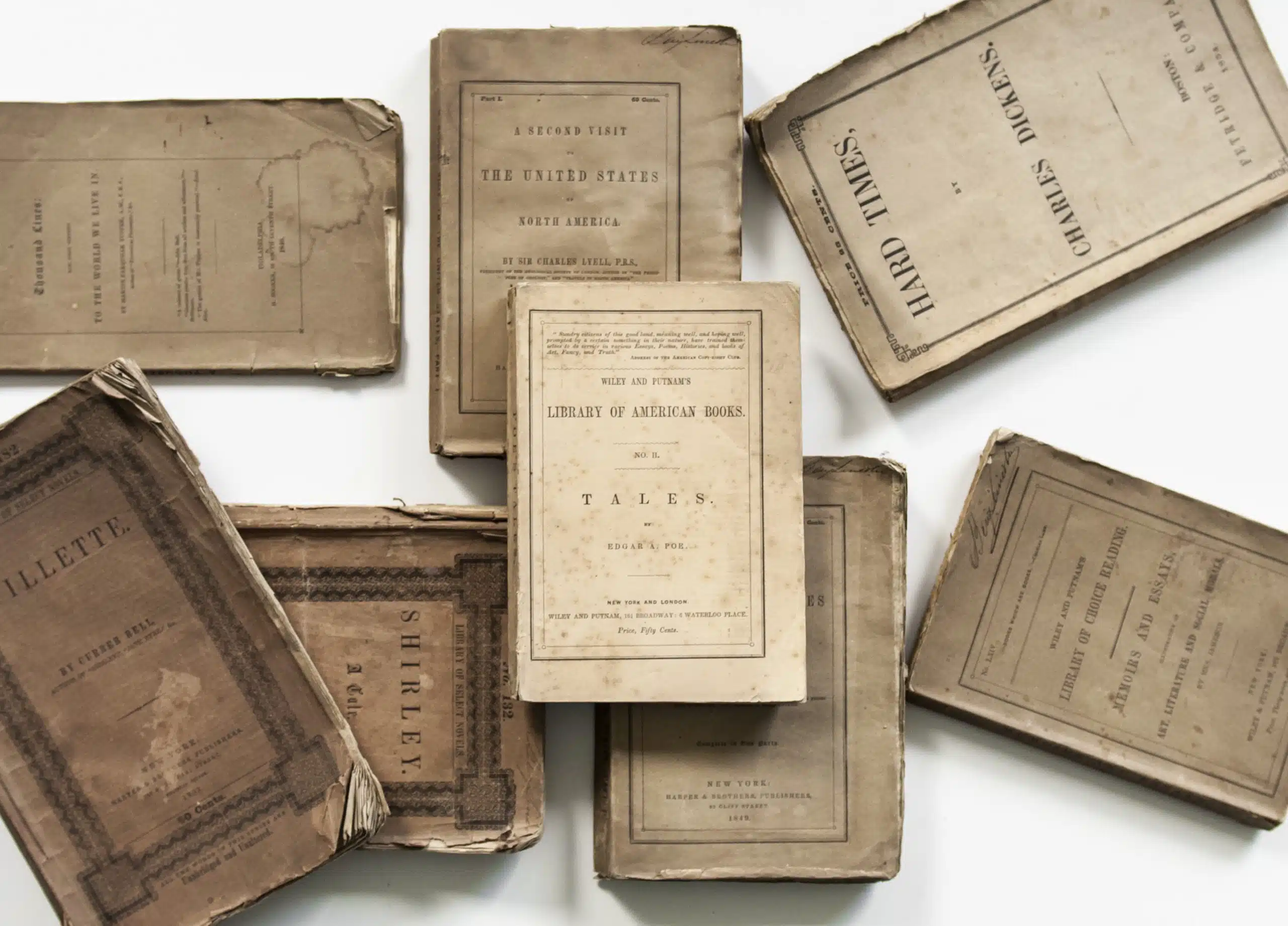
You can’t judge a book by its cover. An attic discovery of the rare 1845 first edition of Poe’s Tales in paper wrappers surpassed all expectations to sell for $315,000. Stored away in a trunk in the attic until they were found during an in-home auction evaluation by Skinner specialists. In the rare book trade, it was thought that all copies of Poe’s Tales in wrappers were known. This was truly a discovery.
Credit: Skinner
You can’t judge a book by its cover. An attic discovery of the rare 1845 first edition of Poe’s Tales in paper wrappers surpassed all expectations to sell for $315,000. Stored away in a trunk in the attic until they were found during an in-home auction evaluation by Skinner specialists. In the rare book trade, it was thought that all copies of Poe’s Tales in wrappers were known. This was truly a discovery.
Credit: SkinnerCredit: Skinner Don’t Wait All of your stuff will need a new home someday. “It’s one of these issues in life like death and taxes that you can’t escape,” Keane says. That means you should begin strategizing long before you actually sell your house and have to move. “There’s much less pressure when you’re downsizing on your own time schedule,” she says, cautioning that rushing through the process can lead to decisions you might regret. Keep in mind, too, that the work you do now is “a gift to your children or your heirs” that allows you to be equitable and to head off future conflicts, while ensuring beloved items are handed down along with stories that make them meaningful. Once you have committed to downsizing or even just letting go of clutter, Keane advises: “Don’t procrastinate. Just jump into it.” Take Baby Steps Getting started doesn’t mean tackling everything at once, though: There’s no need to feel overwhelmed. “I encourage people not to try to boil the ocean,” Keane says. “You really want to break a project like this into parts.” First, identify your goal: Are you moving? Making space for new acquisitions? Trying to simplify? Gifting heirlooms to your children? Your answer will dictate your timeline and path forward. Next, it’s important “to know what you have…what the value is of your tangibles,” she says.
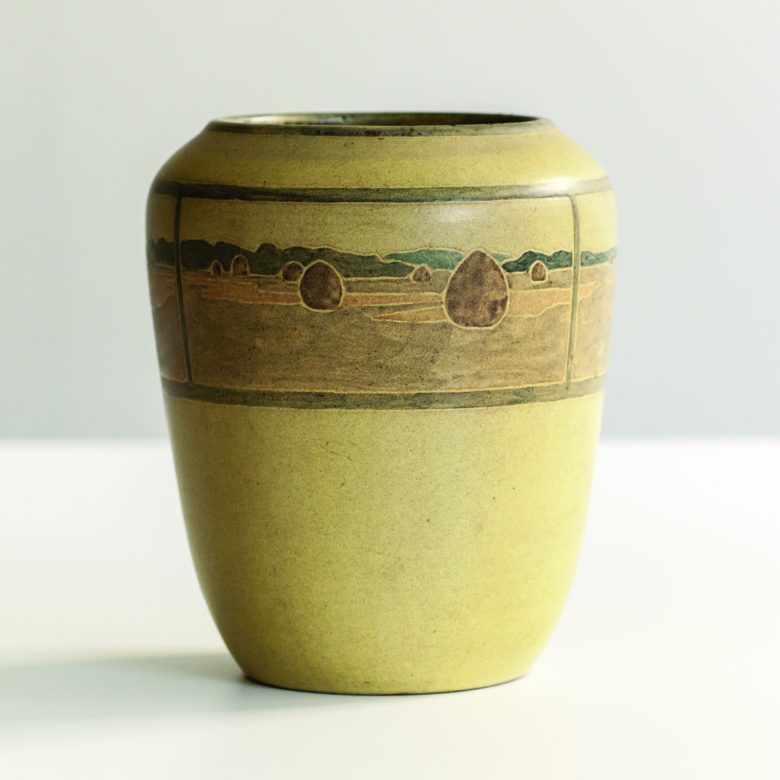
Discovered by a 19-year old picker at a New England yard sale, this rare Marblehead Pottery vase is only one of four known examples of this design. A cautionary tale for people organizing a yard sale before seeking professional guidance for the value of their tangibles. It was auctioned for $303,000.
Credit: SkinnerCredit: Skinner Don’t Underestimate What’s Hiding in Your Home The world of auctions and appraisals is filled with “war stories,” Keane shares. “We sold a carpet that had been taken out of a dumpster for a great deal of money. There was this little 18th-century chair that we sold for $23,000: The untutored eye would look at it and say, ‘Well, that upholstery has got to go,’ but in fact, it was original with the original filling.” And then, there was this whopper of a find: a circa 1909 Marblehead vase that is so rare, there are only three others like it, and one is at the Art Institute of Chicago. It was purchased at a yard sale and sold for $303,000 at Skinner’s 20th Century Design auction last December. “That’s not good,” Keane says frankly. “Nobody wants to hear that. It’s great for the person who attended the yard sale, but this belonged to someone else who didn’t have the proper information to make a decision. You don’t want to be the punchline in a story like that.”

Found in an attic and auctioned for $92,250, this teacup and saucer are from one of the seven similar sets commissioned by Samuel Shaw about 1970 for members of the Society of Cincinnati. The society was formed to preserve fellowship for officers who served in the Continental Army.
Credit: SkinnerCredit: Skinner Call in an Expert So, before you post pictures on eBay or haggle with strangers in your front yard—and definitely before you inadvertently toss valuables in a dumpster—educate yourself. “I highly recommend people work with qualified tangible property appraisers,” says Keane. “They’re really an ally to you in downsizing and estate planning.” What may seem overwhelming to you is all in a day’s work for a generalist appraiser from Skinner, who can typically evaluate and photograph your home’s contents—from rugs to walls, large furnishings to “smalls”—in one visit. A written appraisal will help you decide what to keep, sell, gift, dispose of, or donate. “Appraisers deal with quantity every day,” Keane explains, and Skinner has 24 highly qualified specialists, too—in categories like fine art, jewelry, and military collectibles—who can step in as needed. Questioning whether you really own anything of value? “Send along some photographs,” Keane suggests. Whatever you do, don’t rely on a move manager—who specializes in logistics—or other unqualified individual to sell off potentially valuable items like silver, art, or clocks. “Anyone who says they can do it all is probably overstating their qualifications,” she says. Work with someone who adheres to the Uniform Standard Practices of Appraisal Professionals (USPAP), like all of Skinner’s certified appraisers. Consider Selling Your Possessions at Auction Now that you know what you’ve got, how will you re-home your treasures in a way that allows you to rest easy, knowing you realized their fair, market-driven value? “I’m obviously a proponent of public auction,” Skinner’s CEO says, and when you work with a bona fide, qualified auction gallery, “your tangibles are put in front of the widest audience possible.” Last year, Skinner had 2.5 million website visitors and sold consigned items to winning bidders in 57 countries and all 50 states. Themed auctions ensure a targeted audience of buyers who will appreciate your items, whether you’ve got watches or Civil War memorabilia.
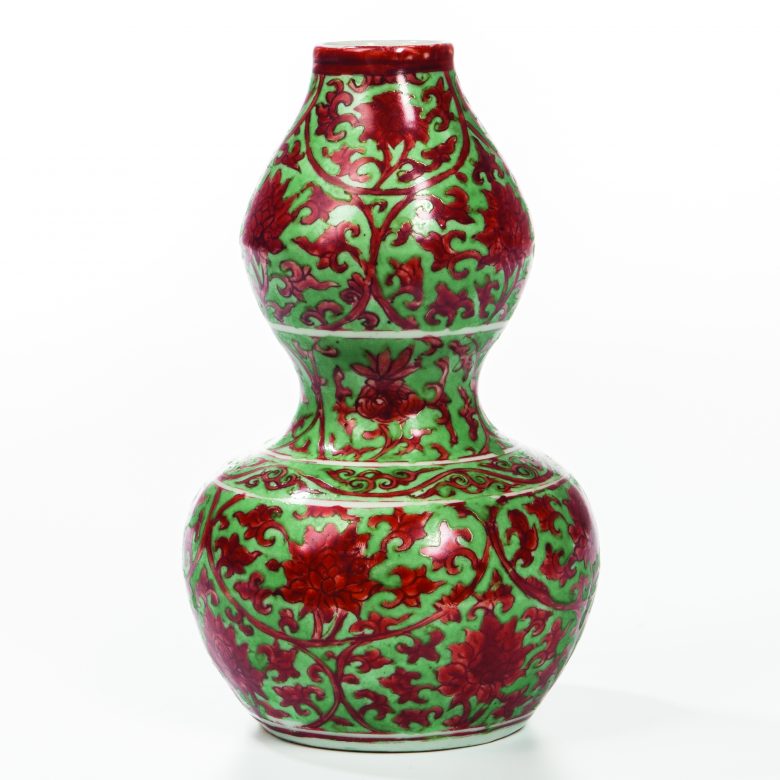
Look before you act. Skinner set a U.S. record for an example in this form when this vase sold for $363,000. Of a rare iron red and green color palette and six-character Jaijing mark, the vase was discovered by a Skinner appraiser and consigned to Skinner from the estate of a New England family. The vase was wrapped in a storage warehouse and forgotten for years.
Credit: Skinner