



How to Pronounce “Scallop” | New England Dialect
Yankees know how to pronounce ‘scallop’ and warn others to be wary of people who don’t. Are you saying it right?
By Katherine A. Powers|Aug 19 2022|

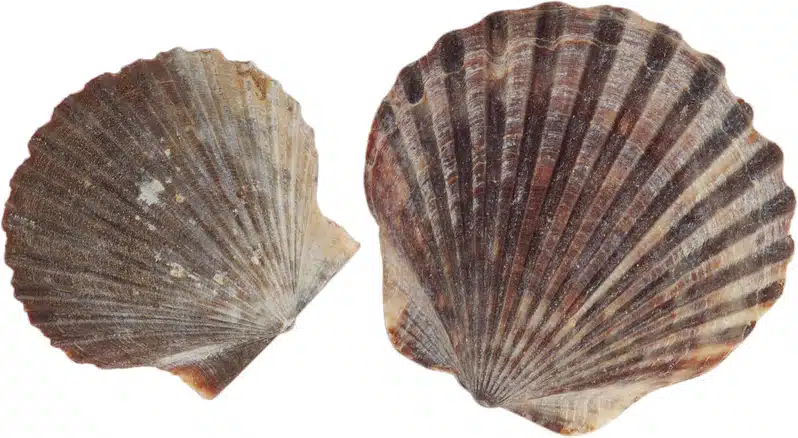
How to Pronounce "Scallop" | New England Dialect
Credit: ThinkstockNow a Yankee Classic, this article about the correct way to pronounce ‘scallop’ was first published in 1981.
When I wish to be told plainly where the New England mind stands in matters of taste, I turn to an ancient friend of mine, Janet Aaron, who, for the quarter century I have known her, has never equivocated and never doubted. She recalls picking bay scallops on Cape Cod as a girl and says dismissively, “The sea scallop is not even to be mentioned in the same breath as the bay scallop. It is the vulgar version of the scallop.”
She fixes me with a warning eye, “And beware the person who says ‘skal-lup’! They don ‘t know what they’ re talking about. They’re inlanders. It’s ‘skawl-up.’ ”
The scallop, or skawl-up, is the perfect repast for the dour months ahead. Bay scallops in particular achieve perfection during the cold months, when their meat is pumped with the sweetness of stored glycogen. The scallop’s graceful, fluted shell is the emblem of the Apostle St. James the Greater and of pilgrims in general, giving it religious associations, which, while not quite penitential, encourage the casuists among us to serve scallops as proper Lenten fare.
The two reigning scallops in New England waters are the large sea scallop, which is harvested year-round, and the smaller bay scallop — also called the Cape scallop when found in the salt ponds and near the shore of Cape Cod and nearby Nantucket and Martha’s Vineyard. The bay scallop is harvested only from November to March, chiefly to protect it while spawning.
My friend Janet’s parochial preference is echoed by New England food and travel writer Eleanor Early, who declared some 40 years ago: “Sea scallops are not really scallops at all. True scallops are found only in bays. They are the most delicate shellfish in the world, very small and very sweet.” This, of course, is half nonsense.
Sea scallops are scallops and very good to eat, particularly grilled — a treatment that the bay scallop can’t really stand up to. Nonetheless, the sea scallop, robust fellow though he may be, simply does not exercise the grip on the New England palate of the bay scallop.
Unfortunately, the bay scallop harvest has been declining every year, and the fishery could be on its last legs. Bays live only 18 months to two years (as opposed to the sea scallop’s maximum of 30 years), so the failure of one year’s class has devastating consequences. Furthermore, although both sea and bay scallops are sensitive to environmental disturbances, including variations in water salinity and temperature, the bay scallop inhabits shallow water and is susceptible to the added pollution of coastal development Some towns have intensified environmental regulations to protect the bay scallop fishery. Some have even released hatchery-raised scallop seed in their waters. But perhaps the most ambitious approach to the drastic decline of the bay scallop is the Taylor Scallop Farm in Nasketucket Bay off the coast of Fairhaven, Massachusetts. Here, bay scallops are raised in special sea nets, ensuring a safe life.
The aquatic “farm” is an eerie sight: a watery metropolis in which peaceful avenues of bright blue buoys stretch over 52 acres. The buoys keep more than 120 long lines afloat, each secured at the other end by an ingenious anchor: salvaged railroad-car wheels, weighing almost half a ton apiece. Suspended from the lines are some 35,000 to 40,000 six-tiered nets, and in them you will find the ever-personable scallop. When a net is hauled out of the sea the privileged visitor may see the inhabitants clacking and chattering excitedly: 150 baby scallops expressing their views. They seem exhilarated and joyful — no doubt they are simply annoyed.
Back on land, after a brisk encounter with a scraper to remove barnacles and other hangers-on, dozens of spiffed-up adult scallops sit in a holding tank. Some chat amiably with their companions, while others seem more interested in the world outside, gazing up with a row of unblinking and attentive eyes. Occasionally, in a surge of ebullience or impatience, a maverick scallop spins off on a rambunctious, cartwheeling carouse.
The Taylor Scallop Company is allowed by law to sell scallops year-round, but the off-season scallops, though certainly good, do not match the cold-water harvest. Taylor Bays, as these scallops are known, are sold live in their shell and are intended to be eaten whole. They are sold in a number of fish markets and are well worth seeking out.
In cooking bay scallops, as in everything, Janet Aaron demands simplicity, directness, no frills. “Bay scallops stand on their own,” she announces. “Pat them dry. Fry them lightly in butter. A hot pan, but don’t brown them. A couple of minutes at most. Just until they are opaque. Serve them with lemon. Salt and pepper. That’s it.”
She pauses sternly. “Well,” she relents, “you may have a glass of dry white wine with them.”
Some people do more with their scallops. For example, scallops are excellent smoked. The delicacy of the flesh might make such treatment seem too brutal — and in the wrong hands it is — but there is at least one source of very good smoked scallops: Ducktrap River Fish Farm of Maine. This company cold-smokes scallops in oak and apple wood. They are wonderful in salads and may be kept two weeks in the refrigerator.
Usually when we think of scallops, most of us are really thinking of the sweet plug of ivory-colored meat that is, in fact, only the scallop’s powerful abductor muscle. With the exception of Taylor Bays, most bay scallops are sold shucked. All sea scallops are. What has happened to the rest of it? It has simply been thrown out, a “sacrilege,” according to the great food writer Waverly Root. Be that as it may, this is the New England custom, and when I suggest to my advisor that the whole animal should be consumed Janet shakes her head and barks, “Well , I never heard of such a thing!” I persist in this heresy, having myself enjoyed scallops whole, both cooked and raw. Janet peers at me with troubled eyes and grumbles, “I don’t know if I can get used to this idea. I don’t think I like it.”
Now that you know how to pronounce scallop, maybe you’d like to try cooking with the whole shellfish. If so, here are a few recipes that use all the edible parts.
This post was first published in 2014 and has been updated.
SEE MORE: Scallops Guide | What’s the Difference Between Sea Scallops and Bay Scallops?
FAVORITE SCALLOP RECIPES:
Angel Hair Pasta with Scallops
Baked Scallops
Baked Scallops in Mushroom Cream Sauce
Crispy Oven-Fried Scallops




SKAW-lupp
To say skal-lup is akin to putting TOMATOES in clam chowdah! Just not done in New England!!!!!
Don’t speak for all New Englanders. Like all dialect, it is regional. In southern RI, it is pronounced scall-up, not scawl-up.
Scallup. Qawhog, the fresher the better.
Real New Englander say skawl-up? Give me a break. This New Englander has been living here 48 years. My family goes back to the Mayflower, settled towns in Massachusetts, Connecticut and Vermont, had family members who have fought in every war since the French and Indian, been farmers, factory workers, teachers, ministers, fisherman etc. I myself teach and preserve New England history as a profession. And I pronounce them scal-lup’s….
Well, Patrick…you the teacher, hopefully, have learned something.
I’m from New England and say skal lup……………… if it should be pronounced skawl lup it would be spelled scaulup
Look at it this way: You get on the telephone and make a call.
Put an s in front of it and you get scall
Add the op scallop
Your pronunciation is now correct.
Born and grown up in New Bedford Ma. The CORRECT way to pronounce it is scallop. Just think how you pronounce all, call. Put a s in front of call and add an op at the end
Of it . . . And you have the proper pronunciation!
Does it matter as long as they are delicious!!!
i can understand both pronunciation but I am used to New Bedford’s
Wall,ball,fall,hall, call…..scallop.
Scallop like dollop, not scallop like gallop.
Born and raised n central CT, skal up. But I also pronounce a body of stored water as “rezz ahv wah” perhaps my Mom’s Brooklyn influence.
That pronunciation is very regional,as New Englanders’ from different regions of New England have different pronunciations. You do not speak for us all on this one Yankee.
I am from West Canaan, New Hampshire…and my family pronounces it…SCALL…UP…its generation generated…how we have heard it pronounced before us…towns within New England themselves….take for instance…two brothers who were raised in North Canaan together…one speaks with an old New England sound, whilst his brother does not…so many factors into play here…don’t you know!
Does that theory also hold for all of the people who pronounce the word “aunt” as ANT?
ANT is pretty much a New York thing!
Perhaps those who say Skall-up are from inland.
I crings if I hear that pronunciation. It sounds low class.
The proper pronunciation is SCALL (rhymes w FALL) op
Not necessarily. I grew up right on the water in CT, minutes from RI and I say skal-op. 🙂
I think that is because CT has such a mix of accents…NY, Italian, Jewish, Polish, threaded throughout the state. So does RI.
Who cares? Just enjoy dem !
I’ve been a Mainer since 1943 and all my life “all” is pronounced the same in fall, call, mall, ball, and scallop
Funniest thing…I was bohn in Wuhstah, Mass 83 yeahs ago. We always said skal-lups, but we also ate scollup potatoes!
Just give me a plate of Skawl-ups for supper! Wicked good!
No Coquilles St. Jacques? My favorite.
I also grew up in New England and I say SCALLOP like GALLOP. I don’t give a F**K whay anyone thinks or says about it.
You do realize that Eastern Mass isn’t the only part of New England, right? That’s the only place that would say skawl-up. The rest of us coastal New England natives not from the Boston area say it like skal-up. I grew up in a fishing village in Stonington, CT, and I’m pretty sure I qualify as a coastal New England native even if I’m not from the almighty Boston area.
*or scall-op.
And the best scallops in the world are Bomster!!!
Everyone knows that Connecticut is really part of New York. Ya, it’s not really New England. It’s scawl-up…
Actually, no. Southeastern CT is not NY at all and is very much New England. Points west of Route 9 or west of New Haven if you push it are more NY and not even eastern CT natives consider them New England or even as part of CT.
PS. I’ve also lived in VT and MA and am married to a MA native. My original comment stands.
If you cant harvest them, you cant’ name them. Skawllup
I too am a lifelong resident of Stonington, and when I read this article and saw SKAWL-UP, all I could think was the article was written by a Bostonian or someone from Maine. Skal-ups here in this part of New England nestled between RI and CT in the home of the last commercial fishing fleet in the State.
I am about to cook some Scallop(s) like dollop right now yup wicked good !
I grew up in New England with relatives who grew up and lived in the Boston area and this article I am reading in July of 2108 is the first I’ve ever heard of the alternative pronunciation apparently favored by Bostonians. Who, of course, have designated themselves the keepers of American English and consider inferior those who speak it differently than they — you know, the rest of the USA, including most of New England.
Pronounce this word: call
Now pronounce this one: scallop
Get it now?
Maybe because it is closer to the way English people would say it, which is Skolup.
Travelling in the Maritimes in Eastern Canada, the provinces of Nova Scotia, Prince Edward Island, New Brunswick and Newfoundland pronounce the word as “skawl-up.”
Let’s hear you say, “all,” “ball,” “call,” “fall,” “hall,” “mall,” “pall,” “tall,” and “wall.”
I was just having a similar discussion recently with a friend (from Vermont) who would only ever eat sea scallops. I told her how my dad, a many generation Rhode Islander, would only eat bay as they were sweeter ad this tastier. It was a dish loved by both my parents, indeed, and not just during Lent! As for pronunciation, in the Ocean State we would say: skah-lup. I am sharing this info with that Vermonter pal!
Scall-up. As far as Bay Scallops go, I’ve lived in Niantic Connecticut for my entire 70 years and until the Niantic Bay Scallops we’re no more. The debate rages on, was it fresh water run off caused by so much development, I don’t think it was pollution. When the eel grass went, the scallops went.
Niantic Bay scallops are back! Yeah!
https://www.theday.com/article/20191125/NWS01/191129578
Why does there seem to be agreement that Gallup is pronounced gal-lup, but so much disagreement about scallop? Those who cite call, all, pall, etc., need to be reminded that the word is divided into 2 syllables between the ‘l’s’, therefore gal-up and skal-up make more sense than Scall-up or gall-up. How about ballast? Ball-ast? Jimmy Fallon (Fall-on)? With this reasoning, my friend Callie might think you thought her a furry breed of dog…. although Wally would probably completely agree with your logic.
I live in an area of NS Canada where local fishers/harvesters all around my ocean location (below me, and behind my woods) say skawlops same way they say trawler. Why does it matter? My name is pronounced Ilona, as in illuminate. But people tend to call me EYElona, EYEona, LEONA cus of the stupid font that does not correctly put bottom/top on capital I as u see here. Mostly I don’t get introduced, don’t get called once they EYEBALL my name tag. Or call me by my surname, since it is an old time Christian name. IT MATTERS
I spent my boyhood summers in Nova Scotia near the Scallop Capital of the World, Digby NS. It’s ALL, not AL.
Who cares how you pronounce it . Scallops are good eatin’ I prefer ocean scallops to bay scallops especially when I am out to dinner .The bay scallops disappear under all that breading and butter sauce!!!! At least you can see ocean ones on the plate. Like I said who cares how to pronounce the word just as long as they are cooked to perfection!!!!!!! Besides that was only to hook you into reading the story as everyone now a days tries to be PHONETICALLY CORRECT . BULL ONLY !!!!!
Skawl lup … 73 years old. From outside Boston…. Our letters are off on a bit of our pronunciations!!!!!
After 83 years, when I learned to speak and having lived in Massachusetts all my life, I say scAllop.
That’s the way I learned to say it. My Mother said that ALL is the word in scallop and to say it that way.
In all my years as a shoreline New Englander, I have not ever heard anyone pronounce it skaw-lup. Ever.
You have to be from Boston to say skawllop. It’s like calling your friend Bob Bawb.
Or Maine.
Here on Nantucket we say “scallop”, rhymes with “wallop”. And whomever told the writer that bay scallops from Nantucket are ever referred to as “Cape scallops” is VERY MUCH mistaken.
rhode island red hens produce brown eggs, but that doesnt make them local like the old jingle. Scawlops are named by the folks that harvest them. Not someone in who doesnt live where they grow.
Aye aye, me matie
I was raised in Pembroke Mass, presently living in the scallop capital of the world ” New Bedford, Mass” If you look at an older dictionary from the 60’s there was only one way to pronounce scallop. Skawl up. The new dictionaries have succumbed to the unknowing New York chefs who mispronounce it all the time on TV. Drives me crazy. If your name is Louise, you don’ t want to be called Lois. Maybe because the Pilgrims had a 30 foot shallop (shallow) doesn’t mean that scallops should be pronounced that way.
Born and raised just outside Boston 77 years ago, as a child spent summers at the family cottage on The Cape, have lived in Maine since 1980. I pronounce scallop like scawlop. I love all scallops, but prefer sea scallops. Yum!
The correct pronunciation is ‘skawl-up’ . That’s it.
I was born &grew up in Newport RI. I say skalup, lobstah, quohog corfee I love my RI accent!!!
I am originally from Boston, Mass.
Keep ya R.I. accent I think it is superb.
Sit down and have a hogie!
we call them Subs.
A real RI native calls their sandwiches “grinders” and your drink is a corfee cabinet.
I say “skal-lup.” I was born in Connecticut, lived there for 4 years after that, went to college there, and live there now, although I lived in the NJ/NY area for years. Mea culpa, mea culpa, mea maxima culpa. I prefer sea scallops; my wife’s partial to them in a sage-brown butter sauce. As to that substance with tomatoes and clams, it’s not chowder, it’s a heated-up Bloody Mary with clams in it.
Love that description….heated up Bloody Mary with clams in it ! Laughed out loud !
????
I’m always told by people I pronounce it incorrectly, I live in Phoenix now. I pronounce it skawl-up, that’s how it was said where I grew up in northeastern Mass right on the coast. People actually get mean about it and tell me I have no idea what I’m talking about. I try not to take it personally and cannot get into the habit of using the other pronunciation.
Show ‘em the dictionary. I had this debate years ago when I first moved to Florida. While technically “Skallup” (like so much of the rest of the country says) is a correct ‘alternate pronunciation’, the way we native New Englanders say it is the ‘preferred’ pronunciation.
No matter how it is said, one thing to agree upon, the sure are good to eat!
It’s all, not al.
Enjoy a nice skawlip dinnah with a glass of tonic.
We always called them “those fancy shell things what looks like claims but aint”
Scallops use to to be so numerous in Charlestown Pond, now called Ninigret Pond, that you had to brush them out of the was to get to the quahogs. Now with the rampant development around the pond the eel grass and scallops have all but disappeared. And they call it progress.
I come from RAI and always pronounced the scall like the word “doll”, so similar to dollops. The issue is the A-if it were an O, it’d be pronounced just like dollops, which is how we all always said it.