Made in New England | Steele Canvas Basket Corp.
For more than 100 years, the Massachusetts-based Steele Canvas has been cranking out sturdy baskets and bags that last—and look good.
By Katrina Farmer|Feb 23 2026|

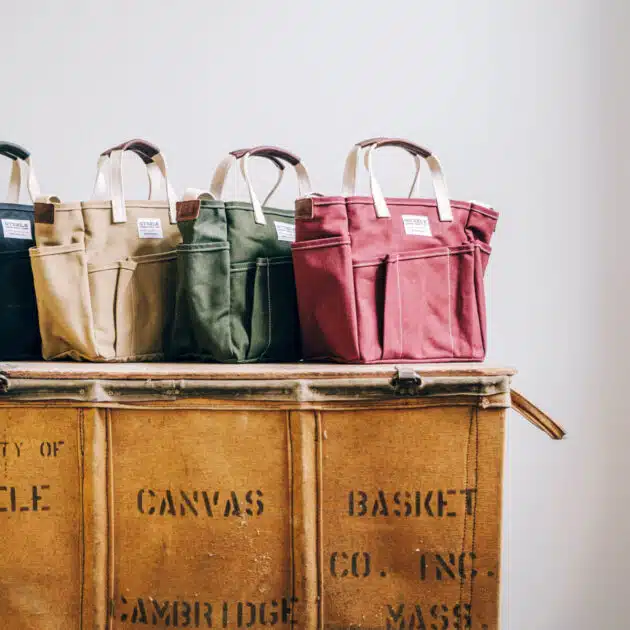
Past meets present: Steele’s best-selling utility totes atop an industrial truck from the 1970s.
Credit: Sophia LiImagine unloading bushel baskets of fresh fish at the Boston docks to be whisked off to markets and restaurants, or piling coal and wood into canvas bags to be lugged up the back stairs of Beacon Hill and Back Bay brownstones. Such scenes were the norm when Steele Canvas Basket Corp. got its start a century ago in Cambridge, Massachusetts, turning out fabric baskets and bags for the rugged use of fishing, coal, shoe, and textile workers.
Today, though, the company’s canvas goods are often found in homes across New England and beyond, tucked into laundry rooms or hanging on hooks in entryways. Stocked by retailers ranging from Williams-Sonoma to Urban Outfitters to L.L. Bean, the products appeal to customers who appreciate items that stand up to decades of hard use.
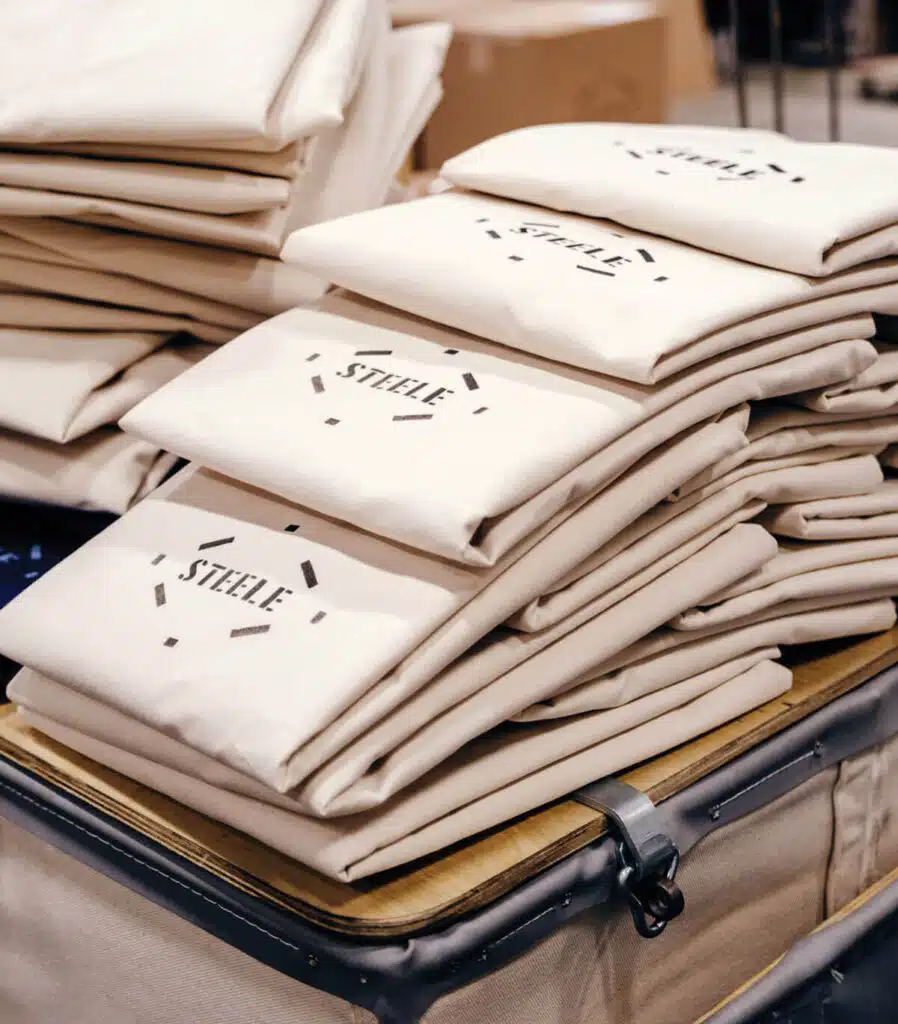
Credit: Sophia Li
As CEO John C. Lordan says, “[Our] two-bushel baskets were made for Steve’s firewood. They weren’t made for Martha Stewart.” And yet, in an ironic twist, it was a mention in the September 2009 issue of Martha Stewart Living that helped put Steele on the map beyond the Greater Boston area.
Steele was founded in 1921 by Albert Pratley Sr.; his son, Albert Jr., was head of the company when Lordan’s father, John J., was hired in 1960. Only the second family to lead the business, the Lordans raised the money to buy Steele and keep it going after Albert Jr. passed away in 1984.
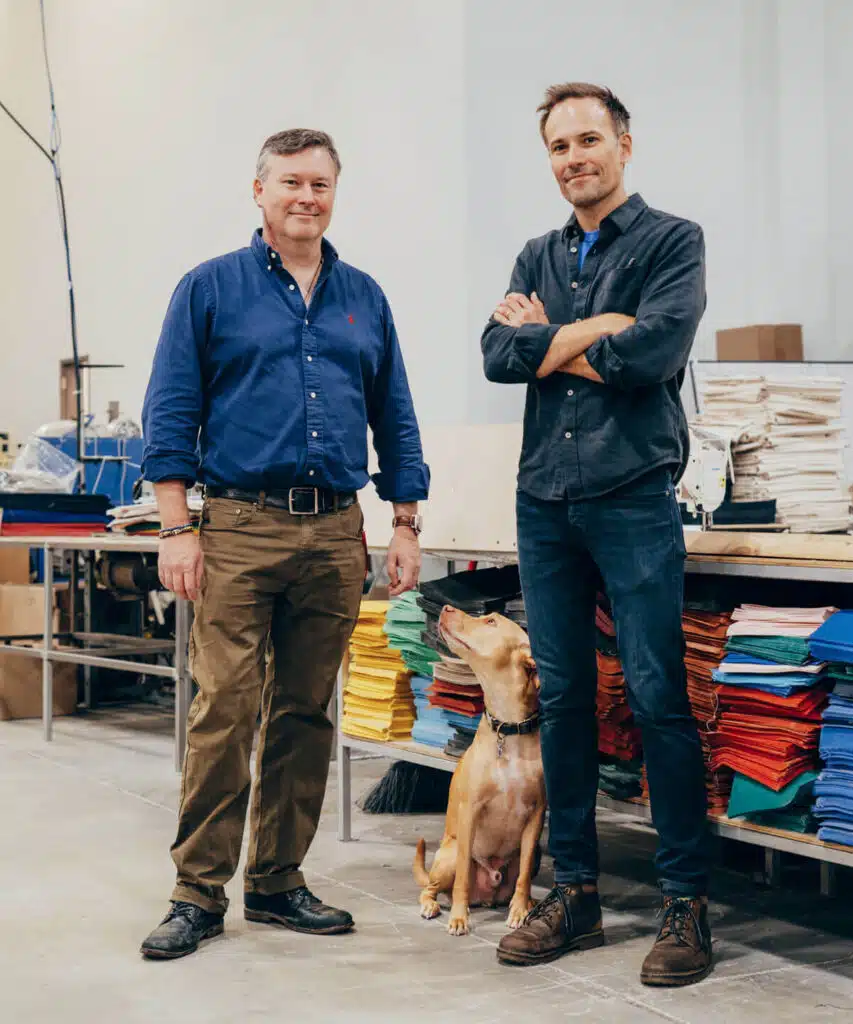
When John C. and his younger brother, Paul, came to work for the company, their dad was president and their mom, as vice president, ran the front office. At first, the brothers saw it as a chance to make easy money over summers and holiday breaks. But in growing up they would come to understand that it was more than a job; after attending college and doing their own thing, they individually found their way back to Steele on either side of 2000. Now, they lead the heritage brand as co-owners.
“It’s the opportunity to step into the shoes of something bigger than you and be responsible for a legacy. That’s what I recognize now,” says John C., with a whisper of a Boston accent.
Credit: Sophia Li
Production happens in a converted warehouse building in Wilmington, having outgrown a factory space in Chelsea and, before that, two locations in Cambridge. In one corner of the shop, rolls of fabric are smoothed out flat on a giant table and cut into segments for bags, baskets, and wheeled storage containers called trucks. From there, the pieces go to the sewing stations, where a team of 30 people keeps the machines humming and the products take shape.
For Steele’s industrial and commercial clients, large baskets and trucks have long been the offerings of choice. The workhorses of factory floors, film studio lots, laundries, post offices, and so on, these products are reinforced with steel framing—crafted right here in the factory metal shop—and often fitted with wooden lids made by Steele’s woodworking team, along with runners or caster boards.
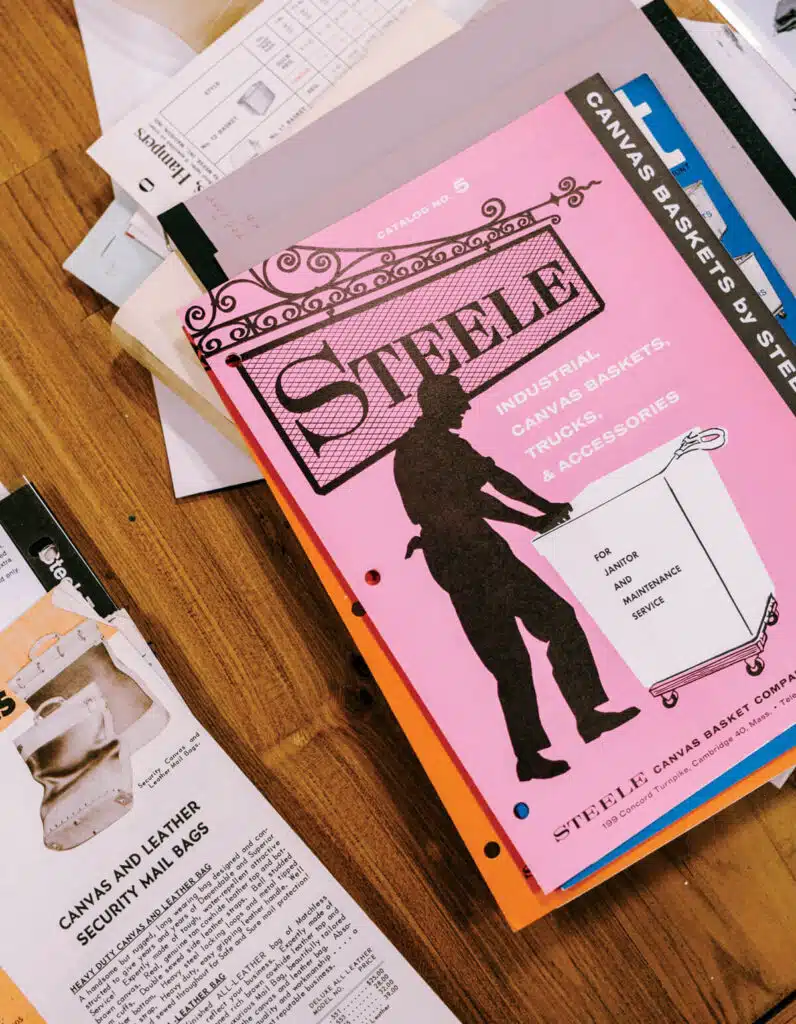
Before John C. and Paul took the reins, only once did the company target the homeowner, offering a log carrier, a butterfly sling chair, an ice crusher kit, and a laundry bag caddy—all of which are still for sale. (Maybe their mom, Sylvia, was the prescient one: She often found practical uses for Steele’s industrial products, using a horse-feed bag as her purse and keeping bushel baskets on hand in the car and at home, as well as around the office.)
Credit: Sophia Li
Under the brothers’ leadership, Steele’s signature baskets and trucks have been joined by soft-sided storage cubes, duffel and weekender bags, and dopp kits. And then there’s the ever-expanding lineup of totes, patterned on the company’s early coal bags: Flying out of the factory at the rate of 250 to 300 a day, they boast details such as hand-stenciled logos, color fabrics, and leather handles. The utility tote is a favorite, made of heavyweight or waxed canvas and replete with pockets, while the gardening edition combines the same durable canvas with a sewn-in vinyl liner that protects against rain, wet soil, and damp tools.
In addition to all the retail stores that stock these consumer-friendly products, other brands have approached Steele for partnership opportunities and corporate gifts. The brothers say they’ve done little outreach, as the products speak for themselves. “The name continues to mean something to people as something they can depend on and is American made,” Paul says.
And as the company evolves, it is staying true to its essential character. In terms of Steele’s product and the way it’s made—well, not much has changed, the brothers say. “We served the New England industries, and we had to make pretty darn tough products for those industries,” Paul says.
“New England customers wouldn’t stand for anything less,” adds John C. “And if it was, they would tell you.”
This feature was originally published as “Steele Going Strong” in the March/April 2026 issue of Yankee.