Made in New England | Lowe Hardware in Rockland, Maine
Nautical know-how undergirds the design-y flair of Lowe Hardware’s home decor.
By Brian Kevin|Dec 29 2025|


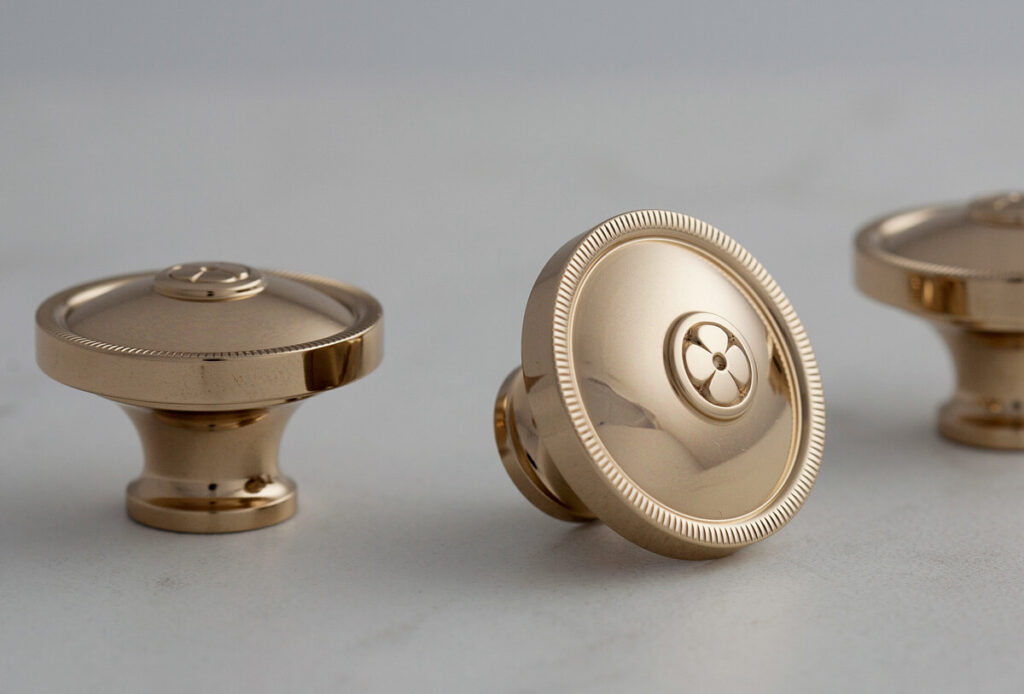
Sleek brass doorknobs ready for finishing at Lowe Hardware, founded by Maine boatbuilder and machinist Bill Lowe in 1977.
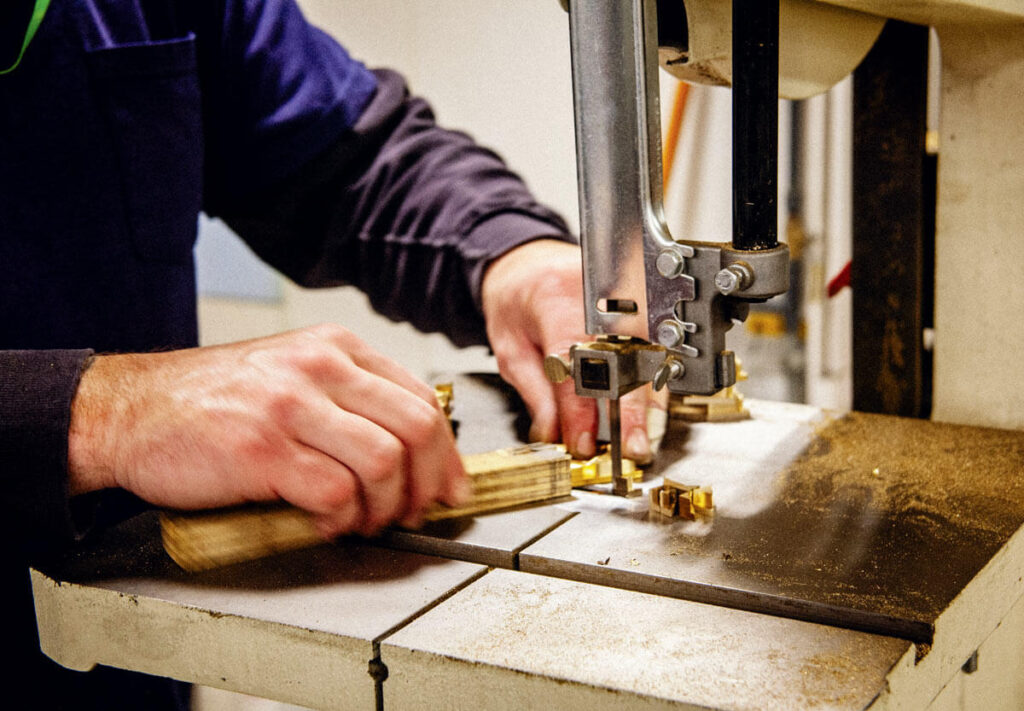
Credit: Courtesy of Lowe HardwareLeave it to a company that supplies some of the country’s highest-end interior designers to know how to make the most of a space: Not an inch is wasted on the manufacturing floor at Lowe Hardware in Rockland, Maine. As they go about their day, proprietor Elliot Lowe and his dozen-plus machinists, finishing specialists, and assembly technicians navigate a tight labyrinth of lathes and grinders, drill presses and polishing machines, cutting tools both manual and computerized. Watch the corner on that bin full of metal rods. Mind that shelf, piled high with ingot-like bars of brass and bronze.
Of course, a good portion of the company’s manufacturing facility is taken up with inventory—elegant little cabinet knobs, latches, hinges, door pulls, and other fittings, each one almost sculptural in its simplicity, small and sleek and lovely. They do pile up, though, and Elliot says the company has “many thousands” of coded individual products, not to mention the many custom pieces it creates. It’s why Lowe Hardware moved into a new 24,000-square-foot hub this past fall, which is double the size of its previous home.

Credit: Leslie Swan
Credit: Courtesy of Lowe Hardware
That’s a lot of growth for a company that 16 years ago was run from the family barn. Elliot’s father, Bill Lowe, founded it there, in the peninsular fishing town of Owls Head, in 1977. Bill was a machinist and boatbuilder looking to specialize, and he had a knack for making handsome and sturdy marine hardware—cleats, rails, winches, and the like. So he turned his 1,600-square-foot barn into a machine shop and, for the better part of three decades, filled custom orders there for both yachts and working vessels, cultivating a reputation at boatyards up and down the Maine coast.
Elliot joined his father in the barn in 2003, after graduating with a degree in mechanical engineering from the University of Maine in Orono. The two “worked great together,” Elliot says, but he had a penchant for tech that his dad didn’t share. He talked the old man into investing in the company’s first CNC (computer numerical control) machine, a precision tool that can mill exquisitely detailed pieces from computer designs. And Elliot also nudged the company to start building an inventory instead of relying solely on made-to-order jobs.
He even got Lowe Hardware online, with a website that noted the company’s ability to tackle residential projects in addition to marine ones. It was, Elliot says now, “a little bit bullsh*t, because we hadn’t done it before. But I knew that we could.”
He knew this in part because, since 2006, Lowe Hardware had enjoyed recurring business crafting the interior hardware for Hinckley Yachts, founded on Mount Desert Island in 1928, makers of some of the most stylish boats in some of the toniest harbors along the East Coast. If he and his dad could blend form and function to outfit a gorgeous half-million-dollar picnic boat, Elliot presumed, they could do it to bedeck a high-end home.
And sure enough, Lowe Hardware’s first residential client, a remodel on MDI, came knocking in 2010. Then another, soon after, on an island in Penobscot Bay. That one was spearheaded by a well-connected New York architect, and the architect told peers about the little fittings company from coastal Maine. Jobs kept coming. In 2014, Lowe Hardware opened a Manhattan showroom. These days, it’s in Greenwich Village, and architectural projects all around the country make up the bulk of the company’s work—sometimes for clients so hoity-toity that even the architects and designers aren’t allowed to know who they’re working for.
The company’s barn-to-Big-Apple backstory, Elliot suspects, is part of the allure. So is its neighborly approach to service, which Elliot says just comes naturally in New England. “We’re not jerks,” he says. “We pick up the phone. If there’s a problem, we say all right, we’ll fix it, and then we do it the next day. I think New Yorkers think, ‘Oh, people in Maine, they’re so nice.’”
But the real appeal is the same commitment to sturdy functionality and classic aesthetics that Bill put into his cleats back in the late ’70s. A set of bronze-finished, bullnose edge-pulls adorning farmhouse cabinets for a client in the Hamptons? They’re as streamlined as if they were built to reduce drag on deck. A polished-nickel door lever with a matching trim plate in a SoHo loft? It has the same minimalist design and clean lines you’d want in a tender built in an Owls Head boatyard.

Credit: Alison Langley/courtesy of Lyman-Morse Boatbuilding Co.
“We’re not trendy at all,” Elliot says. “It’s a timeless design. We take a lot of cues from the old standard hardware that was made 100 years ago.”
Bill, these days, is 80 years old and retired from the company, and his son misses having him around the crowded shop. “I wish he was 20 years younger,” Elliot says. “There’s nobody I can rely on more, and the older I get, the more I realize how much I’ve learned from him.” His dad’s keeping busy in retirement, though, building a 30-foot steamboat in the barn where it all began.