



Return of the Native | Wild Turkeys in New Hampshire
By the late 1960s, there hadn’t been wild turkeys in New Hampshire for more than a century. Then wildlife biologist Ted Walski came along.
By Jim Collins|Nov 15 2014|

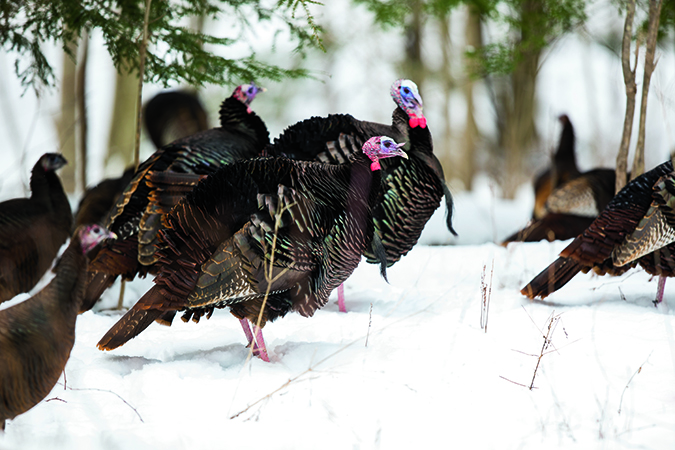
Wild turkeys patrol their home territory in a backyard in southern New Hampshire.
Credit: Joel LainoWild turkeys patrol their home territory in a backyard in southern New Hampshire.
Credit: Joel LainoCredit: Joel Laino The landscape at the time of the report, though, was changing. Biologists had recently begun trapping wild birds and relocating them to a handful of former territories along the East Coast and throughout the Midwest, and were seeing success. In 1969, New Hampshire took a shot. It swapped 31 fishers for a flock of turkeys from West Virginia and relocated them to Pawtuckaway State Park in the southeastern part of the state. But the transplanted birds suffered high predation and back-to-back extreme winters—winters that also knocked the whitetail-deer population to an all-time low—and the flock disappeared. In January 1975, a young Fish & Game biologist named Ted Walski tried again, this time with funding from the federal Wildlife Restoration Program. Suspecting that the West Virginia strain of turkeys lacked the hardiness to survive New Hampshire’s climate, Walski looked to the Allegheny Mountains of western New York, the last holdout of native wild turkeys in the Northeast. Worried that Pawtuckaway’s mostly wooded habitat had contributed to the earlier failure, Walski picked the Connecticut River Valley town of Walpole for his original release site. The town had plenty of mixed forestland and reliable food sources beyond the turkeys’ preferred diet of seeds and nuts, including concentrations of crabapple trees, rose hips, and sharp-thorned barberry bushes. And, crucially, the town counted 13 active dairy farms. The corn kernels left behind on the farms’ manure-covered fields, Walski thought, would provide an important crop that could help the flocks get through a hard winter, when their primary food supplies would be buried under snow. With a colleague from Fish & Game, he released 25 Allegheny Mountains turkeys near Blake’s Farm, at the Sawyer Farm, and at the Graves family farm in Walpole—and began monitoring them.
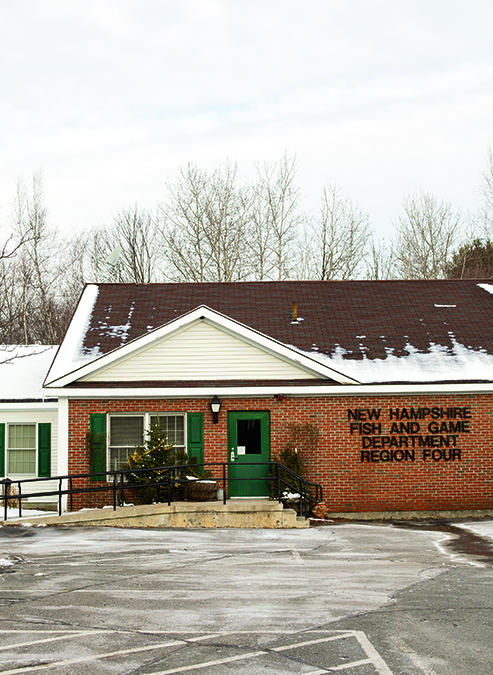
State wildlife biologist Ted Walski works out of the Fish & Game regional offices in Keene.
Credit: Joel LainoCredit: Joel Laino
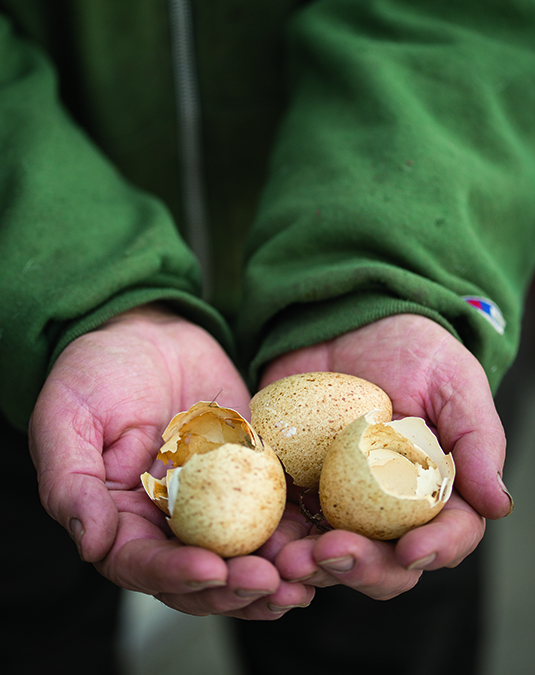
Turkey eggs bear an interesting speckled pattern.
Credit: Joel LainoCredit: Joel Laino
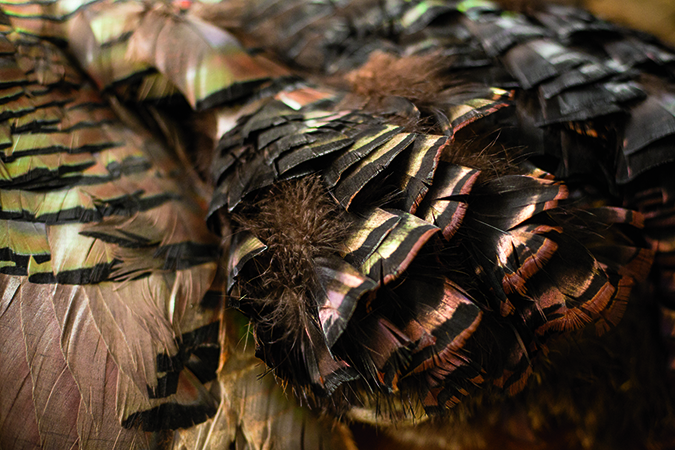
Up close, a turkey quill reveals beautifully varied coloration.
Credit: Joel Laino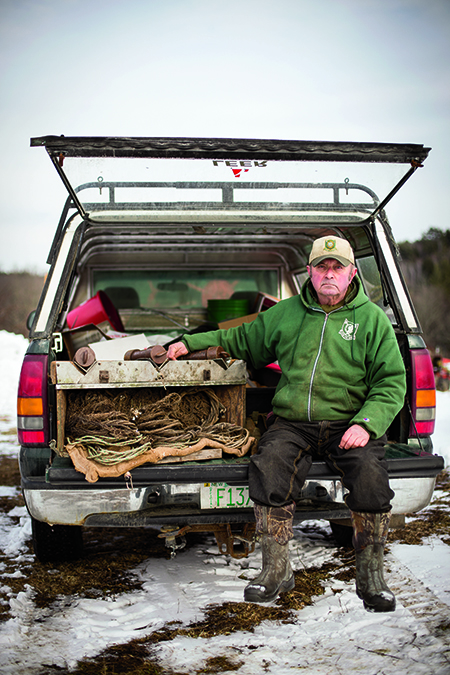



Great article! I enjoyed the history . We have a large flock that we feed over the winter. It’s fun wAtching them. It’s also very entertaining this time of year . Thanks again for the great article .
I saw a wild turkey today. It flew across the street. I was on School/Lake heading toward Salem between 1:00 and 2:00pm
For quite a few years we’ve had them here on the North Fork of Eastern Long Island, NY.
I have been watching Wild turkeys for many years….at least since 1995 We have on old farm with 10 acres of fields also watch deer and a visiting coyote..I would like ro know more about habits of turkeys
We recently bought property in Lancaster N.H. and while walking thru it have been covered in ticks. Do wild turkey eat ticks? If so how can I encourage turkeys to hang @ our property?