Nature and Culture Collide
Before it’s too late, allow me to call your attention to a nifty little exhibition at the Rhode Island School of Design Museum. Entitled Nature/Artifice, the exhibition features 13 works from the museum’s collection that artfully speak to the relationship between nature and culture. I say before it’s too late, because the RISD Museum is […]
By Edgar Allen Beem|Jul 24 2009|

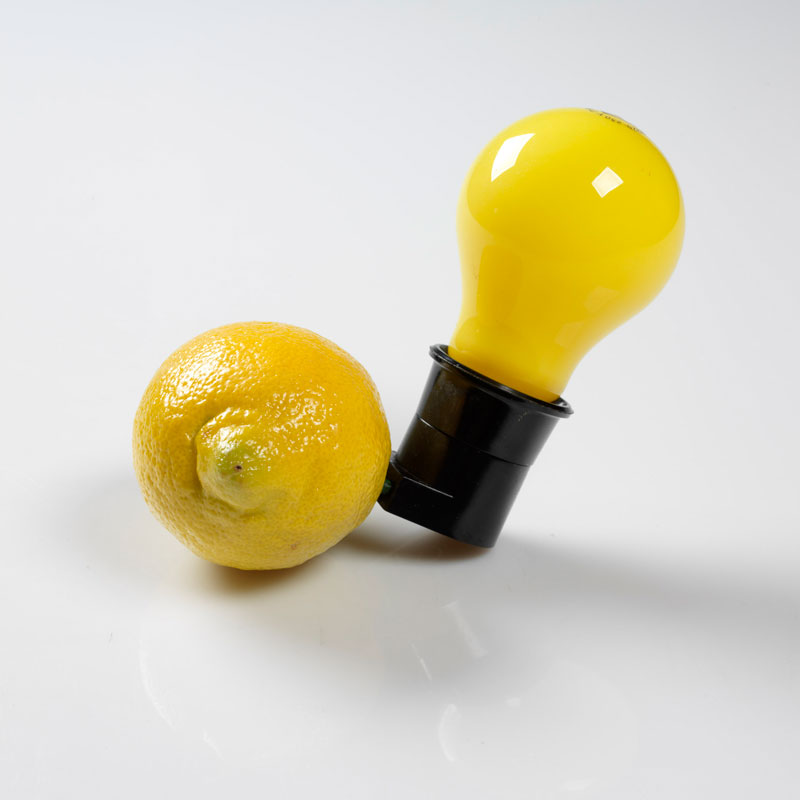
Joseph Beuys, Capri Battery (Capri-Batterie), 1985. Helen M. Danforth Acquisition Fund. © 2009 Artists Rights Society (ARS), New York / VG Bild-Kunst, Bonn
Before it’s too late, allow me to call your attention to a nifty little exhibition at the Rhode Island School of Design Museum. Entitled Nature/Artifice, the exhibition features 13 works from the museum’s collection that artfully speak to the relationship between nature and culture. I say before it’s too late, because the RISD Museum is closing for the month of August as a cost-savings measure in this down economy.
Nature/Artifice (which will return in the fall and be up again through February 2010) is one of those concept shows that brings art together around an idea. Of course, all traditional landscape paintings and a great deal of still-life painting is essentially a matter of the man-made (art) relating the natural, but Nature/Artifice explores some of the material and mental ways that contemporary artists respond to the natural world.
The show, selected by curator Judith Tannenbaum and installed in a single gallery at one of America’s biggest little art museums, is neatly defined by Tony Capellan’s 1996 “Mar Caribe (Carribean Sea)”, a sea of blue and green flip flops arranged like waves and evocative of the artist’s native Dominican Republic, both in the color and costume as well as in the edgy addition of barbed wire in place of straps.
British art star Damien Hirst is represented by “Utopia, 2008,” a mandala made out of butterfly wings. I suppose we might conclude that “Utopia” is the 21st century apotheosis of still-life (nature mort), a stillpoint meditation on the transience of life fashioned from dead nature.
Then there are such curiosities as a waterfall made from audio tape by Christian Marclay, an arrangement of Greek stones by minimalist Richard Long, and the great Joseph Beuys’ “Capri Battery,” a clever work that pairs a yellow lightbulb with a yellow lemon in a trope of formal correspondence.
The RISD show I had planned to feature in this post was Mountains and Rivers, an exhibition of traditional Japanese woodblock prints by the masters of the genre, Hiroshige and Hokusai, but Mountains and Rivers has been delayed until December as RISD reshuffles its schedule around the unexpected August closing.
In the meantime, I recommend Julian Opie’s “View of Matsuzaki Bay in the Rain from Route 136, (2007),” a computer-generated conceptual landscape inspired by Hiroshige’s classic “One Hundred Views of Edo” print series. That Nature/Artifice selection will make a nice transition piece when Mountains and Rivers does open.
[RISD Museum, 224 Benefit St., Providence RI, 401-454-6500.]