Book Review | Seen the Glory
Get Our FREE Yankee Best New England Vacations Guide! Email(Required) Subscribe Men going off to fight the Civil War sometimes declared they were going to “see the elephant.” It was a metaphor: The elephant stood for the whole wide world outside their little towns, and for the mystery and glory of war. Those who survived […]
By Tim Clark|Apr 15 2014|


Credit: Piazza, Michael
Men going off to fight the Civil War sometimes declared they were going to “see the elephant.” It was a metaphor: The elephant stood for the whole wide world outside their little towns, and for the mystery and glory of war. Those who survived often came home shot to pieces in wagons bearing the ironic message “Seen the Elephant.”
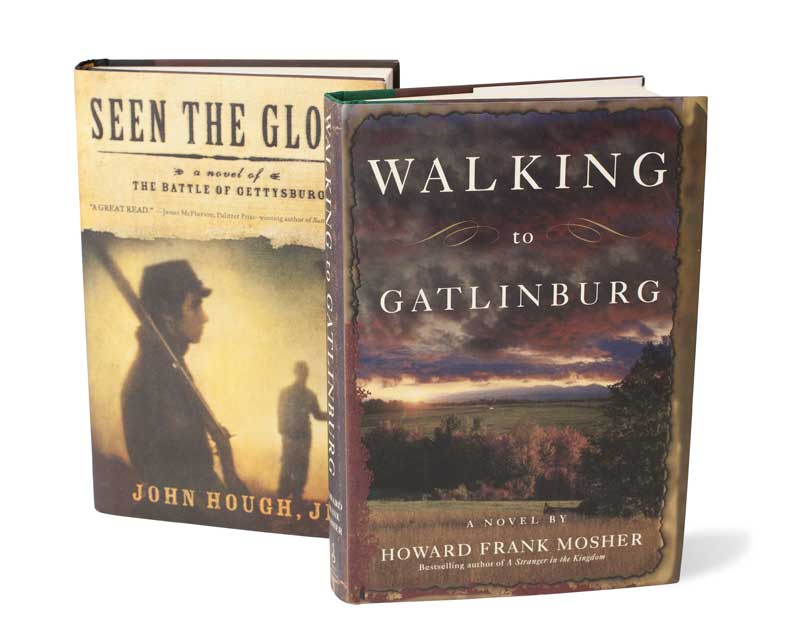
The title of John Hough Jr.’s Gettysburg novel, Seen the Glory, underscores that irony. Two brothers, Luke and Thomas Chandler, grow up on Martha’s Vineyard, where their father, an abolitionist doctor, helps a runaway slave, Joseph, escape to Canada. His example, and their beautiful Cape Verdean housekeeper, Rose, inspire Luke and Thomas to enlist in the 20th Massachusetts Volunteer Infantry Regiment, which would help hold the Union center at the climax of the battle. Hough’s is the first Civil War novel I’ve read that highlights the people the war was fought to free: not only Joseph and Rose, but Delia Wilkes, a free black woman who finds herself taken up by the invading Confederates, and her son, Floyd, who chooses to fight instead of run.
What lingers, though, isn’t the characters, but the misery of a soldier’s life, in camp and on the march, and the indescribable horror of battle. No romantic notions of Southern chivalry or Northern idealism will survive Seen the Glory.
Howard Frank Mosher’s Walking to Gatlinburg is radically different. It, too, tells the story of two Yankee brothers, Gettysburg, and the Underground Railroad. But Mosher uses history as a vehicle for the deeper concerns of myth.
Morgan Kinneson begins his quest in Kingdom County, Vermont, Mosher’s invented Paradise, in 1864. Having failed in his responsibility to convey a runaway slave to Canada, Morgan begins walking south, determined to atone by finding his brother, Pilgrim, who disappeared at Gettysburg. On his journey, he meets murderers, madmen, thieves, witches, ghosts, even a real elephant. Like all mythic heroes, he’s given magical objects–a mystical stone from the doomed slave, a straight-shooting rifle from a pacifist gunsmith, and a compass from Robert E. Lee inscribed The good man’s course is always true.
He also kills a lot of people. That, too, is part of the mythic hero’s journey: the descent into darkness, physical and moral. In each novel, only one brother survives: the one with fewer illusions. Read them both. History shakes our faith; myth restores it.