Jacques Pépin at 90: A Life of Culinary Art, Friendship, and Purpose
At 90, living culinary legend Jacques Pépin reflects on his greatest achievements, his friendship with Julia Child, and that time he turned the White House down….
By Amy Traverso|Oct 23 2025|

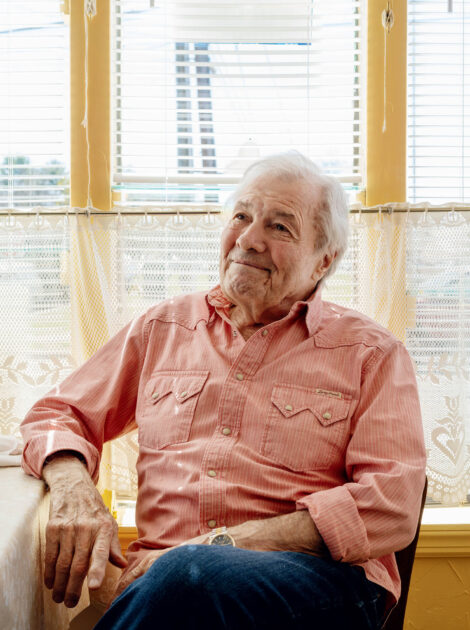
Jacques Pépin in a portrait taken for The New York Times in 2022. In that article, Pépin mused about life before the celebrity-chef era, noting that when he was personal chef to Charles de Gaulle, “the cook in the kitchen was never interviewed by a magazine or radio, and television barely existed. If someone came to the kitchen, it was to complain that something went wrong.”
Credit: Jillian Freyer/The New York Times/ReduxIf you were to write the story of Jacques Pépin’s life as a screenplay, it might be easier to believe.
Growing up near France’s culinary capital of Lyon during World War II, his father a Resistance guerrilla fighter, Pépin survived wartime privations and German bombs as his mother scoured the countryside for food. After the war, Pépin began his kitchen apprenticeship at 13, working up through the regimented brigade system at restaurants in and around Lyon and Paris, culminating in a position at the storied Plaza Athénée at age 16. There, he joined the swirl of café society, where Jean-Paul Sartre and Jean Genet were regulars.
Military conscription threatened to take Pépin far from the Parisian high life, to Algeria, but through an acquaintance he miraculously found a spot as chef of the presidential palace, working in the same kitchen where Antonin Carême cooked for Napoleon and serving three presidents, including Charles de Gaulle.
The good luck and hard work would continue in New York. Cooking for Pierre Franey at Le Pavillon, Pépin met and befriended Craig Claiborne, the legendary New York Times food editor, which led to friendships with James Beard and an up-and-coming cookbook author by the name of Julia Child. All the while, he not only mastered English but also earned bachelor’s and master’s degrees in French literature at Columbia University.
But mon Dieu, Pépin was just getting started. Approached by Le Pavillon regular Joseph Kennedy to cook for his son at the White House, he instead accepted an offer from another regular named Howard Johnson to improve the offerings at his namesake restaurants. He helped open Windows on the World at the World Trade Center. He wrote books, hosted 13 public television series—some with his friend Julia—and earned 16 James Beard Awards.
Now, nearing his 90th birthday on December 18, he has just released his 35th book, The Art of Jacques Pépin: Favorite Recipes and Paintings from My Life in the Kitchen (did I mention that he’s also an accomplished artist?). And he continues to oversee the Jacques Pépin Foundation, which funds free culinary education through community organizations to bring marginalized people back into the workforce.
I caught up with Pépin at his home in Madison, Connecticut—where he’s lived since moving there with his late wife, Gloria, half a century ago—to talk about his extraordinary story. To learn more about this culinary legend, read his memoir The Apprentice: My Life in the Kitchen (yes, he also writes beautifully) or watch my visit with him from Season 3 of Weekends with Yankee—our most popular video on YouTube.
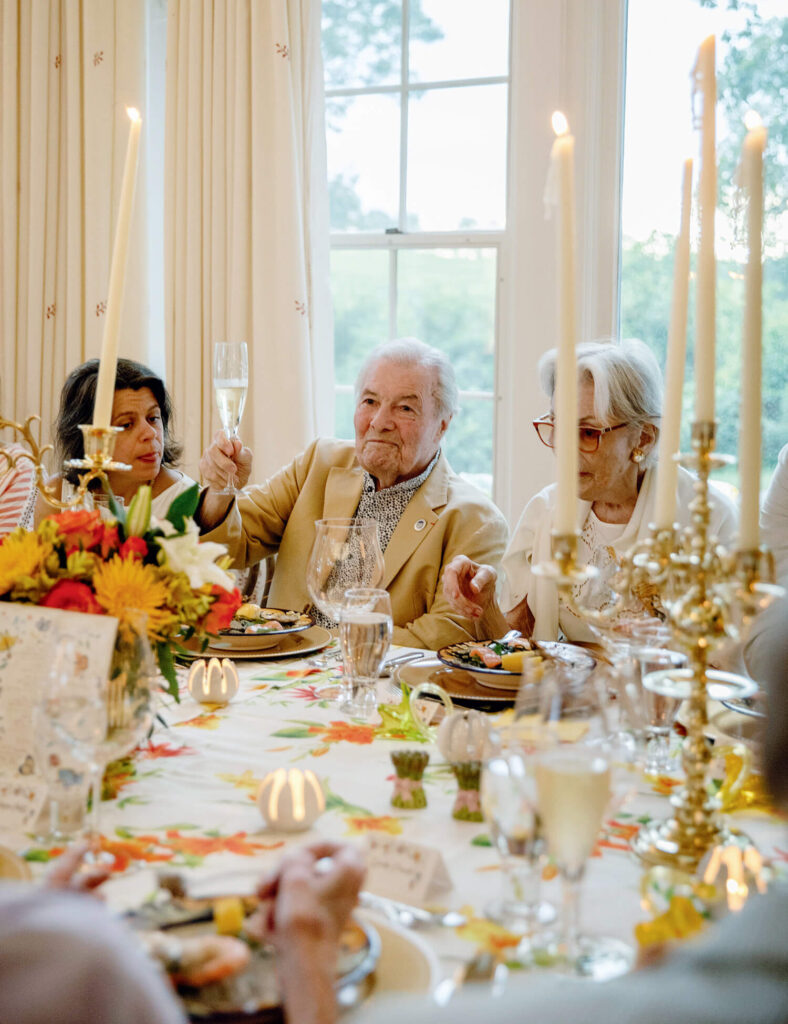
Credit: Lauren Lancaster/The New York Times/Redux
You’ve lived so many different lives. Looking back, is there a time that feels the most significant?
Yes, there are several, but in retrospect, probably when I came to America [in 1959] and eventually decided to stay. When I came here, I said, “I want to see the country, the jazz, New York, and I’ll stay here two years.” But then I ended up staying and it changed my life.
What was the food culture you encountered when you first arrived?
In some ways, it was familiar, because I came here to work at Le Pavillon, which was considered the greatest French restaurant in America. And the people that I met there, like [chef] Pierre Franey, were all involved in food. Then I met the trinity of American food writers: Craig Claiborne of The New York Times, James Beard, and Julia Child, who I met in 1960. Helen McCully [the influential food editor of House Beautiful] showed me the manuscript of Julia’s Mastering the Art of French Cooking. She said, “This woman lives in Boston. She’s a big tall woman with a terrible voice. She’s coming in a week. Do you want to cook for her?” It was a good book, so I said, “OK.” And that’s how I met Julia. The food world was very, very small at that time.
And yet this was happening at a time when American food was very industrialized. Were you shocked by some of the food you found here?
Yeah, I certainly was surprised. A supermarket opened near my apartment—my first supermarket experience. I thought it was a terrific idea. In France, you go to the fish guy, the bread guy, and so forth. Here they were all under the same roof. Except it wasn’t really food. It was all package, package, package. And there was one type of salad—no leeks, no shallots. There was no great wine, no cheese, no great bread. It’s totally different now. Look at our markets. It’s amazing.
You famously turned down the Kennedys when they tried to recruit you to be the head White House chef, and you went to work in culinary development at Howard Johnson’s instead. Why?
Well, again, you look at it in the context of the time. I had worked in Paris. I had been chef to three presidents, and not once was I ever invited into the dining room. You didn’t even think of it. So yes, it was very prestigious to be asked to go to the White House, but I didn’t look at it in that context. Instead, I moved on to Howard Johnson’s, which was a great decision for me. I learned about the chemistry of food, food production, marketing, American eating habits. It was another world altogether. I stayed there 10 years. Then I became director of culinary operations for the World Trade Center. I was a consultant at The Russian Tea Room. I would never have been able to do any of those things with just my training as a French chef.
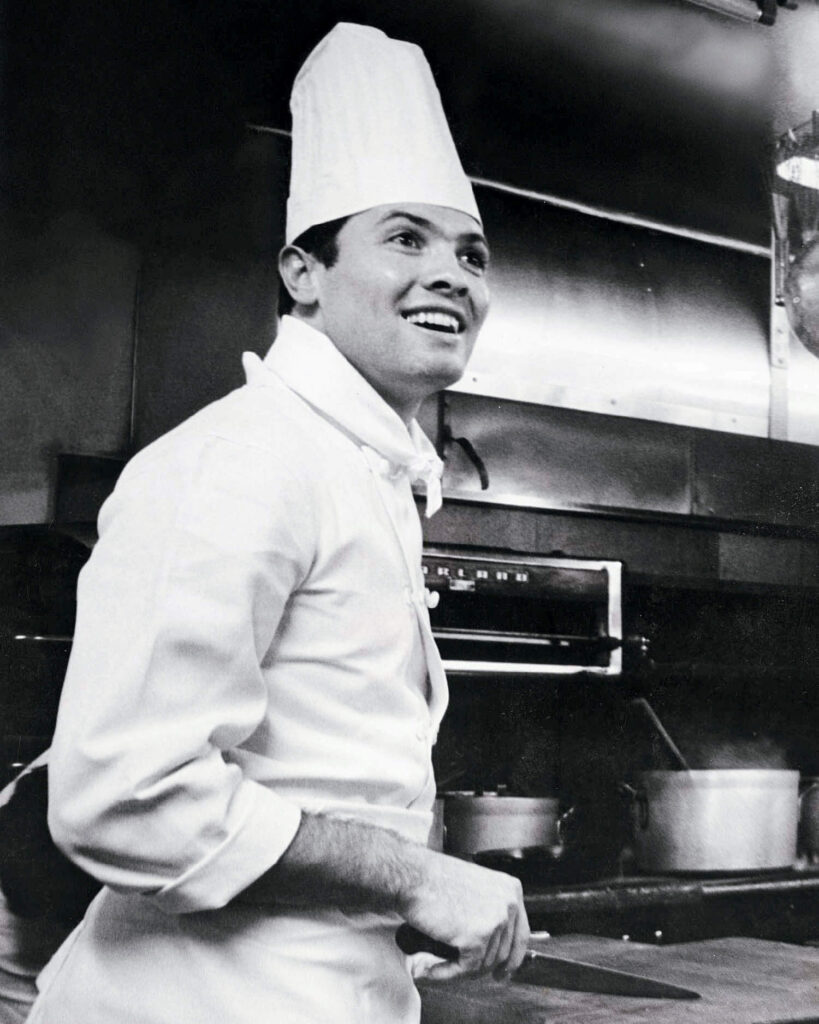
Credit: Courtesy of Jacques Pépin
Meanwhile, you earned a bachelor’s and master’s degree at Columbia.
I always had a bit of a complex about not having an education, like most chefs my age in France. When I came here, I knew I had to work on my English, so I signed up for English for Foreign Students at Columbia. And I went on to get a BA in French literature and then I did my master’s thesis on Voltaire.
And then you ended up creating a graduate program in gastronomy at Boston University. How did that come about?
I moved to Connecticut, and someone asked me to give a class at Wesleyan University on the history of food. I had all those notes. Someone from BU audited the class and said, “We’re starting this type of program. Would you be interested?” Meanwhile, each time I went to Boston, I called Julia. We had lunch or dinner together, and I said, “Why don’t you teach with me?” So, we ended up doing some classes together and created a master’s program in gastronomy. That program still exists now.
You’ve lived in Madison for decades now. What attracted you to the area?
I was in a car accident in 1974. I had 12 fractures. I said to my wife, Gloria, “We should move by the water; it’ll be less taxing in the winter.” Madison was between New York and Boston. It had a train station. And being on the water, I loved going from swimming in the morning to fishing and then wild mushrooming here in the woods. We started meeting friends. Now I’m part of a big group of pétanque players. Every summer, we have a pétanque tournament and a sit-down dinner for 50 people.

Credit: Courtesy of GBH
If you could teach everyone to make one dish, what would that dish be?
Soup. I like to make what my wife ended up calling “fridge soup.” I open the refrigerator and maybe there was some salad left over, two carrots, a piece of meat. It’s never the same. And then I finish it with some pasta or rice or potato. It’s very versatile, very economical. And I’m very miserly in the kitchen. I was raised this way during the war, I suppose.
Tell us a bit about the work of the Jacques Pépin Foundation.
I am very lucky this way because my son-in-law, Rollie, is a chef, and he’s a professor at Johnson & Wales. He asked me, “Who do you think you would like to teach now?” And I said, maybe people who have been disenfranchised in life: people who come out of jail, or former drug addicts, or homeless people. Because I feel that in six weeks or so, I can teach people to peel potatoes and wash salad and chop onions. And if they like it and are willing to work, maybe five years later, they’re the chef. And you can change your life and be proud of yourself. It’s been quite rewarding.
You turn 90 in December. How are you celebrating?
This was another idea from Rollie. He said, “I’m going to ask 90 chefs all over the country to do a special birthday party to raise money for the foundation.” Chefs like Thomas Keller, Daniel Boulud. And people can also throw parties at home to raise money. It’s very rewarding. I’m a lucky guy.
To watch Jacques Pépin’s appearance on Weekends with Yankee, go to newengland.com/pepin.
This feature was originally published as “Time to Shine” in the November/December 2025 issue of Yankee.