Conversations | Vermont Forester and Author Ethan Tapper
As a best-selling author (and unlikely social media star), Vermont forester Ethan Tapper is getting the word out: Nature may have made our woods lovely, but it’s up to us to make them last.
By Rowan Jacobsen|Jun 28 2026|

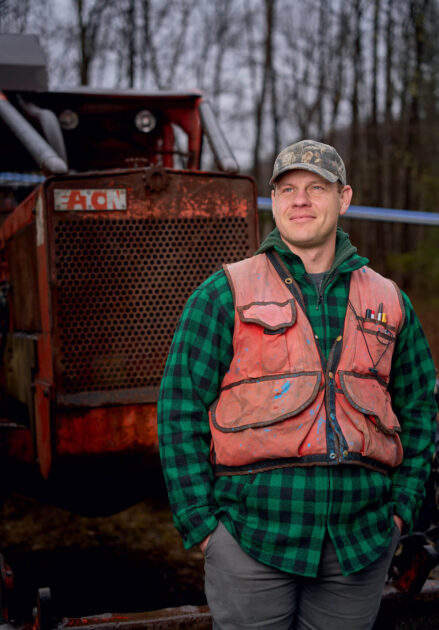
Ethan Tapper at Bear Island with “Red,” his 1981 Timberjack cable skidder. It’s similar to the skidders that were used to degrade this Vermont woodlot decades ago, but instead Tapper uses it to help the forest heal.
Credit: Corey HendricksonOne of the surprise breakout books of recent years is How to Love a Forest, published in the fall of 2024 by Ethan Tapper, then a 36-year-old Vermont forester with no previous writing experience. The nonfiction book chronicles what Tapper calls “the bittersweet work” of managing forests in a world of ecological degradation and stacked stressors—and finding beauty and purpose in them anyway.
How to Love a Forest opens with Tapper driving a skidder into Bear Island, the 175-acre scrap forest that he purchased after it had been ruthlessly logged, and chainsawing a beech tree. In the pages to follow, he cuts trees, hunts deer, and pumps herbicide, working like a surgeon to steer his broken forest onto a healing path. “Like me,” he writes, “this forest is doing its best…. We are both at the beginning of a long journey.” His message of salvation through tough love and hard work reads like a sermon, and unlike anything else in the annals of conservation literature: “The future belongs to people with the courage and the compassion to do what is necessary, even when it breaks their hearts.”
How to Love a Forest struck a chord among professional biologists and the public alike, and it has propelled Tapper into an unlikely new career as best-selling author and motivational speaker. He now juggles his forestry practice with a lively social media presence and constant speaking gigs. Last fall, How to Love a Forest won the New England Book Award for nonfiction. Tapper has a new book coming out in October, and another in the works.
I spoke with Tapper on a frosty January morning at his home at the base of Bear Island, its dark cliffs and trees rising above us, blue sugaring lines running out of it and into the sugarhouse beside the house.
This interview has been edited for length and clarity.
Have you always been the woodsy type?
No. When I read these interviews with other nature writers, they’re always like, “I was the nature kid.” Everybody seems to have always known that this is something they wanted to do. I didn’t. I grew up in Saxtons River, Vermont, a teeny little town of 300 people in the Connecticut River Valley. It’s very rural, and in high school we’d go out into the woods but, you know, to cause trouble or to hide away. I wasn’t actively interested [in nature] at all.
What changed for you?
Well, my girlfriend at the time went on this five-month expedition in Ecuador with this organization called Kroka Expeditions. And she had this enormous, life-changing experience. And I couldn’t relate to her anymore. It felt like we didn’t understand each other, and I thought we were going to break up. To me at that time, that would have felt like the end of my life. And it turned out that Kroka Expeditions had this other six-month program that was starting in a few weeks. And I was like, OK, I’m going to do that for this woman.
So it wasn’t about the nature, it was about the girl?
Basically, yeah. So for this expedition you make a lot of your own clothes, and then you ski north for three months. It was hard-core. I’d never cross-country skied before, and suddenly I’m skiing with a 70-pound pack. It was a wild experience, and it did totally change my life. After that I went and lived in the woods of Maine for a year with these folks who do primitive-skills homesteading, and I worked as a wilderness guide. And out of that came a love for the forest and a desire to take care of it.
Credit: Corey Hendrickson
How did you become a forester?
I went to the University of Vermont, and I remember holding a paper list of all the majors that you could have. And I saw forestry. I didn’t know what it was; I was just like, “Forest. I’ll do that.” Back then, I had this attitude like, What could these people possibly tell me about forests? Because I felt like I knew them completely, and I had this very “leave no trace” attitude. And then, of course, I started taking courses in natural history and ecology and wildlife biology, and suddenly my vision of these forests totally changed. I started to see them as they truly are: systems that are complex and beautiful, but also deeply imperiled and deeply altered. And until you take the time to actually study them, you just don’t see it. I mean, you walk in the forest and you think, beautiful forest, because all forests are beautiful, right? But then when you learn more about what’s actually going on, you see different things.
Bear Island is a central part of your book and life. How did you find it?
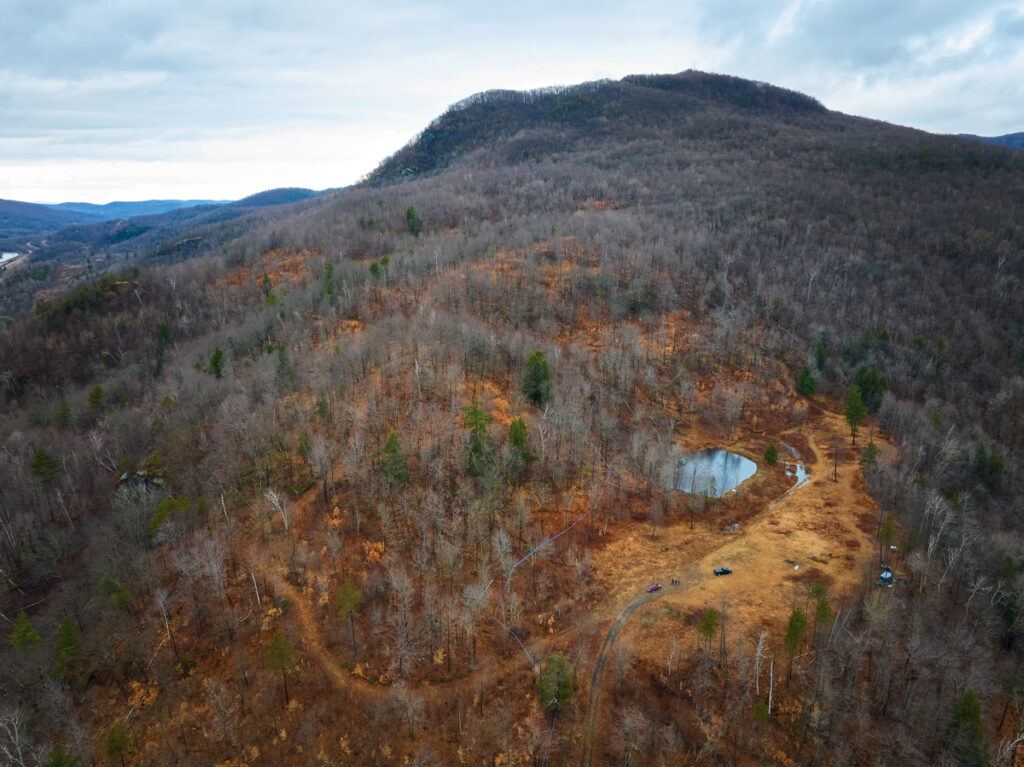
I saw it listed on a real estate website, and it was really cheap. I was like, I wonder what’s wrong with it? And when I went to look at it, what I found was that everything was wrong with it. It had been horribly managed. My first impression was that there were no healthy trees, which is wild. I’d never been in a forest like that before. The skid trails were all rutted and eroding. There was a 30-acre infestation of this introduced plant species called Japanese barberry. There was deer overpopulation. The log landing was piled in trash. The terrain was so steep and rocky it was hard to get around. I got covered in ticks. I was like, Well, this place is terrible; I’ll go find a forest that has less problems.
Credit: Corey Hendrickson
But then I ended up taking some restoration forestry classes, and I convinced myself to go back a second time. And I found all this really cool stuff. Plants that I love, like lowbush blueberry and sweet fern, corydalis and red columbine. And I found some healthy trees after all—they were just hidden behind all these masses of unhealthy trees. And I remember standing on a rocky outcrop with views over the Winooski River Valley and thinking, I’m gonna buy this place.
So you bought yourself a project. What went into restoring it?
I would love to tell people that all I had to do was just fill my pockets with wildflower seeds and scatter them across the mountain, but it actually required me buying a skidder and a chainsaw and cutting thousands of trees, and teaching myself to be a deer hunter and killing dozens of deer, and teaching myself to run an excavator and restoring those old skid trails, and even using herbicide to control those introduced plants. All of these tools have been used to harm ecosystems, but they are also tools that can be used to help them heal. And because I was willing to do that, I saw transformation here that I’d actually never seen in a forest before. Now I see Bear Island not as a symbol of everything wrong with the world, but as a symbol of what’s possible if we’re willing to take action.
Why did you feel it was necessary to write a book about that?
When people think about our relationship to forests and other ecosystems, there are these two polarities: Either we manage them, or we love them and we leave them alone. But if you actually understand the threats they face, that doesn’t make any sense. They actually need a ton of help from us. So I wanted to paint a picture of how it felt to do the work that I do. You know, I cut trees a lot. I use these tools that people typically think of only as things that degrade ecosystems. But I love forests intrinsically, with all my heart, and this is actually how I express that love. The really radical thing is not just to say you love a forest, but to do something about it. And the stuff we’ve got to do are these counterintuitive and confusing and bittersweet actions. And I’d never read a book where anyone spoke to that.
Credit: Corey Hendrickson
What’s wrong with the hands-off approach?
It’s just another way for us to not help them, while feeling really good about ourselves. And that’s the most dangerous part. It allows us to feel comfortable as we abdicate our responsibility. What I’m advocating for is difficult to understand, because it requires us to have so much more of a nuanced understanding of how ecosystems work and what our role in them is. That’s not something that I can explain in a sound bite. Part of what I do now with my social media and my public speaking and How to Love a Forest is to bring people in and pull them a little deeper, so they can see what I see, which is that these forests are not perfect and pristine and utopian, but they are beautiful and diverse and complex and worthy of our protection—and they also need a lot of help.
Do you ever get people who are like, “But do you really have to kill the deer?”
Oh yeah. For people who identify as environmentalists, this is a hard paradigm shift. But the way that I try to accomplish it is not by being confrontational. I just try to do it with this grounding of love and care and compassion, and to also spend a lot of time building trust, so they can see who I am and how much I care about these ecosystems. I’m not just a forester who sees every tree as a piece of timber; I care deeply and have devoted my life to these ecosystems. And then I very gently take people by the hand and show them how these things that I’m doing are actually expressions of that care and compassion.
There’s a long New England tradition, going back to the Transcendentalists, of having some sort of spiritual relationship with nature and seeing it as a potential source of redemption. Do you see yourself as being part of that tradition?
The tradition that I would aspire to be a part of came before that, from the Indigenous people who have been here for hundreds of generations. The thing that I talk about more and more is this concept of stewardship. As Aldo Leopold would say, living on a piece of land without spoiling it. The New England tradition that I really identify with is just living close with the land and the things that it gives us.
And you have a new book coming out in October that talks about that?
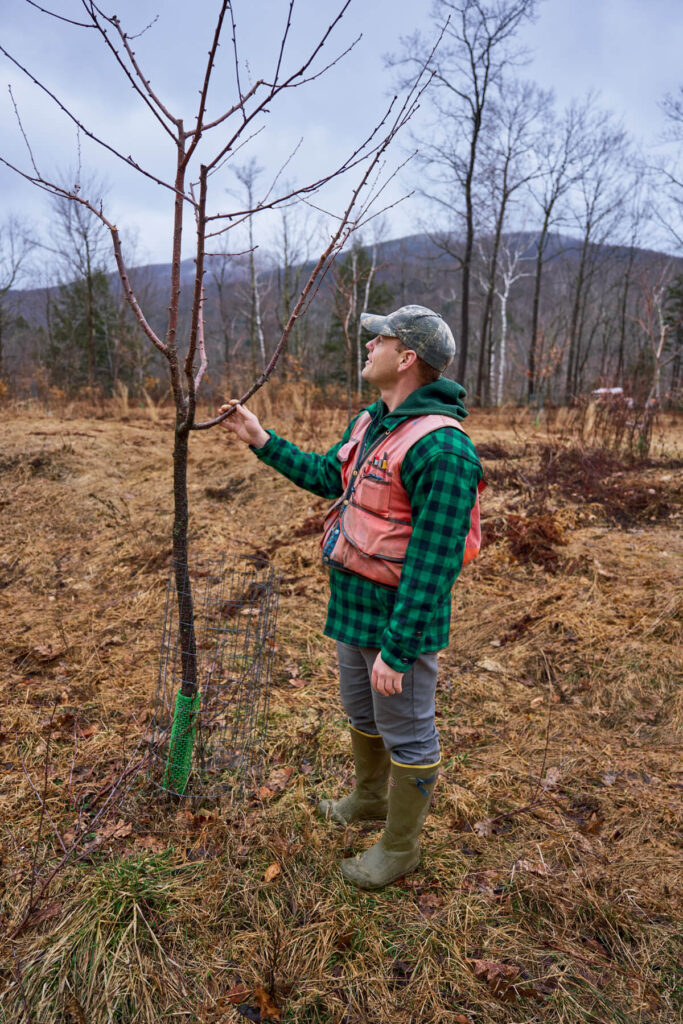
It’s called The Forest Year. I’ve always been fascinated with the idea of living with the seasons. When I left my job with the state of Vermont and started my own business, the first thing I did was build a sugarhouse. In the fall, I want to hunt deer, and I want to collect apples from the orchard that I planted. And in the winter I want to work in the woods with my skidder. And in the spring I want to plant trees and make maple syrup. There’s something special about the forest in every season, and I wanted to express that. And I wanted it to be an almanac, as a tribute to Aldo Leopold’s famous conservation book, A Sand County Almanac.
Talk about your work a little more, because one of its strengths is how you reveal the beautiful complexity undergirding a common forest.
If we just look out our window and think, This is nature, we’re failing to understand that the thing that we call nature is actually tens of thousands of different species that are engaged in these incredibly complex processes and that are dealing with totally novel threats and stressors. It’s a living system. It’s dynamic. And it’s resilient. But its resilience is not limitless.
A lot of times we’ll talk about stressors individually. We’ll talk about climate change, or introduced plants and pests and pathogens, or deer overpopulation, or forest fragmentation, or deforestation. Any one of those things alone would be enough to completely destabilize our ecosystems, and they’re all happening at the same time. So conveying the extent of the changes to our landscape, and the extent of the threats and stressors that ecosystems face, is really important as a means to tell people why we need to take action.
Credit: Corey Hendrickson
You maintain an extremely active social media presence. How does that fit into the plan?
There’s an interesting synergy between the book and the social media. You could write the best book in the world, and if nobody knows about it, no one’s going to read it. And so I happen to have these social media platforms that now have hundreds of thousands of followers. When I started those accounts, I was thinking about them as just a way to publicize How to Love a Forest. And then they just became their own thing.
And I’ve realized that not everybody’s going to read a book, so I try to bring people along and provide useful and important information to them no matter at what level they want to engage. You can watch this minute-long video [for example], or if you want to go a little deeper, you can subscribe to my Substack and read my monthly column. And if you want to go deeper, you can read the book.
Do you ever worry it could take over your life?
Yeah, it’s easy to get sucked into that world and forget what you’re doing it all for. Like, I’m not doing this so I can have more followers on Instagram. I’m getting more followers on Instagram so that I can save forests. But I think it’s really important to do the consulting-forestry work to stay grounded—to be actually out there in the woods doing stuff, not just up on my computer all the time. Every time I’m out there in the woods all day, I realize how important it is to me. It’s what it’s really all about.
This feature was originally published in the July/August 2026 issue of Yankee.
You may also like…
More Than Just a Tree | The Threatened Tradition of New England Ash Trees