New Hampshire’s Spirit of Revolution: The Fort at No. 4
How a remote outpost came to be the stepping stone to a key Revolutionary War victory.
By Yankee Custom Editors|Apr 09 2026|

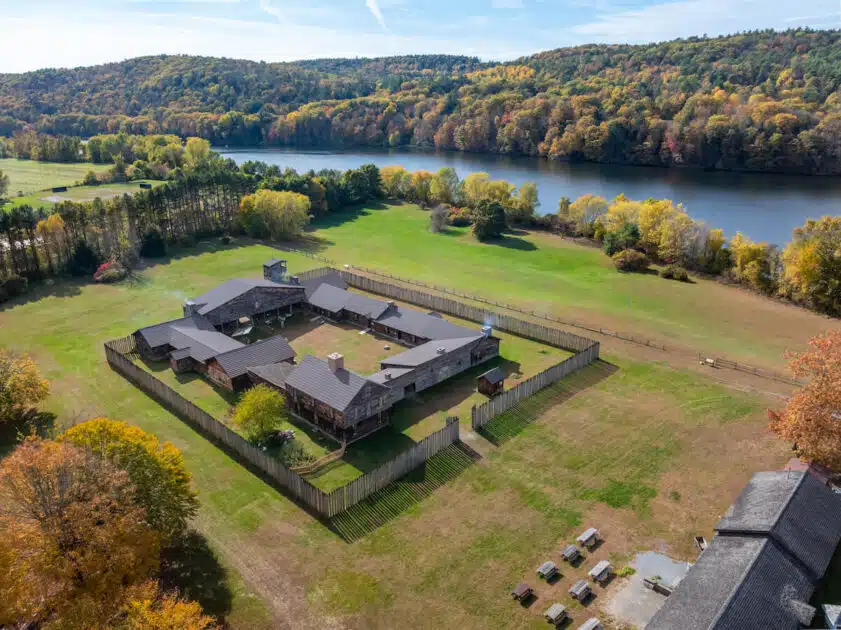
Aerial view of the Fort at No. 4 in Charlestown. The original fort established here in 1744 was reconstructed in 1960 and opened to the public as a museum.
Credit: Windwood ProductionsSponsored by VisitNH.
Whether you are planning your first visit to New Hampshire or—like so many generations of travelers—returning year after year, 2026 is a special time to experience the Granite State. With our nation marking its 250th birthday, there is no better place to connect with the independent spirit of this milestone anniversary than the state that has enshrined the words “Live Free” in its motto. So in this year of American celebration, take a trip to the Granite State and discover the places where the revolutionaries of New Hampshire began their quest for freedom.
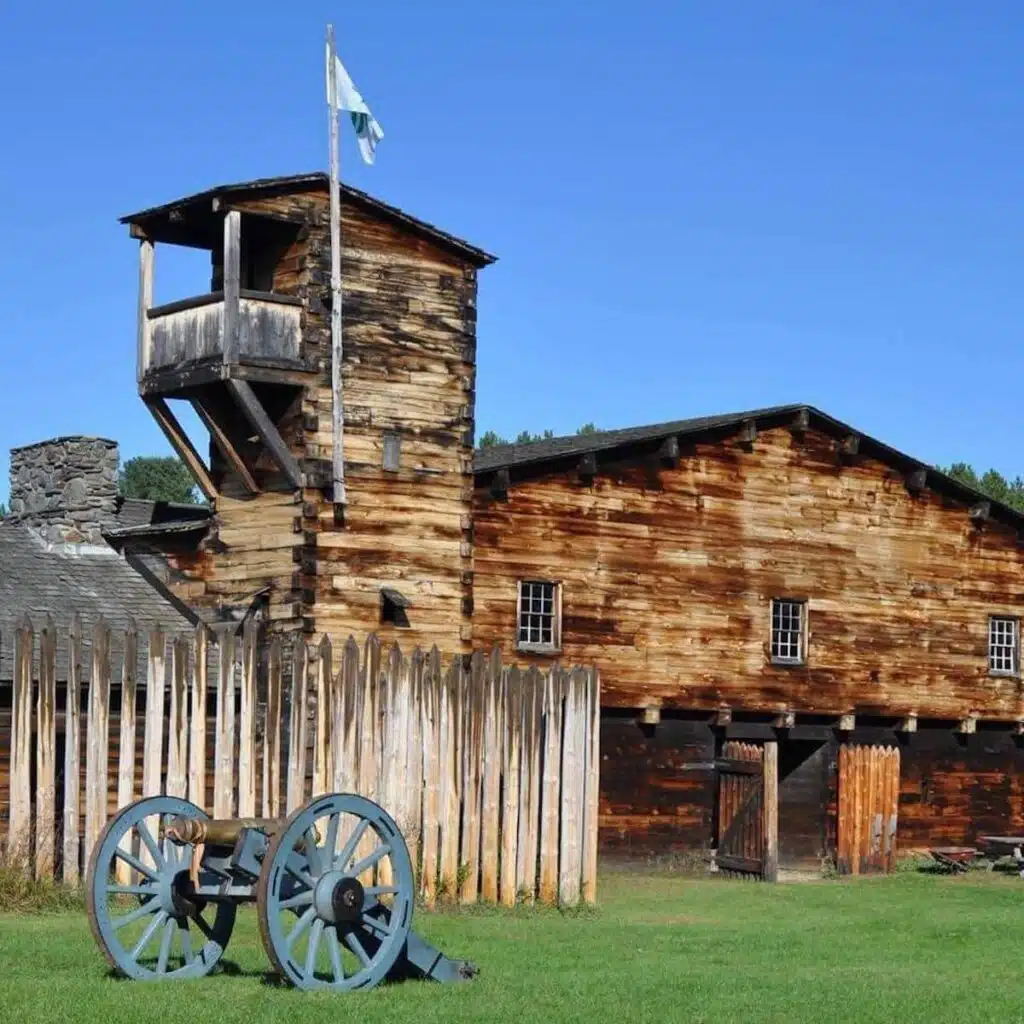
The Fort at No. 4 was built at a time when the Connecticut River was America’s western frontier. Constructed to protect pioneering farmers, it sat at a strategic point at the head of the old Crown Point Road that stretched on to Lake Champlain. “It was a crossroads to many places,” says Alissa Bascom, executive director of the Fort at No. 4. “It was this place on the frontier that was a refuge.”
Credit: The Fort at No. 4
The fort was especially useful during the French and Indian War in the 1750s and 1760s, but afterward the frontier shifted, and the fort fell into disrepair. The site was largely abandoned when suddenly, in 1777, it served a crucial role in the Revolution.
After the British were forced out of Boston in 1776, the war quieted down in New England. The region was a hornets’ nest of scrappy militias and firebrand orators. The English knew recapturing these colonies would not come easily by force or diplomacy. Instead, they decided to cut off the head of the rebellion by isolating New England from the rest of the colonies. The key to this divide-and-conquer strategy was taking control of the Hudson Valley. It was this mission that General John Burgoyne had in mind when he marched south from Canada towards Albany.
In response to this threat, citizens of then-independent Vermont asked New Hampshire for help. The government turned to New Hampshire war hero John Stark. “He was charged with bringing all the New Hampshire militias across the state together,” says Bascom.
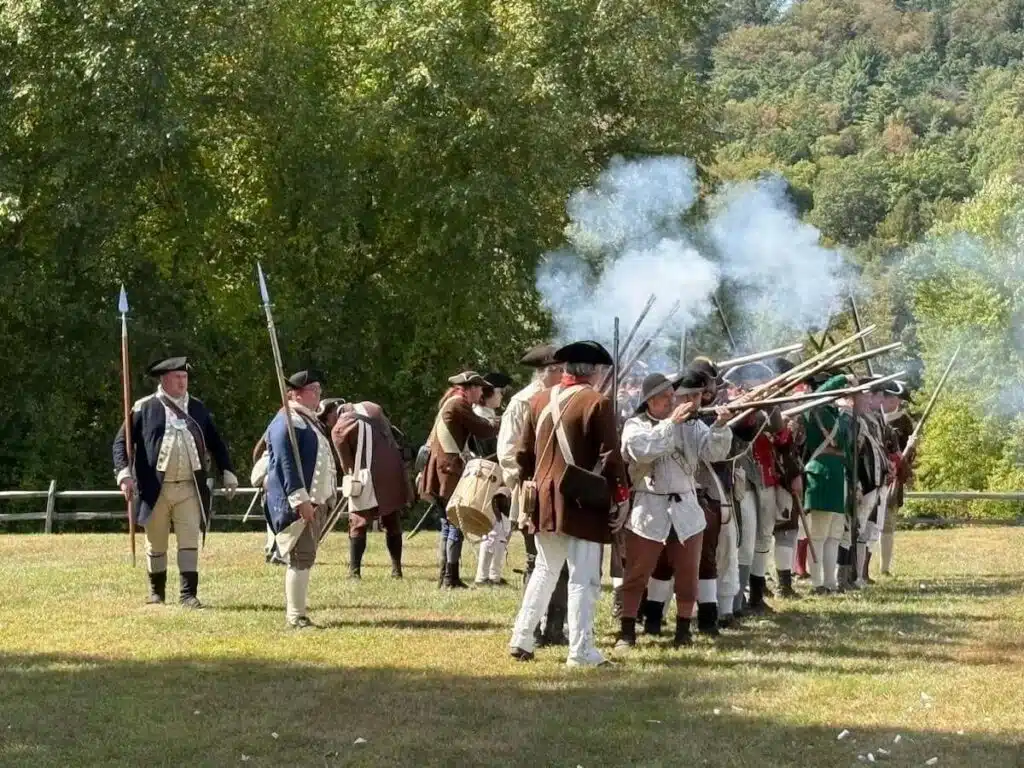
Stark chose the Fort at No. 4 as the rallying point and, in true minuteman fashion, it took just six days for volunteers from across the state to gather here.
Credit: The Fort at No. 4 via Facebook
Stark set out with approximately 1,500 men for Bennington, Vermont, where he was joined by militias from Massachusetts and Vermont. The irregular New England forces surprised a large detachment of Burgoyne’s army outside town, killing 207 and capturing another 700. The blow seriously damaged Burgoyne’s campaign, slowing his army and contributing to his ultimate defeat at the Battle of Saratoga.
Today, the Fort at No. 4 is a living history museum in the town of Charlestown. It has been rebuilt to how it would have looked during its pinnacle between the years 1740 and 1760. The museum is planning a reenactment of Stark’s muster on the 250th anniversary in 2027. For 2026, the fort will host a series of Saturday discussions on how the war affected everyday citizens on the frontier.
To learn more about New Hampshire’s role in the Revolutionary War and to start planning your trip to the Granite State during this special anniversary year, download the brand-new guide New Hampshire 250: A Celebration of America’s 250th and the Granite State. For even more travel inspiration—from unexpected adventures and local events to hidden gems and unforgettable places—go to VisitNH.