New Hampshire’s Spirit of Revolution: Portsmouth
America’s War of Independence still echoes throughout this historic port city.
By Yankee Custom Editors|Apr 09 2026|

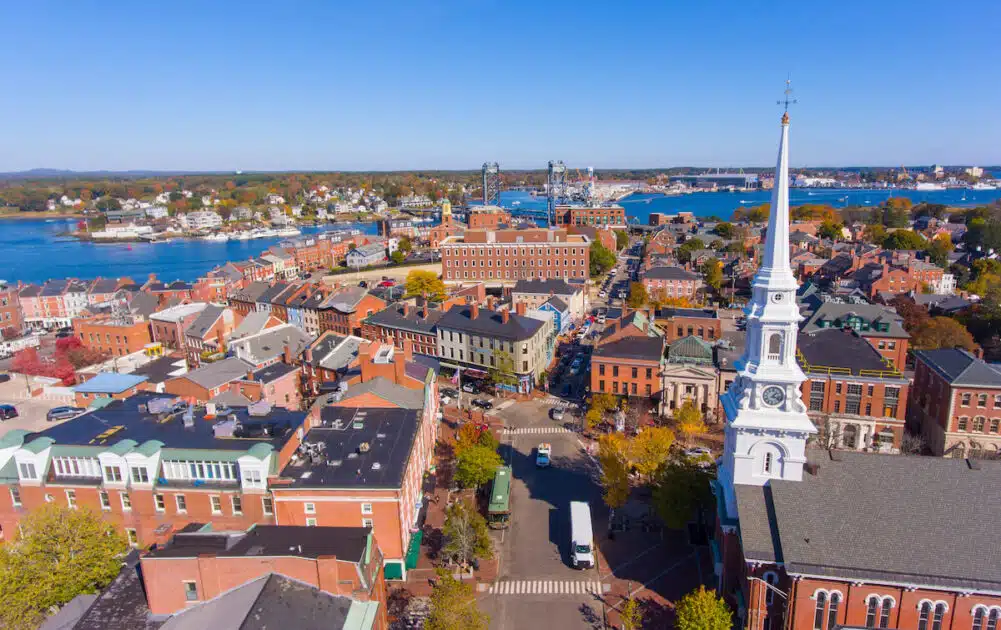
An aerial view of Portsmouth, which in the lead-up to the Revolution was home to both the royal governor of the New Hampshire colony and a spirited community of Patriots.
Credit: Wangkun Jia/stock.adobe.comSponsored by VisitNH.
Whether you are planning your first visit to New Hampshire or—like so many generations of travelers—returning year after year, 2026 is a special time to experience the Granite State. With our nation marking its 250th birthday, there is no better place to connect with the independent spirit of this milestone anniversary than the state that has enshrined the words “Live Free” in its motto. So in this year of American celebration, take a trip to the Granite State and discover the places where the revolutionaries of New Hampshire began their quest for freedom.
Before the Revolution, the city of Portsmouth was the seat of British power in New Hampshire. “The population was divided,” says Gerald Ward, curator of the Portsmouth Historical Society, who estimates that around a third of the population were Loyalist, another third were Patriot, and the rest were on the fence.
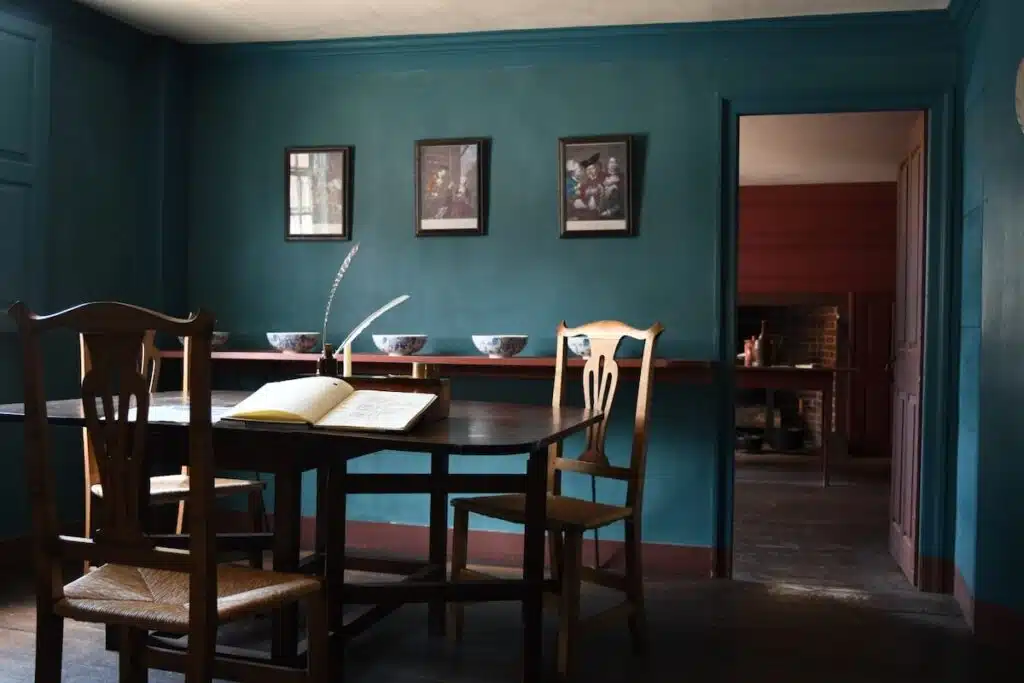
Credit: Courtesy of Bethany H. Allen
The case for independence wasn’t as clear-cut on the coast as it was elsewhere. Home to a wealthy merchant class, Portsmouth’s economy was more closely tied to England. Still, King George III’s efforts to control and tax the colonies spread anger even among those who didn’t want independence. For those who considered themselves to be Englishmen, resistance to the crown could actually be seen as a conservative movement, Ward says. “They weren’t fighting for new rights—they were fighting for rights they’d had since the Magna Carta.”
By 1775, Royal Governor John Wentworth could see that he was losing his grip on New Hampshire. The raid on Fort William and Mary showed that the Patriots were not afraid to flex their growing muscle. He received further proof on June 13, 1775, when an armed mob surrounded his Portsmouth mansion. Wentworth and his family moved first to the fort for safety, then onto a British warship. On August 23, the ship sailed for Boston, effectively abandoning the colony. Without a single casualty, New Hampshire had forced the British empire off its shores.
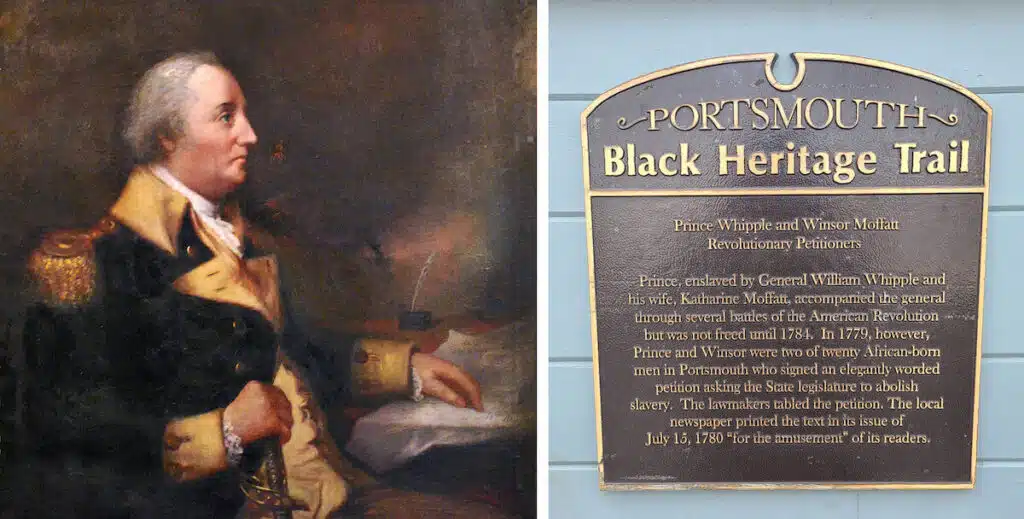
Credit: Moffatt-Ladd House and Garden Museum
In the coming years, Portsmouth contributed to the Revolution in the best way it knew how: namely, shipbuilding. In 1775, the Continental Congress commissioned the construction of 13 frigates, the first ships of what would become the U.S. Navy. The privilege of building one fell to the shipwrights of Portsmouth, who constructed the USS Raleigh, a 32-gun frigate whose launch is still commemorated on the New Hampshire state flag.
Credit: Portsmouth Historical Society
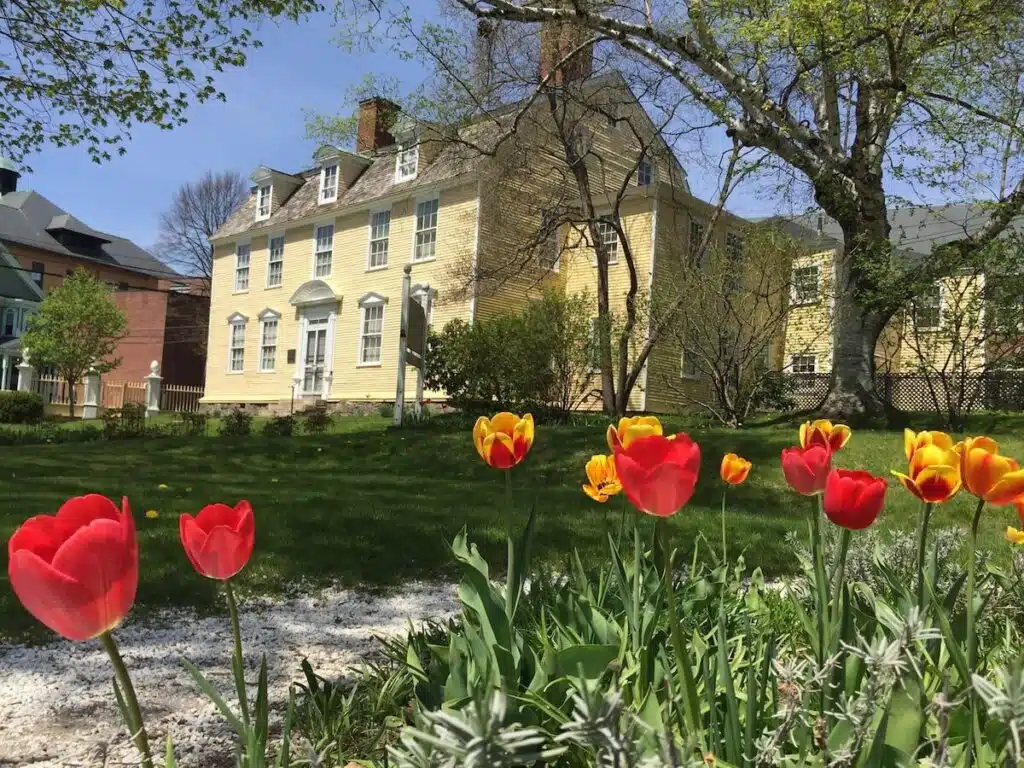
Naval hero John Paul Jones visited Portsmouth-area shipyards in 1776–77 and 1781–82. His time here was brief, but important enough that the house where he rented a room was preserved and named in his honor. The John Paul Jones House is where the Portsmouth Historical Society will host its ”Revolutionary Portsmouth“ exhibit, which will explore the divisions between Patriot and Loyalist Portsmouth at the outset of the war. Nearby at the Strawbery Banke Museum, visitors can tour more Revolutionary-era homes in the preserved neighborhood of Puddle Dock.
QUICK LINKS
• Portsmouth Historical Society and the John Paul Jones House: portsmouthhistory.org
• Strawbery Banke Museum: strawberybanke.org
• Moffatt-Ladd House and Garden Museum: moffattladd.org
• Langdon House: historicnewengland.org/property/governor-john-langdon-house
To learn more about New Hampshire’s role in the Revolutionary War and to start planning your trip to the Granite State during this special anniversary year, download the brand-new guide New Hampshire 250: A Celebration of America’s 250th and the Granite State. For even more travel inspiration—from unexpected adventures and local events to hidden gems and unforgettable places—go to VisitNH.