New Hampshire’s Spirit of Revolution: Blaze Your Trail in the Granite State
Take a tour of New Hampshire’s seven distinctive regions, and you’ll see why so many pioneers have called this place home.
By Yankee Custom Editors|Mar 01 2026|

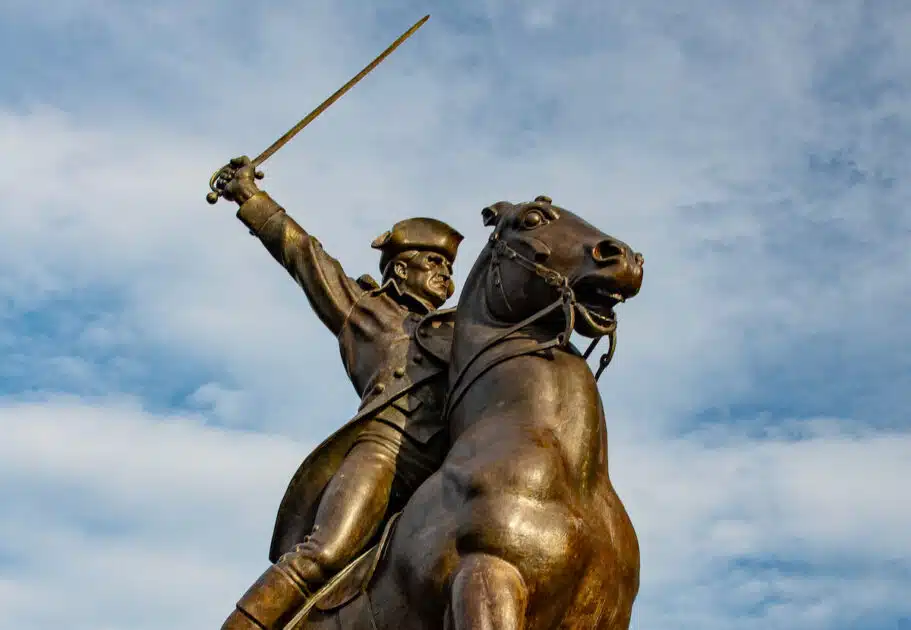
Revolutionary War hero General John Stark, commemorated in Stark Park in his hometown of Manchester.
Credit: JDanault/Shutterstock.comSponsored by VisitNH.
Whether you are planning your first visit to New Hampshire or—like so many generations of travelers—returning year after year, 2026 is a special time to experience the Granite State. With our nation marking its 250th birthday, there is no better place to connect with the independent spirit of this milestone anniversary than the state that has enshrined the words “Live Free” in its motto. So in this year of American celebration, take a trip to the Granite State and discover the places shaped by its countless revolutionaries and innovators.
New Hampshire is a state that likes to lead the way. Perhaps the best-known example of this is its long tradition of holding the nation’s first presidential primary every four years, a distinction that Granite Staters have fought hard to preserve. But New Hampshire’s history is rich with other “firsts” that have had lasting effects, big and small, far beyond its borders.
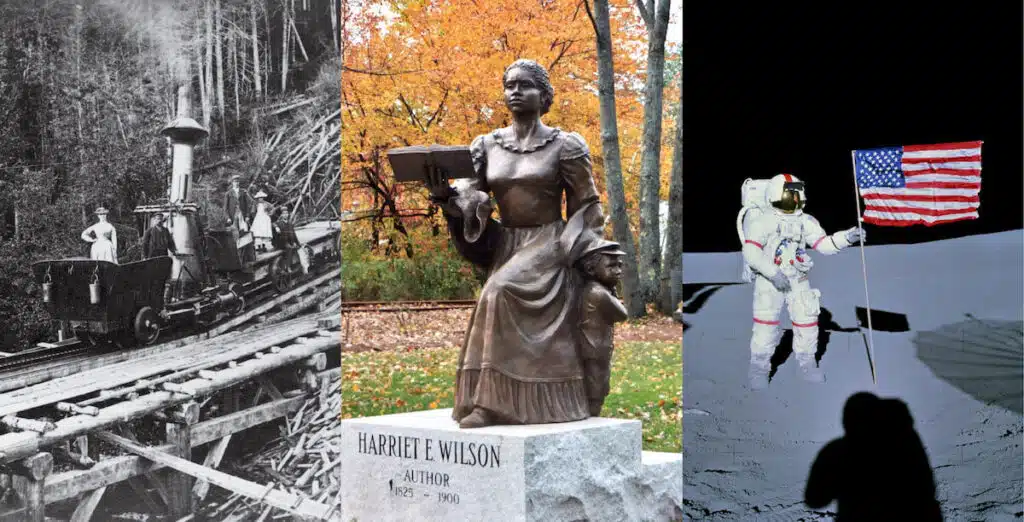
Credit: From left: NH Historical Society; Freedom’s Way Heritage Association; NASA/JSC
The model for tax-supported public libraries was born here, and so was the early programming language, BASIC, that would democratize the use of computers. New Hampshire is part of the story of the first Levi blue jeans, the first snowmobile, and the first mountain-climbing railroad, among other remarkable milestones. Just as important as these innovations, however, are the individuals—the artists and activists, politicians and scientists, and many more—who have called this state home.
So come along on a tour of New Hampshire’s seven regions to learn not just what makes each one unique, but also to discover the trailblazing spirit they’ve helped inspire.
Merrimack Valley
Credit: kickstand/iStock
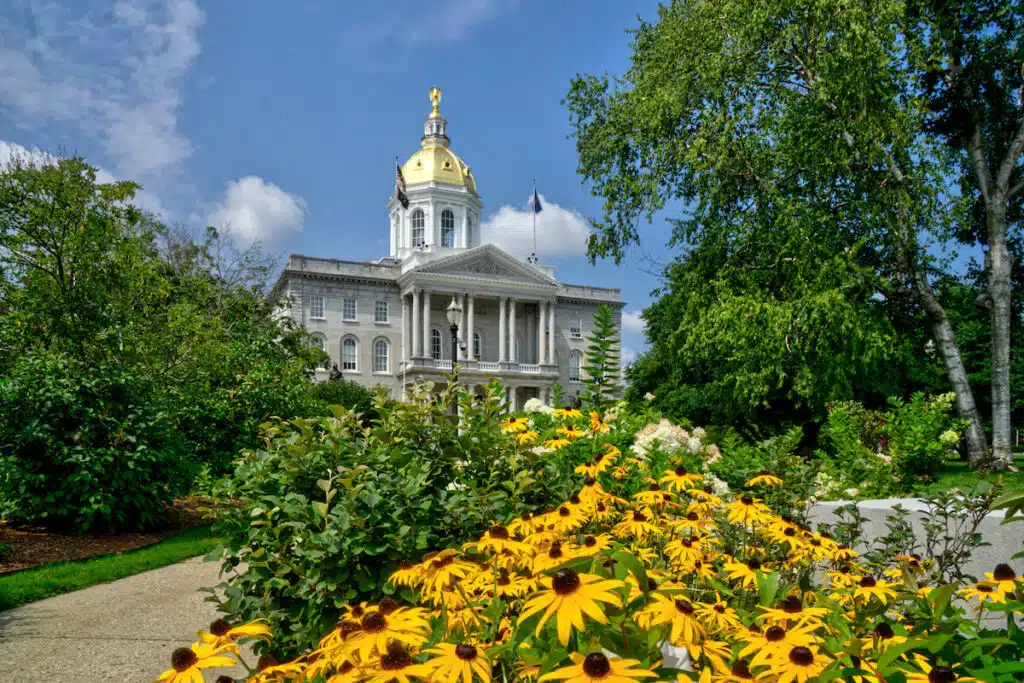
The tumbling waters of the Merrimack River rush through its namesake valley, past cities and villages that lie at the very heart of New Hampshire history. Whether it’s the gleaming capitol dome in Concord, preserved brick mills on the riverbank in Manchester, or vibrant culinary destinations in Nashua, the state’s Big Three cities all follow the rolling river, channeling its lively energy. You can cozy up to world-class works at the Currier Museum of Art in Manchester one moment, blast off at Concord’s McAuliffe-Shepard Discovery Center the next, and top it all off with farm-to-table fare in Nashua. Meanwhile, scattered like skipping stones around the region, you’ll find enough small communities to delight any lover of country life. The banks of the wandering Merrimack have long been home to innovation and change—now, you’re invited to dip your toes in and make a little history of your own.
Trailblazers and “firsts” from the Merrimack Valley Region: Levi Hutchins, creator of what is considered America’s first alarm clock, in 1787 (Concord); first Levi blue jeans produced at Amoskeag Manufacturing Co. c. 1875 (Manchester); first integrated professional baseball team in the U.S., in 1946 (Nashua); Alan Shepard, pilot of the first U.S. manned space mission, in 1961 (Derry); Christa McAuliffe, chosen to be the first U.S. civilian in space, aboard the Challenger in 1986 (Concord).
Seacoast
Credit: Doug Lemke/stock.adobe.com
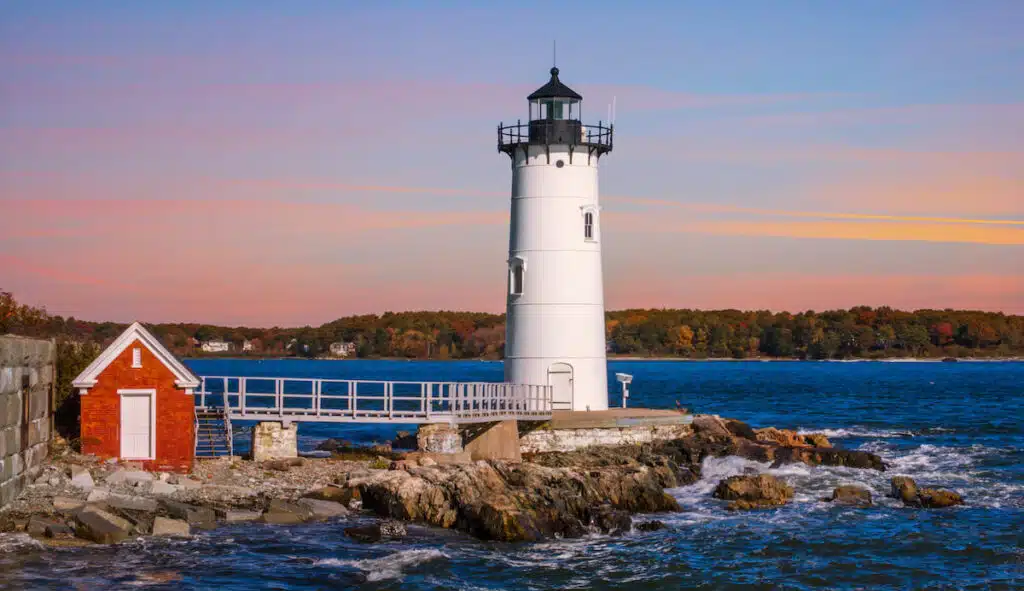
Early travelers came to New Hampshire’s Seacoast for the oceanside experience—a clear, blue Atlantic that’s as welcoming as it is refreshing. Today, this dynamic area has emerged with a rich mix of history, culture, and entertainment, too. Classic beach towns such as Hampton and Seabrook offer colorful landing spots that cater to both kids and adults. In Portsmouth, you’ll discover perhaps the most walkable city in New England—with a top-notch dining scene to boot—while in Dover and Newmarket you’ll find beautifully restored downtown mill buildings. Just what kind of Seacoast experience you’re after is up to you. Whether it’s the beach scene, a slice of New England history, or lively nightlife, this thriving region offers it.
Trailblazers and “firsts“from the Seacoast Region: First U.S. terminus for transatlantic telegraph cable, in 1874 (Rye); home of poet and early conservationist Celia Thaxter, author of An Island Garden,born here in 1835 (Portsmouth); associated with UNH scholar Laurel Thatcher Ulrich, author of the Pulitzer Prize–winning A Midwife’s Tale, which revolutionized American historical studies when published in 1990 (Durham).
Dartmouth/Lake Sunapee
Credit: NPS
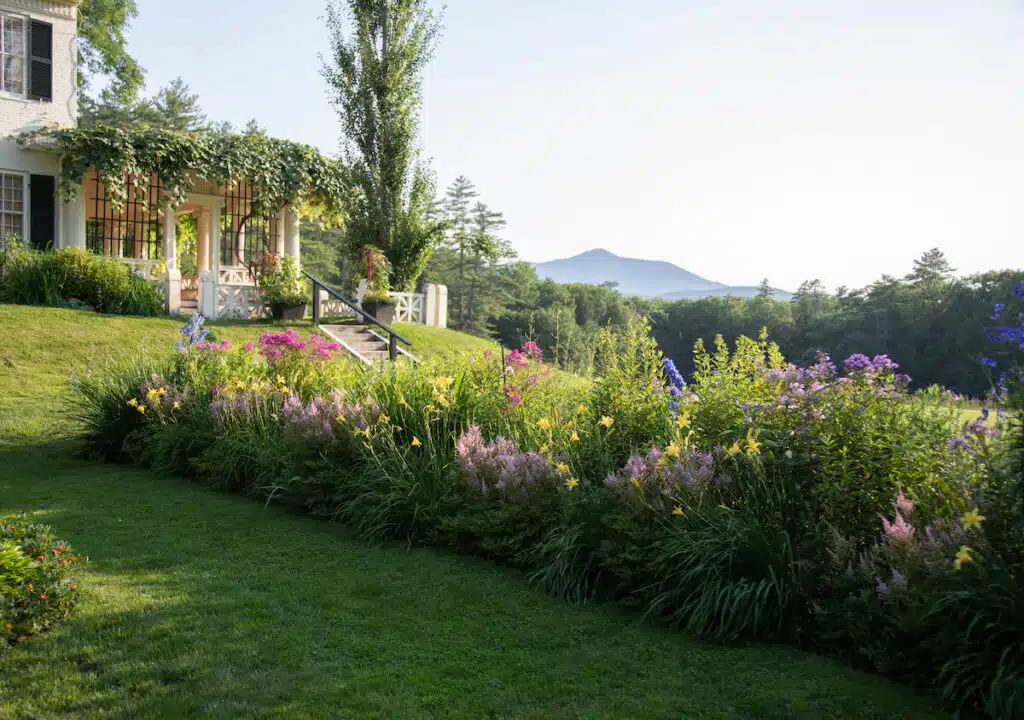
When wandering around one of this region’s beautiful small towns that have attracted artists, writers, and presidents, you may feel you’ve just stepped into a Maxfield Parrish painting. Indeed, it’s easy to see where the famous former resident got his inspiration: There’s water everywhere, from the mighty Connecticut River to lake beauties such as Sunapee and Mascoma. A scenic byway, Route 12A, wends its way past farmhouses and barns set amid fields rolling down to the river, which never seems very distant. And let’s not forget the mountains—they’re all around you, whether in the background of sculptor Augustus Saint-Gaudens’s gardens in Cornish or just every time the road takes a bend and you glimpse Mount Sunapee off in the distance. Slow down, take your time, and breathe in this beauty.
Trailblazers and “firsts“ from the Dartmouth/Lake Sunapee Region: Computer programming language BASIC invented at Dartmouth College in 1964 (Hanover); home of Samuel Morey, paddle steamboat pioneer who tested his creation on the Connecticut River in 1793 (Orford); 1788 birthplace of Sarah Josepha Hale, a leading female magazine editor, author of “Mary Had a Little Lamb,” and lobbyist for a national Thanksgiving holiday.
Lakes Region
Credit: Michael D. Wilson
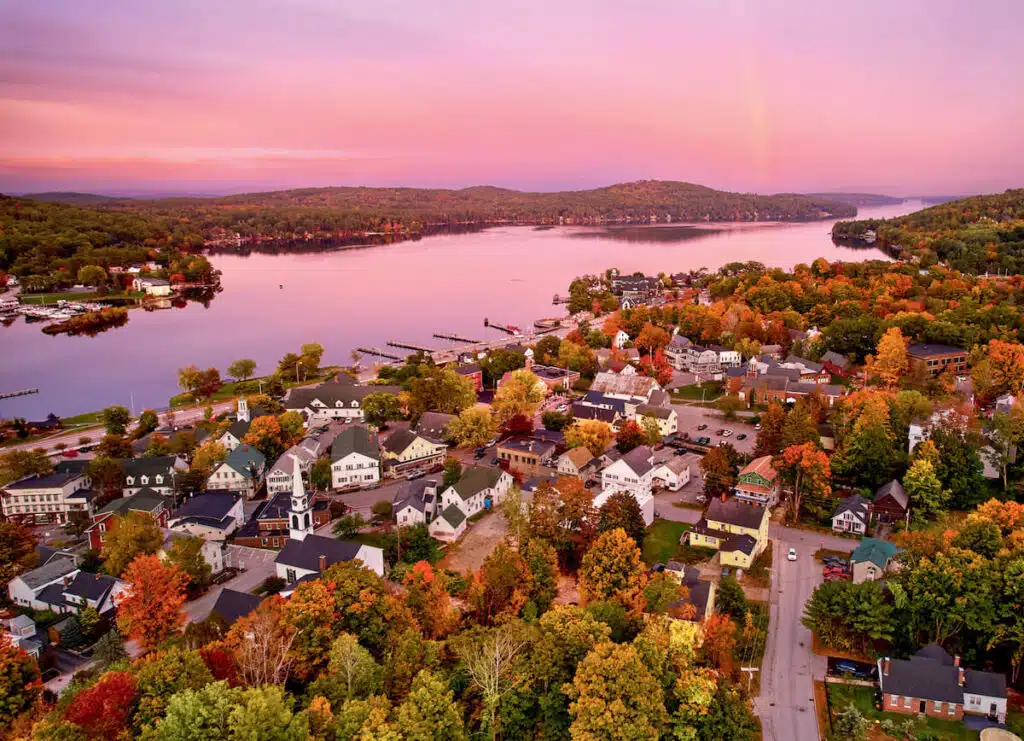
A name derived from the language of the Abenaki peoples, “Winnipesaukee” is commonly translated as “smile of the Great Spirit” or sometimes “beautiful water of the high place”—and both are fitting descriptions of the largest body of freshwater in the Granite State. With more than 180 miles of shoreline, Winnipesaukee serves as the anchor of the Lakes Region, where smaller waters and gentle mountains dot the landscape. Packed with events and activities, the area offers attractions to suit every vacationer’s budget, from the boardwalk bustle of Weirs Beach to the serenity of a naturalist-led loon cruise on Squam Lake. There are trails to hike, antiques shops to browse, local restaurants to sample, and water activities galore—all inviting you to dive on in.
Trailblazers and “firsts“ from the Lakes Region: First snowmobile patented in 1917 by local Ford dealer Virgil D. White, who added caterpillar tracks to the rear of a Model T and replaced the front wheels with wooden skis (Ossipee); summer home of poet E.E. Cummings, American pioneer in modernist free verse, until his death in 1962 (Silver Lake/Madison).
White Mountains
Credit: Bill/stock.adobe.com
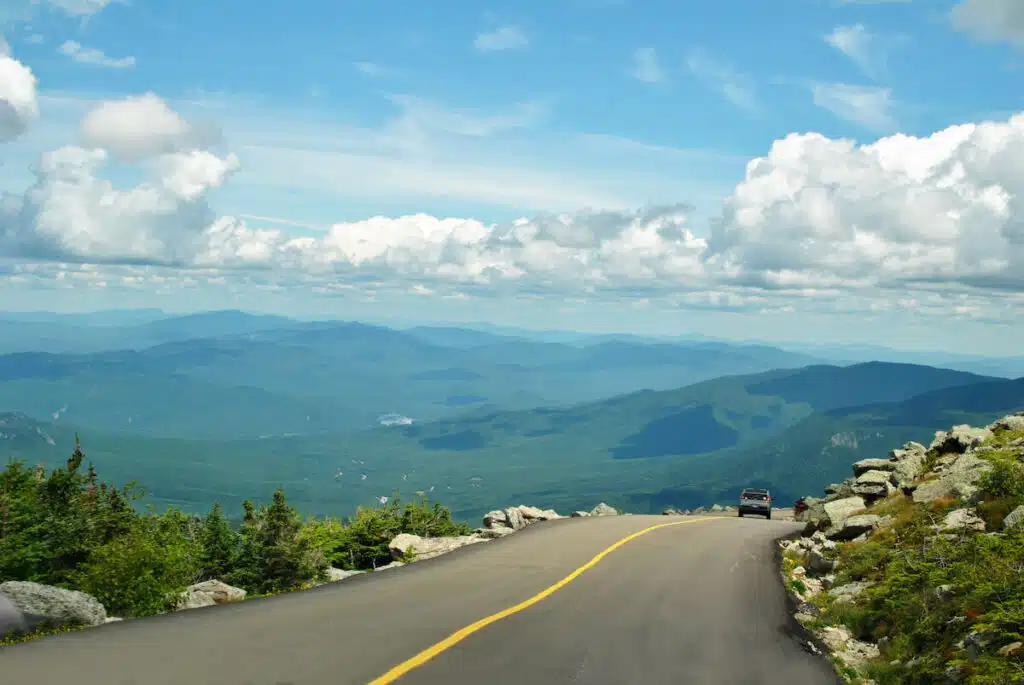
In 1642, a man named Darby Field set a course for history when he took off by foot from Durham, heading northwest toward the mountains. Eighteen days later, with the aid of two Indigenous guides, he became the first recorded European to climb Mount Washington—and people have been following his example ever since. If the outdoors is your passion, there’s enough hiking in the White Mountains to last a lifetime of weekends, from modest excursions to challenging treks up any of the 4,000-footers and Presidentials. The air is just as rarified at lower altitudes: Drink in the beauty of the region from the porch of the fabled Omni Mount Washington Hotel, or traipse through fields of lupine at Sugar Hill. North Conway will keep you busy with its shopping options, while a history of daring and innovation waits to be discovered at the New England Ski Museum in Franconia. Just like the mountains, the region’s food, culture, and fun will keep you coming back for more.
Trailblazers and “firsts“from the White Mountains Region: Home of Frances Glessner Lee, pioneer of modern forensic science and the nation’s first female police captain, appointed in 1943 (Bethlehem); home of Chief Joseph Laurent and his son, Stephen, leading Abenaki scholars and translators in the 19th and 20th centuries (Intervale); first-of-its-kind aerial tramway opens at Cannon Mountain in 1938 (Franconia).
Great North Woods
Credit: Jerry Monkman/EcoPhotography
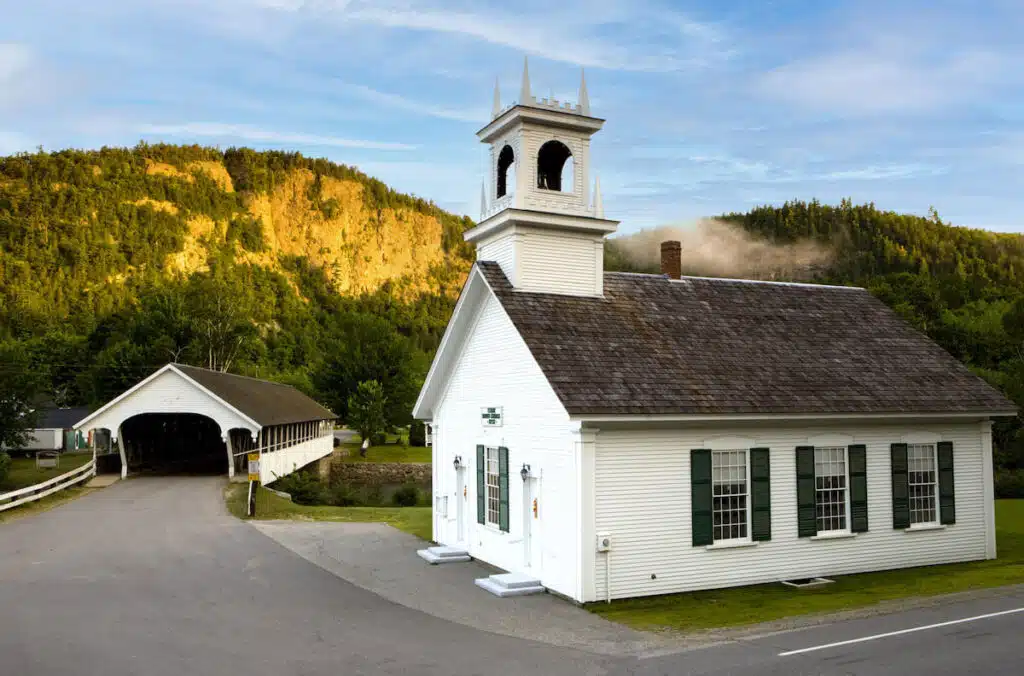
Each season in New Hampshire’s far north carries its own badge of honor. Whether it’s the snow that comes early and stays late, beckoning cross-country skiers and snowmobilers … or the sweet days of spring, with their explosion of lupines and apple blossoms … or soft summer, with kayaks resting on shore and picnics by a waterfall … or the fall color that paints the forest red and orange and yellow, the Great North Woods holds visitors with its natural beauty and promise of adventure. Yet as lovely as the countryside may be, what you’ll take away will be memories of the people you’ve met. Whether you explore Lancaster or Berlin or Colebrook or Pittsburg, or the hamlets in between, you’ll meet people whose love of place is as deep as the wild lands surrounding them.
Trailblazers and “firsts“from the Great North Woods Region: Birthplace of John Wingate Weeks, U.S. representative, senator, secretary of war, and author of the watershed conservation legislation Weeks Act, in 1911 (Lancaster); associated with inventors including Hiram A. Farrand, creator of the 1920s forerunner to the modern tape measure, and Earl Tupper, who invented Tupperware in the 1940s (Berlin).
Monadnock Region
Credit: Denis Tangney Jr./iStock
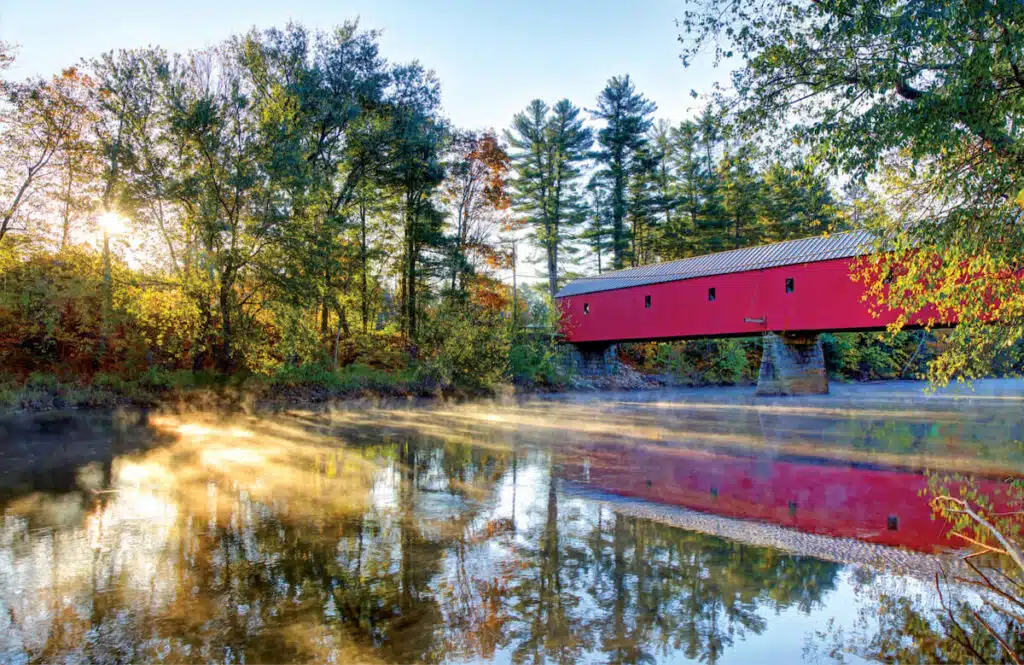
Though a bit on the smaller size as mountains go, 3,165-foot Mount Monadnock has been immortalized in the writings of Emerson and Thoreau, in the paintings of Rockwell Kent, and in the poetry of E.A. Robinson. Mountain views and scenic vistas appear around every corner here, along main highways and lightly traveled dirt roads. Monadnock State Park in Jaffrey features well-traveled foot trails, while Pisgah State Park in Chesterfield boasts the largest tract of state parkland in New Hampshire. The city of Keene pulses at the heart of it all, offering galleries, shops, ethnic restaurants, and a wide Main Street edged by the brick buildings of its namesake college. Whether enjoying quiet exploration, a summer concert, or kayaking a pristine pond, be sure to relish every view from each of the 40 towns of the unforgettable region that is Monadnock.
Trailblazers and “firsts“from the Monadnock Region: Birthplace of Harriet E. Wilson, the first Black woman to publish a novel in North America, in 1859 (Milford); site of MacDowell, the nation’s oldest and most famous retreat for artists, founded in 1907 (Peterborough); home of famed 20th-century political activist Doris “Granny D.” Haddock (Dublin); site of the first free library funded entirely by town tax revenue, created in 1833 (Peterborough).
——————
To learn more about New Hampshire’s role in the Revolutionary War and to start planning your trip to the Granite State during this special anniversary year, download the brand-new guide New Hampshire 250: A Celebration of America’s 250th and the Granite State. For even more travel inspiration—from unexpected adventures and local events to hidden gems and unforgettable places—go to VisitNH.