New England Fall Foliage Forecast 2025
Get the 2025 New England fall foliage forecast, including peak color times, weather influences, and travel tips for the best leaf-peeping this year.
By Jim Salge|Aug 19 2025|

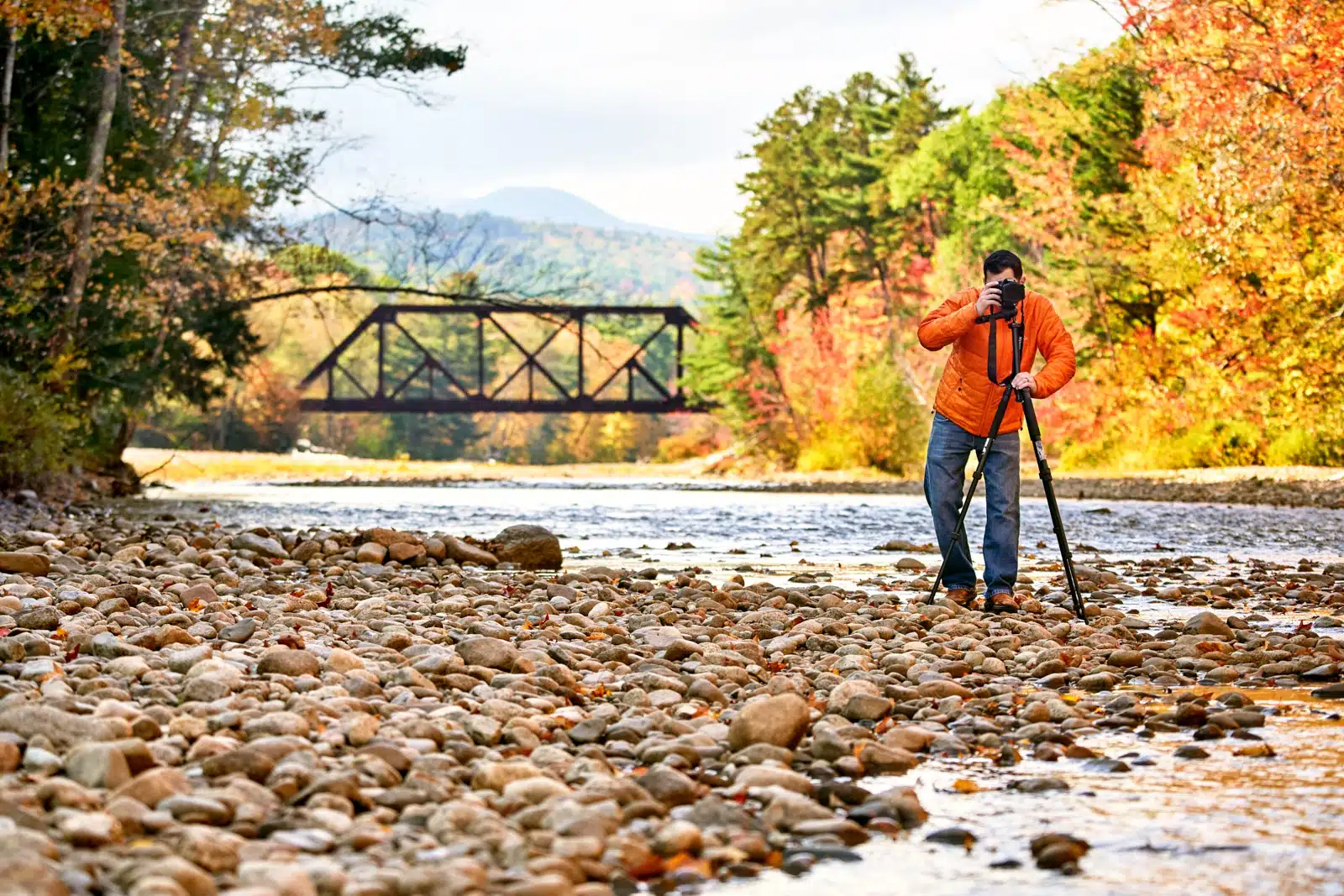
Jim Salge hard at work tracking fall foliage for Yankee.
Credit: Mark FlemingStreaks get people talking. We often root for them to continue, and mourn when they end. Last month the Red Sox were on a 10-game winning streak, their longest in years, and Red Sox Nation was abuzz.
But the streak that really got New England’s attention this spring had nothing to do with sports. It rained (or snowed) for 12 Saturdays in a row! Beautiful weather during the week, then…a wet weekend. By the time we got to early June, it was downright comical: Raining—must be Saturday! Everyone wanted this streak to end.
Now, in preparing the official New England fall foliage forecast, we can see the incredible impact of that springtime rainy streak on the season ahead. New England needed rain, as it was coming out of last fall’s drought, and without it, we would be telling a very different story now. But that rain, which coincided with trees’ all-important leaf-out time, affected our forests and ecosystems in many other ways—some positive, some negative, and some very surprising.
Take fireflies, for example: The population boomed all across the Northeast this year, to levels we haven’t seen in years, thanks in large part to the rain this spring. And the absurd number of deerflies that tormented your summer hikes? Also, spring rain.
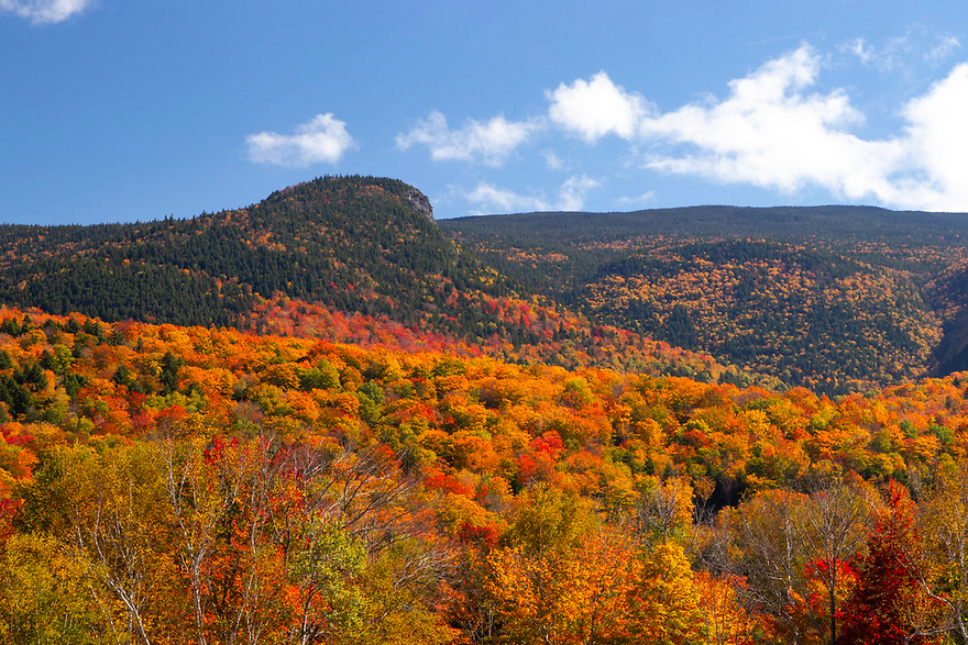
As for the fall foliage, we know it’s going to be beautiful—it always is. Yet some years are brighter than others, and the color show can be long-lasting or gone in a blink. This year will be a great time to get out and explore, so let’s take a look at all of the complex (and often competing) factors that play into the where, when, and why.
Credit: Jim Salge
New England Fall Foliage Forecast 2025 | Influences
Weather & Climate
New England’s hardwood forests are legendary for their fall colors, which owe their magnificence first and foremost to the region’s climate. The best foliage seasons have their origins in previous years’ weather, so looking back is a good way to get a picture of what’s coming.
What we don’t want to see is stress in the forest. This can happen when there are persistent weather patterns that fall outside the climate norms. Last year offers a perfect example: It all but stopped raining in New England in late August, and many of the trees, especially in northern New England, went into winter dormancy very thirsty.
What followed was generally a net positive for the forests, with persistent cold weather and snow creating what many hailed as a return to old-fashioned New England winter. While there were no extreme arctic blasts, there was no January thaw, either. Boston saw three straight months of below-normal temperatures, and the city’s first 50-degree day in 2025, at the end of February, was the fifth-latest on record. Meantime, meteorologist Tim Kelley was keeping his audience up to date on a streak of what would be, when it ended March 11, a whopping 72 straight days of snowfall somewhere in New England.
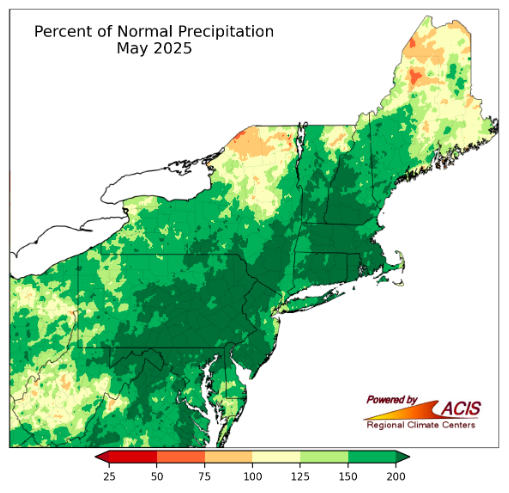
Our current foliage forecast challenges began with what happened next: the seeming flip-flop of March and April. Much of March was warm and benign, and spring advanced quickly with flowers and swelling tree buds. But at month’s end came a return to snow and ice, which held through April, halting spring’s northward advance and damaging some of the tree flowers and buds. (This was especially notable in red maples, which we’ll get into later.)
And all through spring, it was raining every weekend. The rain peaked in early May, with the wettest-ever start to the month in Manchester, New Hampshire, clocking in at more than seven inches in 10 days. All this water coincided with the peak of leaf-out, and the leaves didn’t really dry out for weeks. It was the perfect setup for fungus, which would become one of the big stories of this foliage season.
Consistent rain continued across New England into mid-June, then dramatically dropped off. Heat and humidity were constant; tempering thunderstorms were few. But while soils and lawns dried out, early fungal problems held on in the leaves through transpiration and persistent humidity.
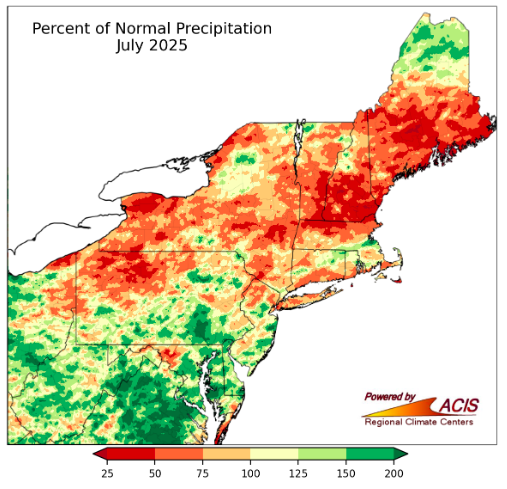
Now, as we write this forecast in mid-August, the lack of rain is starting a new cycle of drought. Lawns are browning, and trees along the forest edge and on rock ledges are showing stress. Cooler weather and hopefully some rain will slow this trend, but the train has left the station.
Flowers & Seeds
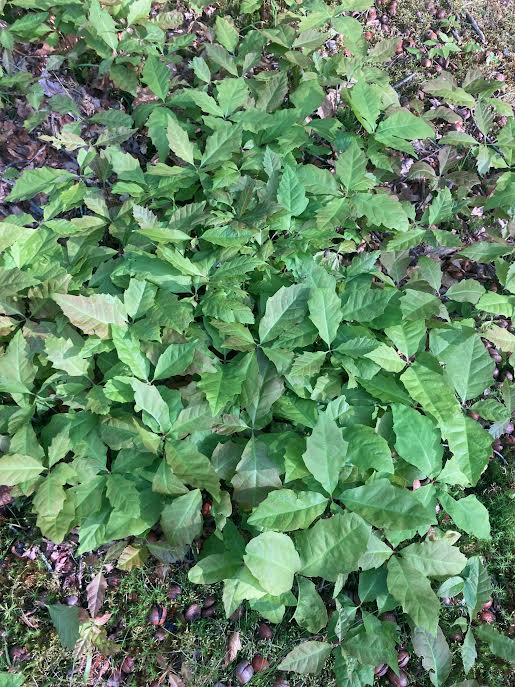
When a tree species produces a region-wide seed crop that’s so large it overwhelms animals’ ability to consume them all, it’s known as a mast year. And last fall, New England’s red oaks had one of their largest mast years in recent memory, with acorns piling up in yards and on forest floors. One year later, seedlings are everywhere (as are mice, by the way, so be prepared as they start looking to move into sheds, garages, and walls this fall). But this reproductive boom can take a toll: When trees put extra effort into producing seeds, energy is diverted from their other processes, like defense. This may be the reason we’ve seen a lot of fungus and mildew in red oaks this year.
Red maples seemed poised for a similarly big mast year in 2025. Spring flowers were abundant, and canopies were thin, both of which point to vigorous mast production. However, the late cold, snow, and ice in April and the subsequent persistence of rain limited the production of mature samaras, even as the energy expended on making them has yielded fewer and smaller leaves on red maples. New England hasn’t seen such a failed crop in years, and we’re curious to see whether this will produce bolder colors this fall.
Not many other trees posted large seed numbers throughout the region this year. Among the big trees, chestnut oak is maybe the most productive, and witch hazel is having a mast year in the understory. The beech has produced a lot of beech nuts in the northern forests, yet few farther south. Note: Mast issues in New England’s beeches may soon take a back seat to a significant disease threat, as you’ll discover next.
Bugs & Fungi
For years, our foliage reporting has highlighted how young beech trees in the New England understory hold on to their colors late into fall, creating glowing woodlands. But 2025 may be the last year that that will happen for a long time.
Credit: Jim Salge
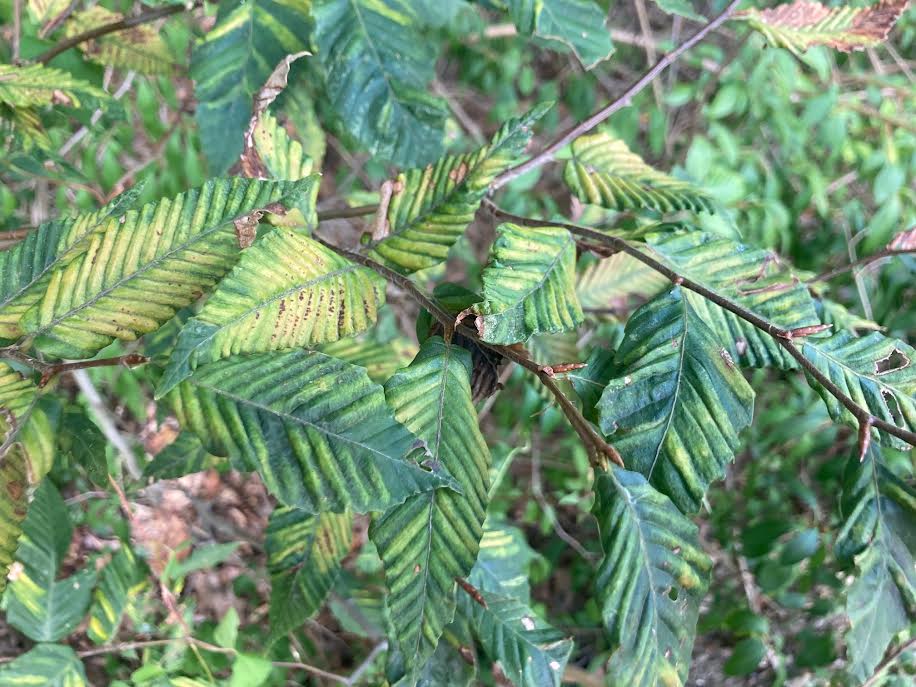
We are right now seeing throughout the region the unbelievably rapid expansion of beech leaf disease, caused by a microscopic roundworm. This pest arrived in New England only a few years ago, and it was slightly noticeable in northern New England in 2024. This year, however, beech leaf disease is everywhere—and the effects may be devastating.
The rise of this pathogen comes on the heels of the emerald ash borer, which is expanding across the region (albeit more slowly), removing ash trees from the forest ecosystem as well. Put the two threats together, and it’s undeniable that the forests of New England are changing rapidly.
On a rosier note, the years-long outbreak of the spongy moth caterpillar (formerly known as the gypsy moth) seems to be ramping down. The main biological control for this pest—an insect-killing fungus called Entomophaga maimaiga—was boosted by our wet spring weather, and trees are recovering. Overall, New England has seen very little defoliation caused by caterpillars this year. Leaf peepers will surely see some native tent caterpillars, but scant widespread impact.
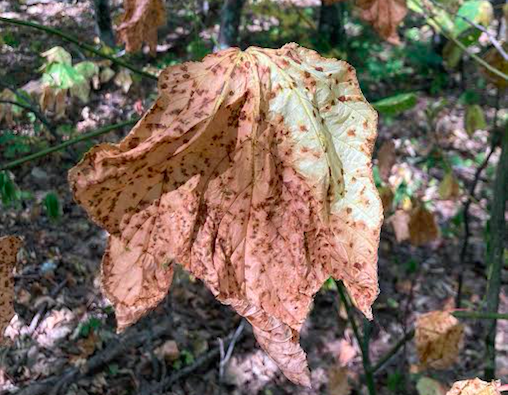
As for tree fungus? Simply put, there’s a lot of it, due in large part to those spring rains. On many of my hikes through four New England states this summer, I saw anthracnose, leaf spot, mildew, and a long list of similar afflictions. But while this definitely could affect the quality of fall colors in our region this year, it’s important to stress that not all trees, not all areas, and not all elevations are seeing fungus—meaning there will still be plenty of bold, beautiful leaves to enjoy.
Credit: Jim Salge
New England Fall Foliage 2025 | Long-Range Outlook
New England is known for its beautiful fall weather, which is also paramount in bringing out the best fall colors. If we get a string of warm, sunny days and crisp, clear nights leading up to the trees changing, it will set the stage for a spectacular color show.
The long-range forecast suggests that as New England heads into fall this year, it will be in what climatologists call a “neutral Pacific pattern,” in which the jet stream has a more consistent west-to-east flow and there are typically fewer extreme weather shifts. In brief, it’s neither an El Niño nor a La Niña. However, the Atlantic hurricane season is starting to heat up, and this same neutral pattern might allow tropical systems to sneak in. The dream scenario would be to have such storms stay off the coast, dragging cool, dry air down from farther north and kick-starting fall.
Credit: Jeff Lukach
Barring that, we may see the summer’s hot and especially dry weather continuing into September before our normal fall progression. As New England is already trending toward drought, some tropical rainfall or strong cold fronts would be helpful for overall forest health, but fall foliage can actually be enhanced by some degree of abnormally dry conditions during the run-up to the season.
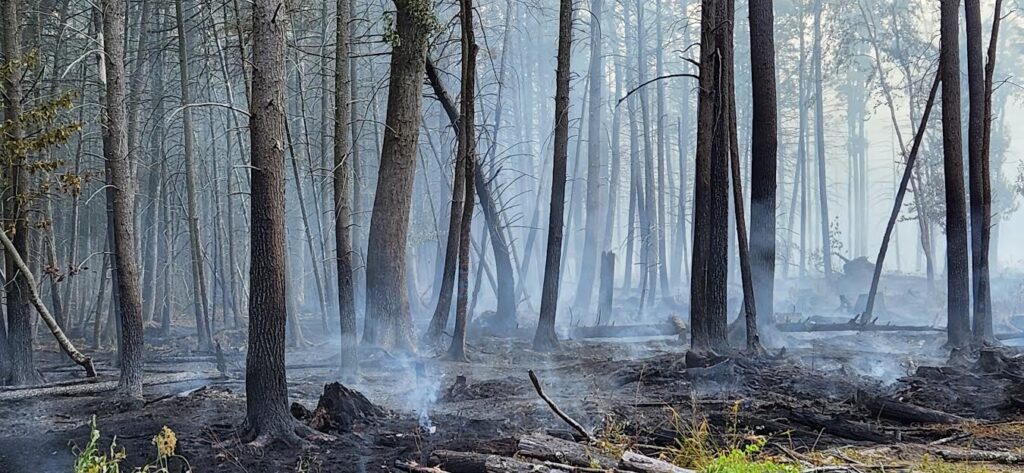
Fire danger is increasing as well, and the lower humidity of fall will exacerbate that. So please be careful with campfires this autumn!
New England Fall Foliage 2025 | The Official Prediction
New England’s fall colors are just about a month away from kicking off, and we certainly see positive signs for the coming season. After a classic winter, there was ample rainfall this spring to help the trees recover from last fall’s drought. Without that early moisture, we would have been in for some challenging color conditions—now there’s lots to look forward to.
However, since that rainfall overlapped with the critical leaf-out period, some fungus did set up on tree leaves. This will make prime foliage conditions more of a complex patchwork across the landscape. Beautiful colors will be out there, and likely plentiful, but leaf peepers should plan their adventures to include different elevations and aspects to ensure they catch the show.
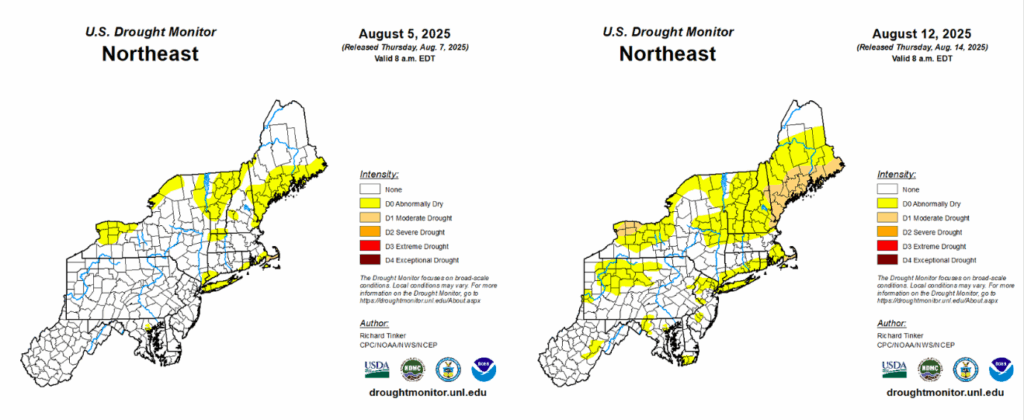
Further complicating our foliage prediction is the drought index, which is creeping upward. Already-stressed roadside birch trees are showing bright yellows, and trees on ledges are starting to brown. While the deep forest tends to be more resilient, we will likely see fall colors emerge slightly early this year if the dry weather continues. This should hold true region-wide, but northern areas have the greatest potential to turn a bit early this year, given that cold air can sneak down from farther north.
It’s also a good reminder that some drought can make colors really bright, but it also shortens the duration of the show. Red can be a dominant color in drier years, too, as bright autumn sunshine brings forth more red pigments in the leaves.
Not everything will be rosy this year when it comes to certain tree species, though. Hickory, striped maple, and cherry trees are showing significant fungal stress, although their roles in the overall fall foliage show are relatively minor. Some areas are seeing oak and maple fungus as well. And much more noticeable will be the trees afflicted with beech leaf disease. Yet overall, New England’s fall colors rarely disappoint; despite some challenges, this year should be no exception.
Credit: Jim Salge
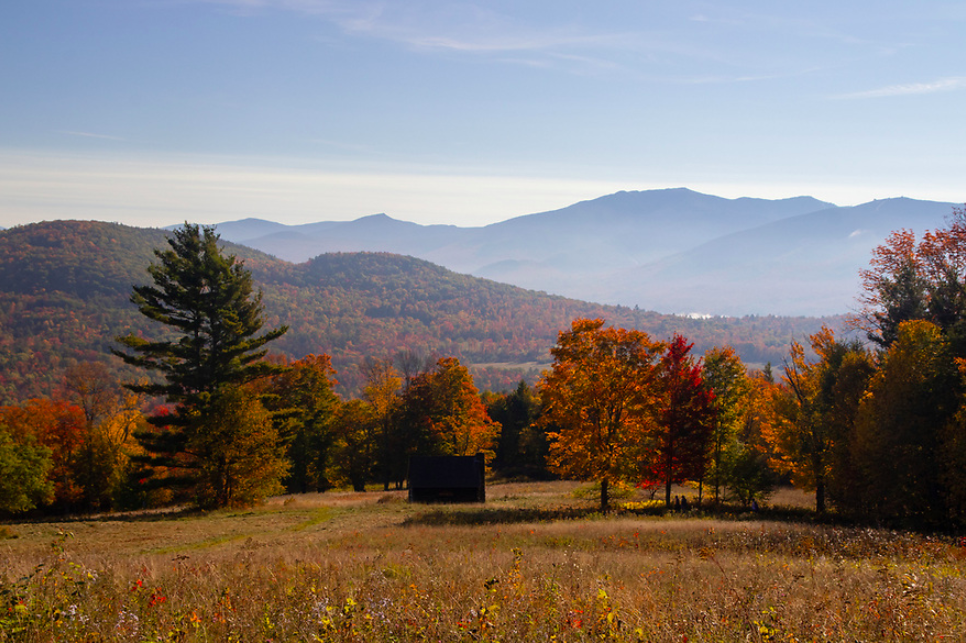
One last factor worth mentioning is the potential effect of any Canadian wildfire smoke in New England this fall. Since the blue haze has a way of masking the yellows and oranges in our glorious leaves, grand vistas from outlooks and mountaintops during smoke-impacted days may be less impressive than smaller-scale scenes, which will yield a better visual and more photogenic colors.
New England Fall Foliage Forecast 2025 | What’s Next?
At NewEngland.com, we’ve put together many tools to help you both plan your visit and stay abreast of the changing leaves, including extensive road trip ideas, a map predicting peak foliage, and weekly travel picks throughout the season (starting in mid-September).
Things to look for in our September New England Fall Foliage Forecast update:
1) Will the emerging drought persist, or will rain bring relief?
2) How much of an impact will fungus have on fall color?
3) Will tropical weather systems stay away, or add to the challenges this season?
We will let you know—and we can’t wait to share the season with you!
Beyond New England
Mid-Atlantic and New York – Much like New England, this region saw above-average rainfall in spring followed by record summer heat and humidity, which increased stress in the forest. Sporadic colors, some bold and some muted, are going to be the norm across much of the East Coast this fall. Expect color to turn early and have a shorter duration.
Southeast – Wet conditions in spring gave way to oppressive heat and humidity in summer, but with little drought. Fall colors should progress normally this year. After the devastating impact of Hurricane Helene last year, a good fall-tourism season for the southern Appalachians would really help the region.
Upper Midwest – Heat and humidity have been the norm here, too, but sporadic rain and even some flooding events have kept forests healthy and out of high-stress drought. A good year for fall foliage appears likely, but Canadian wildfire smoke may dampen viewing opportunities.
Mountain West – Drought has come back in a big way in 2025, and the Rocky Mountains are tinder-dry. This means the foliage season will likely be quite brief this year. The aspens always put on a good show, but be flexible in your travel planning so you don’t miss it.
Pacific Northwest – Hot and dry weather will also make fall colors brief in the typically cool Northwest. Colors should pop red this year before falling quickly in the drought conditions. If warm weather persists as predicted, the colors may come on a bit later than normal, even given the predominantly dry forests.