6 New England Places to Visit This Fall for America 250
From Revolutionary War battlefields and military sites to historic towns and city streets, these six destinations pair America 250 history with spectacular New England fall foliage.
By Aimee Tucker|Sep 11 2026|

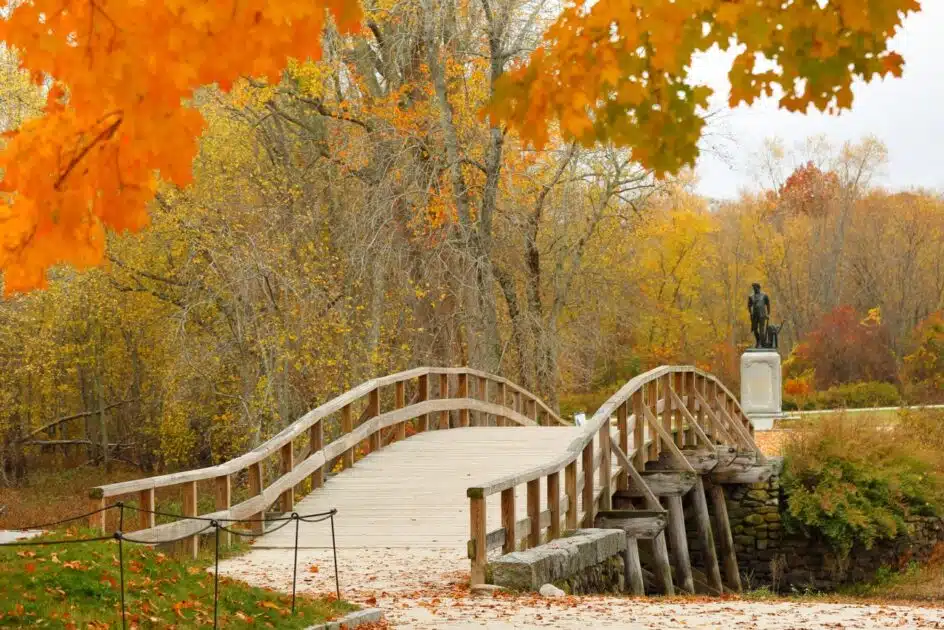
The North Bridge (often colloquially called the Old North Bridge) paints a lovely autumn scene in Concord, Massachusetts.
Credit: Jay Yuan/Shutterstock.comLeaf peepers flock to New England each fall, drawn to the region’s oodles of autumn offerings, from fairs and festivals to hikes and drives, all set against the beautiful backdrop of changing leaves. This year, many visitors will also have the nation’s recent 250th birthday in mind. For a fall trip with a side of America 250 history, head to these six places, where Revolutionary War-era stories and quintessential New England scenery come together.
6 New England Places Where the Revolutionary War Meets Fall Foliage
Minute Man National Historic Park | Concord, MA
This picture-perfect New England town, just 30 minutes from Boston, is home to one of the most recognizable elements of the War of Independence: the Old North Bridge, where the April 19, 1775, “shot heard ’round the world” kicked off a Revolution. The current bridge dates back to 1956 and is the fifth bridge to occupy the site since 1775. Both the bridge and the Minute Man statue shine against an autumnal backdrop, so have your camera handy. For extra fall vibes, head downtown to stroll and shop or visit Author’s Ridge at the 19th-century Sleepy Hollow Cemetery to pay your respects to hometown literary legends Thoreau, Alcott, Emerson, and Hawthorne.
Credit: Natalia Bratslavsky/Shutterstock.com
The Freedom Trail | Boston, MA
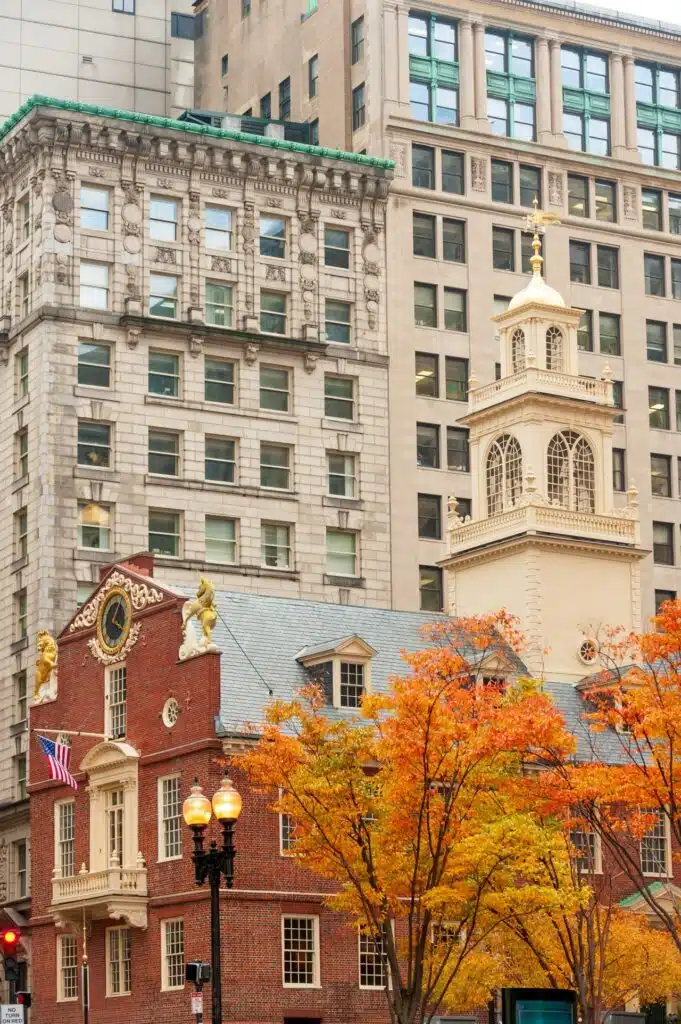
Boston’s 2.5-mile Freedom Trail winds through the heart of the city, connecting 16 historic sites that tell the story of the American Revolution, from Boston Common to Bunker Hill. In autumn, pops of color enhance the trail as it passes through leafy parks, historic burying grounds, and some of Boston’s oldest neighborhoods. Follow the red line past the Granary Burying Ground, Old South Meeting House, and Faneuil Hall (if you’re hungry, this is a good time to grab a Red Apple Farm cider doughnut at the nearby Boston Public Market), then wander through the North End before ending up at the Bunker Hill Monument, a 221-foot-tall obelisk commemorating a key American Revolutionary War battle that took place there on June 17, 1775. It’s a great resting spot for fresh air fall vibes—especially if you picked up a few cannolis earlier in the North End and need a snack. For an extra dose of history, time your visit for a ranger-led talk or walk.
Fort George | Castine, ME
Perched on the rocky shores of Penobscot Bay, the small coastal town of Castine is dotted with reminders of its strategically important past. At Fort George, built by the British in 1779 during the Revolutionary War, earthen ramparts and scattered ruins remain alongside open fields and peaceful woods. Nearby Fort Madison dates to the War of 1812, when American forces built it to defend the harbor. In fall, stroll Castine’s charming village streets and waterfront, peppered with roughly 300 mature American elm trees, a rare sight after Dutch elm disease wiped out most elm populations across the United States.
Credit: lucasImages/Shutterstock.com
Bennington Battle Monument | Bennington, VT
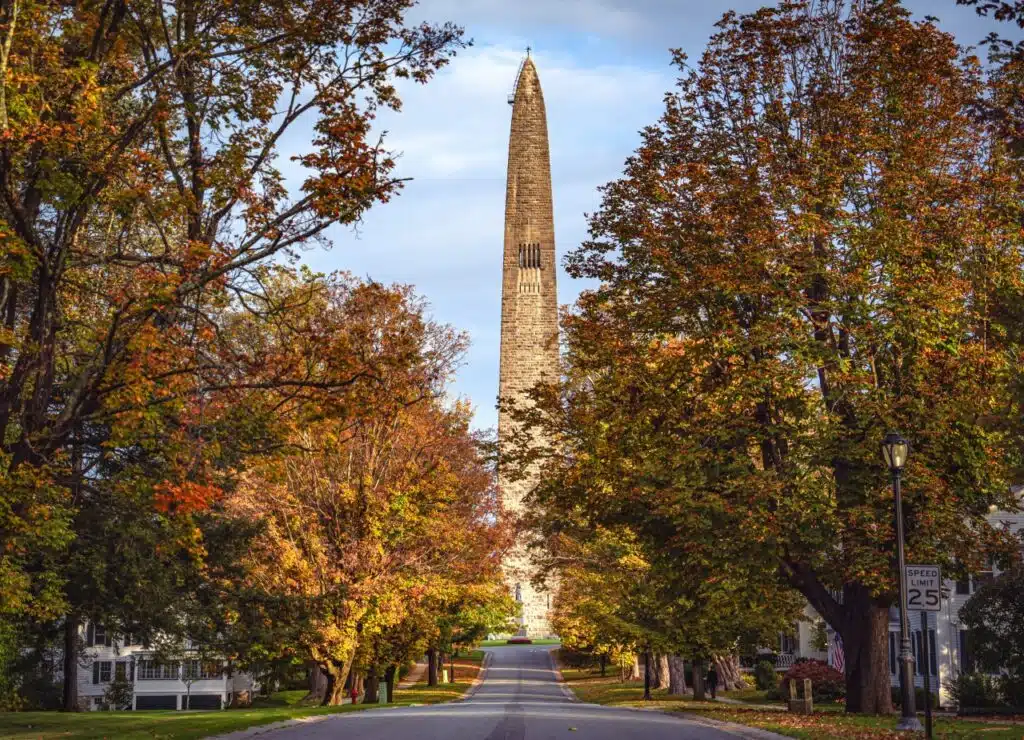
Rising 306 feet above the rolling countryside of southwestern Vermont, the Bennington Battle Monument commemorates the August 16, 1777, Revolutionary War battle that helped turn the tide in favor of the American cause. The monument itself is impressive, but the views from its observation level are the real showstopper. On a clear autumn day, you can see across the surrounding hills and into Massachusetts and New York. Afterward, explore the nearby historic district of Bennington, where colorful trees, white-steepled churches, and historic homes make for a quintessential Vermont fall experience.
Credit: Andy Duback
Mount Independence | Orwell, VT
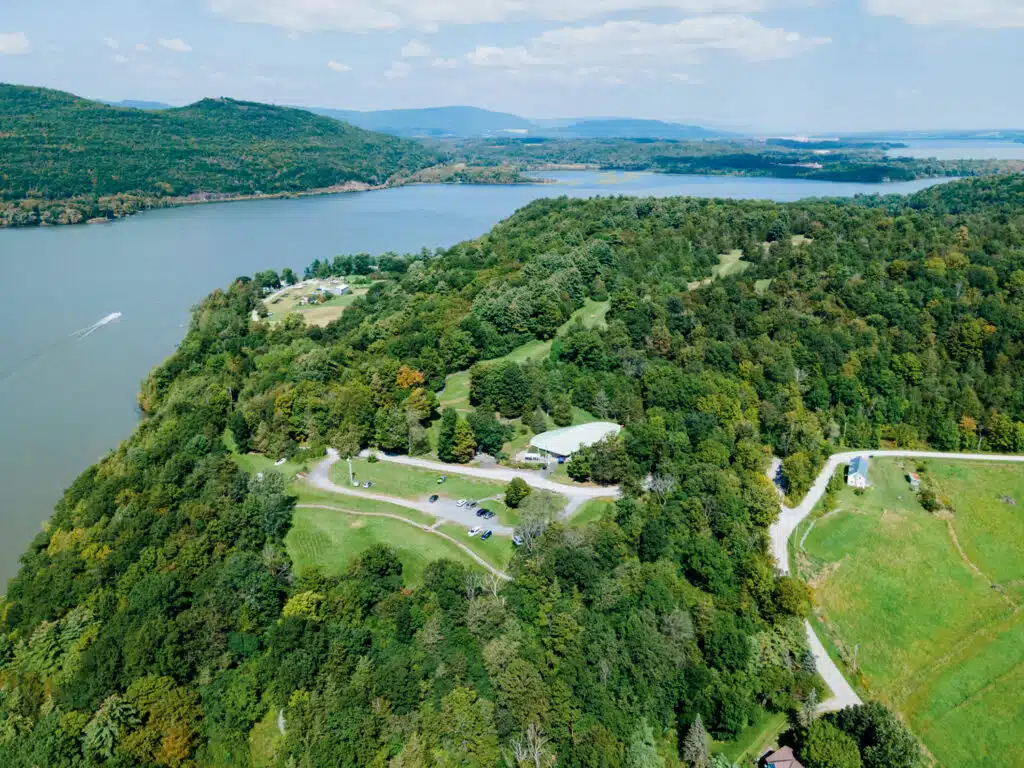
Overlooking Lake Champlain across from Fort Ticonderoga in upstate New York, Mount Independence was one of the largest American military complexes of the Revolutionary War. More than 12,000 soldiers occupied the site in 1776 and 1777, building an elaborate network of batteries, barracks, roads, and fortifications to guard against a British invasion. Today, archaeological remains and six miles of trails reveal the scale of the encampment, while sweeping views of Lake Champlain and the Adirondacks make the site especially spectacular in fall.
Credit: Gabriela Herman
Litchfield Green | Litchfield, CT
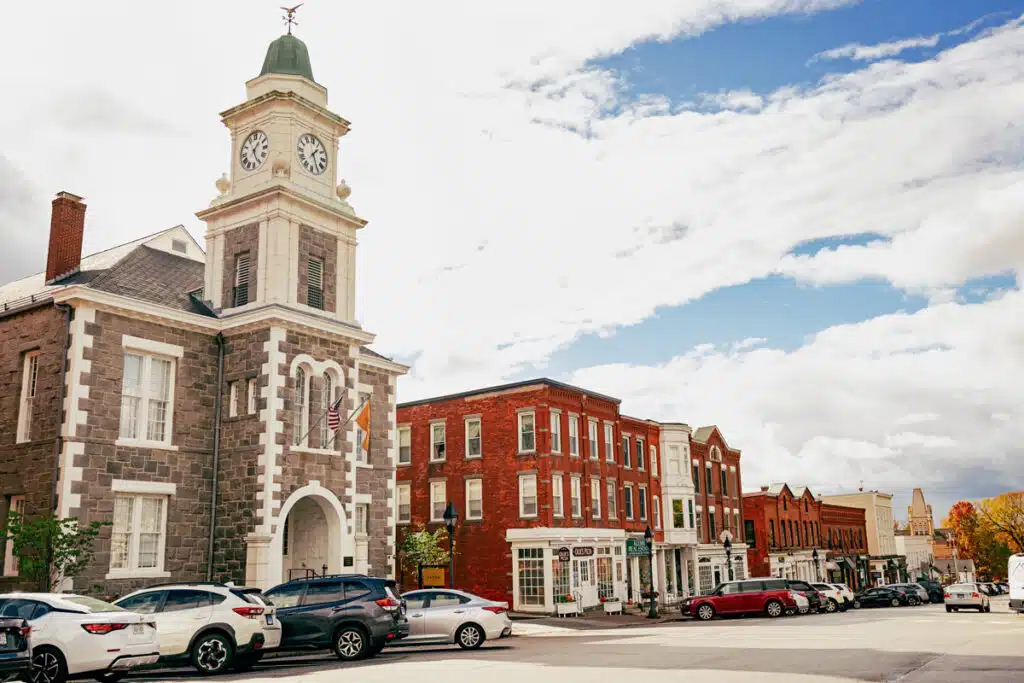
As an inland hub for military supplies, prisoner confinement, and Patriot leadership, this picture-perfect village in Connecticut’s Litchfield Hills played an important role in the American Revolution, and its town green remains an enduring symbol of the town’s history. Litchfield was most notably home to Oliver Wolcott Sr., a signer of the Declaration of Independence and a local militia general who allegedly oversaw the transport of a toppled statue of King George III from New York City to Litchfield, where local citizens melted it down into more than 40,000 musket balls for Revolutionary War soldiers. Today, the green is surrounded by handsome 18th- and 19th-century buildings, churches, and homes, making it especially lovely when the surrounding trees turn gold and crimson. Be sure to stroll the historic district and browse the town’s shops and cafés.
Will you be adding America 250 or Revolutionary War sites to your 2026 New England fall travels? Let us know in the comments below!
You may also like…
· 50 Must-See American Revolution Historic Sites in New England
· 25 Best New England Historic Sites and Museums
· 6 Quiet New England Nature Spots to Visit This Fall