Provincetown, MA | Site of the Mayflower’s First Landing
On November 11 in 1620, a storm-battered English ship sailed into what’s now Provincetown Harbor and dropped anchor. Learn more about the site of the Mayflower’s first landing and the plans to celebrate its quadricentennial anniversary in 2020.
By Catherine Fahy Green|Dec 06 2018|


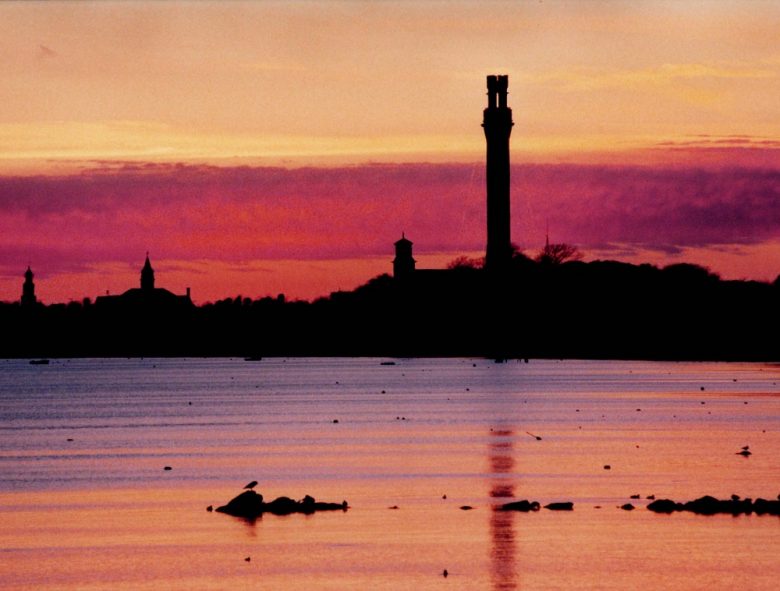
Provincetown’s Pilgrim Monument commemorates the pilgrims’ first landing in America and remains the tallest granite structure in the U.S. Visitors can climb it for 360-degree views of Provincetown and Cape Cod Bay.
Credit: Courtesy of Pilgrim Monument and Provincetown MuseumNearly 400 years ago on Nov. 11, a storm-battered English ship sailed into what’s now Provincetown Harbor and dropped anchor. No one standing on shore would have seen anything like its high, dark weather-beaten wooden sides and broad cloth sails hung from soaring masts.
The Mayflower’s first landing in Provincetown was the Pilgrims’ earliest taste of freedom on this side of the Atlantic. And though they only spent five weeks exploring Cape Cod before weighing anchor in search of fresh water and making their official settlement 50 miles west across Cape Cod Bay in Plymouth, Provincetown remains the type of hopeful, accepting place the Pilgrims sought. Provincetown’s reputation as a place full of possibility, a place where people are free to be themselves, means just what it did 400 years ago — anyone can dress, date, paint or pray the way they want without fear of judgement.

Credit: Courtesy of Pilgrim Monument and Provincetown Museum
With preparations underway for 2020’s quadricentennial anniversary of the Pilgrim’s first landing, no time of year brings you closer to Provincetown’s origin story than Thanksgiving. History buffs can visit the town’s Pilgrim landmarks while nature lovers can explore the dunes and beaches, imagining the windswept land as it looked when the Pilgrims first rounded the point. Variable fall weather can bring a string of mellow, sunny days or grey clouds scudding before a blustery wind. No matter what, at the end of your adventures — unlike the Pilgrims — you can return to a warm, cozy inn with a crackling fire.
The Pilgrim Monument: A Monument to History
Today, the most noticeable structure in Provincetown is the 252-foot-tall Pilgrim Monument commemorating the pilgrims’ first landfall in America and the signing of the Mayflower Compact in Provincetown Harbor. President Theodore Roosevelt sailed into the harbor on his yacht, the USS Mayflower, to lay the cornerstone in 1907. A beacon of tolerance and hope since its completion in 1910, the ornate Italianate tower (modeled after one in Siena, Italy) remains the tallest all-granite structure in the U.S. At 350 feet above level, it dwarfs Provincetown’s stately buildings and weathered beach cottages. Climb the tower’s 116 steps for a 360-degree panoramic view of Provincetown and Cape Cod Bay.
Each year in late November a crowd gathers to witness the annual Lighting of the Pilgrim Monument, a reflective and festive affair with speeches, entertainment and the illumination of 3,000-plus “landing lights” that shine each night for five weeks, roughly the amount of time the Pilgrims spent in Provincetown.
Provincetown 2020 | Save the Date
In 2020, the town of Provincetown and the Pilgrim Monument and Provincetown Museum will host Provincetown 400, a year-long celebration with special events recognizing the Mayflower’s first destination. One highlight will be the September, 2020, arrival of more than 1,500 members of the General Society of Mayflower Descendants, who will take a ferry from Boston for a day of events including a re-enactment of the signing of the Mayflower Compact.
The Mayflower’s approximately 130 passengers and crew spent two storm-tossed months at sea in very close quarters and were doubtlessly eager to feel land under their feet when they saw Cape Cod’s sandy shores. But, in their disciplined manner, before leaving the ship they wrote and signed the Mayflower Compact to ensure unity “for the sake of order and survival.” Seen as the first governing document of the new colony and the first example of majoritarian democracy in action, the Mayflower Compact bound passengers and crew to act in the interest of the welfare of the whole, making Provincetown the birthplace of American democracy.
Credit: Courtesy of Pilgrim Monument and Provincetown Museum
At the base of the Pilgrim Monument, look for the detailed bronze bas-relief of the signing of the Mayflower Compact by renowned sculptor Cyrus Dallin, the same artist who designed Paul Revere’s formidable equestrian statue near the Old North Church in Boston.
Less conspicuous but no less significant is the Pilgrims’ First Landing Park in the middle of the rotary at the west end of Commercial Street. The park was sited on the exact spot where the pilgrims were thought to have first touched land according to a map in Mourt’s Relation, a text attributed to Edward Winslow, the third governor of Plymouth Colony.
The Original Free-Thinkers
The Pilgrims were just the first in a long line of people with alternative ideas who have been drawn year-round to Cape Cod’s outermost port. In the Pilgrims’ case, this wasn’t intentional as the Mayflower was bound for Virginia and landed on Cape Cod only because it couldn’t make headway south in strong early winter winds. The same qualities that made Provincetown Harbor a refuge for the Mayflower — its large, deep, sheltering basin — made it one of the busiest seaports in nineteenth century America. Prized for its rich fishing grounds, Provincetown’s commerce grew under a new population of Portuguese settlers. But its most valuable commodity became its scenery and an isolation that has fostered creativity in generations of artists, writers and free thinkers. Late fall and early winter in Provincetown is the ideal time to savor that isolation and contemplate the extraordinary story of American’s first destination which could well serve as a model for the rest of the nation.