The Cape Cod Hydrangea Festival: A Celebration of Summer’s Bluest Blooms
The Cape Cod Hydrangea Festival celebrates summer’s favorite flower with self-guided garden tours, expert talks, and dazzling displays of hydrangeas across Cape Cod.
By Kate Whouley|Jul 01 2025|

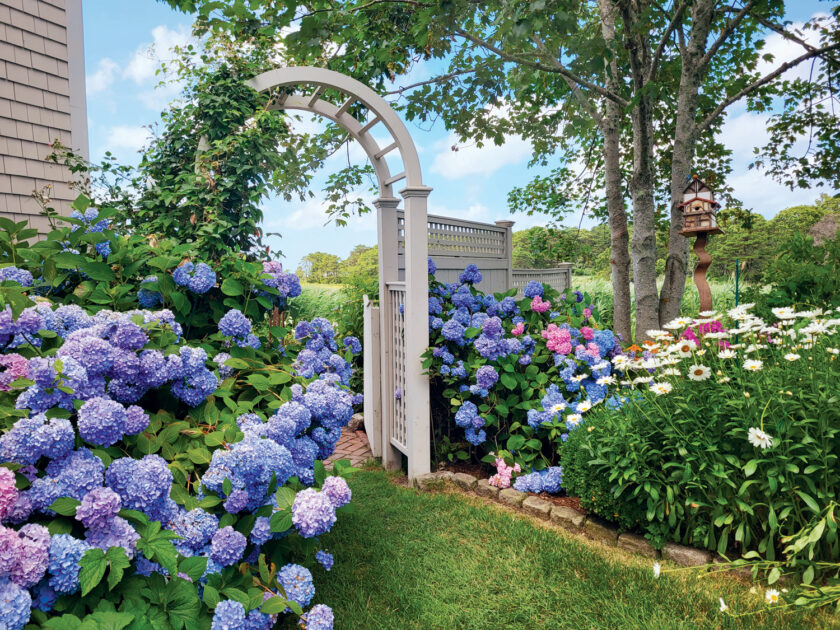
When July rolls around on Cape Cod, count on hydrangeas to deliver floral fireworks.
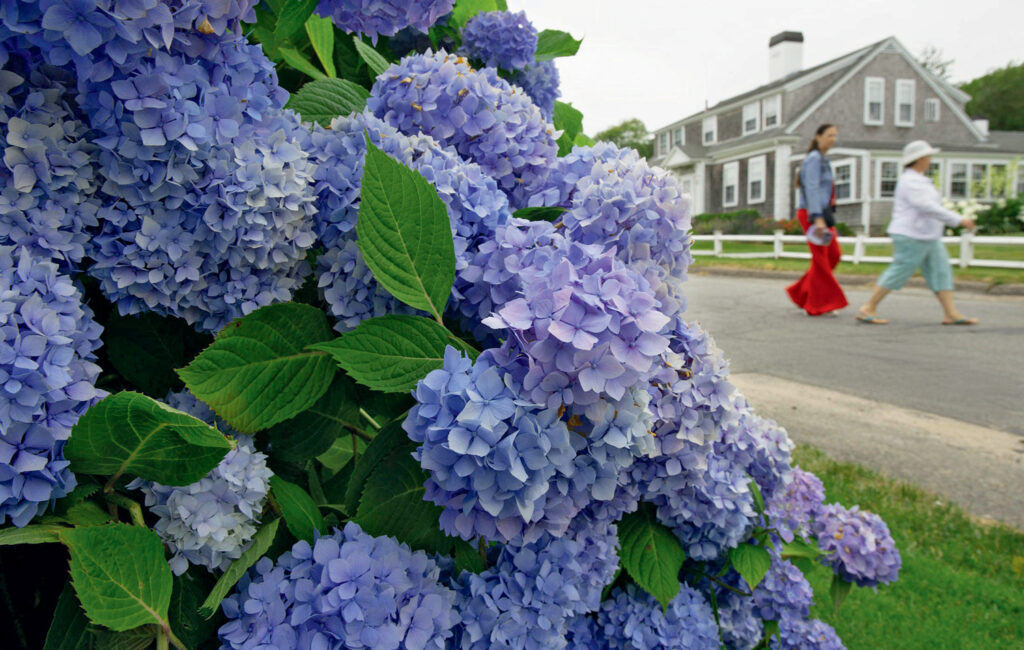
Credit: Greta Georgieva“I wish I could take these home with me,” a friend declares, pointing to the two hydrangeas that form the backbone of the mostly-shade section of the front garden at my home on Cape Cod, Massachusetts. During the first week of July, the huge mophead blooms are a brilliant cornflower blue. These particular plants have been in this spot for roughly 40 years, and it’s not the first time I’ve heard this refrain from someone who lives, as we say, “off-Cape.” Hydrangeas thrive in maritime climates with more temperate winters, sandy soil, and gentle summer sea breezes that produce lingering humidity—or at least the vintage varieties do. But here’s the good news for all New Englanders: The ever-growing popularity of this woody ornamental has led to an explosion of varieties that are hardy in cooler and inland climes.
“The major breeders are focused on producing hydrangeas that will thrive almost anywhere,” says longtime Cape-based garden educator and author C.L. Fornari, who hosts the weekly call-in local-radio program The Garden Lady. “In fact, you can’t even purchase some of the older varieties we have on the Cape.”
Many of those old favorites as well as some of the newer hybrids you’re likely to find at your local garden center—Strawberry Sundae, Endless Summer, and Let’s Dance, to name a few—anchor Fornari’s expansive gardens at her home in Sandwich. In all, she estimates there are as many as 50 hydrangeas on her property, many sent to her to try out (an occupational perk, for sure). Fornari speaks botanical, but she translates into common names as she leads me around her yard. I’m intrigued by the range of different settings for her hydrangeas: standing sentinel at the end of the driveway, hugging the house, tucked in by an arbor, nestled alongside perennials. I’m also feeling just a little special to be given a private tour by The Garden Lady herself.
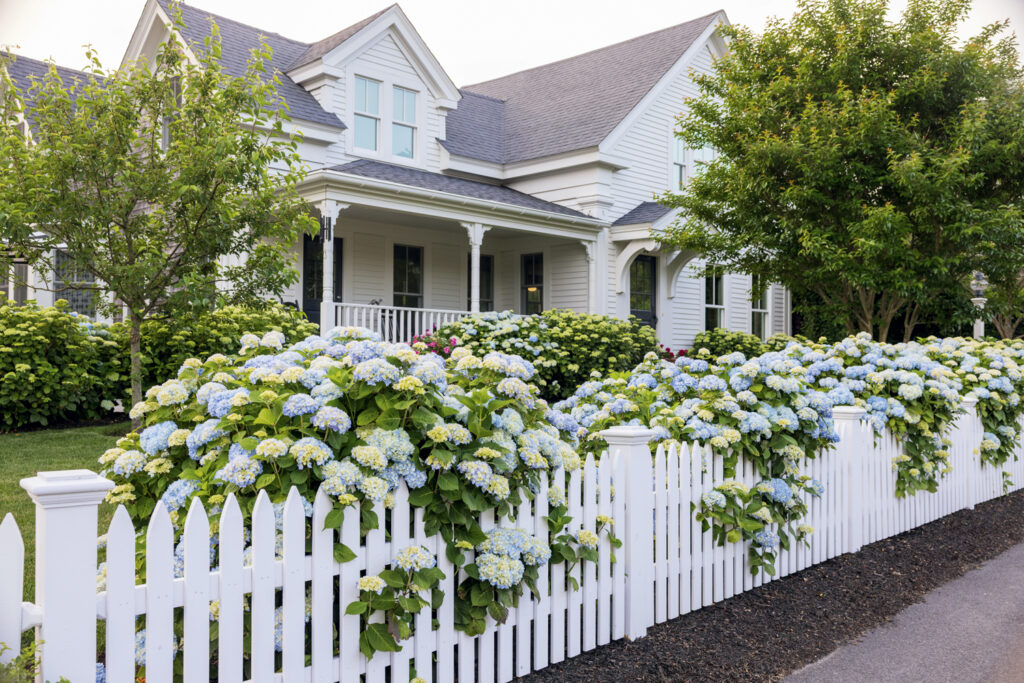
Credit: Betty Wiley
Contributing to The Garden Lady’s renown is Fornari’s role in the cofounding of the Cape Cod Hydrangea Festival. The event, which is coordinated by the Cape Cod Chamber of Commerce and is now in its 11th year, supports the important work of many nonprofit organizations while offering attendees self-guided tours of about 100 private gardens, including Fornari’s, at the peak of hydrangea season in mid-July.
“Each garden is partnered with a local nonprofit and passes all the proceeds to them,” says Greta Georgieva, the chamber’s special projects coordinator. “We get visitors from around the world, and I want them to know they will see more than hydrangeas here,” she adds. “Of course we celebrate Cape Cod’s iconic flower, but the festival is truly a summer garden celebration.”
In addition to the satisfying walks through usually private gardens, the festival includes workshops, special promotions at local nurseries, and even plein air painting demonstrations. For gardeners in search of higher learning, there’s also Hydrangea University, a half-day symposium sponsored by the Cape Cod Hydrangea Society and Heritage Museum & Gardens in Sandwich, home to the North American Hydrangea Test Garden.
“The concept for the test garden came out of a conference we held here in 2015,” says Heritage’s hydrangea curator, Mal Condon, whose work with the flower spans roughly half a century. “Hydrangeas were getting really popular with gardeners, and hybridizers had jumped in big-time. In the test garden, we can evaluate new varieties in a real-life setting.”
Those newer cultivars occupy nearly three acres, allowing horticulturists to study and report on their health and viability. Home gardeners and hydrangea lovers, meanwhile, can stroll the cobble-lined shell paths to take in the colors and blooms, and perhaps do a little garden planning of their own.
Credit: Betty Wiley
Credit: Steve Heaslip-USA Today Network via Imagn Images
The older varieties have their home in the neighboring two-acre Hydrangea Display Garden, a showcase of nearly 155 species and cultivars. “It’s really a historical collection,” Condon says, mentioning that at least 60 percent of the plants are no longer in cultivation or propagation. “The first plantings were installed in 2008. The idea was to establish a garden that contained the older antique varieties, especially the species macrophylla—that’s the one everyone loves—the blues.”
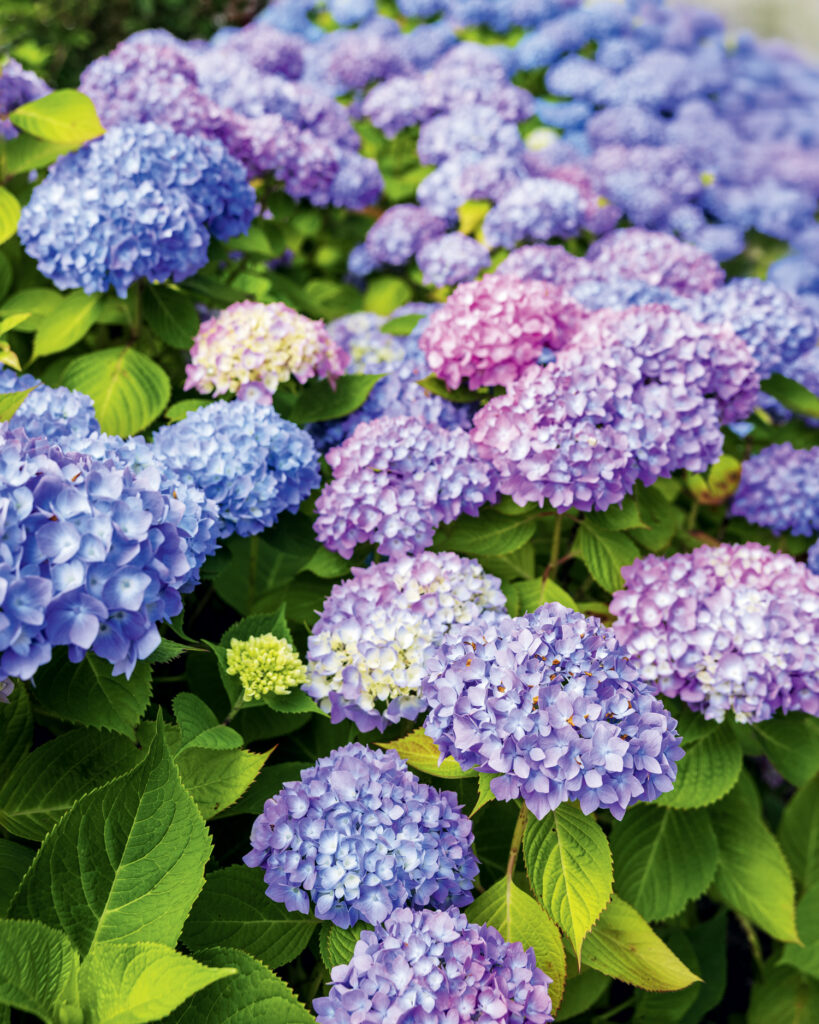
Ah yes, the blues. Maybe it’s because there’s not a lot of that color in any given garden, but what I especially love about my sprawling specimens is watching the hues change—from the palest, white-tinged blue when the buds first open, to the soft robin’s-egg blue of peak bloom.
I learned from my time with Fornari and Condon that it’s not merely the natural acidity of the soil that creates the depth of the blues on Cape Cod, it’s the presence of aluminum. Planted in soils lacking aluminum or in soils that are more alkaline, the macrophylla and some serrata varieties of hydrangeas will produce paler hues, or tend toward pink. Some folks play with color through soil remediation, by acidifying and adding aluminum sulfate (blue) or by treating with lime to increase the soil’s pH.
But not me. I let my hydrangeas be as they are. On the other side of my garden’s slate path and surrounded by orange, yellow, and white lilies, two old lace-caps have become three, with no intervention on my part. And my two original mopheads now number four, spreading on their own, and making their way down the hillside. Standing, hose in hand, at garden’s edge, I can’t help but smile. As the sun sets on this early summer day, I breathe in the glorious beauty of the truest of true blues.
The 2025 Cape Cod Hydrangea Festival runs July 11–20. Tickets for self-guided tours are $5 per person, per garden. For more information, go to: capecodhydrangeafest.com
This feature was originally published as “True Blue” in the July/August 2025 issue of Yankee.
See More:
Hydrangea Care and Pruning Tips for Big, Beautiful Blooms