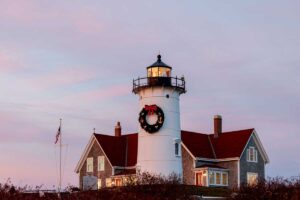
Massachusetts Outdoor Adventures: Battlefields & Beyond
Get a hit of Revolutionary history and plenty of fresh air at these nine historic sites.
By Yankee Custom Editors|May 18 2026|


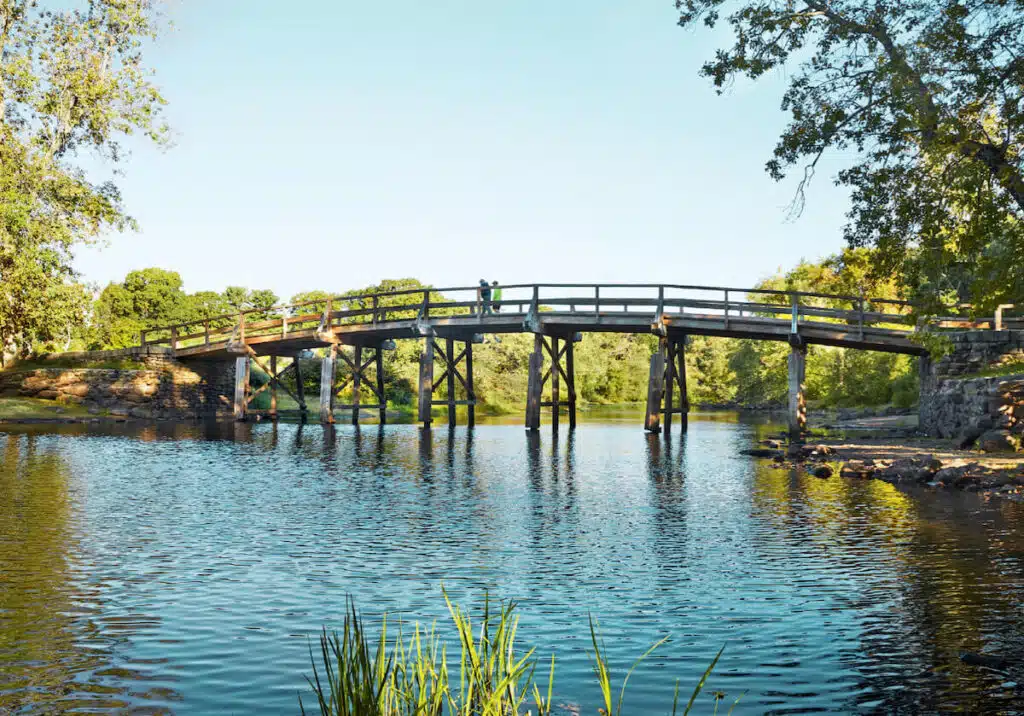
All ages can join in a day of open-air exploring and learning at one of Massachusetts’s Revolutionary War sites, including the Old North Bridge in Minute Man National Historical Park.
Credit: www.allie.photoSponsored by Massachusetts 250
America’s War of Independence unfolded across a Massachusetts that, in many places, looks remarkably unchanged today. From the Berkshires to Boston Harbor, from the North Shore to the South Coast, you can walk the very ground where history was made, experiencing the Revolution in a living landscape rather than from behind the ropes of a museum exhibit. So to celebrate the nation’s 250th anniversary this year, lace up your walking shoes and head into the great outdoors to experience parks, trails, battlefields, and storied coastline where you can still feel the Spirit of ’76 in the air.
Credit: Nina Gallant/Yankee
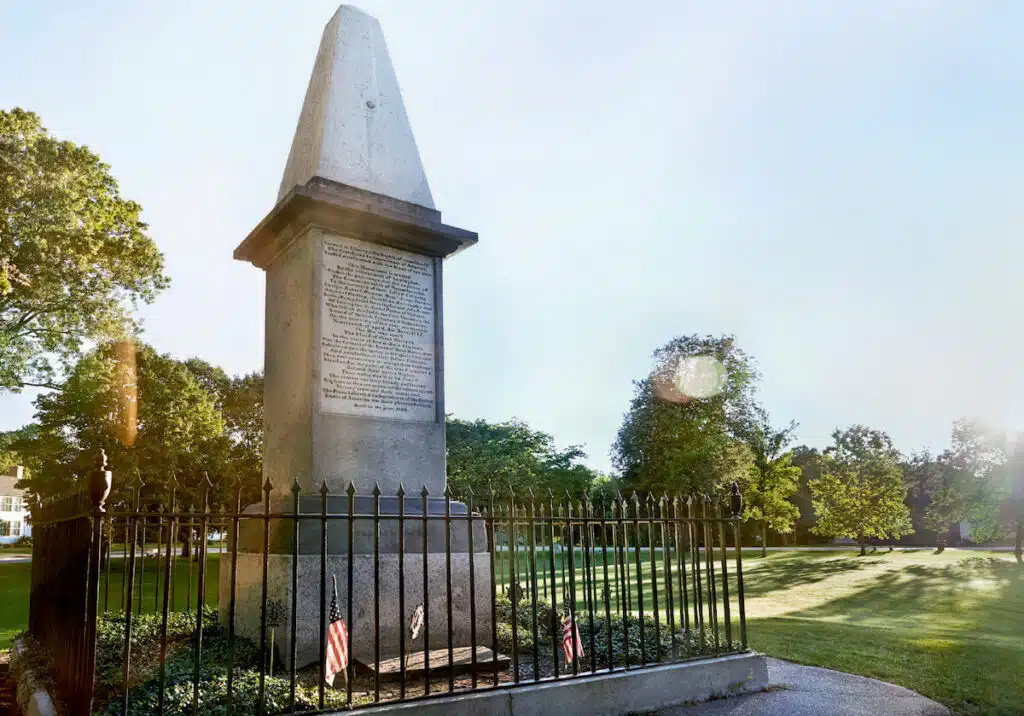
Explore the Lexington Battle Green
The Battles of Lexington and Concord on April 19, 1775, are forever etched in our nation’s memory as the first military action of the Revolutionary War. The opening shots of that clash rang out on Lexington’s town common, better known as the Lexington Battle Green. Today the triangular, grassy park is dotted with monuments, most notably a granite obelisk erected in 1799 that stands as the oldest memorial to the Revolutionary War. One of the few places in the country where the American flag is federally authorized to fly 24 hours a day, the Battle Green invites visitors to explore on their own or take a guided walking tour offered by the visitors center daily from now through October.
Credit: Michael Neelon/Alamy
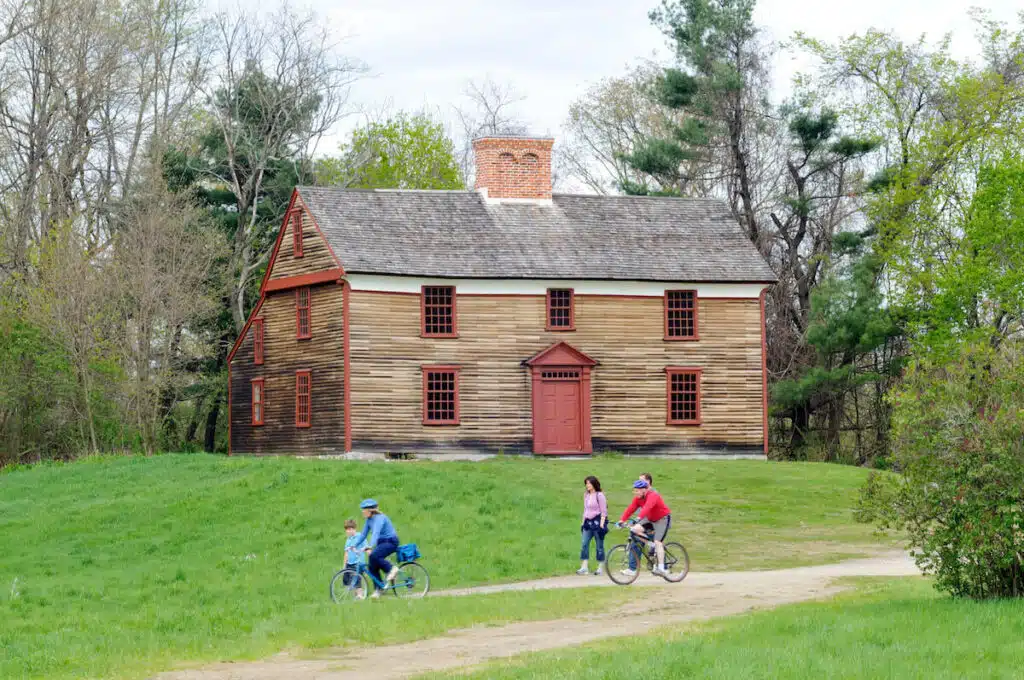
Hit the Battle Road Trail
A five-mile path stretching from Lexington to Concord, the Battle Road Trail offers the chance to follow in the footsteps of British troops who marched from Boston straight into the beginning of the American Revolution. The trail connects several key sites within Minute Man National Historical Park (including the place where Paul Revere was captured by a British patrol), but it also has its own tale to tell: As the British later retreated from Concord, they were ambushed repeatedly along this same road by vengeful Patriot militia. If you want to travel the entire length, biking is the easiest way—however, walking even a part of it will immerse you in the feeling of that dramatic day.
Credit: Nina Gallant/Yankee
Cross the Old North Bridge
Don’t be lulled by the tranquil setting of the Old North Bridge, which curves above the Concord River in the heart of Minute Man National Historical Park. It was here that the Battle of Concord erupted with “the shot heard ’round the world,” as Ralph Waldo Emerson famously described the opening salvo. Stroll across the wood bridge (a historically accurate reconstruction of the 1775 span) for a closer look at Daniel Chester French’s iconic Minute Man statue, then make your way across a pastoral field to the 1911 brick mansion that serves as a visitor center. Inside, there’s a video retelling of the battle, a plank from the original bridge, and uniforms and weapons used by Colonial and British soldiers; outside are gardens and a lawn perfect for picnicking.

Credit: Massachusetts Office of Travel & Tourism
Hike the Knox Trail
In December 1775, George Washington sent a young officer named Henry Knox—who was a Boston bookseller before the war broke out—to transport captured British cannons and other key pieces of artillery from upstate New York all the way to Boston. Knox (who is credited with proposing the audacious plan in the first place) readily agreed, and set out from Fort Ticonderoga with 60 tons of weaponry on a 300-mile winter trek that took 56 days, several dozen men, and more than 200 horses and oxen to successfully complete. A heroic feat that helped end the Siege of Boston, Knox’s expedition is now commemorated with a series of markers along his route from New York to Massachusetts. And while large sections have been paved over, devoted history buffs can still walk part of Knox’s original path: Just head to Otis State Forest in the Berkshires, where an easy three-mile hike awaits.
Credit: Capt’ Tom/Shutterstock
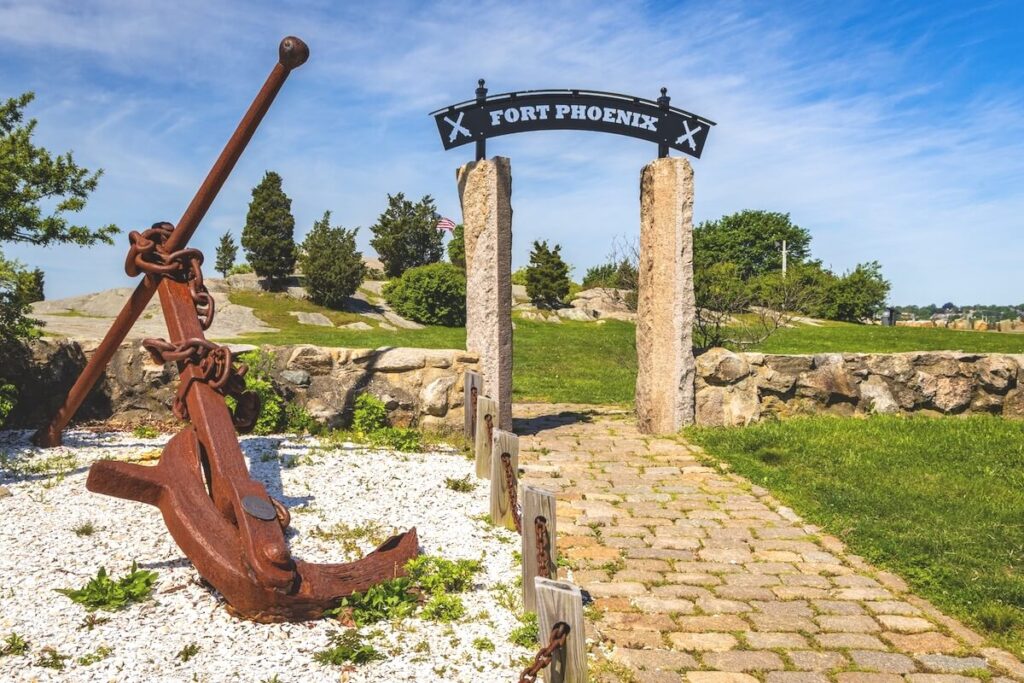
Reach the Beach at Fort Phoenix
Tucked away in the South Coast town of Fairhaven is a must-visit for anyone whose imagination lights up at the thought of sea battles: Fort Phoenix State Reservation, which commemorates the Revolutionary War’s first naval engagement, in May 1775. A fort was established on this site later that year, then destroyed in a 1778 British raid, and ultimately rebuilt and named Fort Phoenix in honor of its “rising from the ashes.” These days, the remnants of the fort are the historical centerpiece of a 28-acre state park that features a popular half-mile-long beach along Buzzards Bay and plenty of other options for recreation, including basketball, pickleball, volleyball, and tennis courts.
Credit: Nicole Goodhue Boyd/John Guilfoil Public Relations
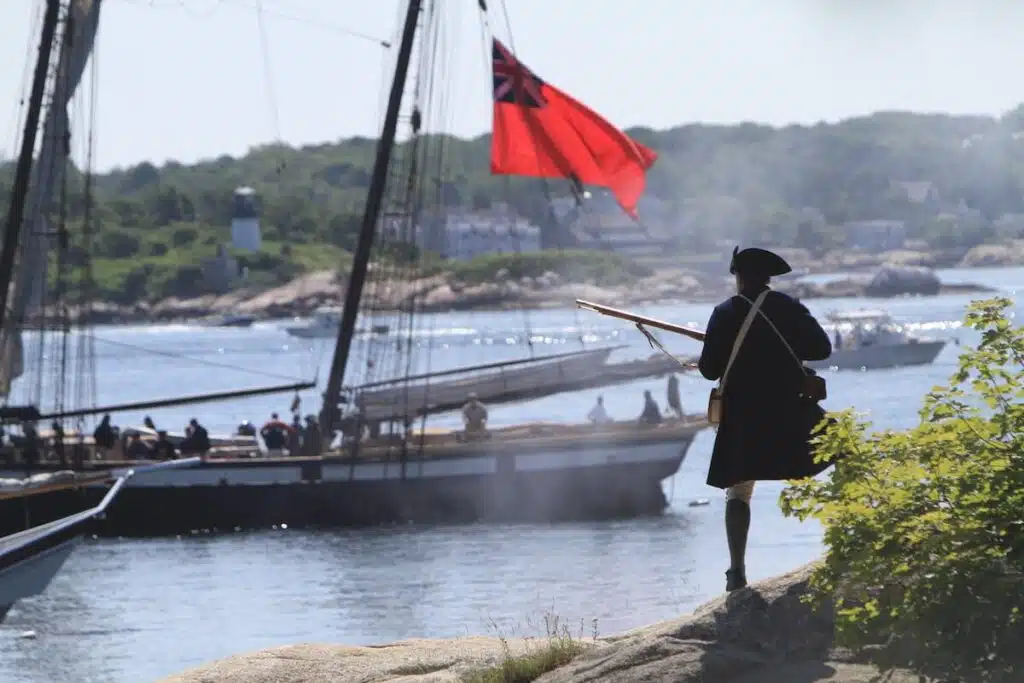
Take a Front Seat at Stage Fort Park
History comes alive June 20–21 at Stage Fort Park in Gloucester, Cape Ann’s largest town, when more than 500 reenactors clash on land and sea in the Battle of Gloucester. In the original August 1775 skirmish, local militia successfully fought off the British sloop Falcon and recaptured two of their own schooners from the enemy. It was a huge morale boost for the Colonial forces, and many credit the event as sparking the creation of America’s navy. In addition to a historical marker by water, several preserved cannons can be found on the bluffs; elsewhere in the 60-acre park are beaches, baseball fields, picnic areas, and other amenities for outdoor lovers.
Credit: Courtesy of North of Boston Convention & Visitors Bureau
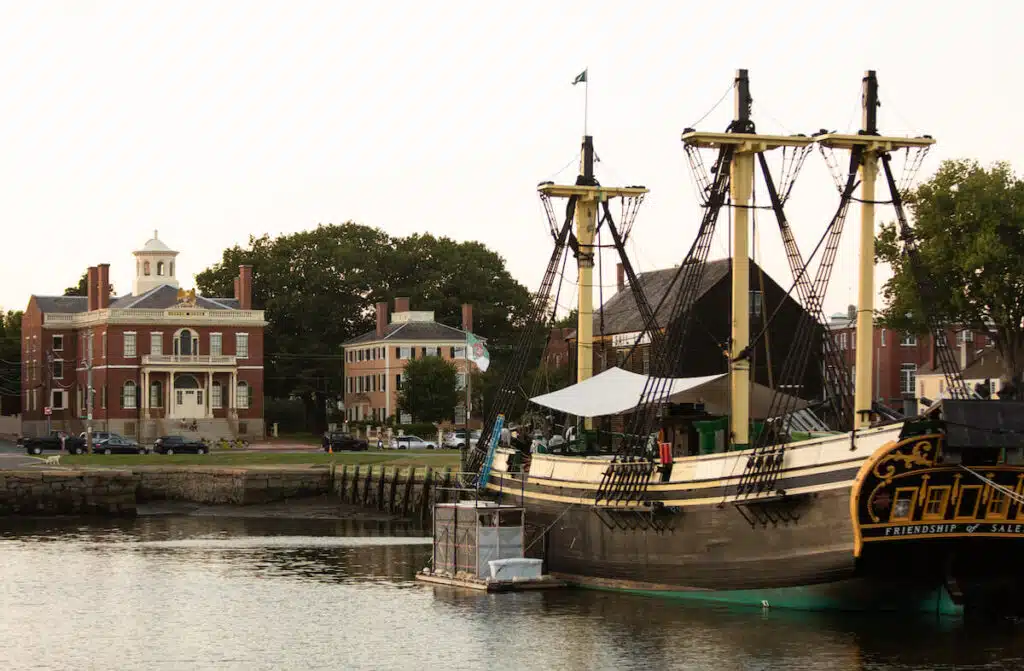
Tour Salem Maritime National Historical Park
To explore a mix of lore and stories in just one place, make tracks for Salem Maritime National Historical Park, where 12 historic structures on Salem’s waterfront are clustered on nine acres. This North Shore city held a key role in the lead-up to the American Revolution: British General Thomas Gage made it the provincial capital in 1774 to punish Boston for its Tea Party rebellion. During your stroll around the campus, learn more about early Colonial trade, the Revolutionary Era, and other chapters from nearly 600 years of Salem’s maritime history.
Credit: Bryan Ruocco
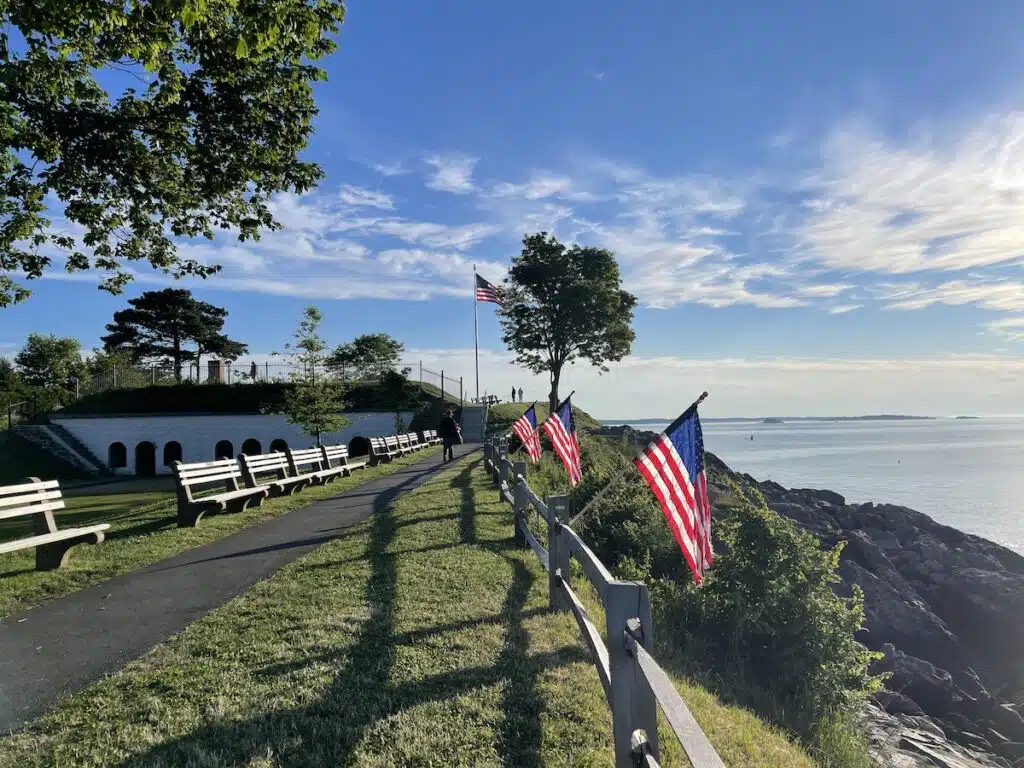
Go Down to the Sea at Fort Sewall
Originally built in 1644 and named Gale’s Head, the fort jutting out into Marblehead Harbor was rebuilt and expanded in 1775 to better defend the coast during the Revolutionary War. Fast-forward through two and a half centuries and a name change, and Fort Sewall is now a scenic public park. A coastal walking path offers views of boaters, swimmers, and Marblehead Light, while the fort itself has a lingering presence in old bunkers and underground rooms once used to detain prisoners. Mark your calendar for the Glover’s Marblehead Regiment Encampment on July 18, when reenactors channel the spirit of the legendary Revolutionary fighting force.
Credit: Boston Harbor Now
Cruise to Historic Lighthouses
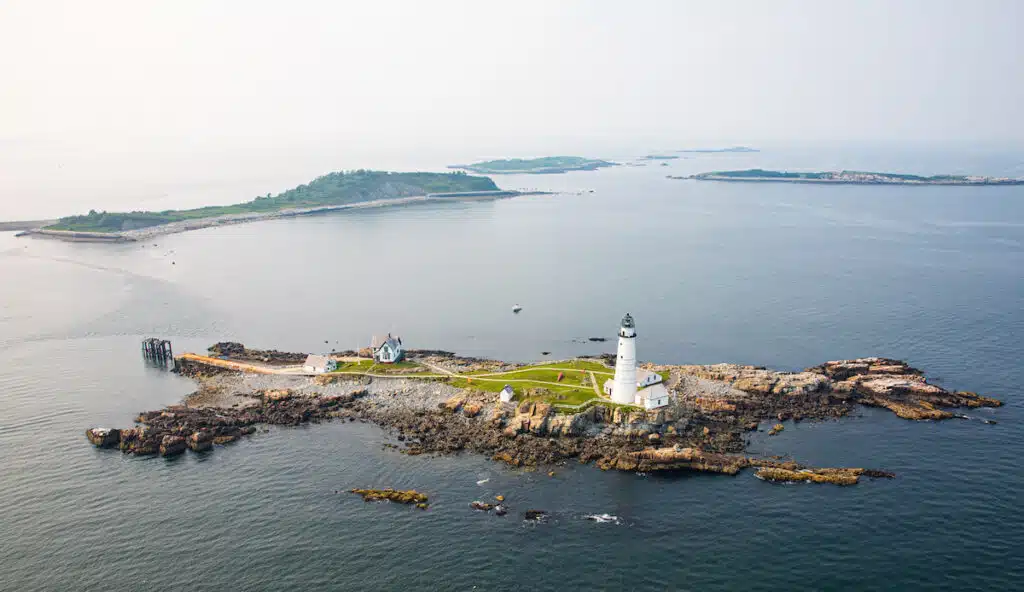
Boston Harbor, one of America’s most historically significant ports, is the backdrop for two-hour Boston Harbor Lighthouse Cruise excursions, which begin running June 27 and continue into September. Three iconic lighthouses dot the route: Long Island Head Light, Graves Light, and Boston Light, the oldest light station in the country. Along the way, with the sea breeze at your back, you’ll learn how these very waters shaped the Siege of Boston and the course of the Revolutionary War.
Visit Massachusetts250.org to plan your next adventure.