Winslow Homer’s Studio in Scarborough, Maine
At Winslow Homer’s coastal Maine studio, the famous painter shifts from historical figure into something more like a friend.
By Madeline Bilis|Aug 24 2026|

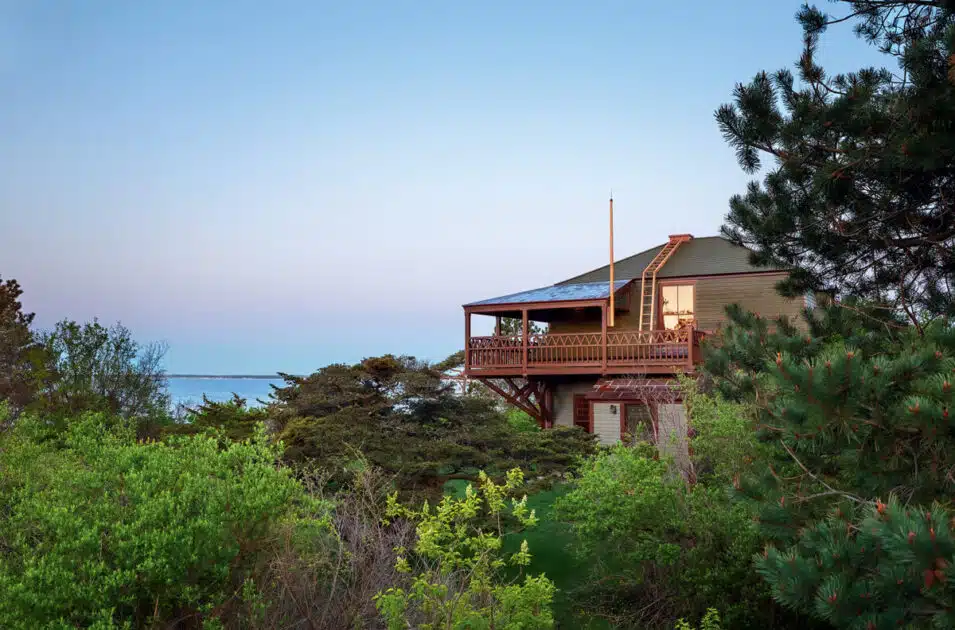
A former carriage house, the studio building was adapted for Homer’s use in 1884, including being moved about 100 feet for added privacy (his brother’s summer home sat just next door).
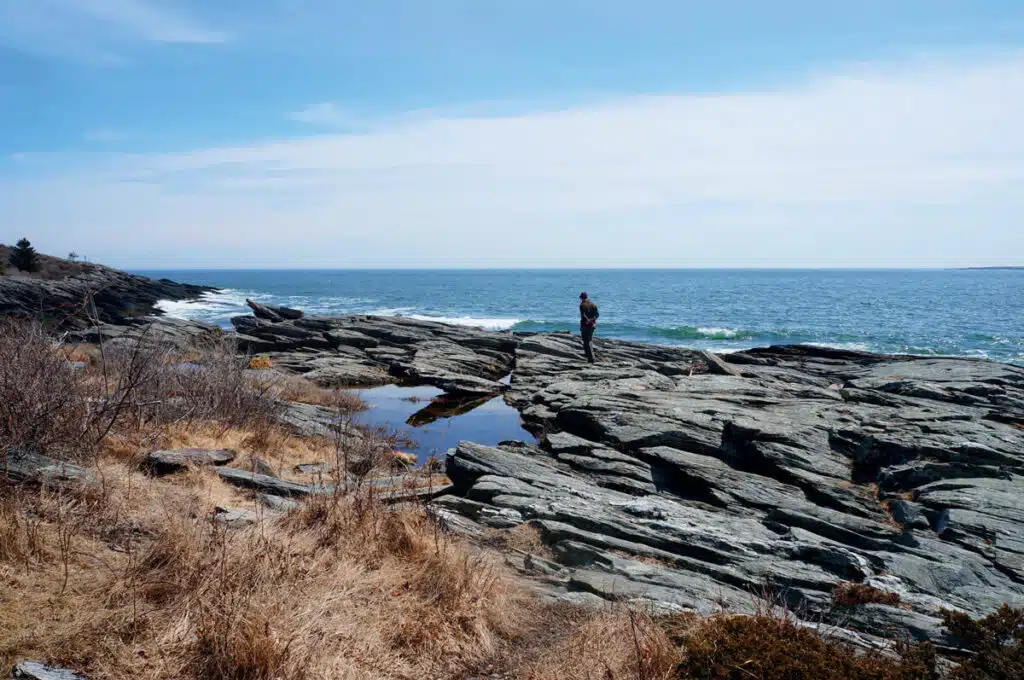
Credit: Trent Bell/courtesy of Portland Museum of ArtIt’s a cloudless Friday in Scarborough, Maine, and I’ve found the autumnal trifecta—warm sun, cool breeze, peak foliage—while balancing on some deeply grooved rocks jutting out into Saco Bay. Standing in the spot where Winslow Homer produced some of his most well-known paintings of the sea, I’m drinking in my favorite part of the afternoon: the “sparkly hour,” when the ocean shimmers brilliantly on the horizon.
Homer, of course, would have hated this.
“It’s not a Winslow Homer kind of day,” says my tour guide, Beth Sanders, pointing out that the famous American Realist artist preferred much moodier weather. Along with 11 other visitors, I’m on a guided tour of Homer’s studio on Prouts Neck, owned by the Portland Museum of Art. In addition to forest-green field guides in which to jot down notes and observations, we’ve all been given postcards of Homer’s iconic 1894 oil painting Weatherbeaten, completed from these very rocks. I hold up my postcard to the coastline; aside from the cheery blue skies and gentler waves in front of me, it’s a perfect match. If a nor’easter moved in, it’d be like standing inside the painting.
Credit: Trent Bell/courtesy of Portland Museum of Art
Credit: Trent Bell/courtesy of Portland Museum of Art
I soon learn that Winslow Homer was born in Boston in 1836 and raised in nearby Cambridge. Showing an aptitude for art from a young age, he moved to New York in his early 20s, finding work first as a commercial printmaker and then as an illustrator. He trekked to the front lines of the Civil War to depict soldiers’ experiences for Harper’s Weekly, and soon began solidifying his reputation as a painter. Homer traveled widely, finding inspiration in places like Gloucester, Massachusetts; the Adirondacks; and the northeast coast of England. Throughout it all, he discovered a deep love for the outdoors—and in particular, the sea.
It wasn’t until the summer of 1883, at age 47, that Homer settled in Prouts Neck, where his family had bought a plot of land and built a sprawling home. The next year, he tapped architect John Calvin Stevens to convert the property’s carriage house into a residence and artist’s studio. When he wasn’t traveling, Homer whiled away his days here, rendering the ocean in vivid colors and fluid brushstrokes until his death in 1910.
Today, the studio is open for guided tours from early April through early November. The visitor journey begins at the museum in Portland, where you’re whisked upstairs to admire the original Weatherbeaten before seeing where it was born. Then, you board a small bus headed to Prouts Neck, an ultra-exclusive community that’s long been closed to outside drivers. As you approach its gates, the bus driver presses a small button in his sun visor—just above a Winslow Homer bobblehead on the dashboard—to gain entry.
We all filter out of the bus and regard the small, boxy studio, painted charcoal gray with brick-red trim, with quiet awe. Entering through the side door feels a lot like stepping back in time. Paneled in warm wood, the main living area is crowned by a central fireplace; Homer’s original pipe rests on the mantel. On an adjoining wall are fish he caught and mounted, as well as a sign that reads “SNAKES! SNAKES! MICE!,” which the artist once posted outside to ward off uninvited guests.
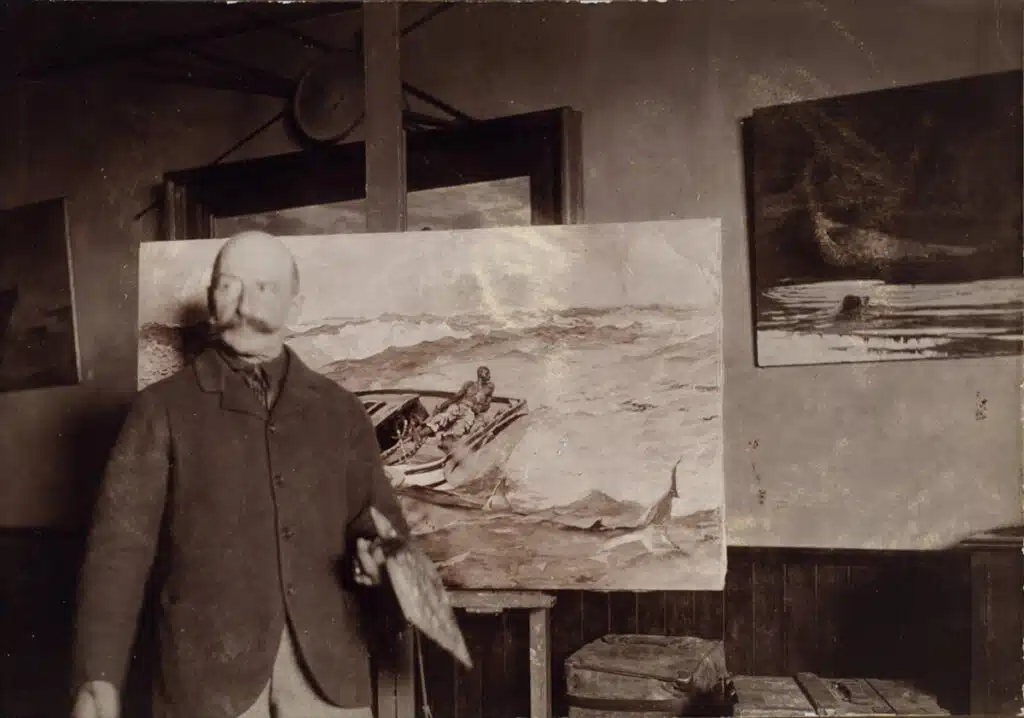
Credit: Bowdoin College Museum of Art, Brunswick, Maine, gift of the Homer Family
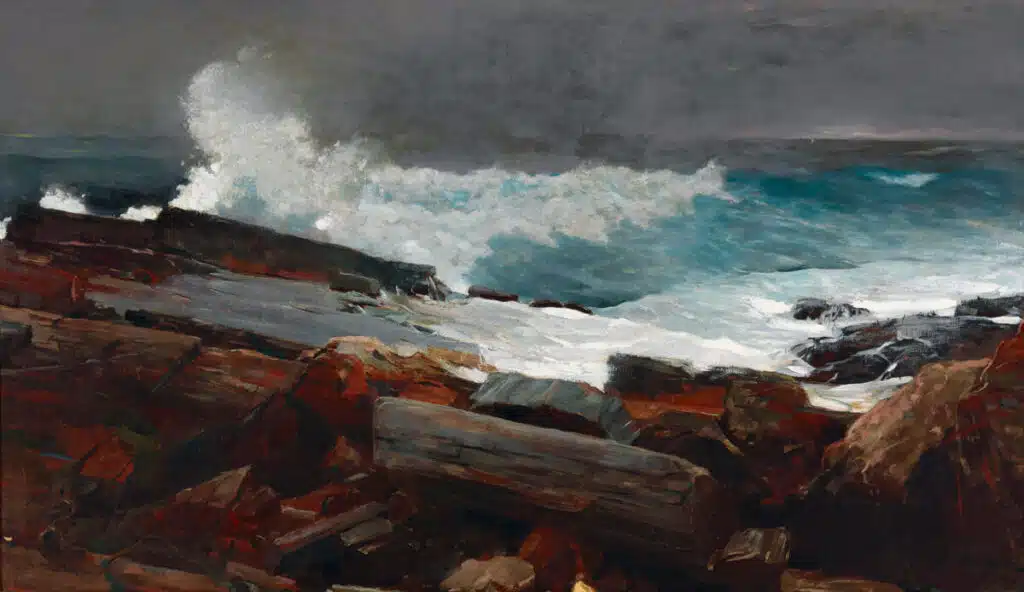
Credit: Weatherbeaten, 1894, by Winslow Homer, Portland Museum of Art, Bequest of Charles Shipman Payson, 1988.55.1
The studio’s immersive soundscape, part of a slate of updates that the museum debuted in 2021, makes it seem as if Homer could be walking around upstairs. But it’s only when I see his penciled inscriptions on the walls that I feel like he might actually be in the next room. “Oh what a friend chance can be when it chooses,” he scribbled on the wood, a quote from an 1871 detective novel called The Clique of Gold. (“He was a big reader,” William Cross, author of the Homer biography American Passage, tells me later. “He was a high school dropout, but he was, as we say in Boston, mighty smaht.”)
Peering into the studio’s small library alcove, I feel a kinship with Homer. In addition to a copy of The Clique of Gold, three volumes of the Sherlock Holmes series are on display; it seems the painter and I share a love for mystery novels. Being here almost makes him seem like a person I could’ve befriended, rather than a larger-than-life historical figure. Then Beth, the tour guide, shows me the windowpane where he scratched his name in the glass. As I move my face closer to the window, I realize Homer must have done the very same thing while etching it.
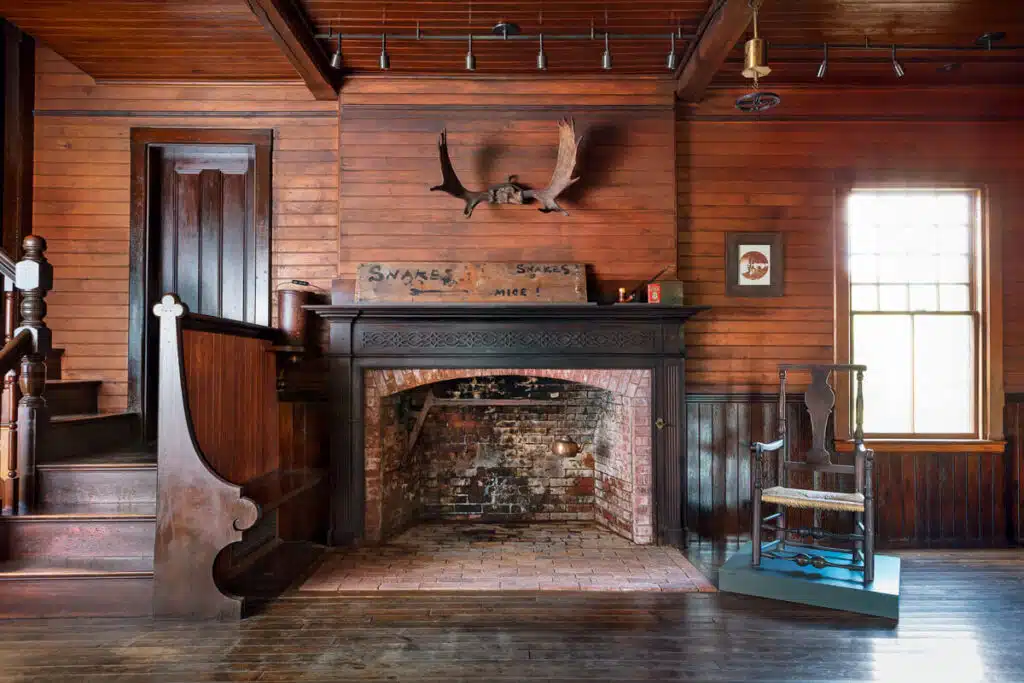
Credit: Trent Bell/courtesy of Portland Museum of Art
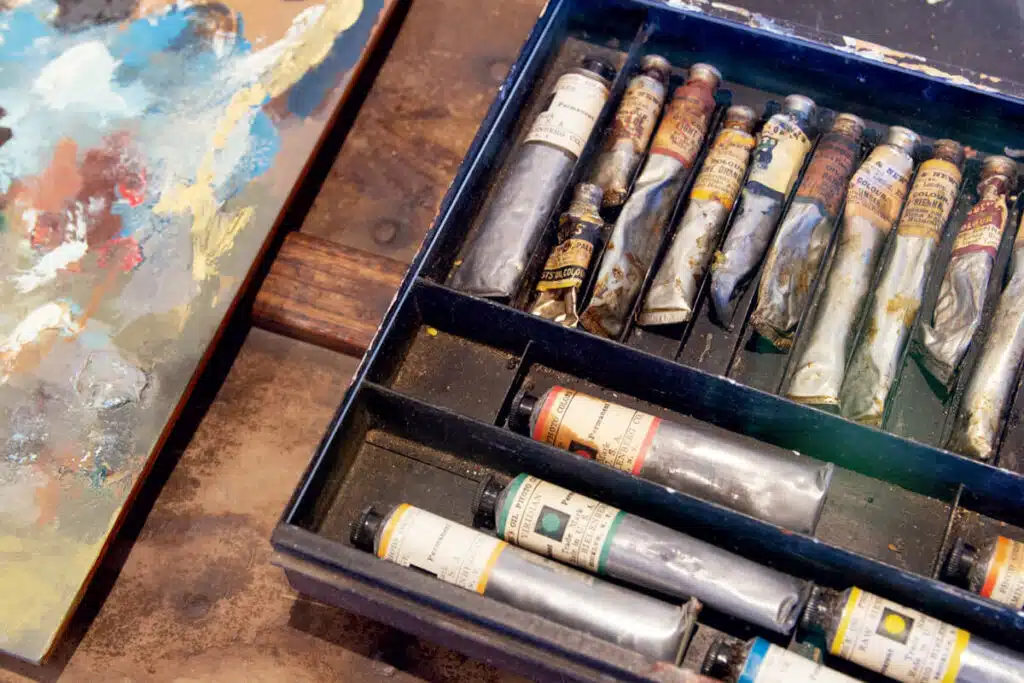
Credit: Trent Bell/courtesy of Portland Museum of Art
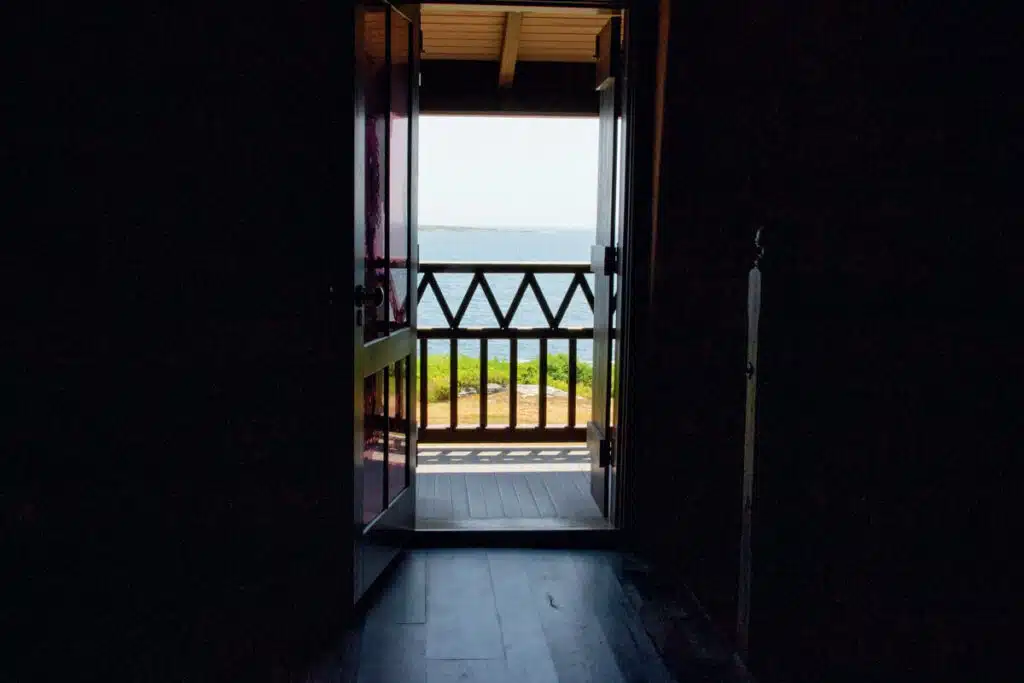
I continue following in Homer’s footsteps as I make my way to the second floor, where a door to my right opens to a breezy piazza. The deck wraps around the part of the building that faces the sea, overlooking a grassy expanse punctuated by sinuous juniper trees resembling oversized bonsai. I’m told that they’re trees Homer planted and pruned himself to give them their windswept look. I linger a moment, admiring his horticultural handiwork and the way the piazza’s crisscrossing latticework casts geometric shadows on the floorboards, before heading back down and out to the lawn.
I settle into an Adirondack chair beside the studio until it’s time to board the bus. As I take in the scenery, puffy clouds shield the sun, bringing the sparkly hour to an end. For a few fleeting moments, I get a taste of Homer’s preferred flavor of weather. And watching the ocean take on a striking silver tone, I realize I’ve just acquired a new favorite part of the afternoon: the “Homer hour.”
For details on visiting Winslow Homer’s studio or to book a tour, go to portlandmuseum.org.
This feature was originally published as “Brushing Up Against a Legend” in the September/October 2026 issue of Yankee.
You may also like…
· Exploring Prouts Neck in Scarborough, Maine