



Culture of the Cold in Caribou, Maine
In Caribou, Maine, where some of the coldest temperatures in North America have been recorded and where subzero temperatures often linger for days, people have learned, “If you can’t embrace it, you’re never gonna like it.”
By Jaed Coffin|Feb 25 2015|

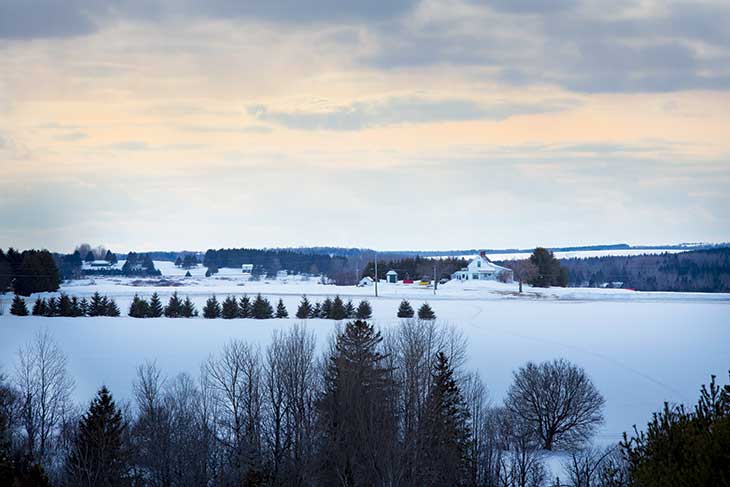
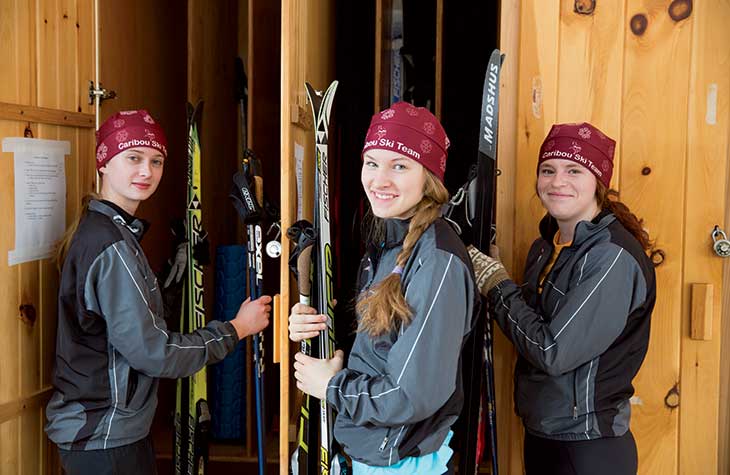
View from the ski hill at Caribou High School. “It was an amazing gift from Carl Soderberg and has impacted that community forever, promoting an active, healthy, outdoor lifestyle,” Laino says.
Credit: Joel Laino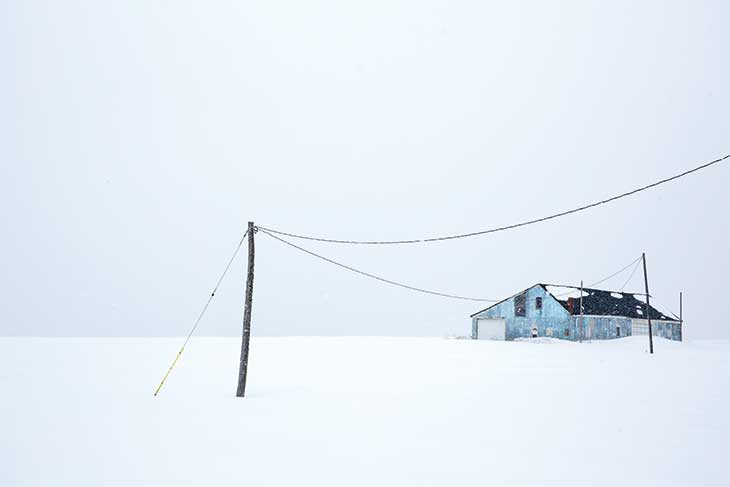
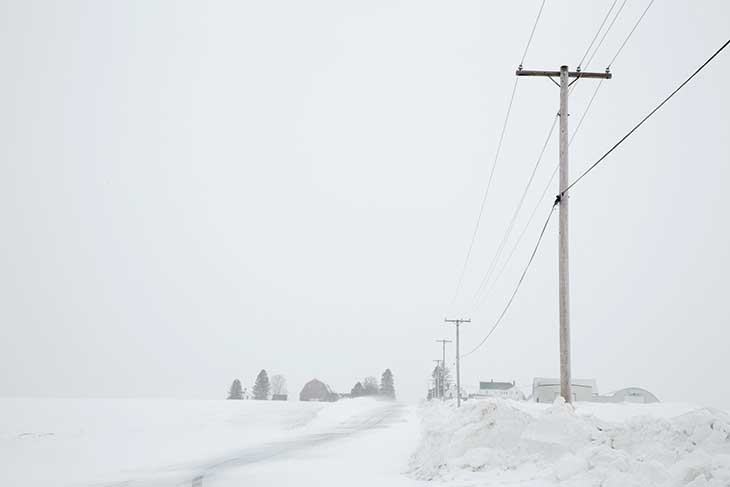
In Maine’s far northeast corner, a farm outbuilding stands in stark relief against snow-covered fields. “The weather was frigid, but there was a perfect serenity to the landscape,” notes photographer Joel Laino.“With few people in the area, I experienced a feeling of connecting with nature.”
Credit: Joel LainoCredit: Joel Laino I left Brunswick on a Tuesday morning, just before 8:00 a.m., when my car thermometer read a balmy 18 degrees. By noon, the sun high overhead, I got off I-95 in Houlton to stop for gas, and checked my car thermometer again: 3 degrees. I’d been in 3 degrees before—hundreds of times. Three degrees was nothing to be afraid of. As a boy, 3 degrees just meant that you walked to school instead of riding your bike. But 3 degrees in Aroostook County just feels different. It was the wind. I was wearing a down jacket, a sweatshirt, and a hat and gloves, but the wind across the plains seemed to carry all that cold under those layers, to my skin, and hold it there, firmly. Before my tank was full, I had to shove my hand into my armpit and work the pump handle with the hand I’d been hiding in my pocket. When I got back in my car, I exhaled quickly and swore before continuing north along U.S. Route 1, through Mars Hill and Presque Isle. Earlier that fall, I’d come to this part of Maine a few weeks before the annual potato harvest, to write about a farmer whose family had been cultivating the fertile acres of Aroostook County for six generations and counting. Then, the rolling fields of potatoes and barley were green and golden, and all but shimmered with the fertile, purple hues of the late-dusk light. Now those same fields were featureless, bright white, and empty, buried beneath a vast sheen of windblown ice.
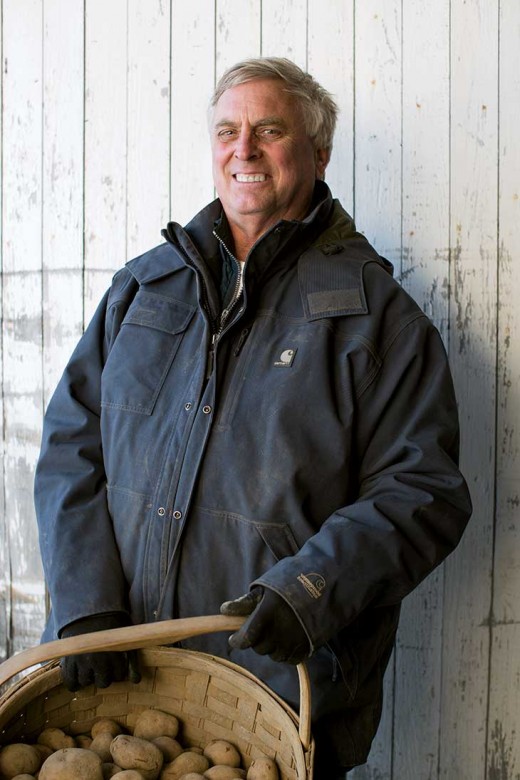
Potato farmer Carl Bondeson of Finn’s Organics at his storage barn in Woodland, Maine
Credit: Joel LainoCredit: Joel Laino
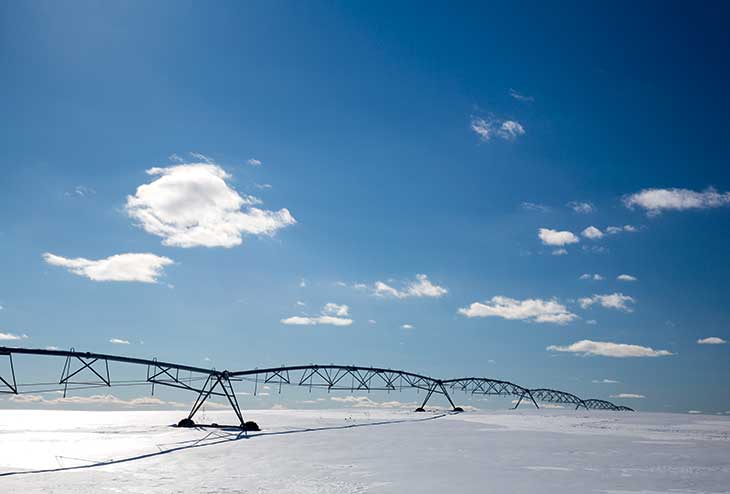
A field irrigator
Credit: Joel LainoCredit: Joel Laino As I drove along them for another 30 miles—one thing about Aroostook is that for a visitor, as soon as you feel you’ve come north, there’s always more north to go—there seemed nothing fertile about the landscape at all. And yet to say it looked dead isn’t right, either. The weathered barns and century-old farmhouses along Route 1 rose above those vaulting, frozen pastures with a kind of fragile solemnity—as if there were something stoic, monastic even, about the barrenness they endured. The road to Caribou doesn’t make for smooth driving: Now and then I was blown suddenly right by gusts ripping out of the west, and every hundred yards or so, I found my car plowing through foot-deep snowdrifts—and then jerking forward again across stretches of bare, windblown pavement on the other side. Around 1:00 o’clock, I was driving along the Aroostook River, downtown Caribou to my left, headed for the National Weather Service station—where, I’d read, some of the coldest temperatures in America had been recorded. In the Skyway Plaza mall parking lot, I pulled over to ask a man for directions. “How’s it going?” I said to the man, who, his nose running, his cheeks bright red, dressed in a tan work jacket, was swapping out letters on a “Save a Lot” sign advertising that day’s specials in capital letters. He paused, then smiled. “Oh, you know, a little bit chilly!” he said, gamely slapping his gloves together. I told him where I was headed; he told me how to get there in that way that New England people prefer to give directions: as a series of vague landmark references, without street names or mileage, but that five minutes later turned out to be totally spot-on. The weather station is on outer Main Street, near the compact Caribou airport. Inside, science and operations officer Todd Foisy—a self-described “weather nerd” who, despite growing up in Alabama, came to Maine from a job in Alaska—met me in his office and showed me a digital map of this region on a large computer monitor. Foisy referred to the dark, 70-plus-mile-long crooked finger running along the Canadian border from Houlton to Van Buren as “the Potato Belt”: a sparsely wooded region that, trimmed to the west by the millions of acres of North Woods, resembles a Midwestern plain. Here, the unobstructed westerly winds, without breaks or natural obstacles, transform the cold winter air into some of the most frigid temperatures in the nation. “A lot of mornings,” Foisy said in an eager voice, “the wind chill will bring the temps down to minus 40 along the riverbeds. It’s just a shame I can’t be there to record it!” Caribou sits more than 400 miles north of Boston, a drive of about six and a half hours; Foisy said that Boston sees, on average, no more than a single morning of subzero temperatures per year. Caribou? “We get about 41,” Foisy said, proudly.
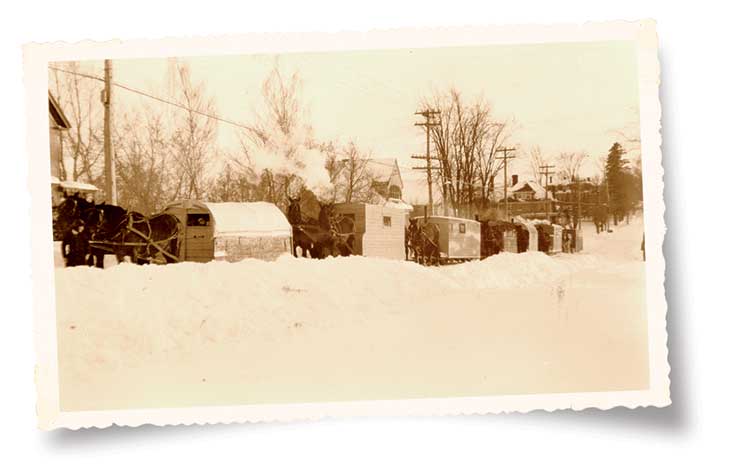
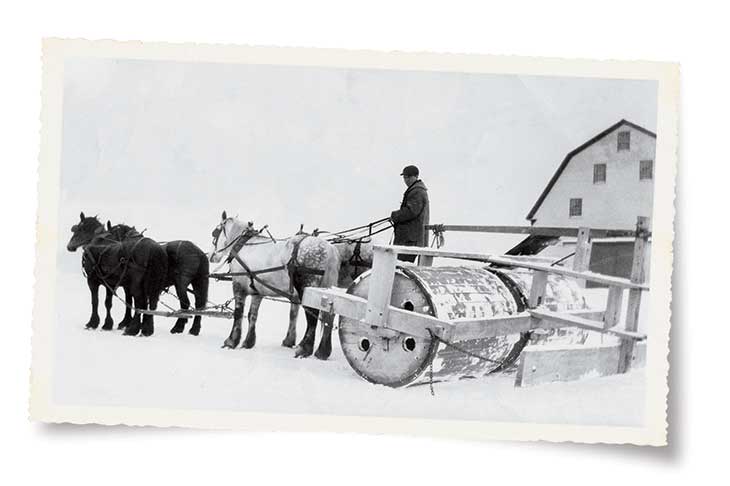
School buses at the turn of the 20th century were horse-drawn enclosures, each equipped with a woodstove.
Credit: Collections of Maine Historical Society, 9445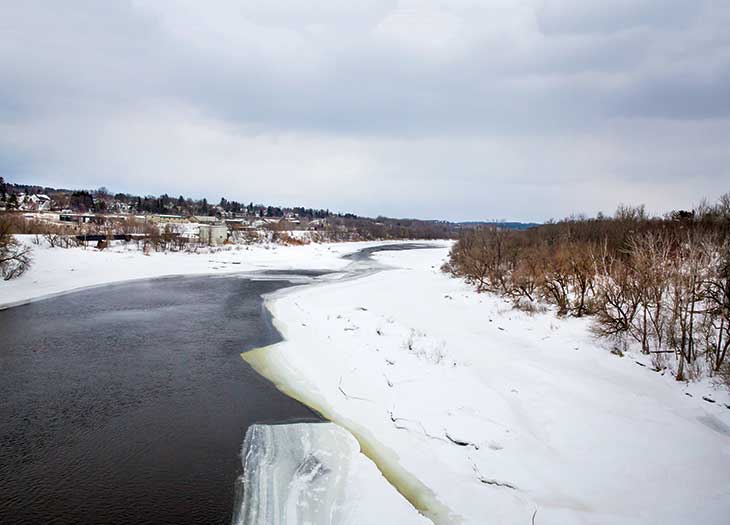

I used to own a house on Route 1 in Lille, Maine (north of Presque Isle). Originally from Connecticut, winters in Northern Aroostook County were unlike any other I had ever known!
I grew up in Caribou (1953-1973) then I was caught up at Dartmouth College (Hanover,NH). I just miss the ol’ hometown immensley. I remember Mrs Castonguay at Sincock Elementary, Mrs Richard Seagars, Mr. Thibadeau, Mr Mathews, Mr Cyr, Dwight Hunter etc. they were some of the best teachers around; for which I am forever grateful. We used to have fun outside, regardless of the weather… no playstations, ninetendos, etc., we could get a drink of water out of the garden hose without fear of disease… the goof ol’ days!
The driver of the horse-drawn wooden “roller” is Albert White and the horses belonged to Joe Hamilton.
I was born and raised in maine so I used to the really cold temperatures nothing like Northern Aroostook County.
Great early images of old Maine. Bob Cole is my friend from Bates and used to wear light t-shirt when others were freezing. Bobby!!!! did they make those shirts in Caribou? We took him to Fripp Island on Spring break and it was a different country in need of a good winter
Born and raised in Caribou! did not see the sun til I was 14! at the age of 18 joined up with a cruiseline (US Navy -USS FLINT AE-32) never went back except in the brief summer. In spite of the weather, an absolute “Norman Rockwell” area to be raised.
I live in New Sweden from 1973 to 1978. I picked potatoes for Carl Bondeson for most of those years. This article brought back a lot of memories of my time their.
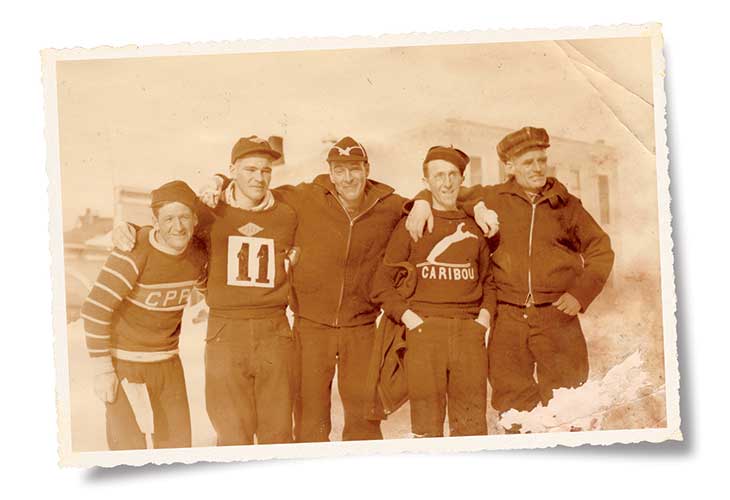
A very nice story, but I’d like to add a couple of corrections. The picture of the school teams was taken on South Main Street in Caribou in the mid 1930’s. The teams continued on until after WWII. There is no football field at Caribou High School. Unfortunately, football is not a school sport in Aroostook County for a variety of reasons including in the past potato harvest interfered with it. It probably was the soccer field that you saw near the ski center. Thank you for the wonderful and thoughtful article.
Looks extremely cold, but glad people have a nice sense of community.
My Grandfather Lou Sirois was from Caribou and his wife, my grandmother, Viola Searway hailed from Ashland, so I have a lot of Aroostook County blood running through my veins! Looking forward to a spring/summer visit soon.
Beautiful area used to haul potatoes out of Mars Hill back in the 80 ‘s for Mars Hill Shippers. I live in n.j. Never saw that much snow and was never ever so cold as their
I was born in Presque Isle in November 1968. Moved to Caribou in 1976 with my parents. My Dad owned Anderson’s Salvage in Caribou until he had a stroke in 2012. He has since passed but my Mom Donna still lives there. I live in North Carolina now since 1996. I go up every year in the summer. Beautiful place! In the summer!
Awsome great read .Left Caribou in the middle of my senior year of high school for NH in 1965. Spent most of my younger year on 3 McKinley St. The old barn next door is sill there but the space where my house was is so small you would never know it was torn down. Great memories, and yes it was damm cold!!!!
Wonderful article! I grew up in Mapleton, just West of Presque Isle, but visited Caribou frequently. One note – those aren’t football fields, but rather soccer. No one plays football in the County, as it’s a) too cold & snowy, and b) took too many kids away from the harvest way back. And nowadays, the schools are all too small.