Blossom Season in the Crown of Maine
A patchwork of blooms sweeps over Maine’s Aroostook County.
By Yankee Custom Editors|Mar 20 2026|

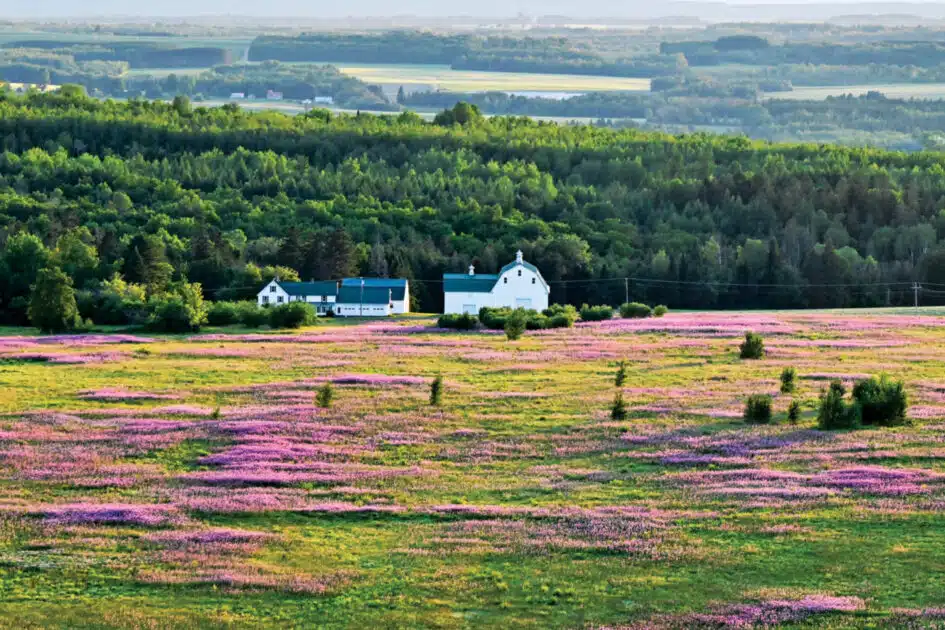
From spring through fall, Aroostook County’s blossom season brings a parade of color to forests and fields like this one in Presque Isle, Maine.
Credit: Paul Cyr PhotographySponsored by Aroostook County Tourism
From spring’s first luminous sprouts to fall’s last ruddy leaves, Maine’s Aroostook County is a showcase of lush rolling vistas. A patchwork of forests and fields, croplands, meadows, and woodlands all embrace the brightness and warmth of “blossom season” with exuberance, painting the Crown of Maine with floral splendor. The landscape’s post-winter cheeriness is contagious among visitors and residents alike.

Credit: Michael Gudreau
Blossom Season, Month by Month
In early summer, when lupines stipple the roadsides with pastel pinks, purples, and blues, Maine’s Swedish Colony toasts the summer solstice at New Sweden’s Midsommar Festival, June 19–21. Fiddlers and accordionists play as dancers wearing wildflower crowns and folk costumes skip around a maypole adorned in lupines, daisies, buttercups, and peonies. Attendees can try their hand at Viking lawn bowling and tipspromenad (a combined nature walk and quiz), then gather for a smorgasbord of pickled herring, smoked salmon, köttbullar (Swedish meatballs) and färskpotatis (boiled new potatoes with fresh dill).
Credit: Paul Cyr Photography
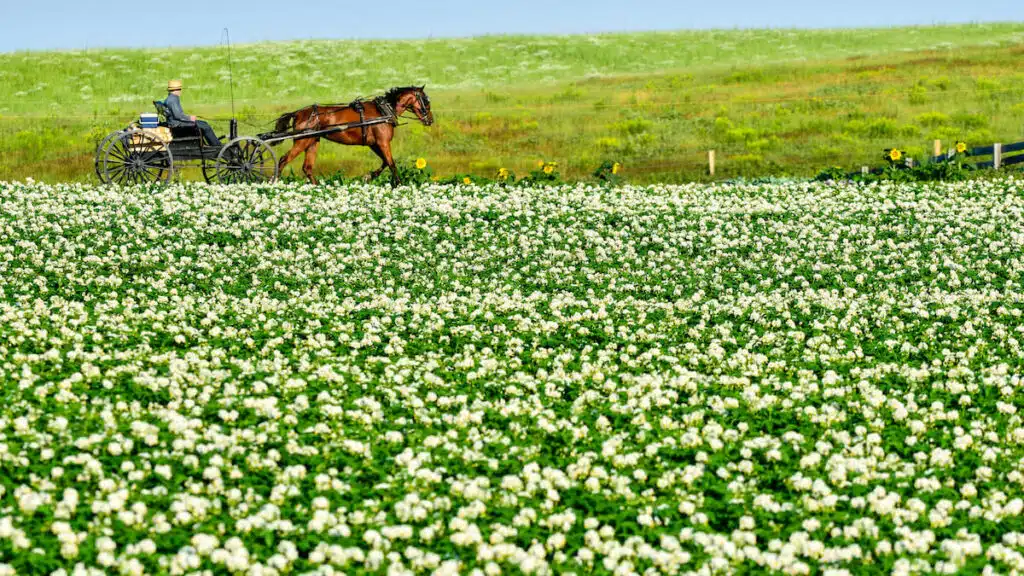
In July, when the lupines are fading, the farmlands around Presque Isle, Fort Fairfield, and Caribou unfurl thousands of acres of fragrant ivory, pink, and purple potato blossoms. This, too, is cause for merrymaking, and Fort Fairfield goes all out. The Maine Potato Blossom Festival, July 11–19, is a grand celebration of Aroostook County’s primary crop and its hundreds of family farms. Decorated potato-themed floats roll through downtown to kick off a jam-packed week of outdoor concerts, sports tournaments, cook-offs, and not-too-serious contests of strength and skill (think: wrestling matches in mashed potatoes).
Credit: Paul Cyr Photography
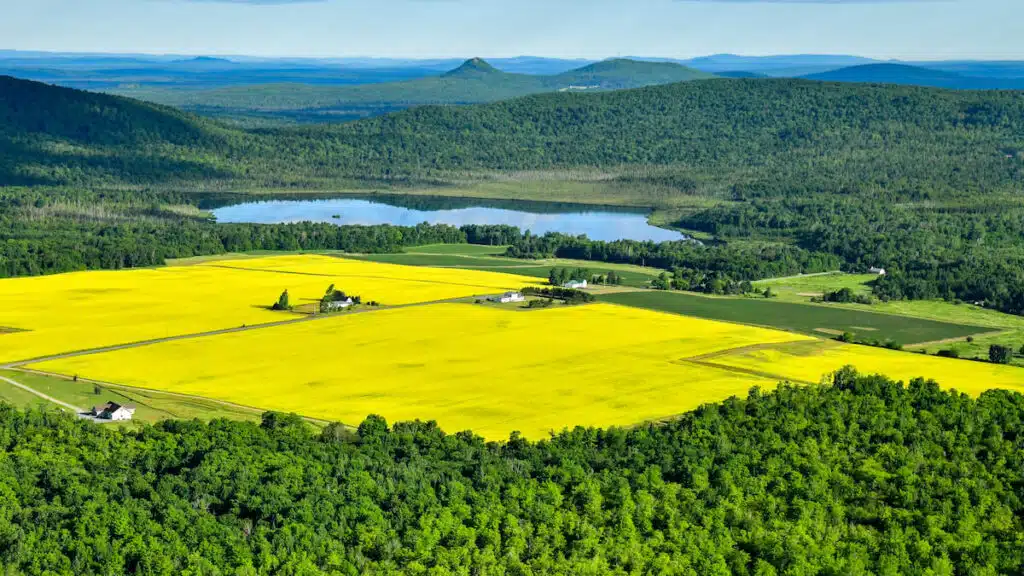
At July’s end, electric-yellow rapeseed blooms carpet the canola fields around Mapleton and Washburn. Families climb to the open summit of 1,142′ Haystack Mountain in Castle Hill to gaze out on the sea of wispy, long-stalked golden flowers rippling in the breeze.

Credit: Christopher A. Mills Photography
The sunflower capital of Aroostook County is the town of Mars Hill, where the jaunty, towering flowers are in bloom through August and early September. Yost Farms, a producer of organic sunflower oil, cultivates a multiflowering variety on the east side of Mars Hill Mountain, visible from Mountain Road. Find more sunnies and cut your own at Skonieczny’s Farm in Van Buren, LaJoie Growers in Van Buren, or Goughan’s Farm in Caribou.
Credit: Paul Cyr Photography
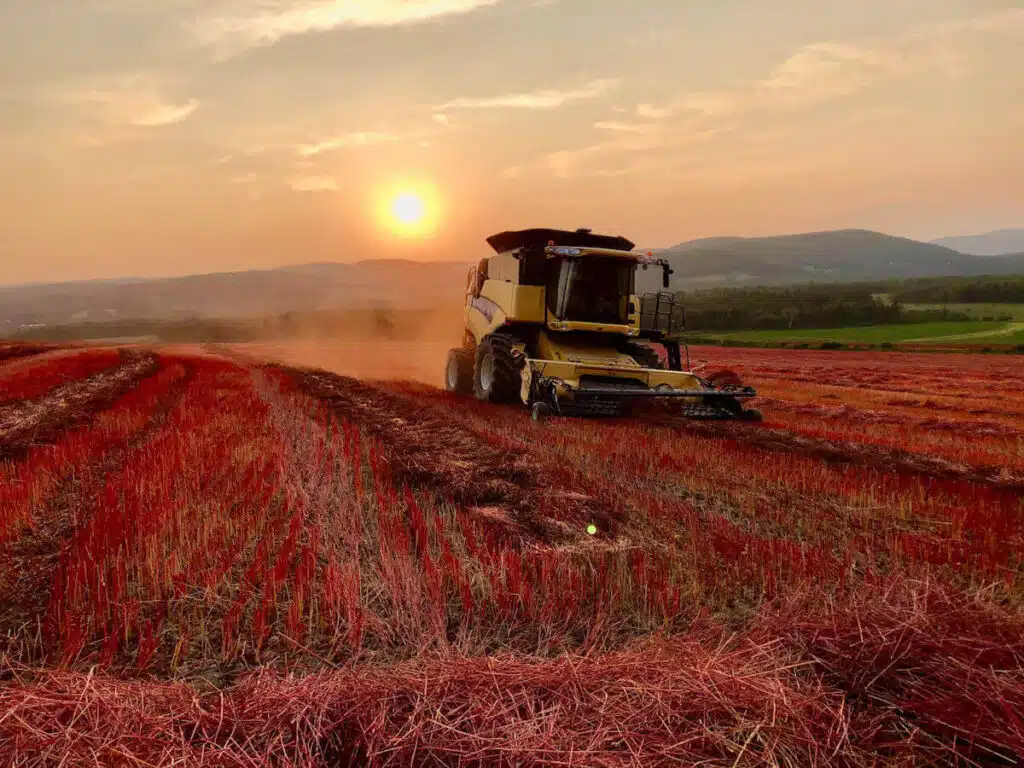
By mid-September, the St. John Valley farmers have harvested the buckwheat they grow for flour, a staple for local Acadian families who use it to make skillet flatbreads called ployes and an ingredient for nationally distributed snacks. The buckwheat stalks, meanwhile, have turned a blazing crimson that complements the spectacular fall foliage—Maine’s earliest—bringing the kaleidoscope of color to its regionwide annual peak. In Maine’s Aroostook County, blossom season is as joyously unrestrained as ever … come, take a twirl in fields of blooms.
Blossom Season Types:
• Lupine (May to early June)
• Potato Blossoms (late June to mid-July)
• Rapeseed (July)
• Sunflowers (August to early September)
• Buckwheat (September)
• Peak Fall Foliage (late September to early October)
Blossom Season Events:
• June 12-14, 50th Anniversary Celebration of the Acadian Village
• June 19-21, New Sweden’s Midsommar Festival
• July 11-19, Maine Potato Blossom Festival
Drive, and Dive, into the Color
As big as Connecticut and Rhode Island combined, Aroostook County’s landscape offers Mother Nature a canvas of epic proportions for all those stunning seasonal pinks, purples, reds, and golds—and green, so much green, in a region that’s 90 percent blanketed by forest. Fortunately for travelers, there are many roads to The County’s riches, including two National Scenic Byways that lead you into the heart of not just great vistas, but also history and heritage.
Credit: Paul Cyr Photography
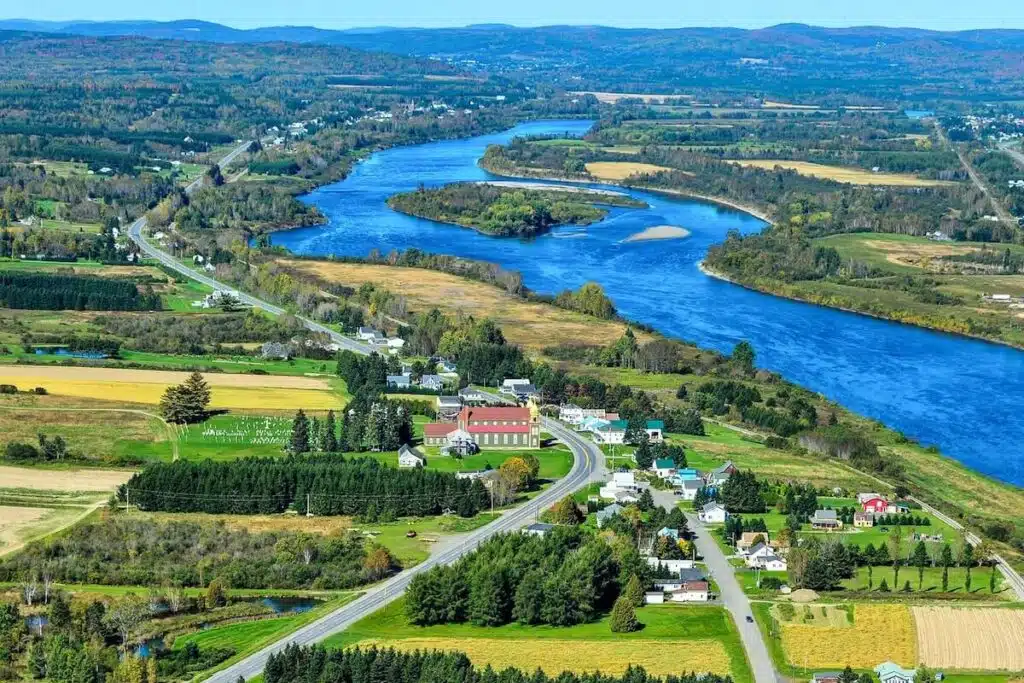
Meandering 134 miles along the top of New England, the St. John Valley/Fish River National Scenic Byway is a tour of river views, rolling farmland, and especially Acadian culture. The descendants of French colonists from Canada’s eastern Maritime provinces, Acadians migrated to the St. John Valley during the 18th century, and the area is still rich with their influence.
Credit: Paul Cyr Photography
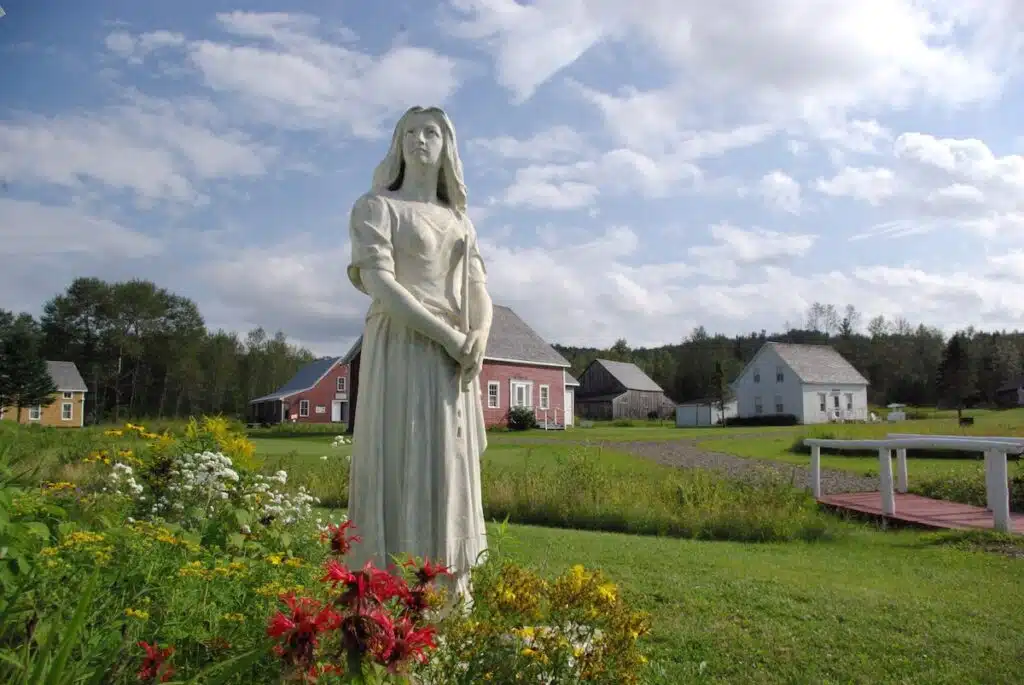
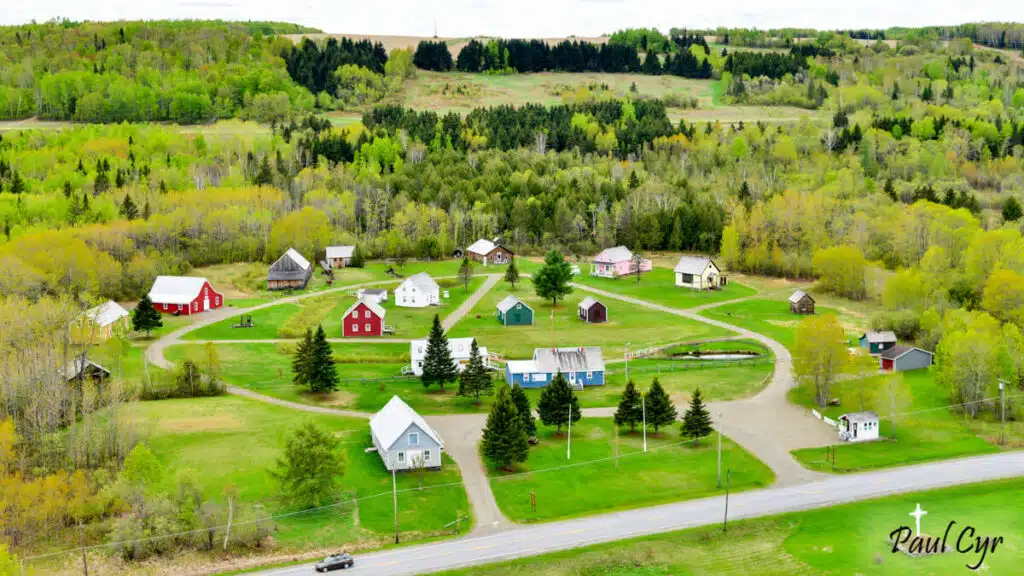
A can’t-miss stop on the byway is the Acadian Village in Van Buren: First opened to the public in 1976, this living history museum invites you to explore historic buildings and relics—and you might even see the grinding of that blossom-season staple, buckwheat, the way it was done generations ago.
Credit: Paul Cyr Photography
Speaking of immigrant heritage, just a 30-minute detour from Van Buren leads to the towns of the Maine Swedish Colony, where the New Sweden Historical Society, host of the Midsommar Festival, is a treasure trove of artifacts telling the story of Aroostook County’s early Swedish residents. Here, you will find eight museums that come alive with living history.
Credit: Don Cyr
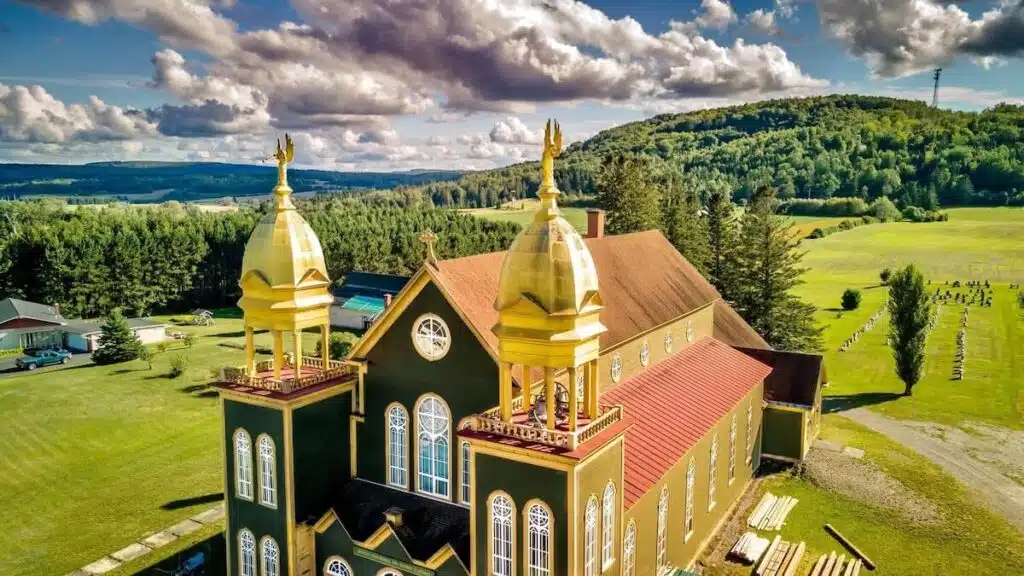
All this, and you’ve only just started on the St. John Valley/Fish River National Scenic Byway, which continues north as it traces the Maine/New Brunswick border along the St. John River to the towns of Allagash and Dickey in the far west, with southern swings down to Long Lake, Eagle Lake, and Portage Lake. Among the panorama of glittering waters and blossoming meadows, Acadian heritage calls: at Lille’s Musée Culturel du Mont-Carmel, whose gleaming yellow baroque-style belfries echo the local sunflower fields in summer; at Madawaska’s landmark Acadian Landing Site; and at Bouchard’s Country Store in Fort Kent, famous for its ploye mix.
Credit: Andy Mooers Realty
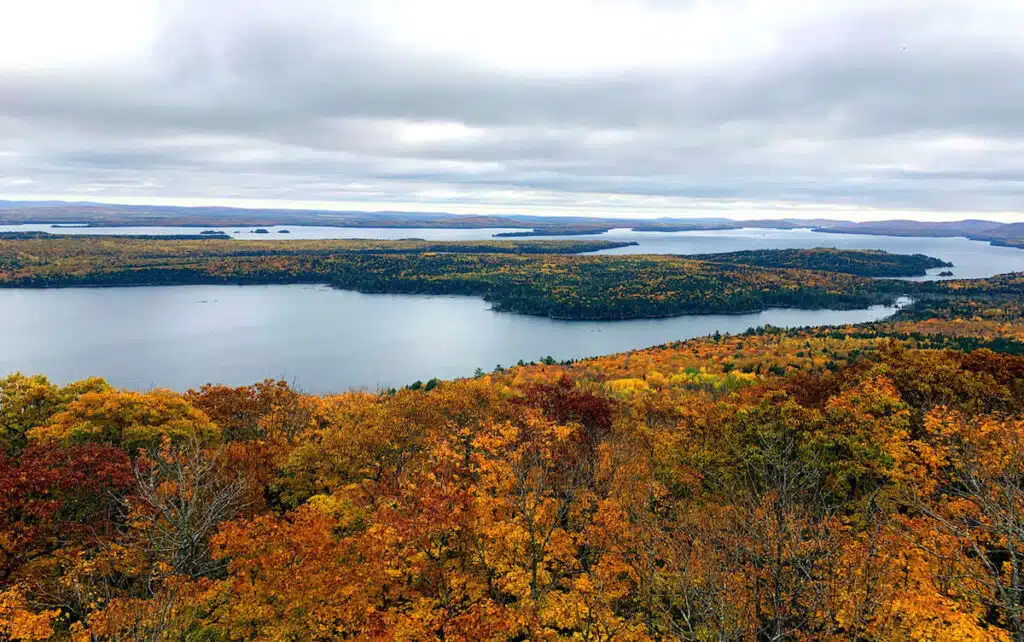
The St. John Valley/Fish River National Scenic Byway may be the longest drive of its kind in Aroostook County, but shorter routes pack just as much visual drama—particularly in fall, when bright flowers give way to blazing foliage. In southern Aroostook County, U.S. Route 1 from Orient to Danforth has earned the title of the Million Dollar View Scenic Byway for good reason. Along this 7.9-mile stretch you can look out over the sparkling Chiputneticook chain of lakes and drink in direct views of Mount Katahdin in the distance, and during autumn, nothing beats stopping in Weston to climb the Peekaboo Mountain fire tower: Soaring nearly 60 feet high, it provides a foliage-filled vantage of East Grand Lake, the third-largest lake in Maine, famous for legendary salmon and trout fishing.
Credit: Dylan Brett/iStock
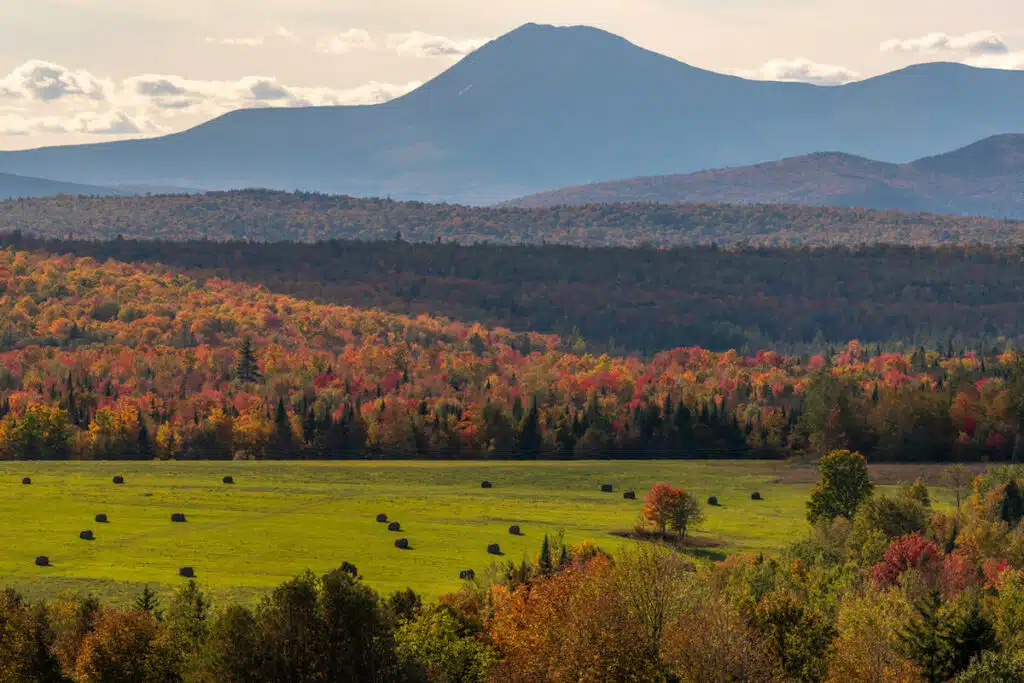
Forestry heritage, recreation, wildlife viewing, and, oh, yes, inspiring mountain panoramas are the calling cards of the Katahdin Woods & Waters National Scenic Byway, which begins at the southern entrance to Baxter State Park and curves around the eastern fringes of the National Monument for which it is named. Glorious at any time of year, its views of the Appalachian Mountains—including Maine’s tallest peak, Katahdin—and the surrounding wild woodlands will stop you in your tracks during autumn.
Elsewhere along its 89 miles, the byway is dotted with places to stop and explore: Take a ramble along the Penobscot River Trails in Medway, for instance, or browse the Amish farmstand on the Silver Ridge Road in Sherman. Since you are in the historic former hub of Maine’s logging industry, be sure to make time for the award-winning Patten Lumbermen’s Museum, which preserves that bygone heritage through replica camps, sawmills, and thousands of photographs and artifacts such as bearskin coats and loggers’ bateaus.
No matter what road you take or which time of year you choose for your getaway, however, travel memories like no other are waiting in Maine’s Aroostook County. Its celebrations and colorful heritage invite you to connect with the spirit of its people; its serenity and natural beauty coax you to relax and “just be.” It’s the best of both worlds in one stunning place: the Crown of Maine.
PLAN A TRIP AND LEARN MORE
Call Judy for what to see and do at +1 (888) 216-2463 or visit online at VisitAroostook.com to request the official Aroostook travel guide be mailed to you.