From Taverns to Town Squares, Revolutionary Stories Live On in Massachusetts
Take a deep dive into historic sites that offer a new way of looking at America’s fight for freedom.
By Yankee Custom Editors|May 12 2026|

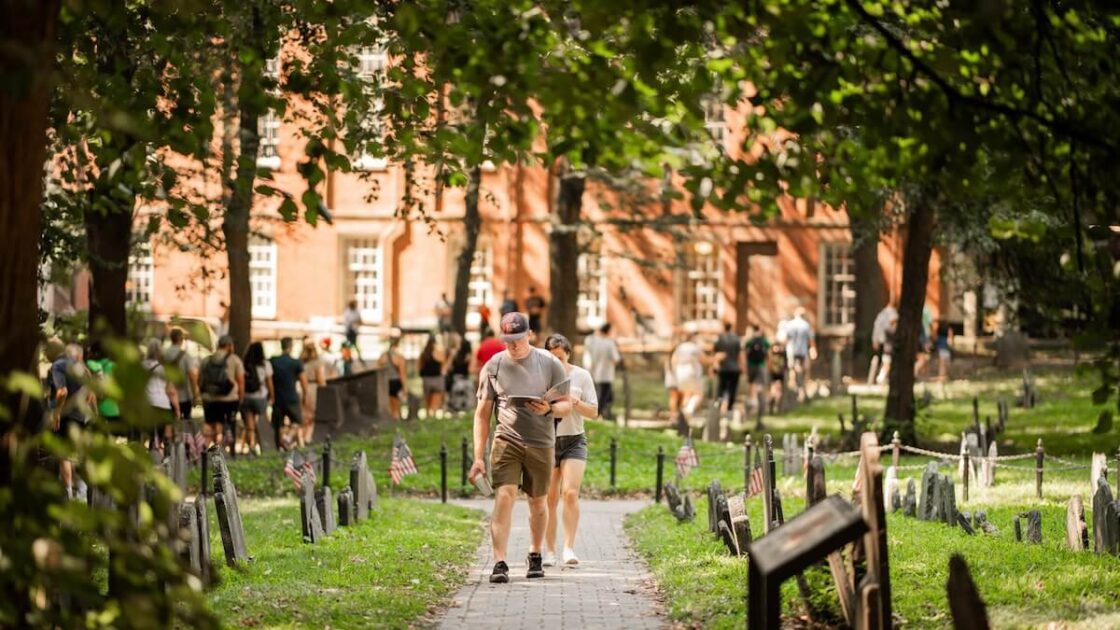
Each year more than a million people visit Boston’s Granary Burying Ground, the final resting place of Paul Revere and many other Revolutionary War figures.
Credit: Arlan Fonseca/NPSSponsored by Massachusetts 250
As the birthplace of the Revolutionary War, the Massachusetts landscape is dotted with names known around the world as America’s sacred ground: Lexington. Concord. Bunker Hill. Yet these celebrated battlefields aren’t the only places where the heartbeat of a new nation first stirred. In Boston and beyond, there are quieter corners of history waiting to be discovered—the meeting places, homes, and burying grounds where people lived, worked, gathered, and were eventually laid to rest. Some paint a fuller picture of famous figures; others offer an intimate glimpse into everyday life during the Revolutionary era. But all of them tell stories of freedom that still endure, 250 years onward.
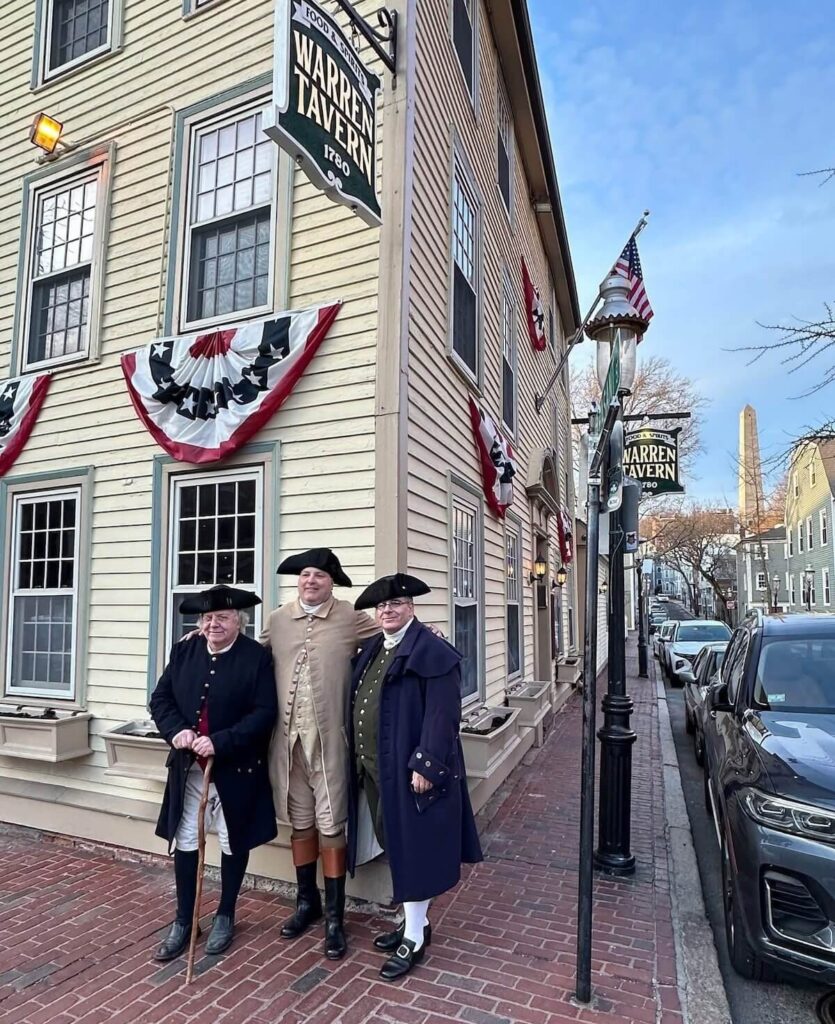
Credit: Warren Tavern via Facebook
Homes and Meeting Houses
From rebel plots to battlefield plans, the American Revolution took shape both in public and private spaces—many of which you’ll discover in and around the city of Boston, the hub of Patriot opposition. Set amid modern skyscrapers in the heart of downtown is the 1729 Old South Meeting House, where Bostonians hosted massive public protest meetings against the British; this was also the starting point for the march to the harbor for the 1773 Boston Tea Party. Just around the corner is the Old State House, which was then the seat of royal government. It rang with heated political defiance by the likes of Samuel Adams and James Otis but may be better known as the site of the 1770 Boston Massacre, during which British soldiers shot into an angry crowd and killed five civilians.
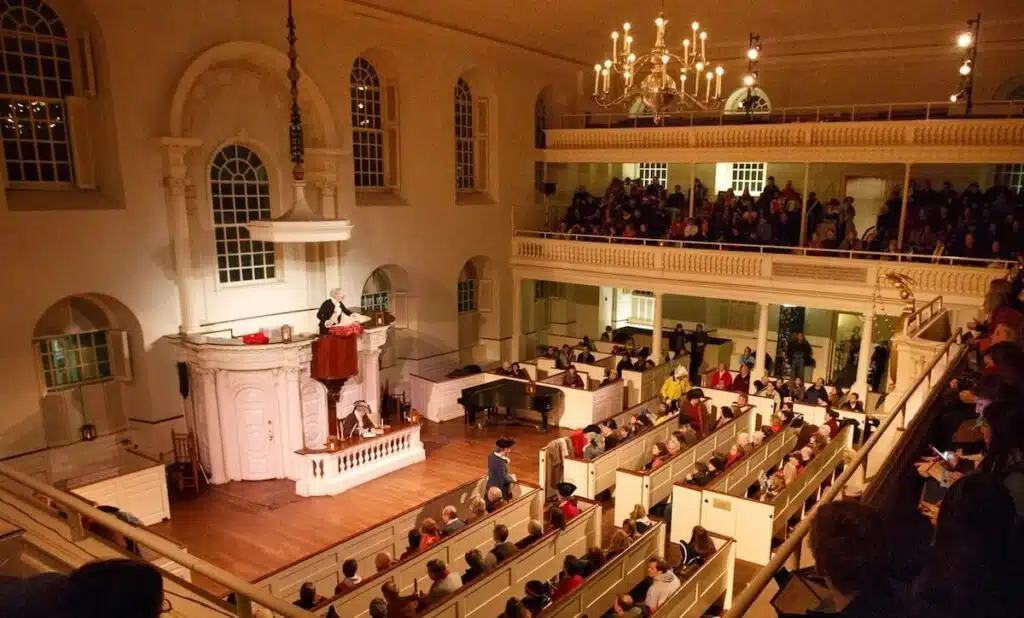
Credit: Michael Blanchard Photography/Boston Tea Party Ships & Museum
In the nearby North End, the Paul Revere House invites visitors to step inside the two-story timber-frame home that was owned by the legendary Patriot from 1770 to 1800, and now stands as the oldest structure in downtown Boston. While the building may look modest, its history is anything but. This was a covert meeting place for the Sons of Liberty, the secret rebel group that Revere helped lead, and also served as a lookout point for monitoring British troop movements. And, of course, this was the jumping-off point for Revere’s celebrated midnight ride of 1775.
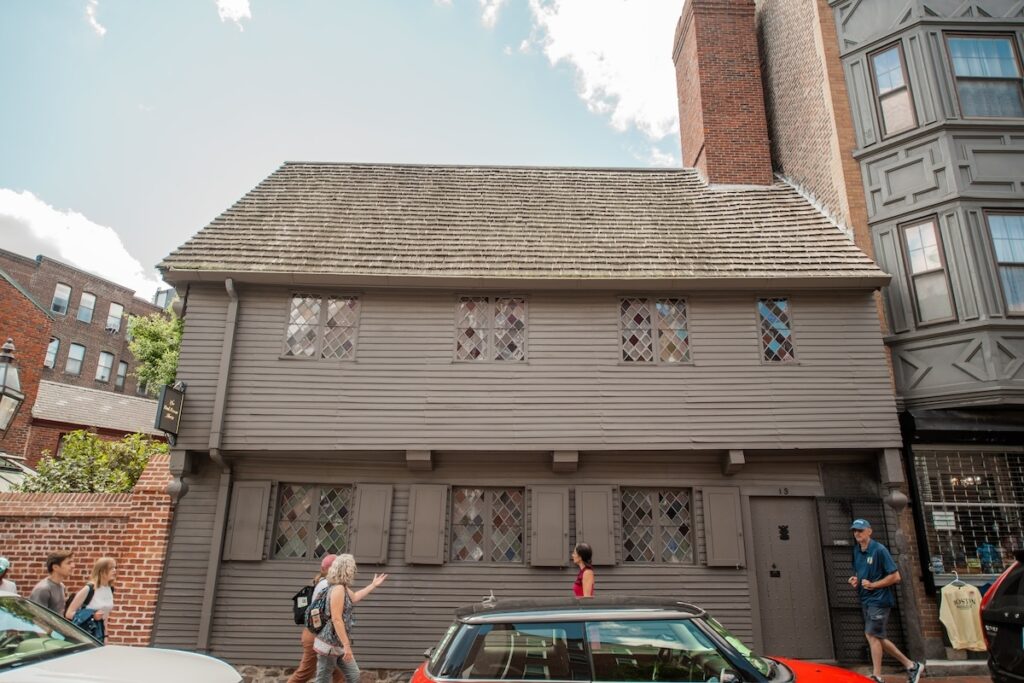
Credit: Arlan Fonseca/NPS
The infamous 11-month blockade known as the Siege of Boston is remembered today with a number of military landmarks—including the Bunker Hill Monument and the Dorchester Heights Monument—but the tale is also told through private homes that are now museums. In the Boston neighborhoods of Dorchester and Roxbury, respectively, you’ll find the Pierce House and the Dillaway-Thomas House, both associated with Continental Army commanders who were key in fortifying Dorchester Heights. Across the river in Cambridge is the sunny yellow Longfellow House, which hosted an even more prestigious military figure: George Washington, who used the home as his headquarters during the Siege of Boston.
Credit: Historic New England
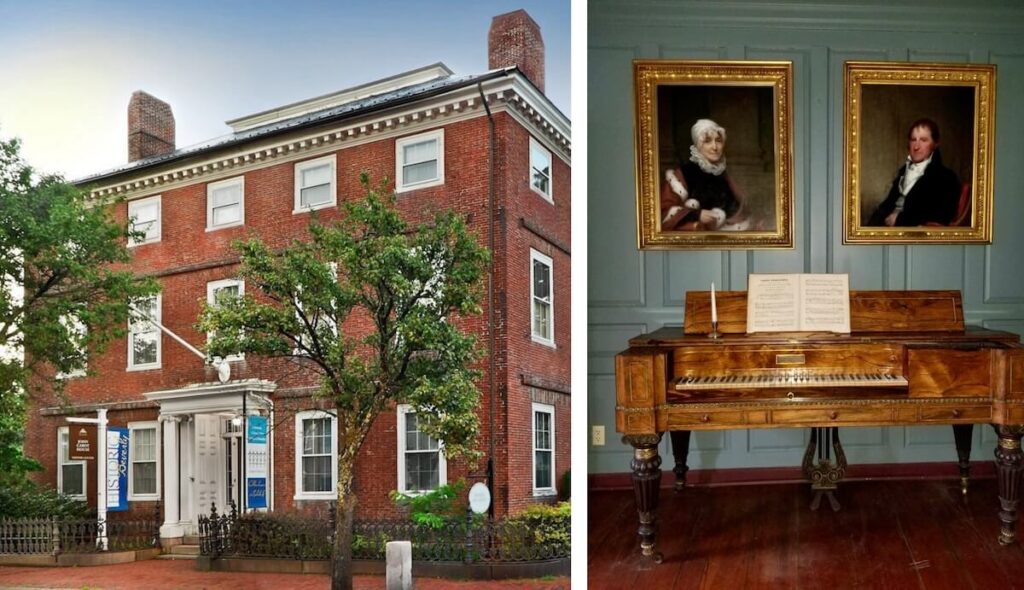
Far and wide across Massachusetts, other figures in our nation’s early history come into focus. In the Western Massachusetts town of Sheffield, for instance, The Trustees’ Ashley House commemorates an enslaved woman named Elizabeth Freeman who sued for emancipation—and won—in 1781, a powerful testament to the Massachusetts Declaration of Rights’ ideal that “All men are born free and equal.” That same year, the John Cabot House was built as the town’s first brick mansion for a wealthy merchant whose ships transported supplies for American troops. Now a museum operated by Historic Beverly, the John Cabot House debuts the exhibit “Declaration 1776: The Big Bang of Modern Democracy” on June 28; meanwhile, “The American Revolution: A Story of the War in 28 Paintings,” featuring artwork from Ken Burns’ The American Revolution, is on view there until July 4.
Taverns and Inns
For another taste of life as it was lived during such radical times, turn to Colonial-era taverns. Warren Tavern in Charlestown is a solid first stop for a pint of Sam Adams: Built in 1780 and named for Dr. Joseph Warren, one of the Revolutionary leaders killed at the Battle of Bunker Hill, it’s Massachusetts’ oldest operating tavern still in its original building. Buckman Tavern on Lexington Green dates back even further, to around 1709. Famed as the gathering place of local militia before the Battle of Lexington, it’s now open as a museum where you can delve into the events of that day, as well as the years leading up to and following the battle. More lore awaits at the restored 18th-century Hartwell Tavern, situated along the Battle Road in Minute Man National Historical Park, where you can chat with interpreters dressed in Colonial garb as part of the park’s “Living History” program.
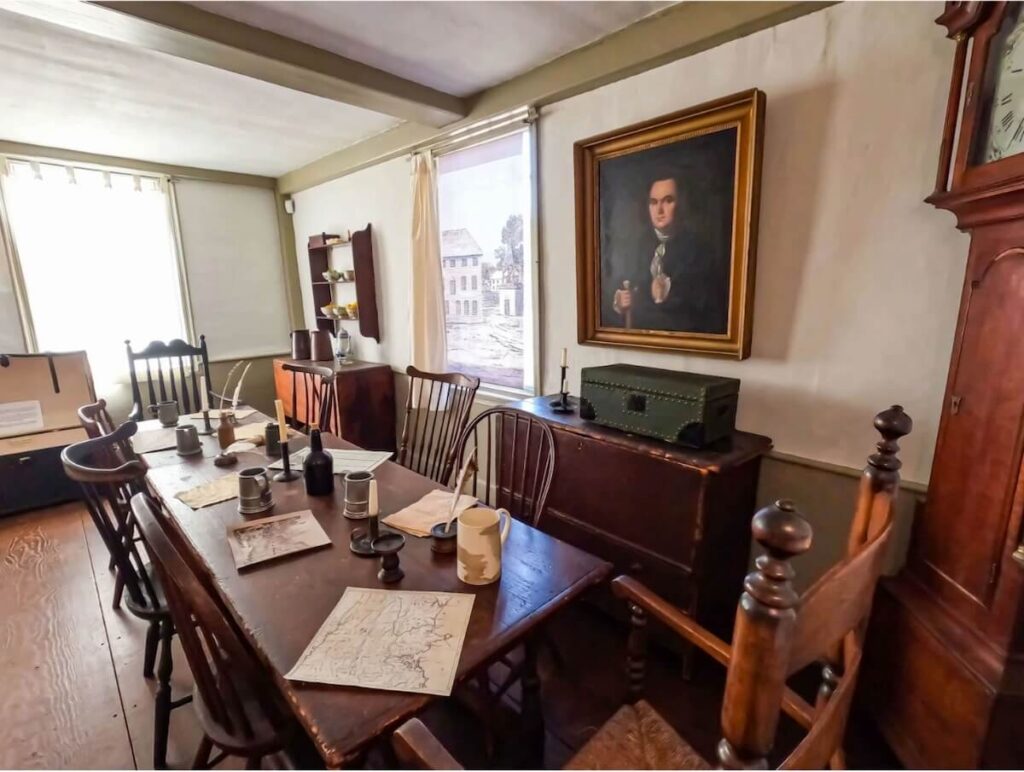
Credit: Lexington History Museums
For the other side of the story, head to the Golden Ball Tavern Museum in Weston, which highlights the often-overlooked history of Loyalists in the American colonies. It was here that Loyalist Isaac Jones opened his tavern in 1770 and later gave shelter to British spies. (Jones did, however, eventually join the Patriot cause.)
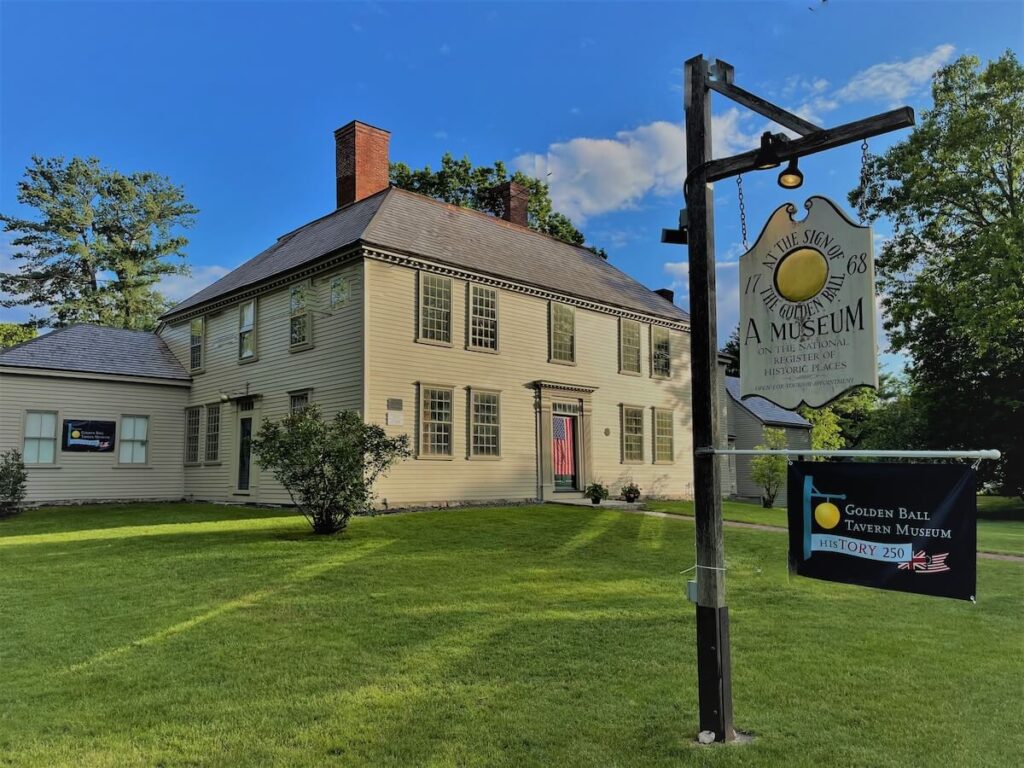
Credit: Golden Ball Tavern Museum
Country inns were the places where many Patriots rested their weary freethinking heads. Concord’s Colonial Inn, built in 1716, is among the few still in business today. During the war, one of the inn’s original buildings was used to store arms and provisions for the Concord Minutemen.
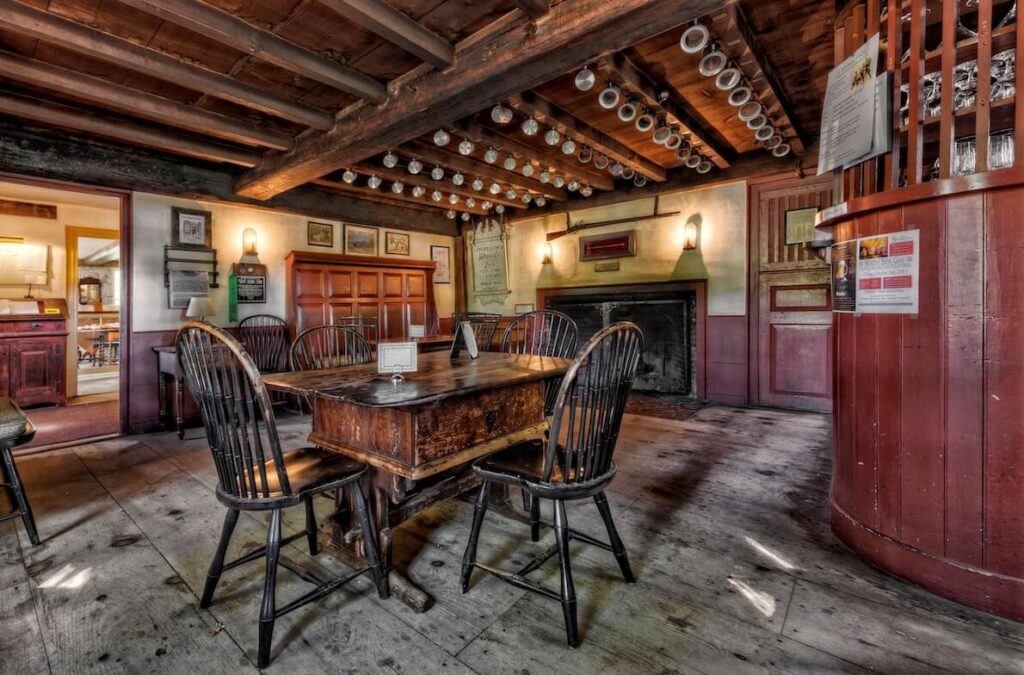
Credit: Courtesy of The Wayside Inn
One of the most famous Colonial-era lodgings is The Wayside Inn in Sudbury, considered the oldest operating inn in the country. First opened in 1716, it was conveniently located on the Boston Post Road, which was then main route from Boston to major towns to the west and south of the city. George Washington passed by this spot during the Revolutionary War, an event commemorated with a plaque at the site.
Burying Grounds and Cemeteries
Revolutionary War soldiers, generals, colonels, and more—and from both sides of the fight—are now laid to rest in countless Massachusetts cities and towns. Some of the era’s best-known figures can be found at the Granary Burying Ground in downtown Boston, including Paul Revere, the victims of the Boston Massacre, and three signers of the Declaration of Independence: Samuel Adams, John Hancock, and Robert Treat Paine. On nearby Boston Common, the Central Burying Ground is one of the only cemeteries in the city where both Patriot and British soldiers are buried.
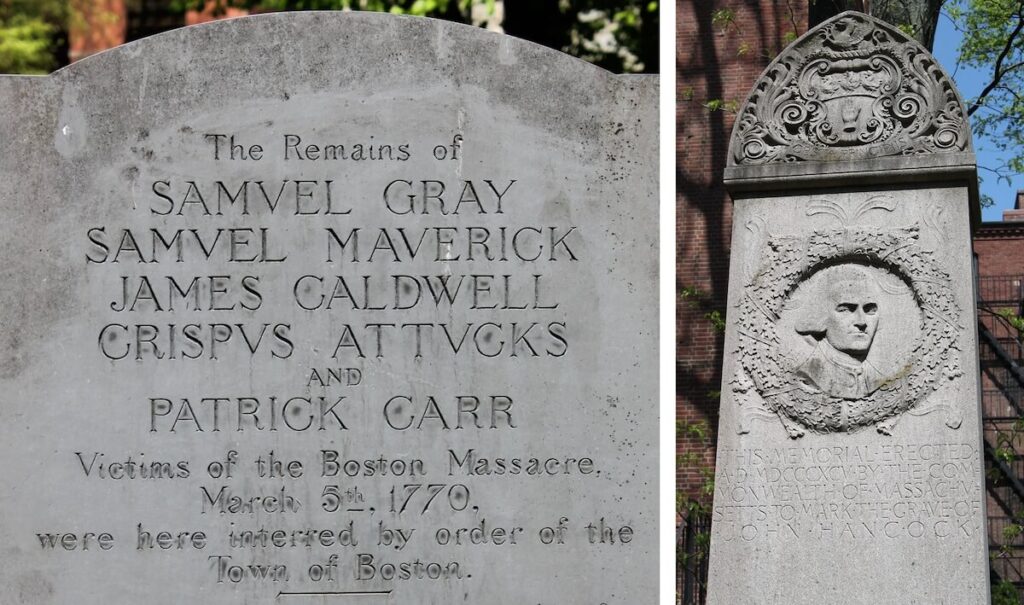
Credit: NPS
Overlooking the harbor in the North End is Copp’s Hill Burying Ground, whose tombstones were reportedly used for target practice by British soldiers during the Revolution. It is here that you’ll discover the graves of Robert Newman, who hung the lanterns at the Old North Church on the eve of the Battles of Lexington and Concord, and Prince Hall, a Black soldier and local civil rights leader. Across the river in Cambridge, Black Continental Army soldiers Neptune Frost and Cato Steadman are among the 19 Revolutionary fighters interred at the Old Burying Ground.
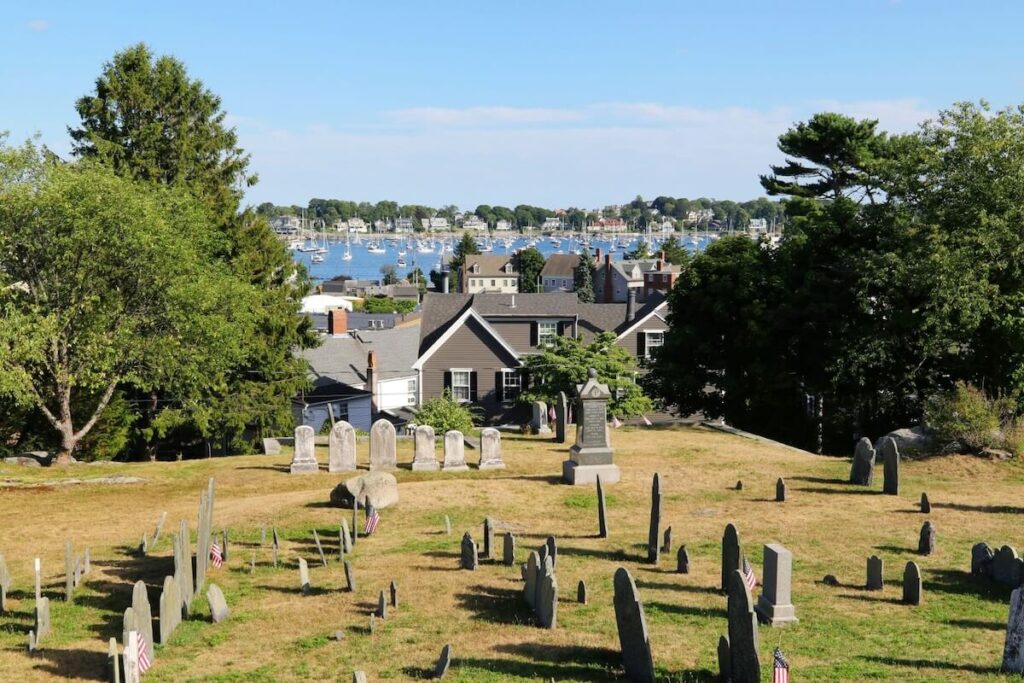
Credit: Alyson Horrocks/Yankee
While many historic cemeteries do not hold public events, some have found ways to invite the community into a living celebration of Revolutionary War heritage. One notable example is Old Burial Hill in Marblehead, where local hero General John Glover and several members of his 14th Continental Regiment are buried. Each year, the Glover’s Regiment reenactment group leads a candlelight march from Marblehead’s Old Town House to Glover’s tomb, ensuring that—more than two centuries onward—the sacrifices that were made in forging a nation are not forgotten.
Visit Massachusetts250.org to plan your next adventure.