Beach Living 101
Yankee’s selective guide to a day on the sand.
By Yankee Magazine|May 02 2022|

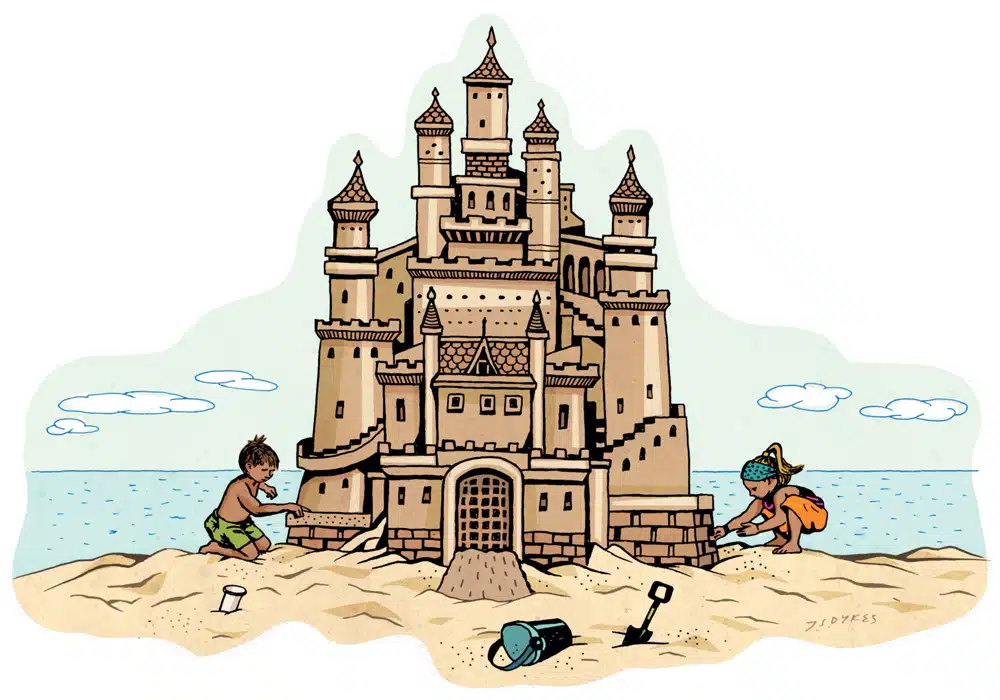
Building Sandcastles
Credit: Illustration by John S. DykesBuilding Sandcastles
Credit: Illustration by John S. DykesCredit: Illustration by John S. Dykes
Pro Tips: Building Sand Castles
Advice from Greg Grady, founder of the Sand Sculpting Competition at New Hampshire’s Hampton Beach, on how to become a master builder.
♦ The Right Stuff: Head to the water’s edge, pick up a handful of sand, and form a ball. “If you can hold it sideways between your thumb and middle finger and it stays compacted,” Grady says, “you can sculpt that sand.”
♦ Patty-Cake, Patty-Cake: Grady is a big proponent of building via pancake method. You need a “mud bucket,” a container filled two-thirds with sand and mixed with water for a batter-like consistency. Fill, dump, shape, then repeat. “Pat [the pancakes] down so they’re nice and flat,” Grady advises.
♦ Form & Function: For a simple tower, Grady recommends a five-gallon bucket with the bottom removed. Turn it upside down, fill it with sand and water, and pound it firm. To release the bucket, tap the sides gently and lift. For a tapered construction, continue building with smaller and smaller containers.
♦ Get Sticky: “What really hurts a sculpture are wind and blowing sand,” Grady says. To keep your creations well hydrated, spritz them with a spray bottle—which doubles as a handy cooler for you, too.
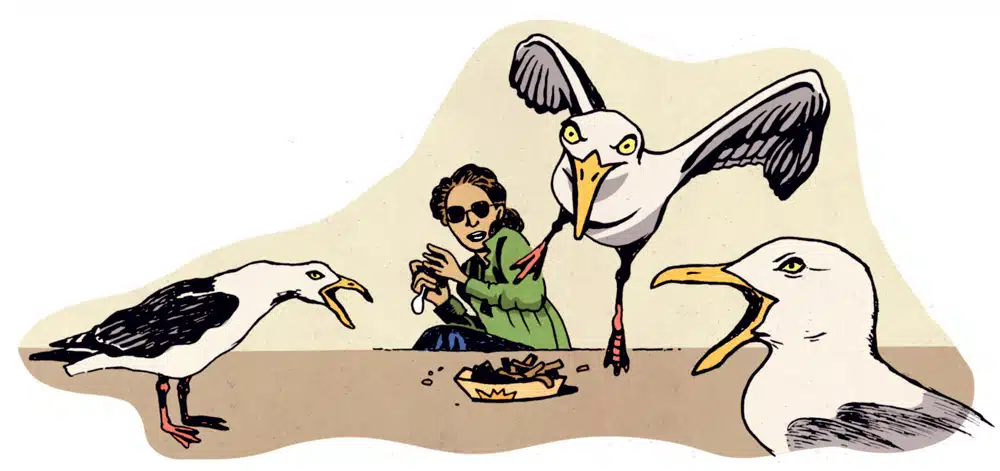
How to Keep Seagulls From Eating Your Lunch
Credit: Illustration by John S. DykesCredit: Illustration by John S. Dykes
How to Keep Seagulls from Eating Your Lunch
The perfect beach day: sea, blue sky, fully loaded picnic basket. Or perhaps you’ve carried a lobster roll from fish shack to outdoor table, ready to enjoy. Then, a flash of wings, a snapping beak, and you’re staring at the empty plate. You just bought a seagull lunch.
Anyone who has spent time by the ocean has a tale of the meal that got away. You laugh, you fume, you wonder, What can I do? Experts offer these tips:
♦ Because gulls often dive-bomb from behind, eat with your back to a wall, eyes skyward.
♦ Never toss a bit of food to one gull. That just signals “Come and get it” to dozens more.
♦ Carry a kiddie water gun to surprise uninvited guests with a quick spray that says, “Back off!”
♦ To protect from air raids, eat beneath a beach umbrella.
♦ Look seagulls in the eye. Researchers have found that the cheeky birds back away when stared at.
♦ If all else fails, you can try what one New Jersey beach town did: bring in trained birds of prey to circle overhead and scare them off.
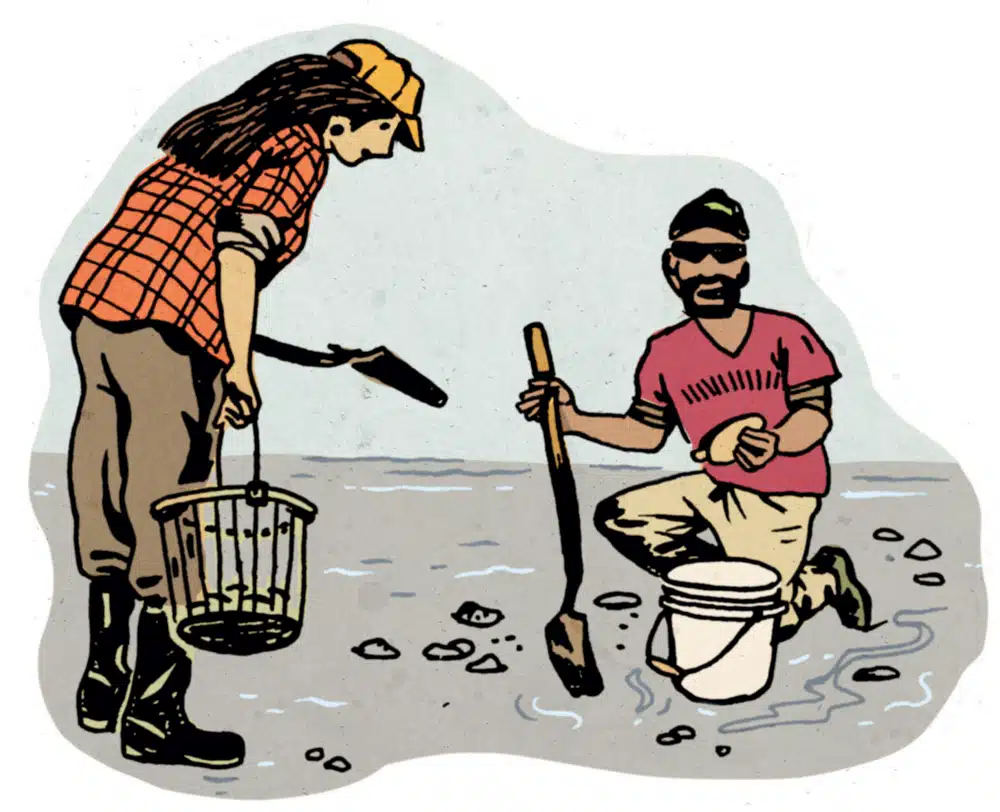
Clamming for Beginners
Credit: Illustration by John S. DykesCredit: Illustration by John S. Dykes
Clamming for Beginners
One of the most satisfying ways to enjoy the sea is to head out at low tide, clam rake in hand, ready to gather a fresh ocean bounty. Here are basics for a safe, fun, and legal outing.
1. Check with the local town hall to find out when clamming is allowed and how to buy a recreational shellfish license. Ask about size regulations, which may vary from 1- to 2-inch minimums to insure sustainability.
2. Low tide is optimal for clamming, though an hour or two on either side will still offer a good chance at filling your bucket.
3. You’ll want a clam rake, a wire clam basket, and a clam gauge—all available online or at bait-and-tackle shops. Rubber boots and gloves will protect feet and hands from sharp shells.
4. Keep clams cool and alive before cooking, on ice or in the fridge. Enjoy fresh!
Flying a Kite
Credit: Illustration by John S. Dykes