Behind the Brand: Garnet Hill
Celebrating 50 years of creativity, community, and a passion for New England.
By Yankee Custom Editors|Jun 16 2026|

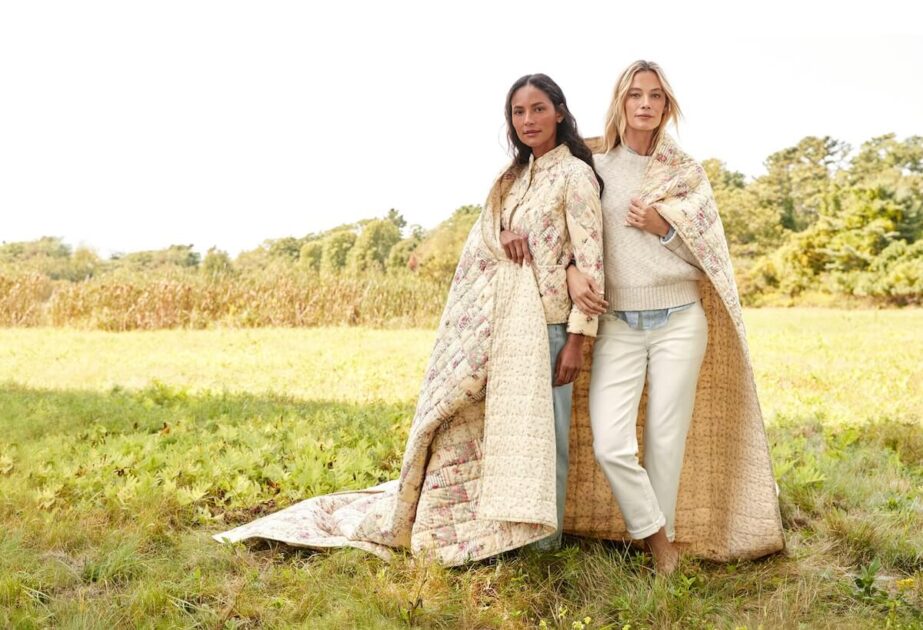
Founded as a retailer of cotton flannel sheets, Garnet Hill now sells bedding of all kinds, along with clothing and decor—but always with the belief that there’s no better quality than the natural fibers around us.
Credit: Garnet HillCreated in partnership with Garnet Hill.
In December 1976, as America’s big bicentennial year drew to a close, the ads printed in that month’s Yankee magazine showed many businesses were still sounding a patriotic note. But far outnumbering the bicentennial coin pendants and Liberty Bell–topped pewter spoons was a very different kind of ad, one that spoke to another national preoccupation—the energy crunch. From fireplace inserts to thermal grates to a gizmo that rolled old newspapers into logs, Yankee’s pages practically shouted the ways New Englanders could heat their homes for less money.
And then there was this, quiet as can be: an inch-high ad with no bold type and no photo, just a line drawing of a mountain range, offering “Fine Quality English Cotton Flannel Sheets” described as “unparalleled for warmth.” For a mere 25 cents, readers could receive a brochure complete with fabric swatches from the company, Garnet Hill, in Franconia, New Hampshire.
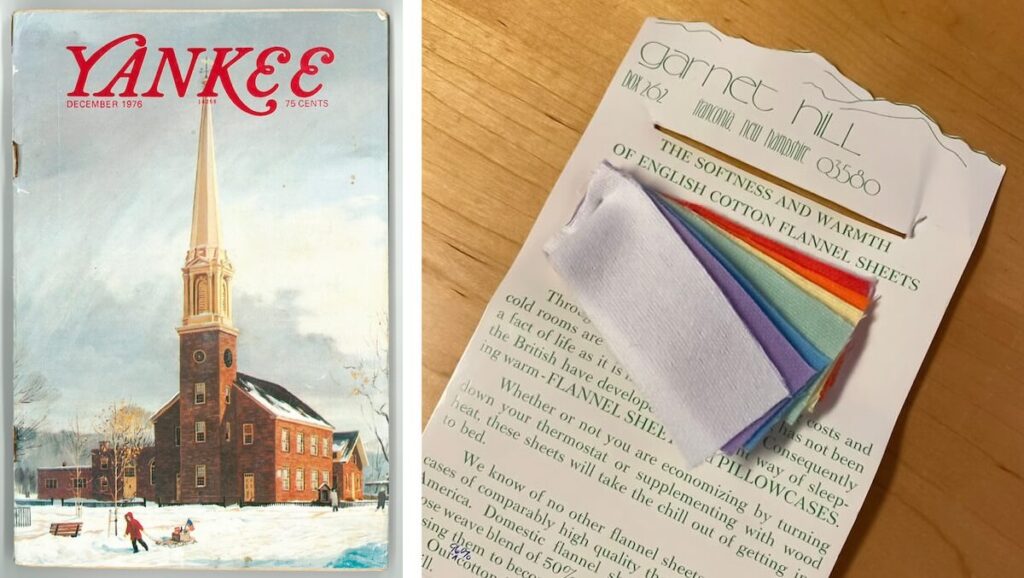
Credit: Garnet Hill
That ad, the first one placed by Garnet Hill anywhere, didn’t use many words. But seen through the lens of the company’s milestone 50th anniversary this year, it says a lot about what founders Pegge Kirschner and her husband, Grant Dowse, thought was important. Customer service. Quality products. Natural fibers. And, given that Pegge and Grant were using these same flannel sheets to stay warm in their own home, a former sugar shack in the White Mountains—authenticity.
Much has changed for Garnet Hill in half a century. Alongside its signature flannel sheets, it sells a wide range of bedding, clothing, and home décor, averaging more than 80,000 purchases a month and attracting over half a million followers on social media. The company’s ownership, too, has changed hands (Pegge and Grant passed away in 1985, in a tragic plane crash), and Garnet Hill is now part of the QVC Group’s Cornerstone Brands division.
But for both employees and customers of this New England heritage business, the throughlines run deep and touchstones are everywhere, as we learned in our recent talk with Garnet Hill’s Sandi Summerson and Wendy Thayer. Sandi, general merchandise manager and senior VP of merchandising, has been with the company 12 years and is based in Garnet Hill’s offices in Exeter, New Hampshire. Wendy, meanwhile, is a 23-year veteran who serves as brand marketing manager at the original headquarters in Franconia. The following is a condensed version of our wide-ranging conversation with these two brand ambassadors.
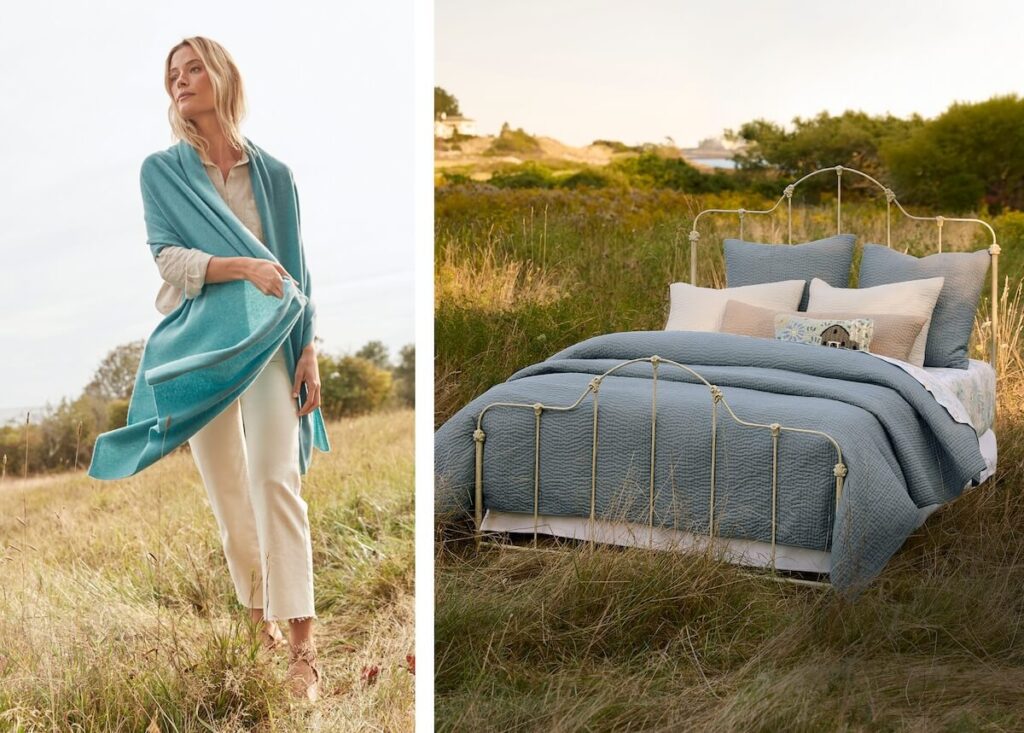
Credit: Garnet Hill
Yankee and Garnet Hill share some interesting similarities. Both are rooted in small-town New Hampshire and have maintained corporate headquarters there for decades. Both were born from a very New England kind of “bootstrap” entrepreneurship, and created products that appealed to the same kind of audience. But both companies have had to evolve a long way from where they began. What do you think that Garnet Hill’s customers of 50 years ago would be able to recognize in the Garnet Hill of 2026?
Sandi: We always use the same filters when we create our product: quality, commitment to natural fibers, and best value for the customer. That’s what our founders did, and that’s what we still do today. There are so many other brands out there that flood the market and promote sustainability, but I know our customers really respond to our authenticity. The natural fibers philosophy is still part of everything we do.
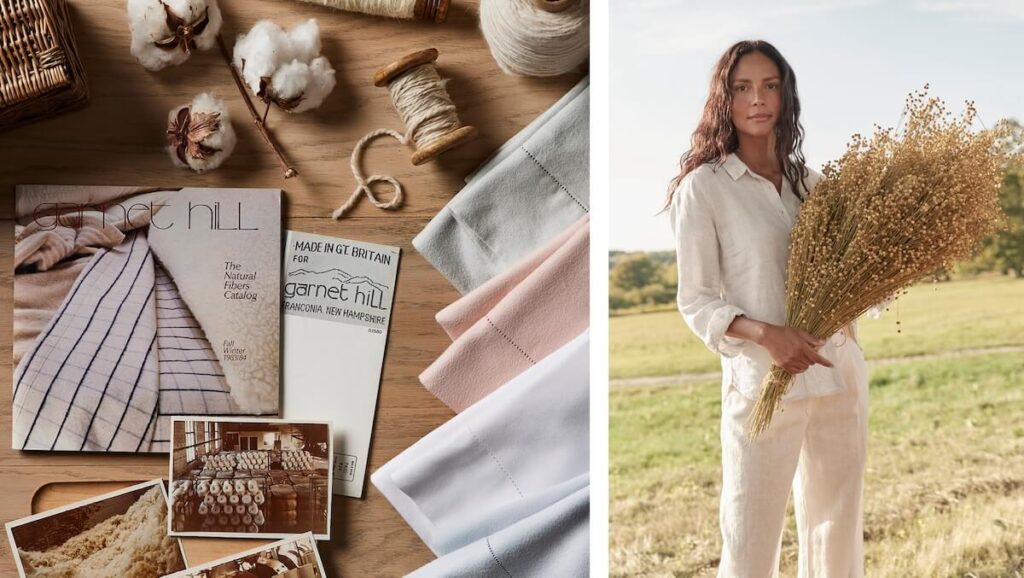
Wendy: We were the original natural fibers catalog before anybody knew what that was! That was literally our tagline for years, because Pegge and Grant were so passionate about that lifestyle—you know, the idea that it was OK to turn down the heat or turn off the air conditioning because the natural fibers would help your body self-regulate and you could still be super-comfortable.
Credit: Garnet Hill
Sandi: And beyond the product, I think Garnet Hill has always been just incredibly human. Our team members really care about each other, and a lot of them have been with the company for years, decades. There’s a culture here that carries into the brand and, I hope, how customers experience us.
It goes beyond geography, too. While we’re embedded in New England, we have people all over the country with our being part of Cornerstone Brands and a bigger company. What’s stayed consistent is the emotional connection that we share, and the values behind the brand. And that comes from Pegge and Grant and their vision.
Looking at how Garnet Hill tells its story—on the website and social media, in the catalogs—it’s clear that Pegge and Grant are still very much a part of the narrative even as it continues to unfold today. Tell us a little more about them.
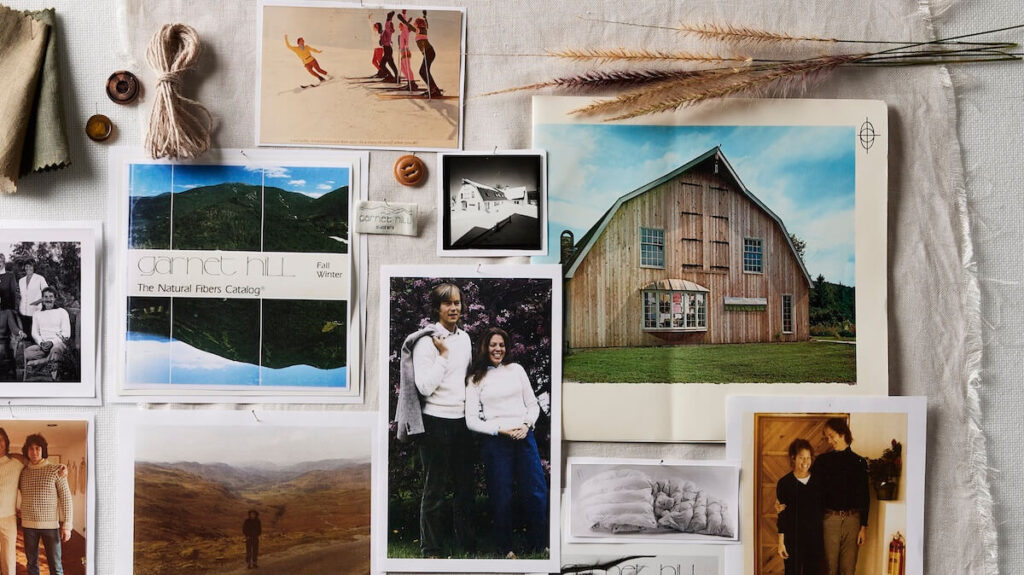
Sandi: I’ve always loved their story and how organic it is—you know, a couple of young Americans traveling in Europe in the early ’70s, experiencing these amazing English flannel sheets for the first time and saying, “Why don’t we have these in America?” Then bringing that back and borrowing money and doing everything they can to bring the brand to life. And that little ad that they did in Yankee magazine to kick it off? We still have a copy of that in our Exeter office. There’s something very authentic and very New England about that story.
Credit: Garnet Hill
Losing Pegge and Grant so tragically was just devastating. But what is remarkable to me is how the employees stayed deeply committed to carrying the vision forward. And I think that says everything about the culture they created, and that’s still very much alive 50 years later.
Wendy: I would say that’s also true in their community. One of the reasons they came here to Franconia and stayed [after graduating from Franconia College] was their passion for the White Mountains. From my window in the gambrel-style barn that Pegge helped design as the original Garnet Hill office, which is now our headquarters, I can see Mount Lafayette and Cannon Mountain. Along with hiking, they were avid skiers, and they loved everything about this community. And I just can’t tell you how many people have stopped me, in a chairlift line or on the street, to tell me about some amazing memory they had with Pegge and Grant. That’s a special thing, to work for a company where I can feel a connection to original founders who were so passionate about the area and love it as much as I do.
Sandi: We have so many visual reminders of them, too. There’s a lot of original furniture and artifacts and signage at the Franconia headquarters, which is a very New England building, with additions layered on over the years. But even at our store in Dedham, Massachusetts, and at our office in Exeter—which does, on the outside, feel a little more like a generic space—we have visuals of the brand. We have pictures of our founders; we have artifacts from their time. It’s important for us to surround ourselves with our brand history no matter what location we’re in.
Reaching your 50th anniversary seems like a rich opportunity to share that history, while also showing customers how Garnet Hill is innovating for today. How did the company decide to mark this milestone year?
Sandi: Connie Hallquist, who’s our president, has been talking about this anniversary since she walked in the door in 2020, knowing it’s going take some time to get it right. So we’ve been brainstorming about how we can honor the history of our brand in a meaningful way for a while now. And that led us to three special 50th anniversary collections: the Best of Garnet Hill, the Archive-Inspired Collection, and the Franconia Collection.
Credit: Garnet Hill
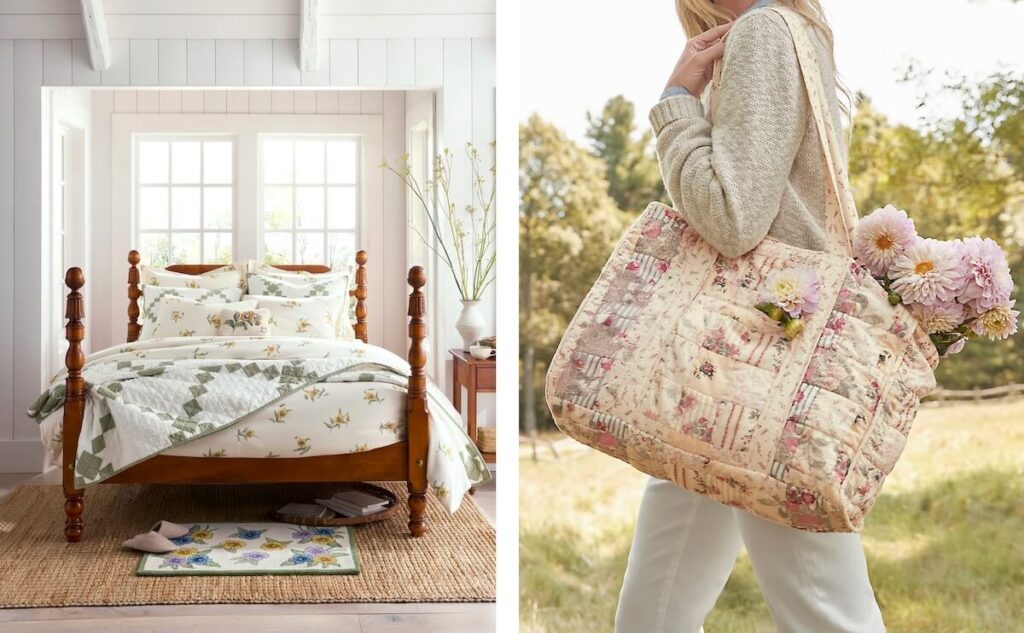
The Best of Garnet Hill celebrates the products that our customers have loved for years, things that have stood the test of time and are still relevant today. The flannel sheets, of course. Our Asian wrap organic-cotton pajamas. The Dream Quilt. The Signature Eco Merino Cardigan—I have a picture from maybe 20 years ago of my daughter wearing one of those sweaters, and the merino cardigan is still the same sweater today! By contrast, for the Archive-Inspired Collection, our designers immersed themselves in decades of Garnet Hill catalogs looking at what we could either reinvent or bring back, like reimaging our Zinnia print from 2002 for pajamas and bedding in 2026.
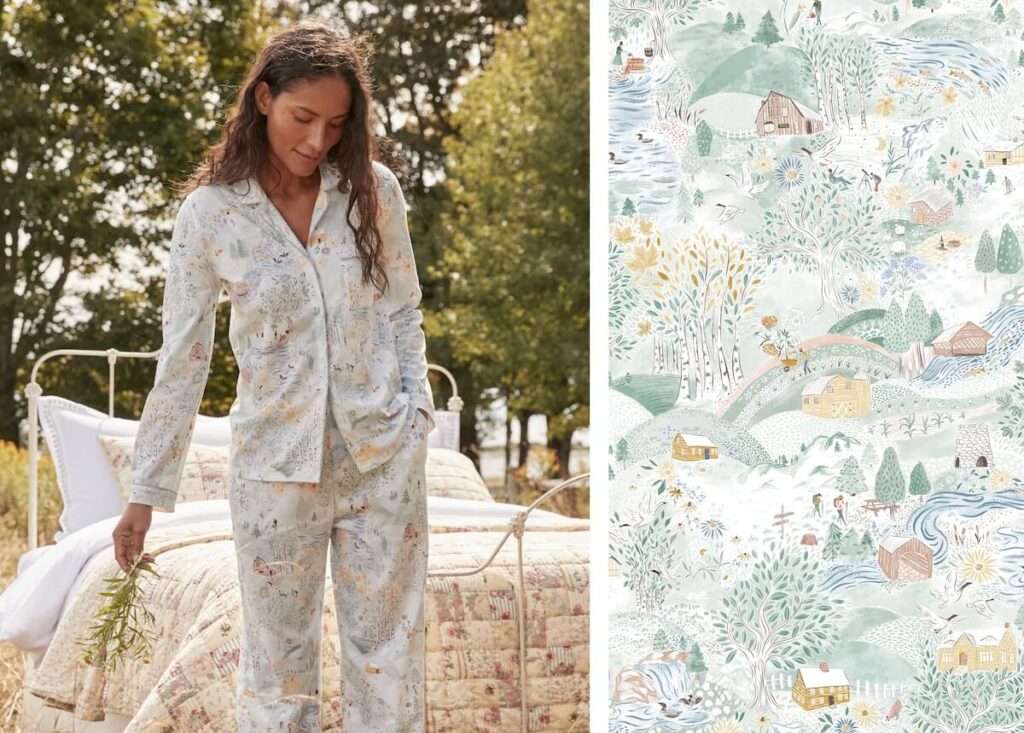
And then there’s the Franconia Collection, which feels incredibly personal because it’s so connected to our roots and our home. We worked with artist Jill Labieniec, who’s from New England and loves the outdoors, and it was really fun. Our team created a list of different things that could inspire her—loons, skiers, Polly’s Pancake Parlor, all these little things that are part of Franconia—and she created this most beautiful, whimsical design. Bringing that collection to life was an amazing and heartfelt project for us.
Credit: Garnet Hill
The Franconia Collection in particular seems to speak to Garnet Hill’s authenticity—not only the fact that it was born in New Hampshire but also that it has stayed there and been part of the local community. Tell us more about that.
Sandi: It’s so true: There is genuine meaning to this brand. Garnet Hill isn’t just some made-up place; it’s a real place, with a trail and a view of Cannon in Sugar Hill. And I think while we’re pretty humble and a bit quiet as a brand, we’ve gained confidence in telling our story and touting our roots a little bit more, because that’s been 50 years and going.
Wendy: We’re actually holding our company anniversary celebration this fall at The Rocks, a property near Franconia that’s owned by the Society for the Protection of New Hampshire Forests. We’ve done a holiday catalog shoot there at the tree farm—which was really special because we were able to bring that “real, true New England” story to life with literally the horse and wagon that they have there. But more importantly, the Society for the Protection of New Hampshire Forests has been a perfect local partner for us. We’ve supported them for over 30 years through providing all our employees gift certificates for wreaths or Christmas trees. So the anniversary celebration kind of brings it all full circle, and it’ll definitely be a passion point for Garnet Hill to be in such a beautiful, special place overlooking the White Mountains.
Sandi: One tradition I love highlighting is our annual Community Service Day. This past May, our whole Garnet Hill family came to Franconia to volunteer at Copper Cannon Camp, which is an amazing tuition-free camp for underserved children. Every year our team members sign up for different tasks—building, cleaning, painting, planting—to help get the camp ready to open for the summer. It’s such a great way to get our company’s teams together, and it exemplifies how community is really important to us.
Garnet Hill does, of course, reach far beyond New Hampshire, too, with the partners and suppliers it chooses to work with. When you think about community in a larger sense, what does it look like to you?
Sandi: Our suppliers are not just part of our Garnet Hill team, they’re part of our family—they truly are. And they’re all over the world. We have some that we’ve been working with for decades, like Green Cotton’s factory in Ukraine, who’ve made our Asian wrap sleepwear since the beginning and have been amazing partners. Even branded partners like Eileen Fisher, whom we’ve also worked with a long time, have a strong connection to our brand through their sustainability ethos. It’s important for our vendors to really understand Garnet Hill in order to deliver on our quality, which is in our sustainability, which is our brand.
Credit: Garnet Hill
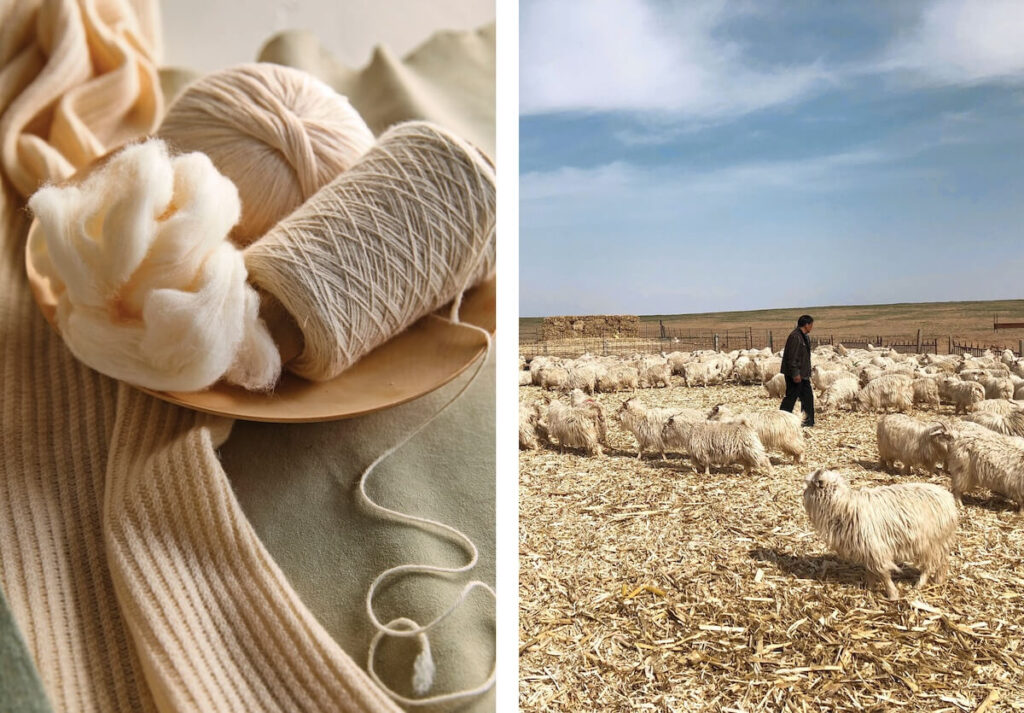
Connecting with our partners can provide amazing perspectives for us, too. For instance, our team was able to travel to Inner Mongolia and stay with some of the farmers who raise the goats for our cashmere fibers. Cashmere is our biggest business now, but actually meeting the families in this multigenerational business just brought it to such an emotional place. And, you know, those kinds of things bring the whole world closer together.
To learn more about Garnet Hill and its 50th anniversary, or to shop its products, go to garnethill.com.