The Magic of Being There
There’s nothing quite like hearing a symphony in person, both for the power of live music and for the memories it creates.
By Amy Traverso|Oct 22 2026|

For generations of music lovers, the chance to enjoy world-class performances in one of the nation’s best concert halls is a Boston experience not to be missed.
Credit: Mike MejiaSponsored by the Boston Symphony Orchestra
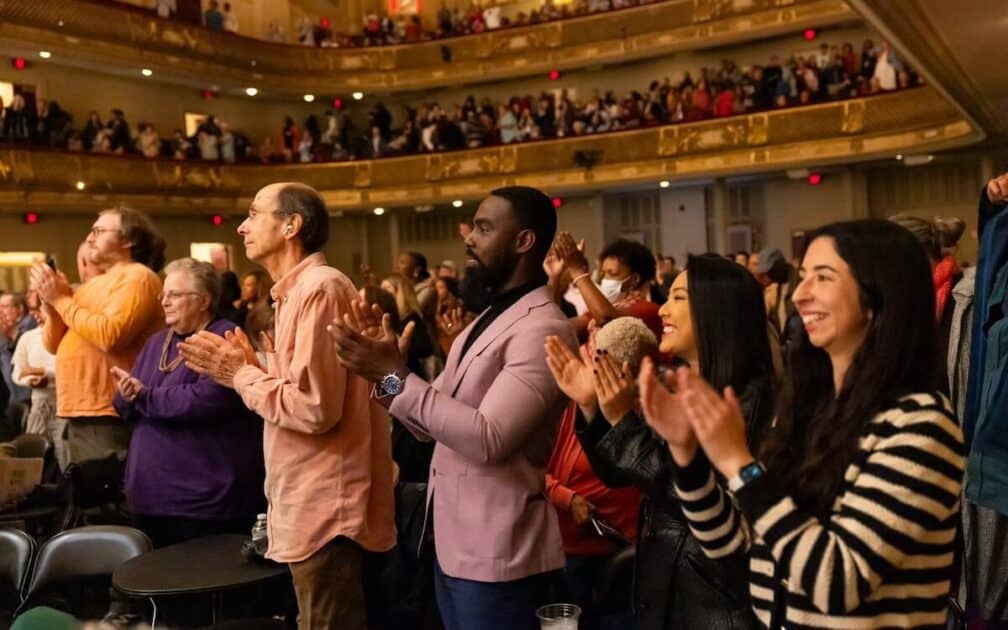
On an unusually chilly Thursday night in September, a week into the Boston Symphony Orchestra’s new season, an eclectic crowd is streaming into Symphony Hall. There are couples meeting just after work, a gaggle of young adults—likely including students from the city’s music schools and conservatories—and a sprinkling of family groups, with kids and parents clustered together. Some people are dressed for a night out; others are decidedly more casual.
Standing in the crowd, waiting for my 18-year-old son to join me for the night’s performance of Mahler’s Symphony No. 7, I count at least five languages being spoken around me. It is a reminder of what makes city life so special—these moments of simultaneous difference and commonality. Here we are, from all corners of the globe, sharing in the love of music.
Credit: Michael Blanchard
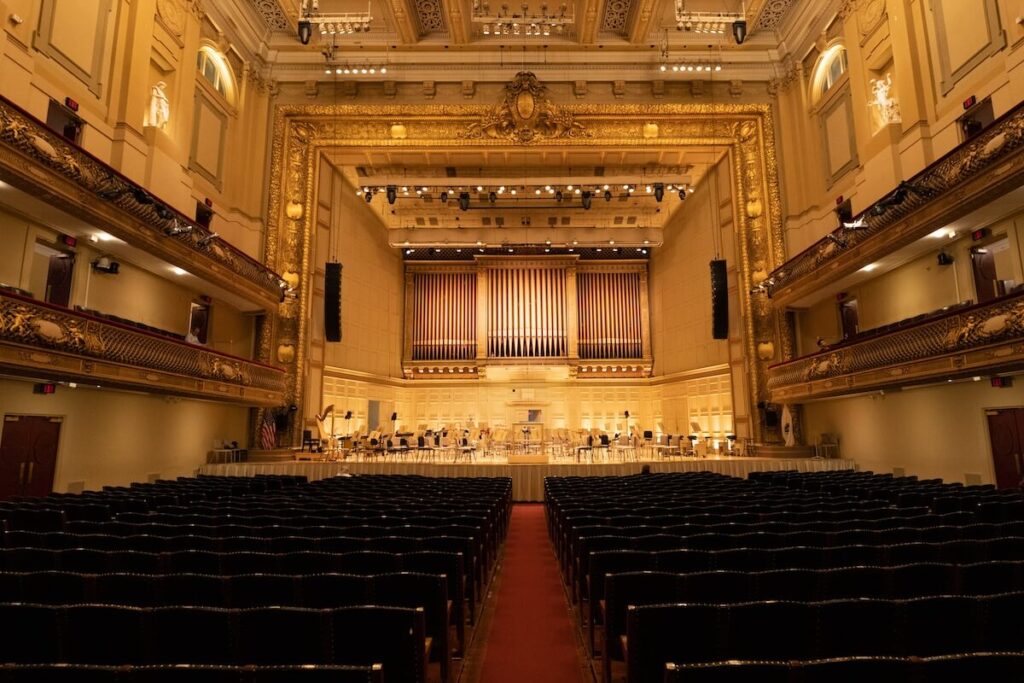
My son arrives with enough time for us to find our seats and take in our surroundings: the filigreed proscenium, the gleaming gold pipe organ, the Beethoven medallion high above the stage. A young woman next to me strikes up a conversation with the man behind her. She’s a cancer researcher from Spain. “I come every week,” she says, describing the 45-minute bus ride from home and the way these concerts offer a respite from the demands of her lab. The man nods his head; he’s from Belarus and says he has been coming to the symphony almost every week for 25 years.
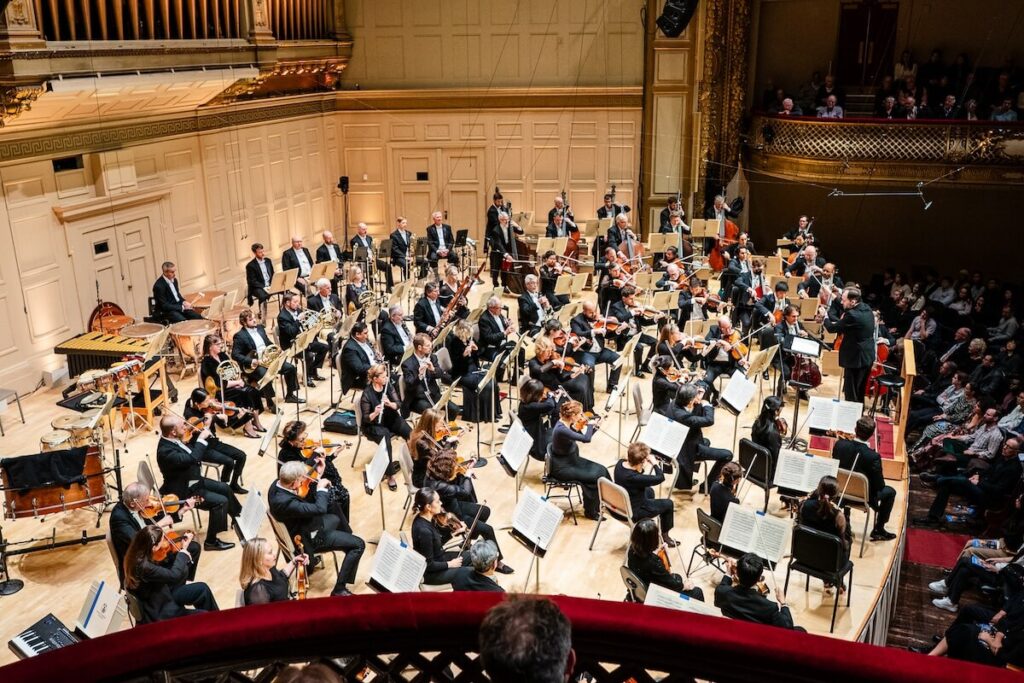
Then their attention, and mine, is captured by the sight of musicians in formal black attire filing out onto the stage. The giant double basses are brought upright, and there is a shuffling of musical scores and adjusting of seats. The room fills with the swell of tuning horns and strings until the first violinist stands: The conductor has arrived, to a wave of applause. And soon we hear the French horns performing the call-and-response opening of Mahler’s Seventh, a theme that came to the composer after a prolonged creative block as he rowed across Lake Wörthersee in Austria. It’s easy to visualize the picture he paints: the rhythm of the oars, a horn echoing through the mountains.
Credit: Robert Torres
I look over at my son. He’s enjoying a gap year before college, and lately we’ve been spending some time filing in the cultural gaps of his teen years. This visit to the BSO is one such outing. More than that, it’s part of a long family tradition—one of the best things I can pass on from my own childhood.
* * * * *
My first introduction to symphonic music was similar to that of many kids of my generation: My father dropped an LP of Prokofiev’s Peter and the Wolf on the spindle of our turntable and explained to me how each musical leitmotif helped tell a story—the bright strings tracking Peter’s springy steps, the oboe giving voice to a waddling duck. My father came to his love of the symphony through an uncle, a bookish bachelor who cherished his BSO season tickets. Now, it was my turn.
Credit: Nathan Smith
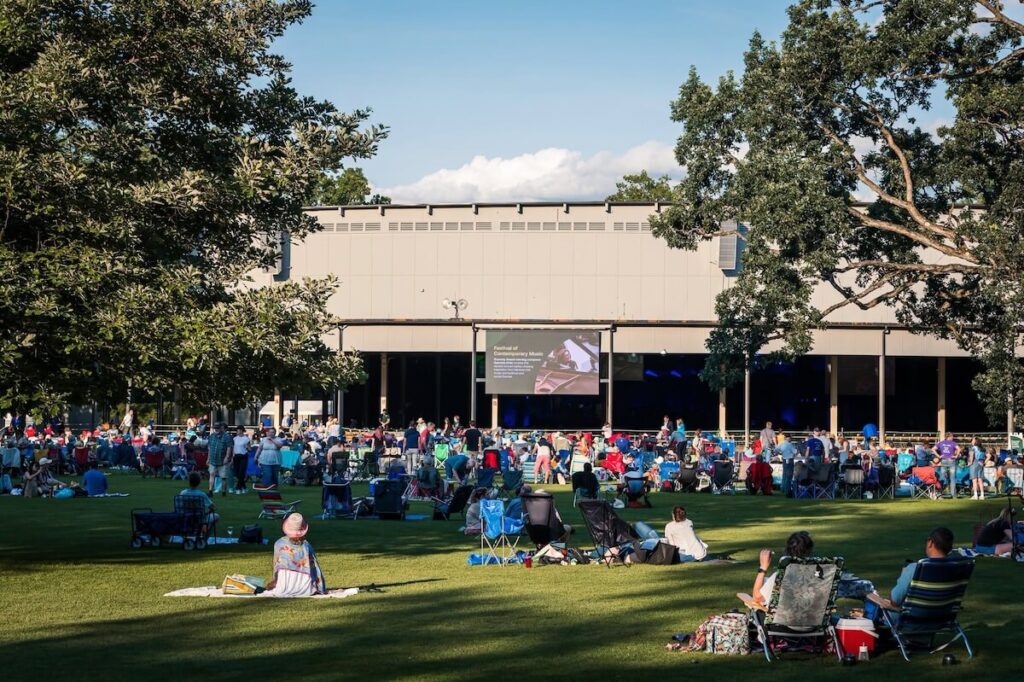
In the early 1980s, Dad made one more introduction for me. This time, it was on the Great Lawn at Tanglewood, the BSO’s summer home in the Berkshires. As we unpacked our picnic basket of green grapes and Mom’s best ham-and-cheddar-stuffed bread (imagine the sweet torture as it perfumed our car all the way from Connecticut!), Dad explained that the man conducting tonight’s program was John Williams—the John Williams—who had composed the scores for E.T. and Star Wars. I remember thinking how nice people like Prokofiev and Williams were, to have composed all this wonderful music for us kids.
Credit: Winslow Townson
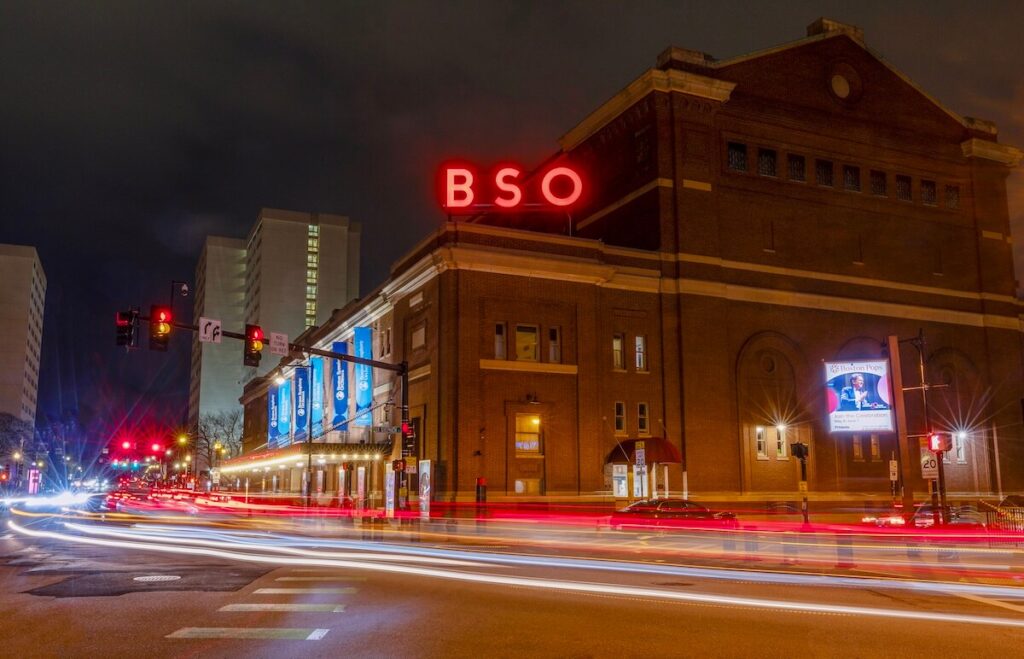
Fast-forward a decade, and these Tanglewood trips had become a family ritual. We watched Seiji Ozawa conducting Aaron Copland one summer; another year, it was Verdi. There were live performances of A Prairie Home Companion. I learned how beautiful music can sound under an open sky. Then, in the blink of an eye, I was in my twenties, working as an editorial assistant at Boston magazine, whose offices are across the street from Symphony Hall. Staying late at the magazine, as we often did, I saw the people heading in for performances—most memorably, the excited families all dressed up for the Holiday Pops. I felt a pang of envy as I toiled over page proofs, and I imagined being one of those families someday.
Credit: Courtesy of Amy Traverso
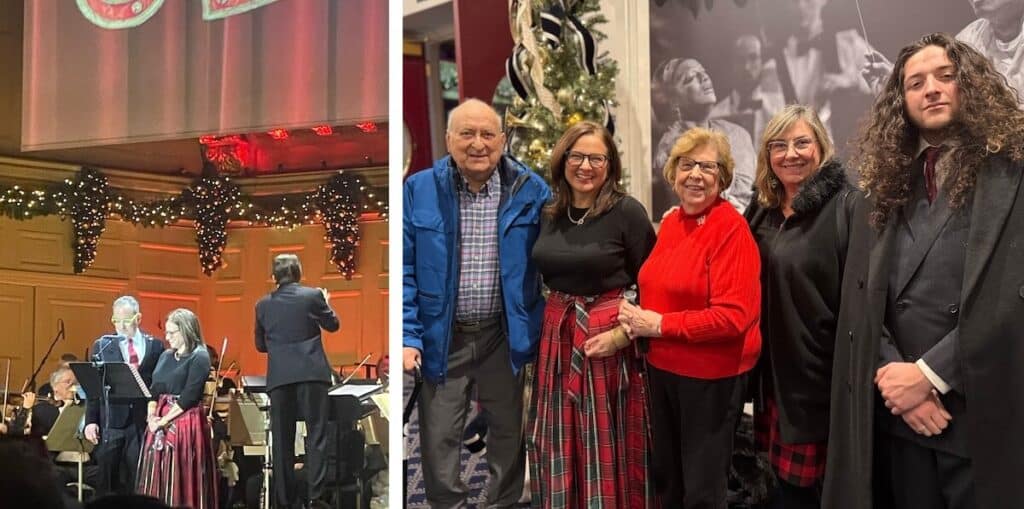
And then, 20 years later, my family was that family. Only we weren’t just attending a performance: Because of my role as host of the public television show Weekends with Yankee, my husband and I had been asked to join the Pops onstage to read “A Visit from St. Nicholas” (better known as “’Twas the Night Before Christmas”) during one of the evening performances. My father, mother, son, and sister were in the audience. For a few minutes, I saw Symphony Hall from the stage, a sea of faces lit up with holiday cheer. The music felt so close, it was as if we were all inside it. It was magical.
Now, back in that grand hall, seated in the audience alongside people from all walks of life, I still feel that same magic. There’s nothing like the physical sensation of symphonic music when you experience it in person—the way it feels like an ocean wave as it crests and falls, the way that a crescendo echoes through the body, the wonder of seeing with your own eyes so much talent and precision in perfect synchrony. I hope my son feels and remembers all of this … and that one day he will be the one buying the tickets for another generation.
Coming Soon to Symphony Hall
Holiday Pops: A beloved holiday tradition for over 50 years (and led by conductor Keith Lockhart since 1994), this season offers 41 Boston Pops performances, including the annual Holiday Pops Company Celebration with two-time Tony Award–winning Broadway star Sutton Foster as special guest. Dec. 3–24
Tchaikovsky Cycle: This monthlong humanities festival offers the chance to hear the BSO perform all six of Tchaikovsky’s symphonies plus his opera The Queen of Spades (Pique Dame), while special talks and events invite audiences to look at the world-famous composer’s life and legacy through a modern-day lens. Jan. 7–31
Celebrating Philip Glass at 90: Audiences can revel in the creativity of one of America’s most important and original artists—or experience it for the first time—in an all-Glass program led by conductor Dennis Russell Davies to mark the composer’s 90th birthday year. Feb. 11–13
Stravinsky Ballets: The BSO and Andris Nelsons perform all three of Stravinsky’s revolutionary early ballets—The Rite of Spring, Petrushka, and The Firebird—over two consecutive weekends. Look for complementary pre-performance events to help audiences delve deeper into these iconic works. Feb. 18–27
For more information and to see the complete lineup for the Boston Symphony Orchestra’s 2026–27 season, go to bso.org.