Back to the Land
Wild cranberries give a family Thanksgiving just the flavor it needs.
By Yankee Magazine|Oct 23 2026|

By Susie Spikol
You only know what you know, and something I knew early on was that my family’s Thanksgiving cranberry sauce left much to be desired. The way it slurped out of the can into the dish, with rings imprinted, reminded me of some gelatinous pupa. It looked like it should taste sweet, this jiggling burgundy cylinder, but one tart, metallic mouthful was enough to pucker my kid-lips forever closed. For the longest time, I had no idea that cranberries were real. I thought they existed only in cans, like Spam.
Twenty-plus Thanksgivings went by, and I never ate anything cranberry again until the autumn I was out in a bog with my graduate school botany professor. I ate my way through his class, trying every wild edible he presented. From the Indian cucumber’s juicy root to the refreshingly minty wintergreen leaf, I took it all in, growing my plant knowledge by nibble and note.
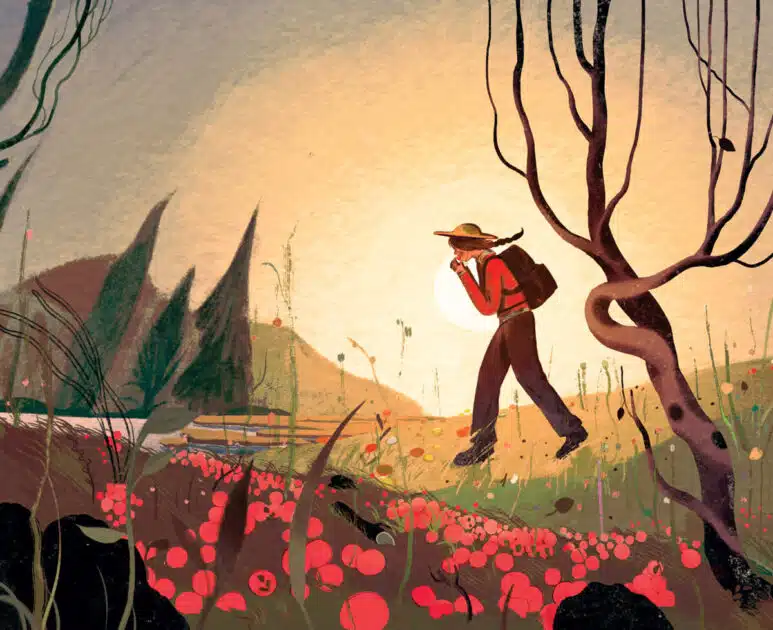
It was the edge of winter. The wind rattled brown oak leaves stubbornly clinging to their branches. On the bog, each step was soft and sinking. A sharp peaty smell floated up through the November air. A glimmer of something red caught my eye, tangled in the shaggy sphagnum moss. Hanging from a delicate evergreen plant with small, oval leaves were bright, round red berries.
“Vaccinium, wild cranberries,” my professor declared, his hand outstretched, filled with the little jewels.
Even before I bit down on one, an earthy aroma scented my mouth, like I had swallowed the wet woods. Then the berry made a smart snap between my teeth, popping with a burst of peaty tartness, proving that cranberries were real and that I was now in love with them.
After that day, each late October into November I’d search out the wild cranberries. Each time I found them twined among the moss and leatherleaf of bogs and wetland edges, I’d kneel in the wet moss and drop them into my mouth, biting into their musty tang. It never once crossed my mind to collect them and cook them into sauce. Instead, I ate them like a ruffed grouse, a cedar waxwing, a chipmunk, and all the other beings that came to snuffle about the cranberries. I carried this late-season harvest in my bones and skin.
It wasn’t until another decade later or more before I made sauce. By then I had two young children and was living on a dirt road in the western highlands of southern New Hampshire. Across from my small home was the old Shea orchard, a meadow of apple trees gone wild. Each fall, my children and I wandered among the old stand, eating someone’s forgotten Baldwin apples. Along the back edge, the apple field sloped toward the woods, and the ground turned wet and springy where an old beaver pond stretched out. Finding treasure tucked into the strands of cotton grass and moss, my apple-cheeked children learned to love the sharp snap of a ripe cranberry, and with it, I hoped that a bit of this untamed flavor would scent their lives wherever they went in the world.
Credit: courtesy of the Hancock Historical Society
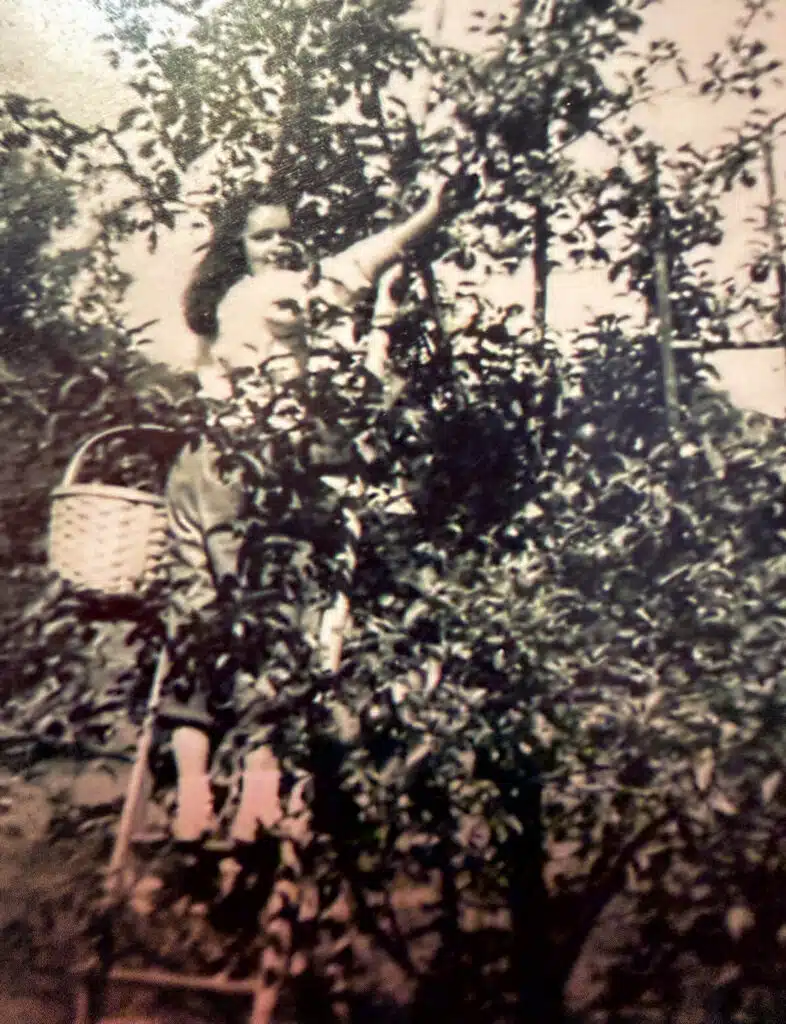
One late October, my son and daughter, both in ladybug rain boots, and I went down to the orchard for a midmorning snack. There, squatting on the edge of the beaver pond, was a white-haired woman picking cranberries and placing them into a bucket. This, between the moss and bog cotton, was Barbara Hugron Shea, daughter of the orchard, who’d come home to pick cranberries for Thanksgiving supper.
As we joined in the picking, dropping berries by the handful into her bucket, she told us about her childhood growing up in the area; how she helped her father, Emil Hugron, plant the apple trees when she was a young girl; how they raised all their own food; how they turned sap to syrup; and how, each fall before Thanksgiving, they would pick cranberries for sauce.
Sauce. Not from a can but from the graceful evergreen plant tucked into the wet, soft moss, and flavored with their own maple syrup, with a sprinkle of warm spices like cinnamon and nutmeg. That’s what they did, and for her whole life she never had a Thanksgiving without these cranberries for her sauce.
That fall, I made my very first cranberry sauce, Shea’s Cranberry Sauce, hand-picked, sweetened with friends’ maple syrup and warm spices. Every year since, I make it now because you only know what you know.
Susie Spikol is a New Hampshire writer, naturalist, and educator. Her most recent book is The Book of Fairies (Simon & Schuster).