In Conversation with Novelist Alice Hoffman
Novelist Alice Hoffman on seeing her best-selling books adapted to the big screen, the power of fairy tales to get at hard truths, and why she thinks Nathaniel Hawthorne was both a feminist and a hunk.
By Yankee Magazine|Aug 24 2026|

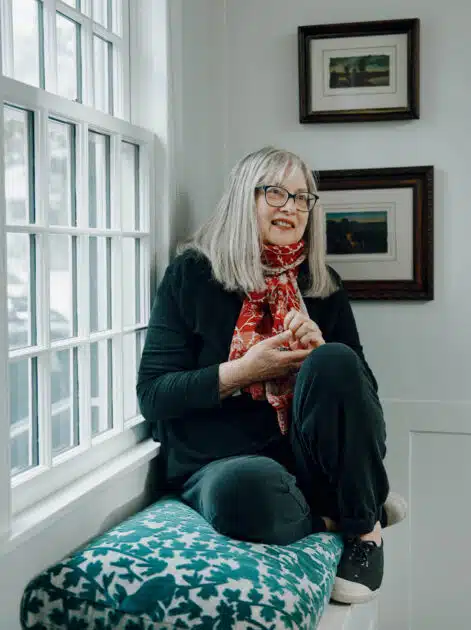
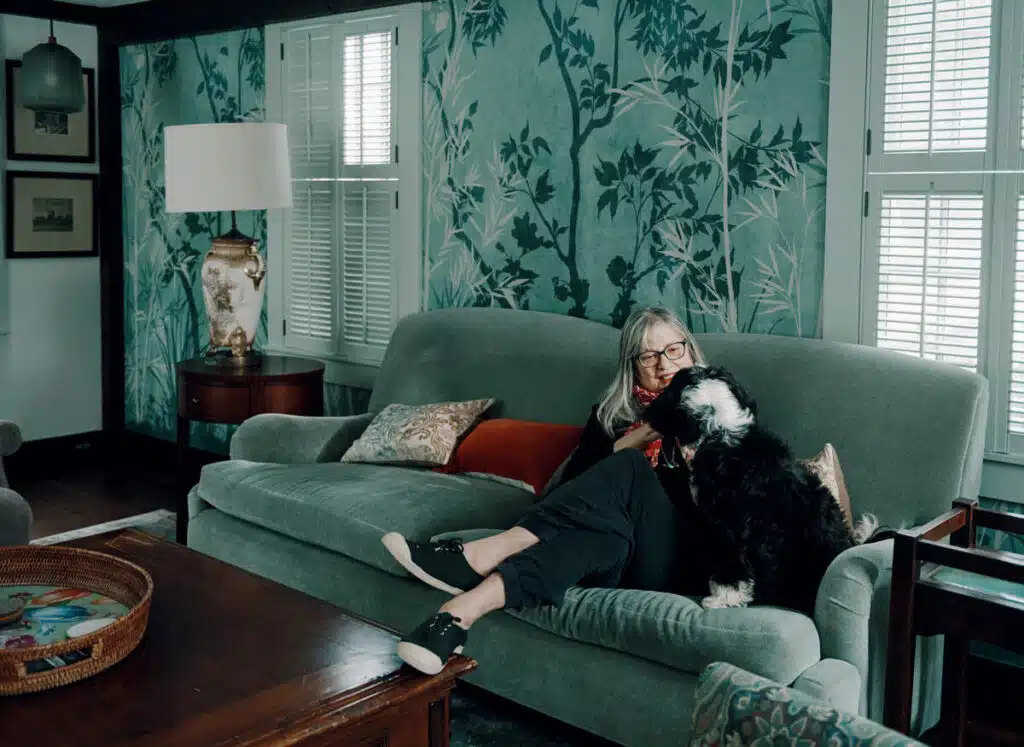
Novelist Alice Hoffman at her home in Cambridge, Massachusetts.
Credit: Tony LuongInterview by Kelly Horan
An Alice Hoffman novel moves like weather—serene one moment, convulsive the next, and as charged with stormy possibility as the warm, thick air of a late summer afternoon. Her fictional realms are narrative particle accelerators, colliding the unfathomable matters of the human heart with the differently unknowable enchantments of spells and witchy intuition.
To say nothing of magic. Hoffman escaped a dreary and solitary Long Island childhood by reading, starting with Edward Eager’s seven-book Tales of Magic series, in which even ordinary children in an unremarkable town can experience the shimmering extraordinary. Across more than 30 novels, Hoffman has made such everyday magic a genre of her own—it’s right there in the title of her 1995 blockbuster, Practical Magic. Hoffman has also gone much deeper and, at times, darker, forging a distinctive alchemy of fairy tale, realism, and emotional cartography in books as varied as The Dovekeepers, a 2011 novel about the 73 C.E. Siege of Masada, and When We Flew Away, her tender and luminous 2024 prequel to Anne Frank’s The Diary of a Young Girl.
Which brings us to Hoffman’s women. They are sisters, daughters, and widows, seekers on the margins. Their inheritance is pain, but also fortitude. When asked “Why witches?” Hoffman responds, in essence: because princesses don’t have any power.
With two much-anticipated Hoffman arrivals this September—The Witches of Cambridge, the first novel in a new series and the movie sequel Practical Magic 2—we wanted to check in with the author about her writing, New England as a character in her work, and the destiny-shaping turns of everyday magic in her own life.
We reached Hoffman by phone at her home in Cambridge, Massachusetts, where she’s lived since the 1970s.
Editor’s note: This interview has been edited for length and clarity.
In Conversation with Alice Hoffman
Which authors made the biggest impression on you as a young reader?
I always think that what you read when you’re about 11, 12, 13—those are the books that influence you the most. I read all of Edward Eager’s Magic books. I also read a lot of Shirley Jackson. She really had that ability to combine dark and light and magic and the real world. And I was a huge fan of Ray Bradbury. I was so lucky to discover him. He’s a moral, good writer and he really kind of opens up the world for people.
I gather you spent a fair amount of time at the library?
I did. I felt so lucky to be able to have the freedom to take out anything I wanted and to make the kinds of choices at the library that I might not have been able to make in other places in my life.
Is there a particular writer who made you want to be one?
Anne Frank. Her diary hugely influenced me. That book let me think that maybe I could be a writer too…. The fact that you could be young, you could be female, you could be Jewish, and you could be a writer—that was kind of shocking to me.
You’ve written about your father leaving your mother, brother, and you when you were 8, and about the “unhappiness [that] was trapped in the house like a bubble,” as you told one interviewer in 1994. Do you think if you’d had a happy childhood, you’d have become a writer?
That’s a good question. I don’t know because I didn’t have one. So I have no idea what happens when you have a happy childhood. I’d never even thought about going to college. My mother had signed the papers to let me drop out of high school, but I had a great guidance counselor who wouldn’t let me.
What happened next?
I ended up at Adelphi, which is a great, great college on Long Island that is open to people who might not otherwise have gone to college. And it was the ’70s, and my brother was living in California, and I thought maybe I should go out there, too, and he said there was a great school out there that I had never heard of, Stanford. I applied, and I ended up in the writing program. And I had a great mentor [the writer and critic Albert Guerard]. He picked me out of the group because of my writing. He gave me a fellowship so that not only did I not have to pay, but I was paid and I had housing. He completely changed my life and helped me to be published.
Sounds like a fairy-tale turn befitting a character in one of your novels.
You know, that can happen. But also I think you have to be willing to say yes. So I said yes to certain things that, because I felt like I had nothing to lose, I figured I might as well say yes.
I’m struck by the extent to which a certain fairy-tale quality runs through so many of your books. What is it about the fairy tale as a literary form that appeals to you?
I always felt growing up that fairy tales had the ability to tell the truth about certain kinds of emotional and political things in a way that realism couldn’t. And in certain tragic books and books where the cruelty is unbelievable, it’s hard to talk about these things in terms of realism, so I think that’s what I used the fairy-tale motif for.
You certainly don’t turn away from hard things. You have a novel about a young girl with AIDS, At Risk, from 1988, for example. How do you find a way into difficult subjects?
I don’t know if I really can answer that. Talking about process is difficult because it’s very internal. It’s very, in a way, magical. It’s not something that you take apart or look at in that way. I don’t even like to talk about it, to tell you the truth, because I feel like I just don’t want to investigate it.
Can you say more about that?
I was in a PhD program [at Stony Brook University] and dropped out because I felt like the more I was writing, the less I wanted to study literature in a certain kind of way, to take it apart and look into it in a scholarly way. I wanted to let it be more of an art.
So you let the ideas come to you, without analyzing where they come from and what they might mean?
Yeah. I mean that happened to me with the black moth that Anne Frank keeps seeing [in the 2024 novel When We Flew Away]. I was on vacation on an island, and there was a gigantic black moth on my cottage door. I found out that it’s called the witch moth.
Are you serious?
Yes! And the people on the island said sometimes it portends a death. I’m like, well, I’m glad it left my door! So I think you just kind of gather information, and it comes out in different ways. It’s kind of like, how much do you really want to know what’s going on in your subconscious? You want to let it kind of work for you, not examine it.
That’s actually a lovely way of explaining your process without wanting to explain your process. Another through-character in your books is New England—specifically, the atmosphere of Massachusetts. Has that been a conscious decision, to tap the rich literary soil around you?
I think most people are affected by the literary history of New England, whether they live here or not. I feel lucky to live here. This is the origin of American literary history. It’s where the original great writers came from, so it’s very interesting to think about that history when you’re working here.
Which New England writers in particular have seized you?
I’ve written a book about Nathaniel Hawthorne, so I’m interested in him and his whole gang of Concord writers.
You’re referring to your 2023 novel The Invisible Hour. You made Hawthorne very hunky and appealing in that novel. I bet he appreciates that from somewhere beyond the grave.
Well, he was pretty good-looking, I have to say. He did write about women in interesting ways. I don’t know if in real life he was a feminist, although it seems to me that he really supported his wife. I think The Scarlet Letter is a really interesting book to have written at that time, and to be written by a man. It’s kind of a very feminist book.
Another writer who has inspired you is Emily Brontë. What is it about Wuthering Heights that appealed to you so much that, 150 years after its publication, you wrote a novel inspired by it, Here on Earth?
I love Wuthering Heights. I think it’s just the best psychological novel ever written, maybe the best novel ever written. Here on Earth is kind of a modern version of it. When things are written by women, and love is part of the story, people tend to see it as a romance, which Wuthering Heights definitely is not. It’s many things. That’s what’s so great about it—it’s a mystery, it’s gothic, it’s a romance, it’s historical. It’s everything, and it’s just so brilliant and beautiful. I’m gonna hold off watching [Emerald Fennell’s 2026 film adaptation], though.
Oh yeah? Tell me why.
I think the book is what it is to you, and I think it’s beautiful, and I want to keep the book what it is to me at the moment.
Credit: Tony Luong
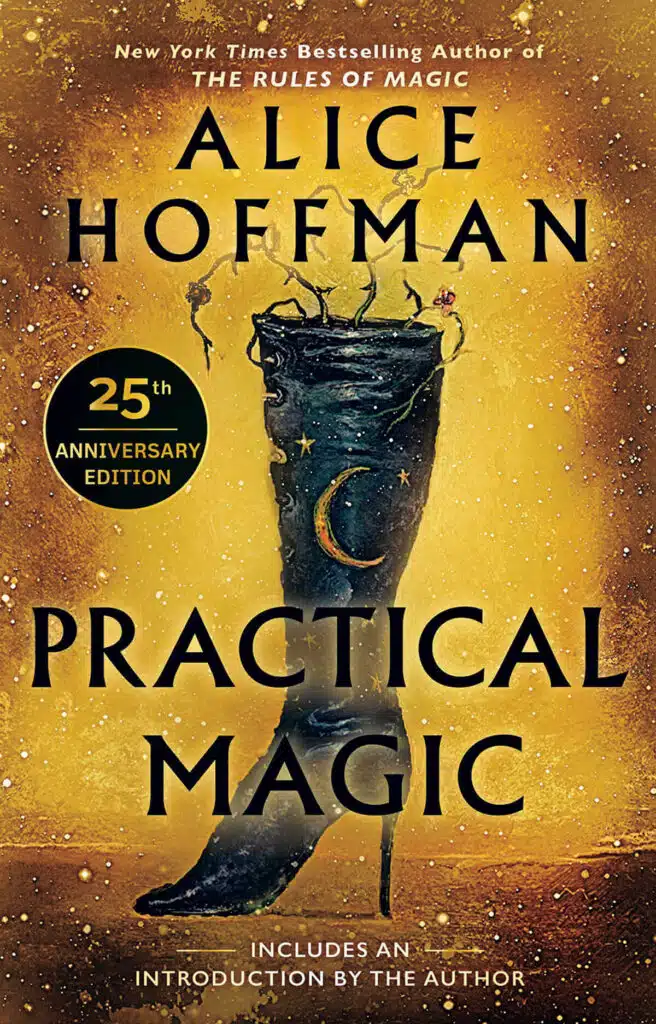
That gives us a nice segue to putting your own work on the screen, which you did 28 years ago with Practical Magic, starring Sandra Bullock, Nicole Kidman, Dianne Wiest, and Stockard Channing. That’s an iconic cast—I was surprised to read that when the movie was first released, it was a flop. Is that true?
It’s true. Practical Magic didn’t do well at all. . . . I think it was very unusual to have a film come out with so many women in it. I mean, it’s more about sisterhood than it is a love story. And so it didn’t do very well at the box office. It didn’t get good reviews from male critics, that’s for sure.
Also, the men in Practical Magic drop like flies; male critics might object. But your women are so complex and interesting and enigmatic. In your introduction to the 25th anniversary edition of Practical Magic, you write that the novel “addresses serious questions about the place of women in our society—questions that are as important, or more so, than they were 25 years ago.” Can you say more about that?
I’m interested in women’s relationships. That’s where Practical Magic came from. And my new book [to be published September 8], The Witches of Cambridge, is all about friendship and what friendship can mean, and how friends can change your life, and how friends can really be your family. I think that’s true for a lot of people, especially now, and especially because people live so far away from their biological families. I’m also interested in what it means to have longtime friends who knew you when you were a child, when you were in school. They know you in some deep way.
It’s also a novel about women’s power and men’s efforts to quash it. What can you tell me about how this new book came to be?
I was getting a master’s at Harvard Divinity School, and our final paper was to write about someone at Harvard we disagreed with. I discovered Increase Mather, who had been the seventh president of Harvard and was Cotton Mather’s father—and boy, did I disagree with him. I found him very interesting, and I found that time period at Harvard very interesting, because even though it was the time of the Salem witch trials, there was a lot of magic on a daily basis going on at Harvard and in people’s daily lives. It was a fascinating time period, and it was interesting to me to see women having power. The Witches of Cambridge takes place in two time periods—the 17th century and the 1950s—and is about a group at Radcliffe in a secret society that’s been around for hundreds of years. Both periods are interesting to look at in terms of what was happening in the lives of women.
So, two eras of hunting witches—the actual witch hunts and Senator Joseph McCarthy’s metaphorical ones. Was that a parallel for you in this novel?
Yes, completely. And [you can] think in terms of what’s happening now, as well. So it’s three interesting time periods to compare women’s lives: now, in the ’50s, and in the 17th century.
Not only do you have a new book in stores, but the movie Practical Magic 2 is out on September 11.
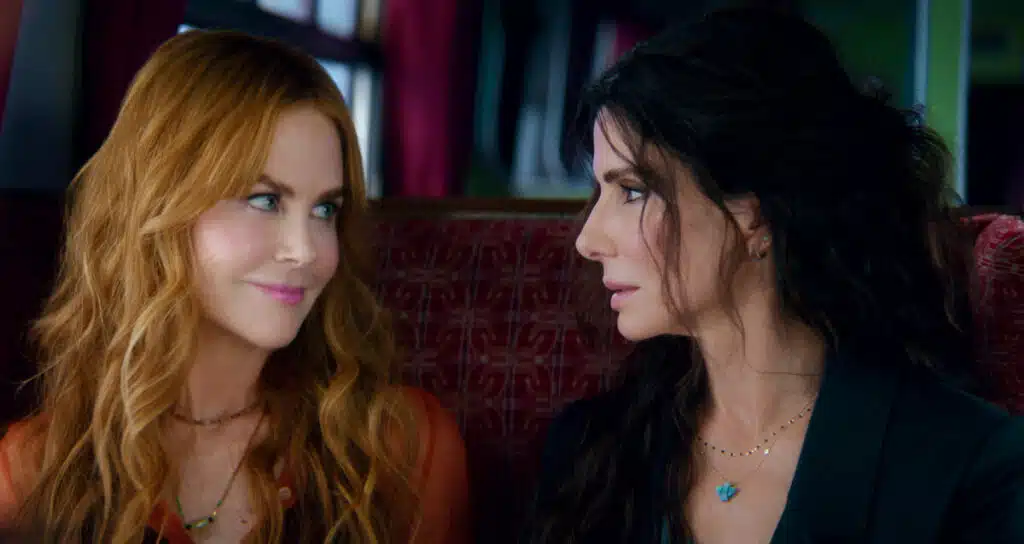
Yes, it’s a sequel based on the last book in the series, The Book of Magic [2021]. The film follows the sisters Sally and Gillian Owens, played again by Sandra Bullock and Nicole Kidman, and Sally’s college-age daughters. They go to England and try to break the curse on women in their family who fall in love.
Credit: Courtesy of Warner Bros. Pictures
What does it feel like to release a book into the wild and to have it come back to you in a new interpretation?
As a novelist you’re creating it all alone, and then it becomes a whole world, and it can be extremely gratifying to see how other people respond to the material and make it their own. And once it’s a film, it belongs to other people. It is still yours, but it changes. I was on set briefly for the first movie and again in England for Practical Magic 2. I can tell you that they really work hard, and it was raining a lot of the time, and it was fun and a great experience seeing hundreds and hundreds of people on the set having their own job to make this story theirs. It is a collective community thing that is the opposite of being alone in my room, working.
Nearly 30 years separate the two films. What does it mean to you to have the sequel come out now?
It’s great that interest in the original film has gotten bigger, not smaller. It has become a cult film that grandmothers and mothers watch with daughters and granddaughters and friends. It’s become a thing that women gather to watch every year, so of course it’s wonderful that this is coming now, to carry that forward.
This feature was originally published as “Conversations: Alice Hoffman” in the September/October 2026 issue of Yankee.