



Up Close: The Hole Story of the Apple Cider Doughnut
Whether tossed in cinnamon sugar, glazed, or (gasp!) plain, New England’s cider doughnuts owe a debt to the biggest of apples. Learn the sweet history of the apple cider doughnut.
By Amy Traverso|Aug 24 2026|

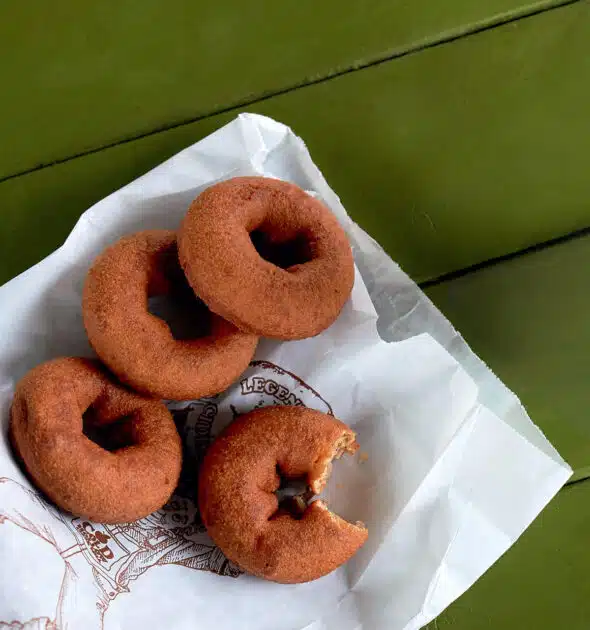
Apple cider donuts from Cold Hollow Cider Mill in Waterbury Center, Vermont.
Credit: Mark FlemingApples are so essentially New England-y that one might assume they’re native to our shores. In fact, domesticated apples originated in the mountains of Central Asia and made their way here on waves of trade and immigration. Likewise, you might expect cider doughnuts to have roots in 18th-century Vermont homestead life or some early New England agrarian festival. Instead, think midcentury Manhattan.
In 1951, as autumn was approaching, The New York Times reported that a Midtown-based enterprise called the Doughnut Corporation of America was debuting the Sweet Cider Doughnut, “a spicy round cake that is expected to have a natural fall appeal.” While serving doughnuts with cider was already a seasonal tradition, especially at Halloween, DCA’s inspired idea was to put the cider straight into the batter, lending a sweet tang to a simple cake doughnut. (Did some anonymous home cook ever add cider to their batter before 1951? Most likely, but in the history of innovation, to the popularizer goes the publicity.)
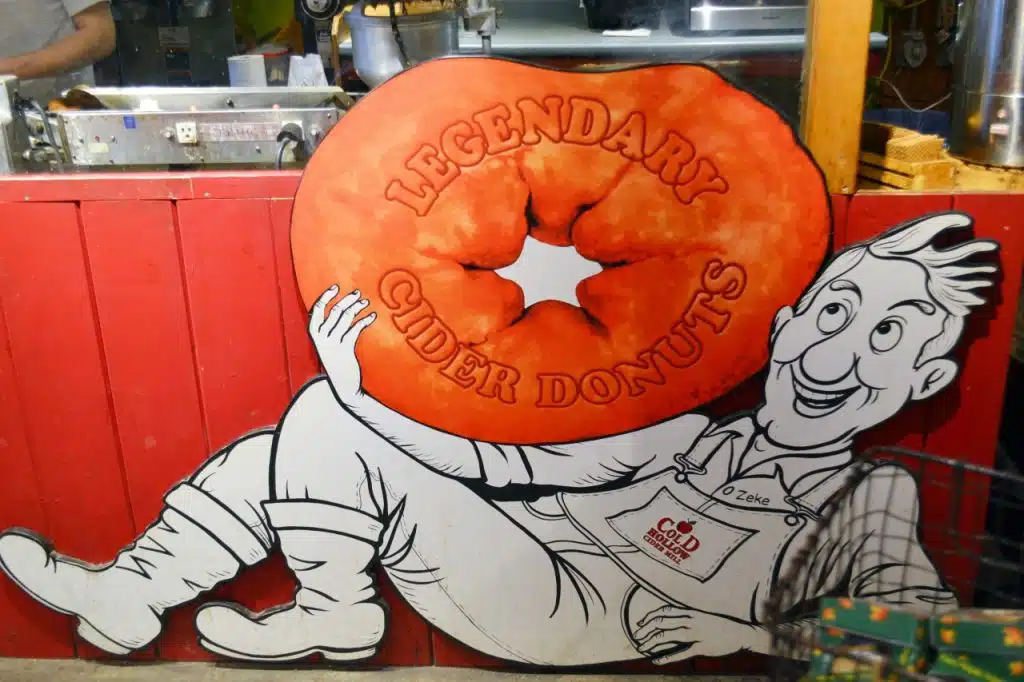
Credit: Aimee Tucker
The cider doughnut became a success that has long outlived DCA itself, and seven decades onward, it’s hard to imagine fall in New England without these toothsome treats. Among the signs of their regional appeal: Just this year, a group of New Hampshire fourth-graders crafted a bill to have the cider doughnut named their state’s official doughnut.
Among New England’s many cider doughnut hubs, Vermont’s Cold Hollow Cider Mill and Massachusetts’s Red Apple Farm (both of which churn out thousands of doughnuts a day during peak season) are two standouts. But they’re all great. And if you hand me a paper bag of still-warm cider doughnuts on a fall day, I’ll not only love them, but I’ll swear they were invented right here.
This feature was originally published as “The Hole Story” in the September/October 2026 issue of Yankee.
You may also like…
Apple Cider Doughnut Muffins Recipe



This article’s mention of DCA brought back an odd memory. In 1983 I got a job interview for a marketing job at DCA in Jessup, Maryland. The person whose job I would be taking interviewed me. He advised me not to take the job. He said America was on a health food kick and he expected the market for the commercial donut mixes and donut making machinery to dry up. I followed his advice, but I think he was wrong. This was before Crispy Creme donuts became a big deal. DCA supplied lots of commercial bakeries, particularly at supermarket chains.
At the time of my interview, DCA owned a flour mill in nearby Ellicott City, formerly Ellicott’s Mills, Maryland – site of the first station of the Baltimore & Ohio Railroad, the first common carrier railroad in America which will be 200 years old in 2027. Tim Garner, Marlborough, MA.