Keeping Time
By rescuing hundreds of thousands of old newspaper images, a Portland archivist has given his city a priceless family album.
By Yankee Magazine|Jan 03 2022|

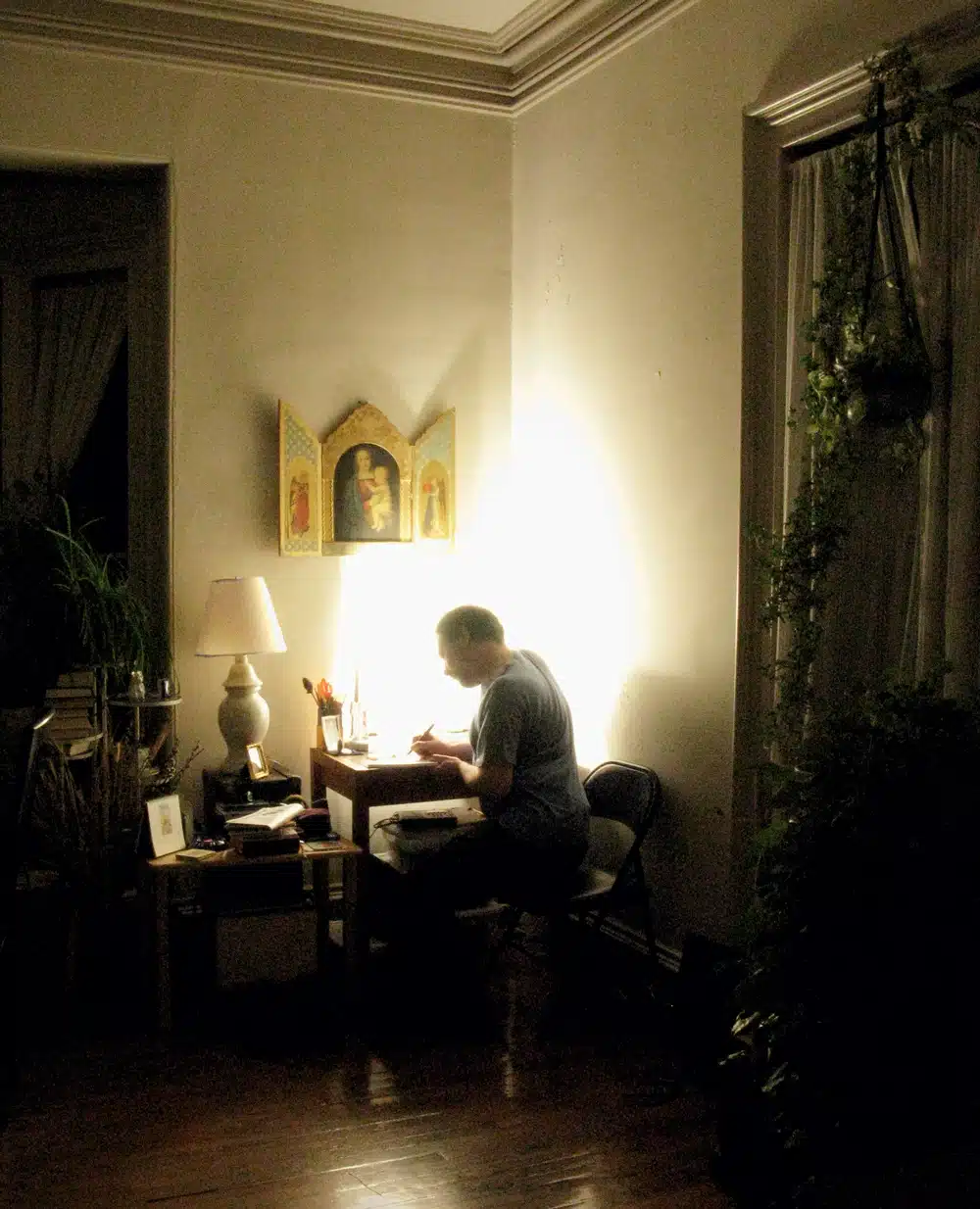
The author at home. In addition to his full-time job as an archivist, he writes essays and studies and teaches philosophy, “believing that each person’s observations are eminently worth recording.”
Credit: ©Abraham A. SchechterBy Abraham A. Schechter
The author at home. In addition to his full-time job as an archivist, he writes essays and studies and teaches philosophy, “believing that each person’s observations are eminently worth recording.”
Credit: ©Abraham A. SchechterCredit: ©Abraham A. Schechter
In late 2009, I seized upon an unusual opportunity that few archivists ever encounter. Maddy Corson, the granddaughter of the Portland Press Herald’s founder, alerted me that the newspaper had again been sold and that the building constructed by her grandfather in 1923 was being gutted. For me, as the Portland Public Library’s archivist, preservation and access to history are of primary importance.
Hurrying downtown by bicycle, I saw large piles, stacked boxes, and bags of unorganized photographic negatives in the Gannett Building’s basement. Being a lifelong photographer, I recognized the mounds of cellulose fragments as camera originals, surely holding a century of regional history.
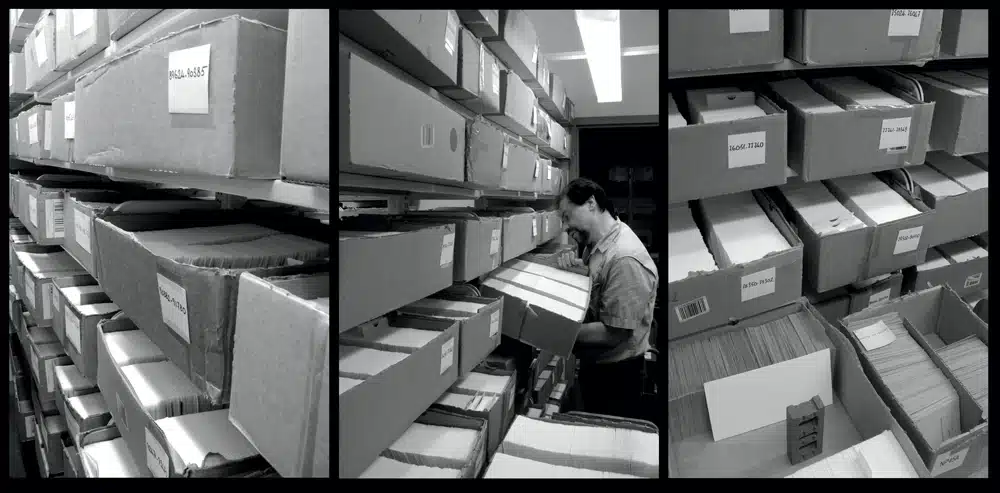
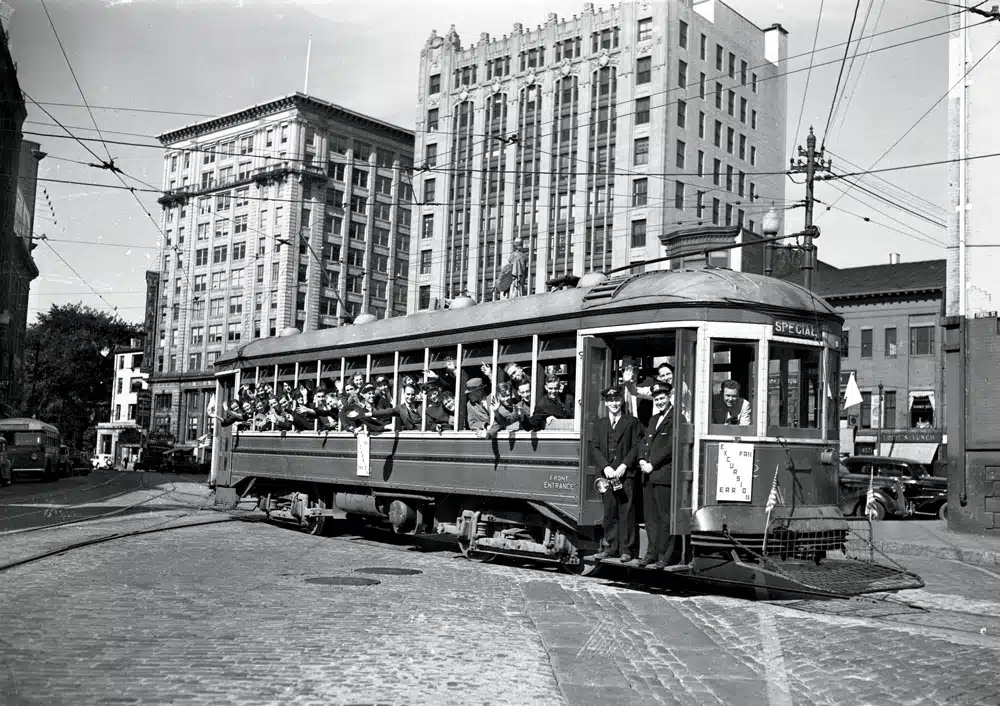
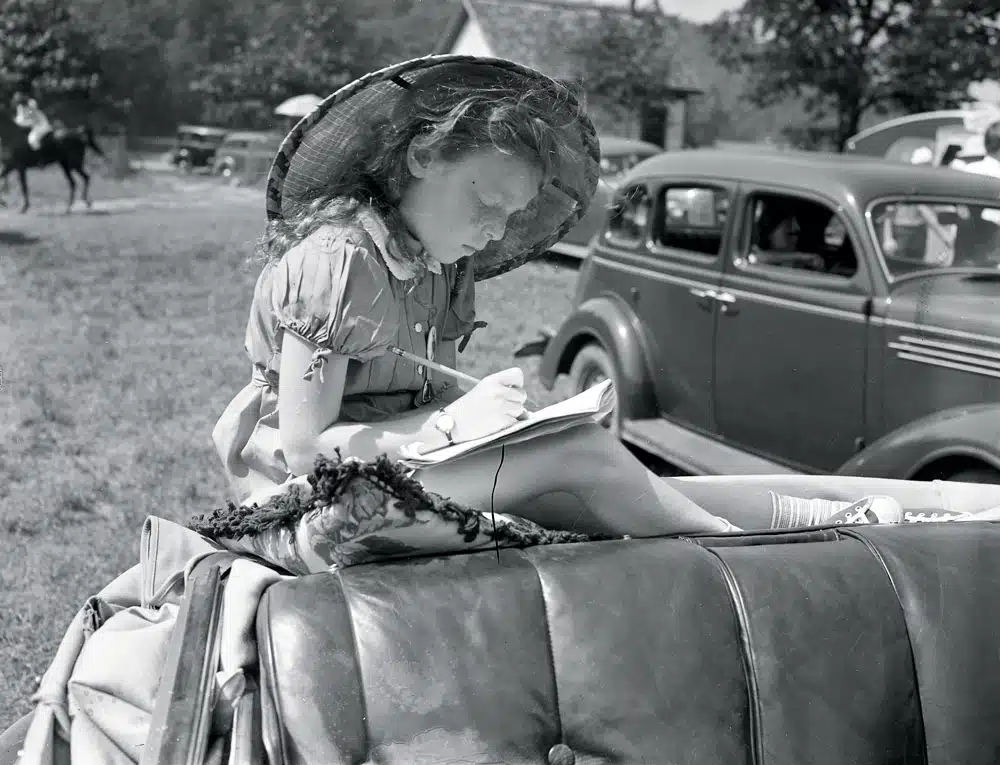
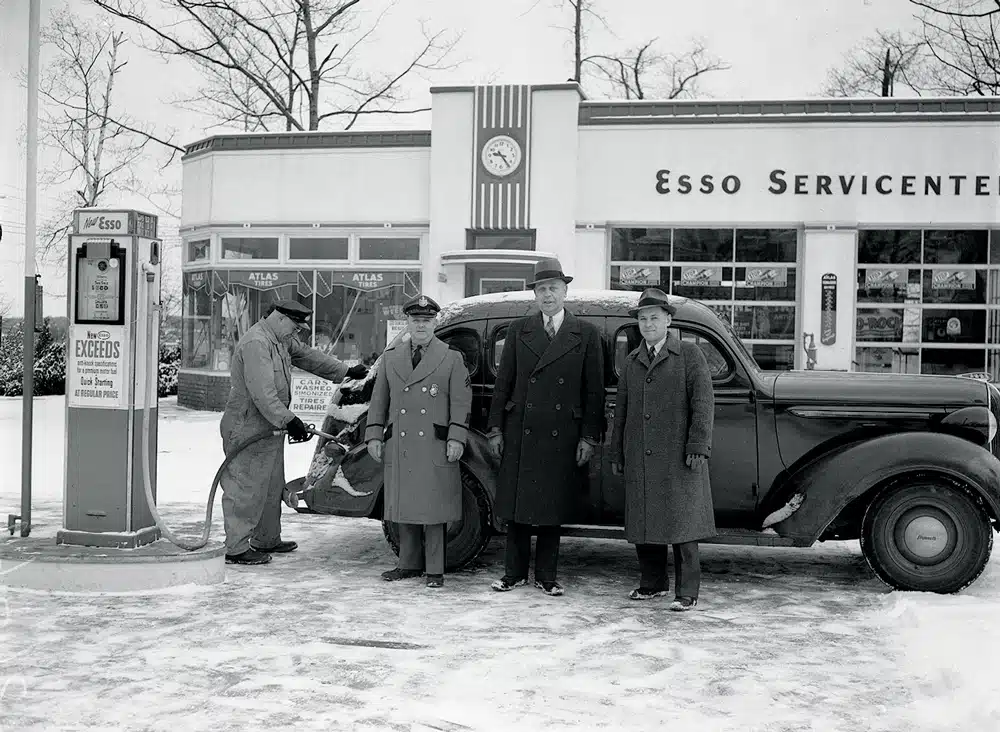
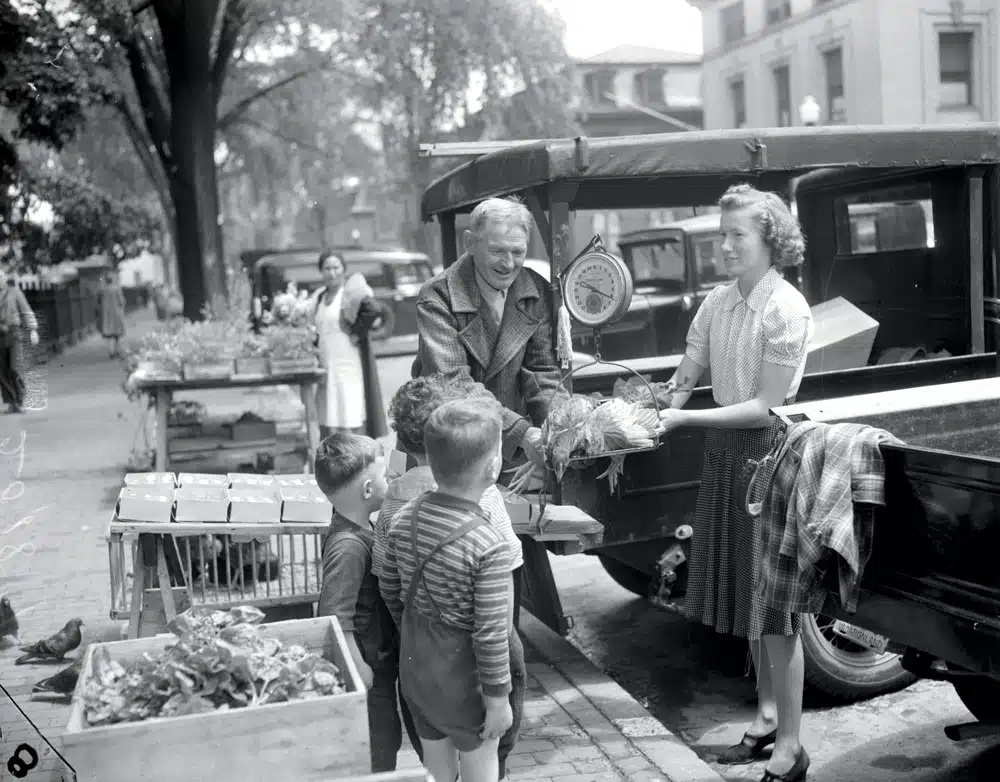
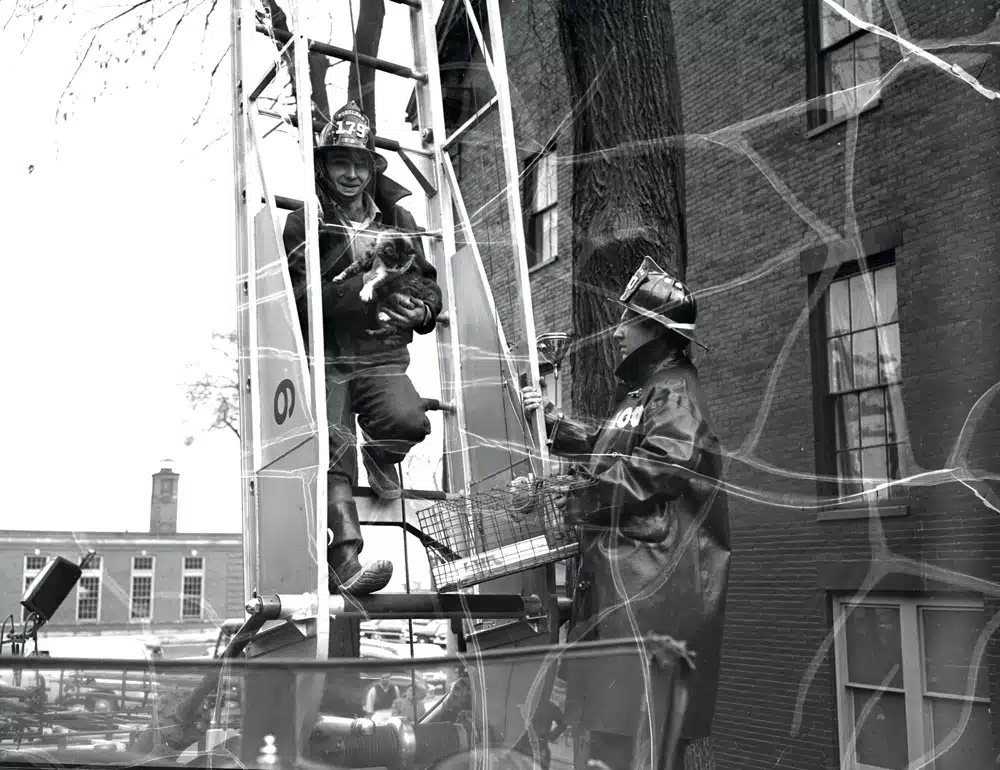
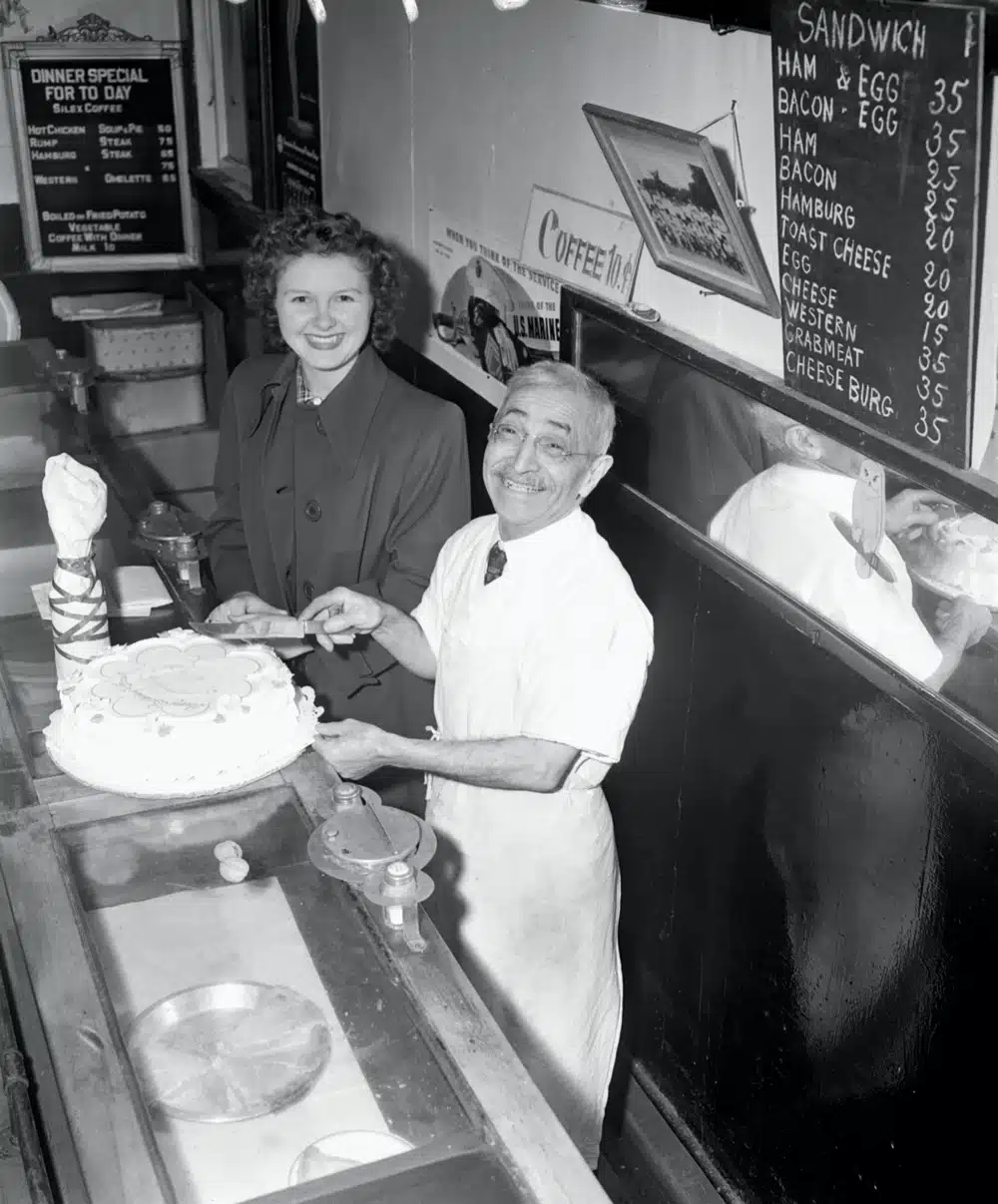
Snapshots from the Portland Room archives at the Portland Public Library only hint at the scope of Schechter’s work—not just acquiring raw material, like the trove of photographic images he’s rescued from the former Portland Press Herald building, but also arranging, describing, preserving, digitizing, and otherwise paving the way to make history available to future generations.
Credit: ©Abraham A. SchechterCredit: ©Abraham A. Schechter
Finding the demolition supervisor, I asked him about the film. He was surprised that I wanted the discarded negatives, even after I told him what they meant. “You want this stuff? Then you gotta take it away this week, or it’s all going to a smelter,” he said, referring to the film’s silver content.
“That’s not going to happen,” I said. “I’ll take it all.”
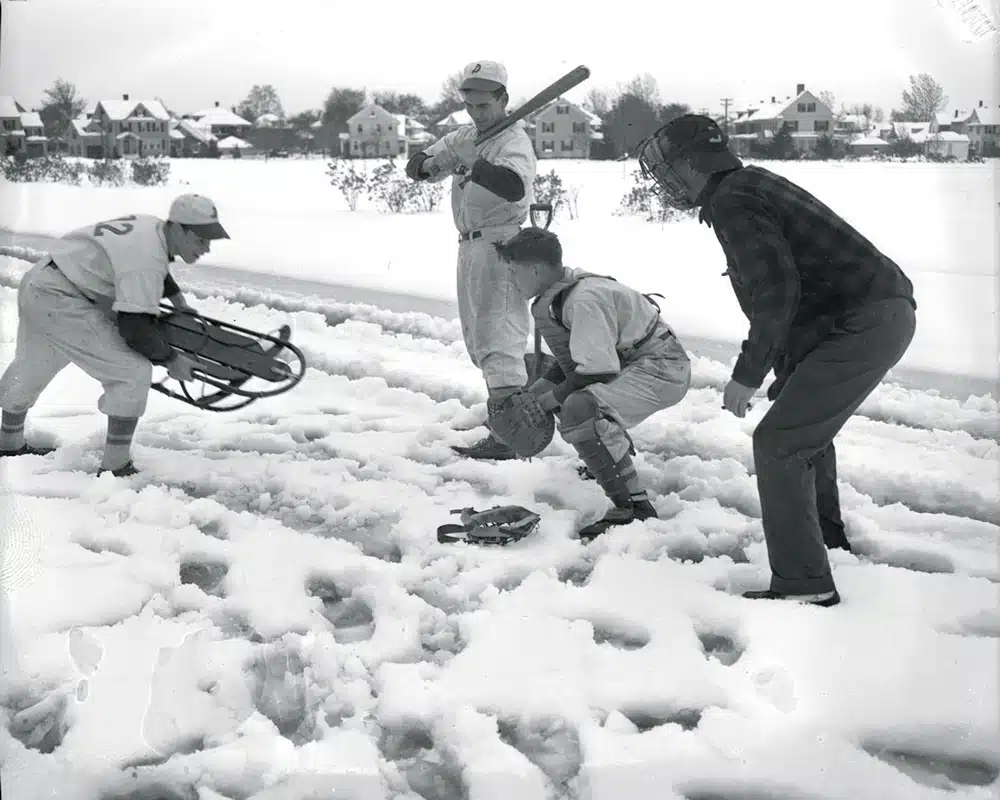
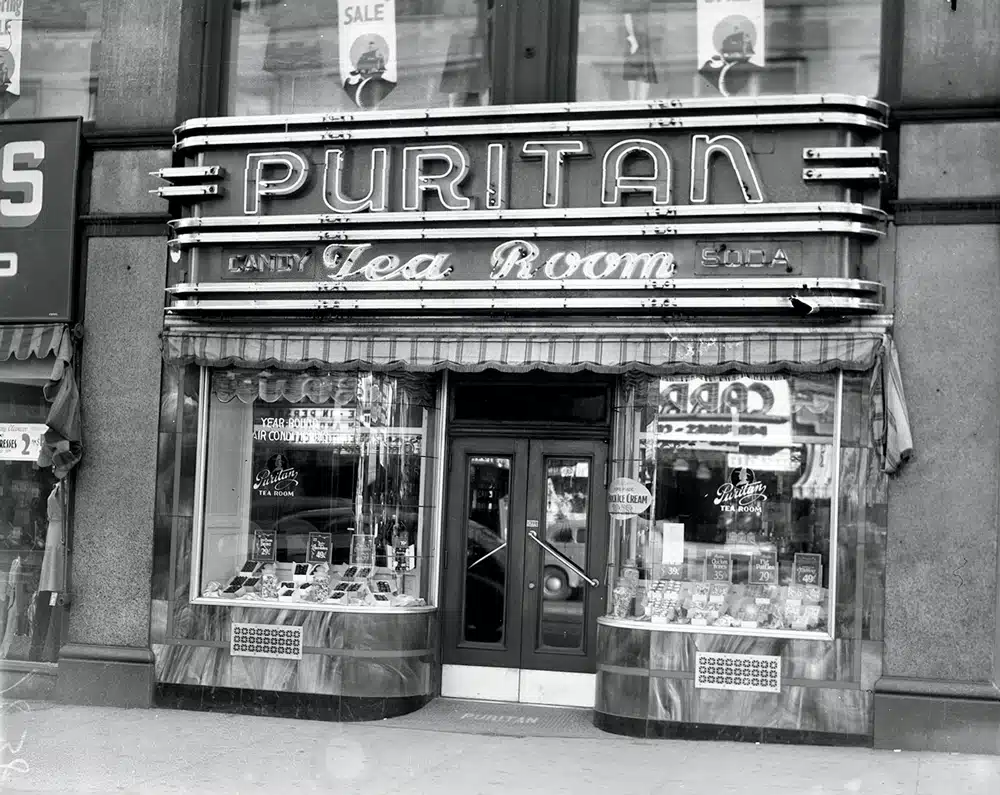
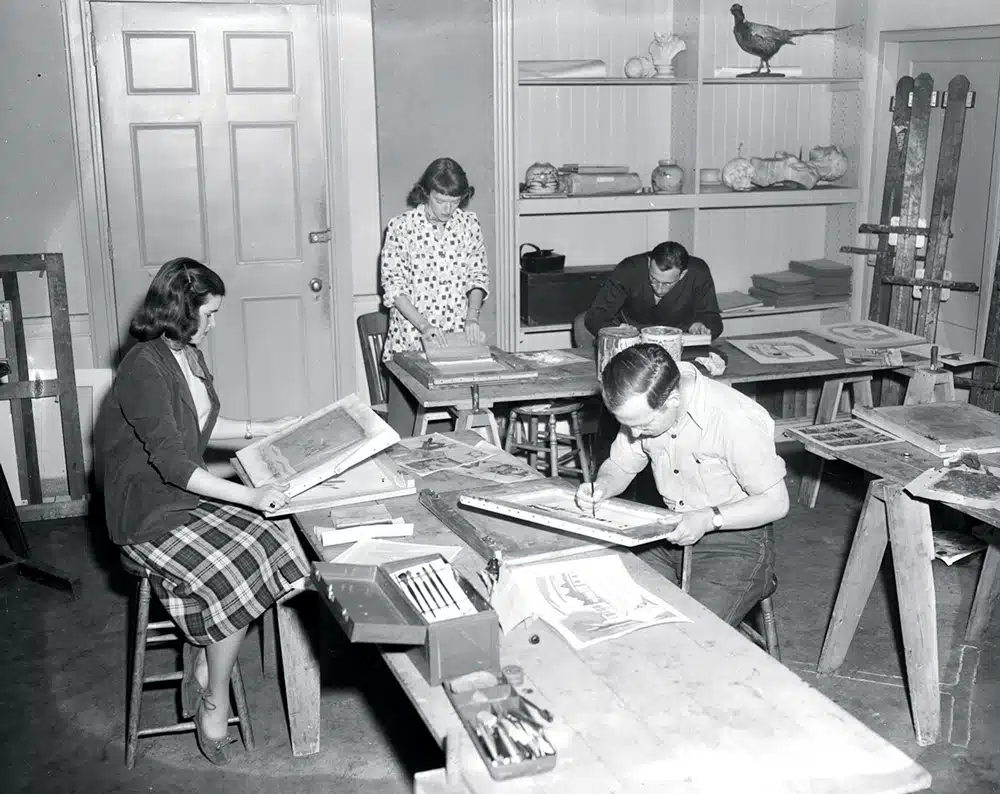
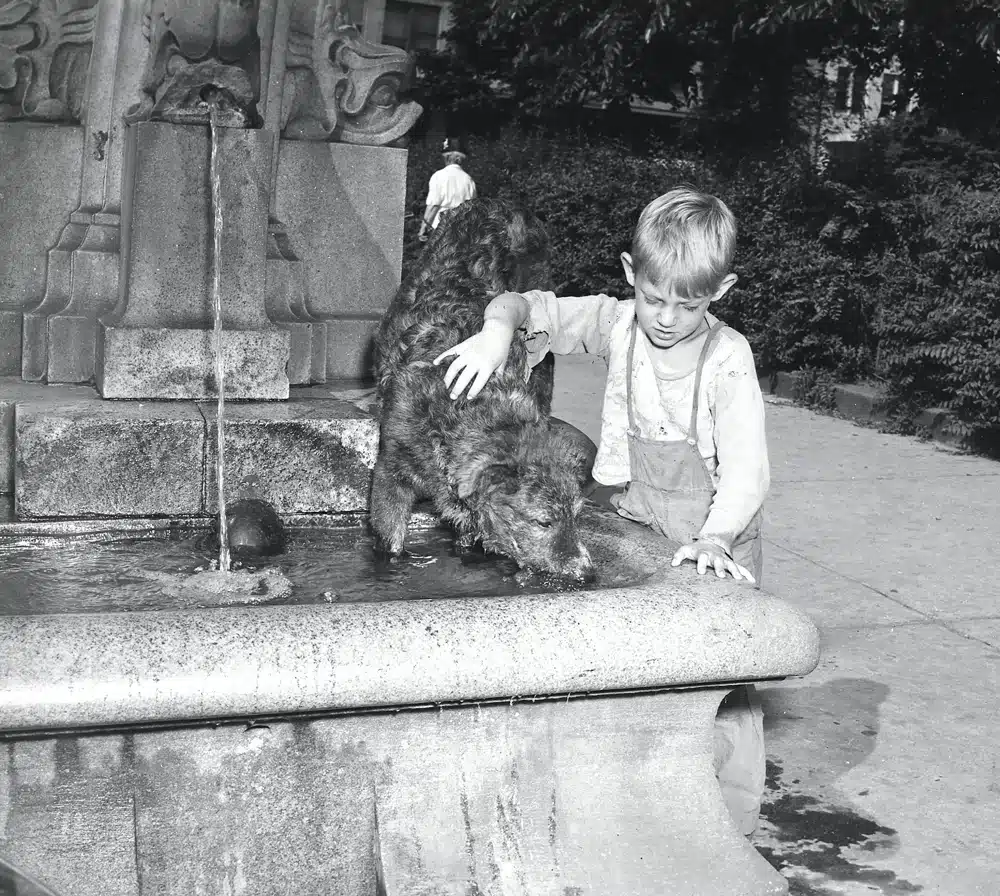
With Maddy’s support, along with the library’s, the film was moved out of the damp basement to a workspace for me to begin the herculean task of salvaging and rescuing what has turned out to be a priceless trove of more than half a million unique photo images, taken between 1936 and 2004.
It took three years to analyze, organize, and arrange all the film; during that first pass, I examined more than a million exposures. Afterward, I began rehousing the images, now protected in alkaline enclosures, at the library. The processes are painstaking, requiring precise locations, names of buildings and people, and dates so that these images—which had been right on the precipice of a smelter!—can be rediscovered by the public.
From the start, I understood there would be years of work ahead, but the urgency of preserving the images was my greater concern. And even while looking at those sorry mountains of scattered negatives, I could visualize the completed work. The archive is still in progress.
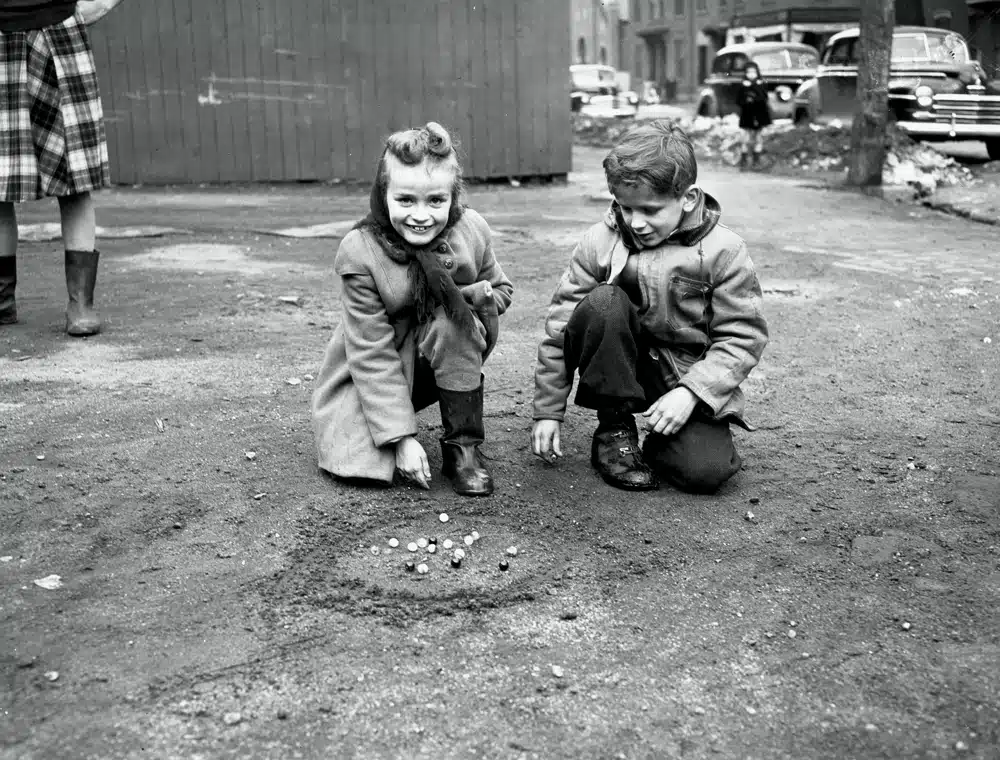
MARCH 1948 (above): For generations of inner-city kids, there’s often been no play space more convenient than an open bit of sidewalk. Here, Joyce Hansen and her brother Tracy play marbles along Portland’s Federal Street.
Credit: Courtesy of Portland Public Library Special Collections & ArchivesCredit: Courtesy of Portland Public Library Special Collections & Archives
The unexpected joy in this stewardship is how the project took on a community aspect. My volunteer assistants have been senior citizens with a flair for history and memory. They remember many of the subjects in the photos, and our work together has been as satisfying as it has been productive. We’ve used a space in the library’s Portland Room, and passers-by have watched the project take shape. They ask questions, and the years of banter have forged a fellowship of appreciation for valuing local history. Everyone has stories, and I listen.
When the pandemic forced quarantining, my work on thousands of image scans I’d made from the negatives moved to my dining table. There, I began building digital archives. Digitization and accuracy is demanding; each image has information to be respected.
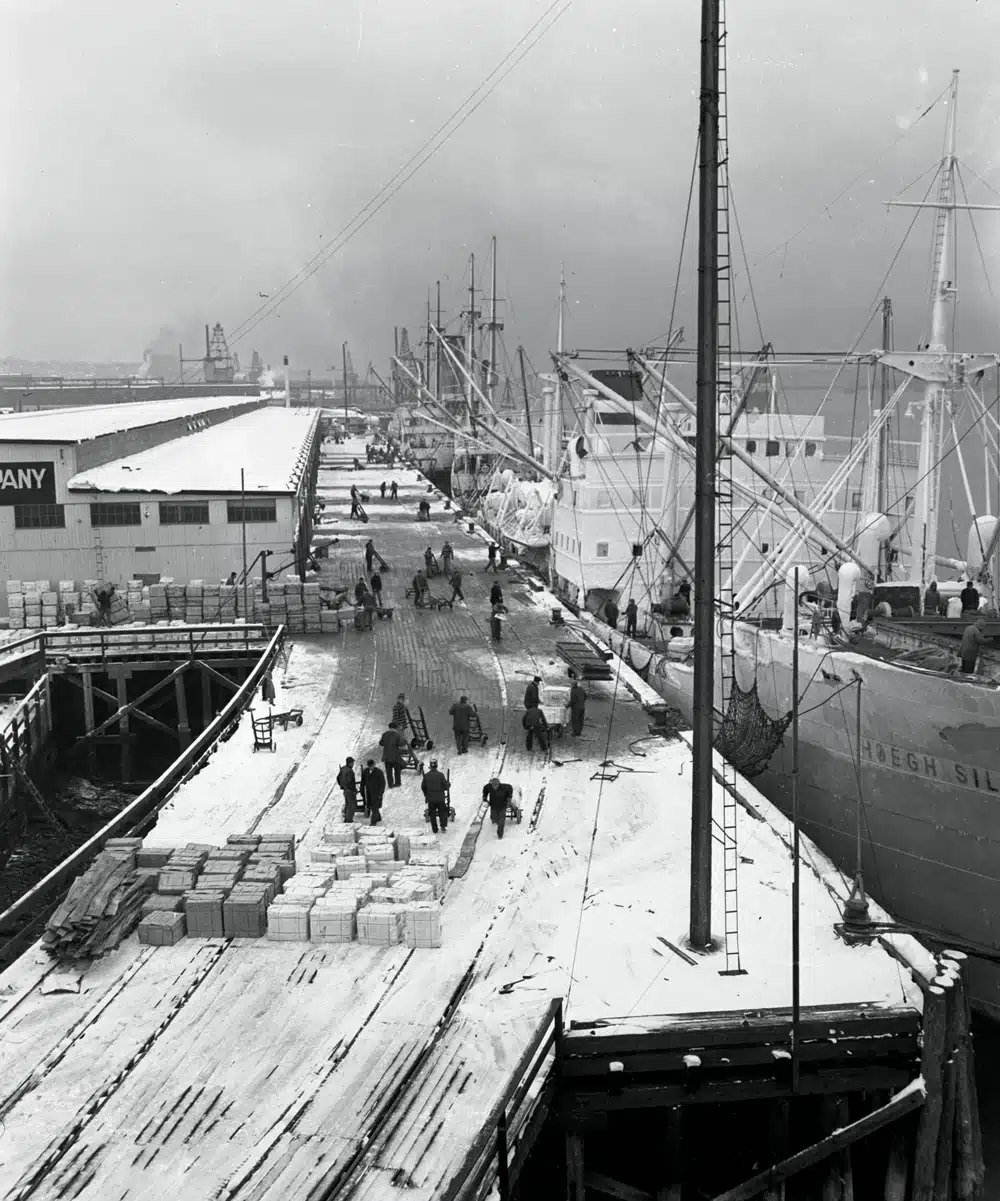
JANUARY 1950: A snowy but bustling Portland Terminal Company pier reflects how the rebound of commercial shipping in the postwar years generated employment here for some 350 longshoremen.
Credit: Courtesy of Portland Public Library Special Collections & Archives