W. E. B. Du Bois | New England’s Gifts
Would there have been a Malcolm X or a Rev. Dr. Martin Luther King Jr. without W. E. B. Du Bois? Most likely, but the civil-rights world they led and shaped would undoubtedly have looked much different. Born in Great Barrington, Massachusetts, in 1868, at the dawn of Reconstruction, Du Bois died in 1963, during […]
By Ian Aldrich|Oct 30 2015|

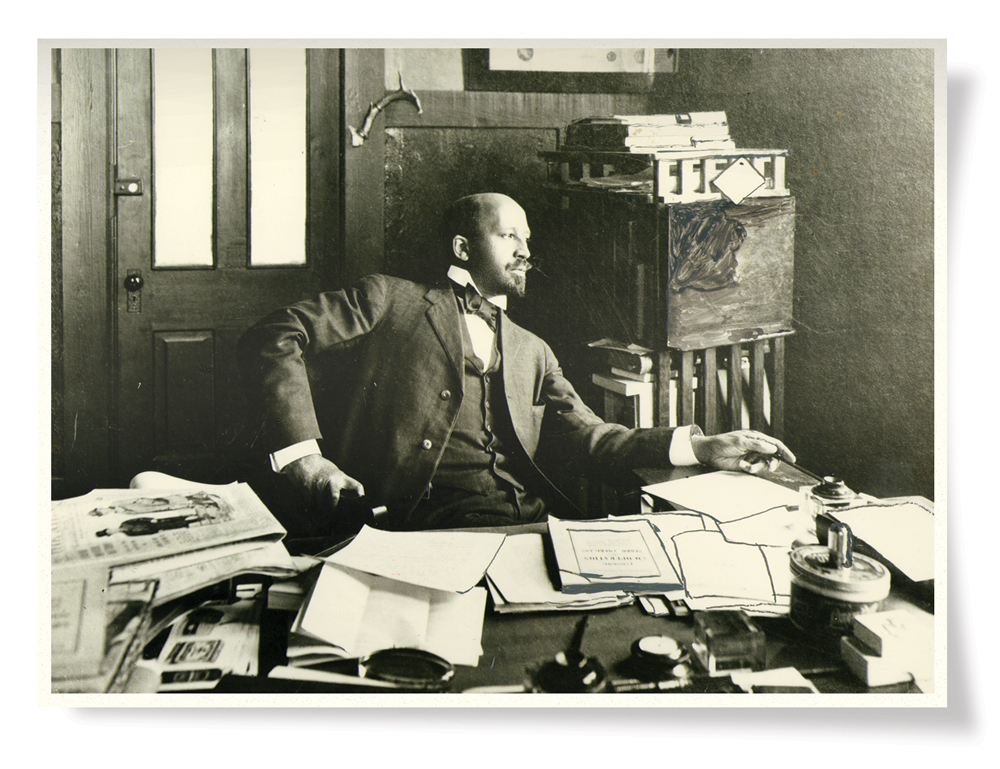
W. E. B. Du Bois: “There is in this world no such force as the force of a person determined to rise. The human soul cannot be permanently chained.”
Credit: University of Massachusetts Amherst
Credit: University of Massachusetts Amherst
Would there have been a Malcolm X or a Rev. Dr. Martin Luther King Jr. without W. E. B. Du Bois? Most likely, but the civil-rights world they led and shaped would undoubtedly have looked much different. Born in Great Barrington, Massachusetts, in 1868, at the dawn of Reconstruction, Du Bois died in 1963, during the throes of the new Civil Rights era. In between he redefined the image of the African American man.
Scholar, journalist, agitator, and leader—Du Bois was all those things. His was a life of contrasts and controversy: life in a segregated America determined to hold on to 19th-century ideals; friction with other black leaders, most notably Booker T. Washington.
Du Bois confronted and charged ahead. He didn’t feel the need to earn respect from whites, as Washington urged, but instead demanded it. “To be a poor man is hard,” he once said. “But to be a poor race in a land of dollars is the very bottom of hardships.”
Firsts defined him: first African American to receive a Ph.D. (in history) from Harvard University; first to a write a case study of an African American community in the United States; co-founder of the National Association for the Advancement of Colored People (NAACP). He authored 17 books; crowds poured out for his speeches. Betterment of himself, of other African Americans, and of his country became Du Bois’s life calling. He opened doors for black Americans born in the 19th century and paved the way for the new generation of leaders and movements that followed in the next. Dr. King once said of him, “His singular greatness lay in his quest for truth about his own people … The degree to which he succeeded disclosed the great dimensions of the man.”