Conversations | Aquinnah Wampanoag Writer Joseph Lee
Aquinnah Wampanoag writer Joseph Lee explores the complexities of Indigenous identity, displacement, and resilience on Martha’s Vineyard and beyond.
By Joe Keohane|Feb 23 2026|


Joseph Lee’s story is a quintessentially American story in that it stubbornly defies any easy definition of what a quintessentially American story even is.
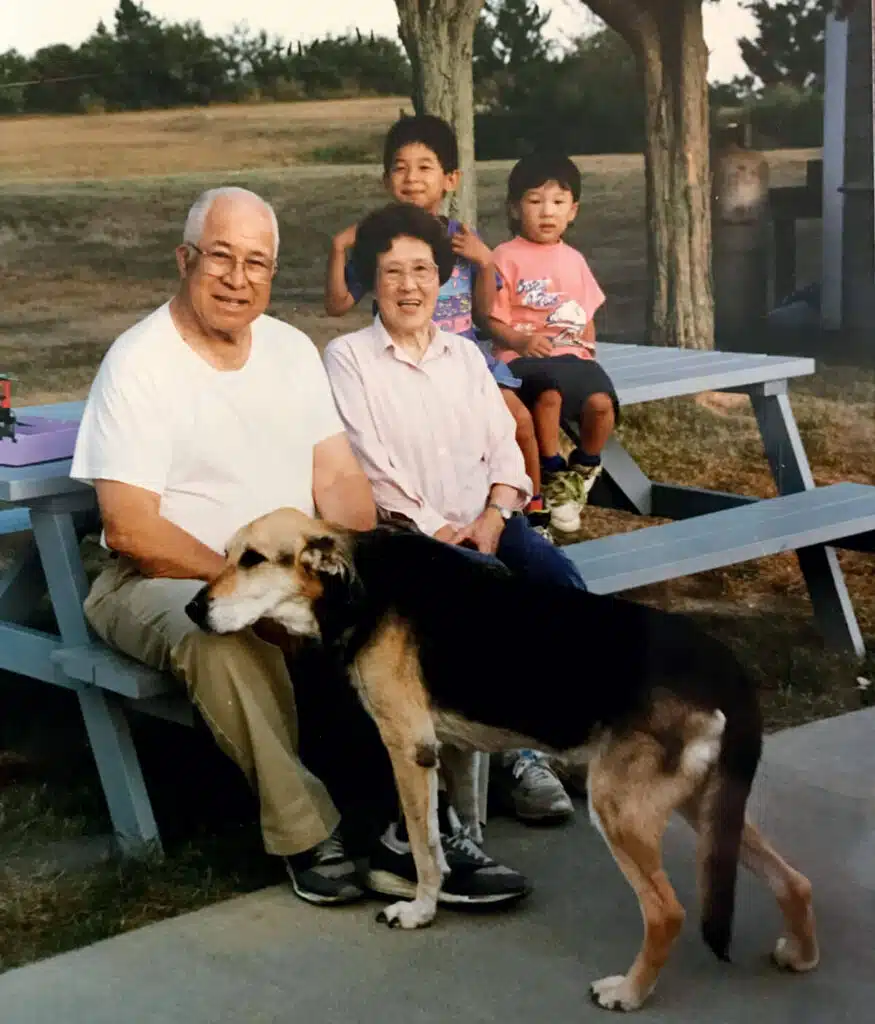
He grew up in Newton, Massachusetts, the son of a civil engineer and a preschool teacher. His paternal grandparents were Chinese. His maternal grandmother was Japanese, and his grandfather was Wampanoag with a mixed background.
As a boy, Lee would spend his summers on Martha’s Vineyard up-island with the Aquinnah Wampanoag, a people who have lived on the island for some 10,000 years, unbeknownst to the average tourist. “Many people don’t fully understand that there are Indigenous people in this country,” Lee says, “and they certainly don’t think of them in the Northeast, and then they definitely don’t think of them in a place like Martha’s Vineyard.”
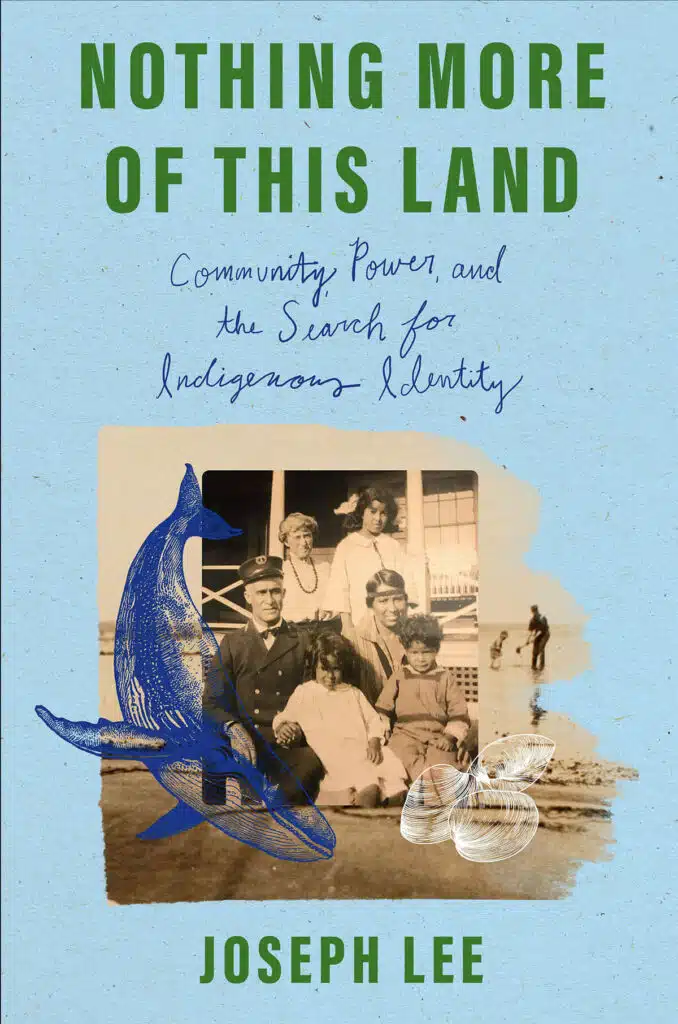
Lee’s experience of visiting Aquinnah every summer—staying with his grandparents, attending tribal summer camp—planted the seeds of a complicated but no less profound connection with his Wampanoag heritage, which he grapples with in his book Nothing More of This Land: Community, Power, and the Search for Indigenous Identity, published last summer.
A mix of memoir and reporting, the book covers Lee’s formative summers with the tribe, his drift away from that part of his heritage, and finally his efforts to forge “a more progressive, inclusive understanding of what it means to be Indigenous.”
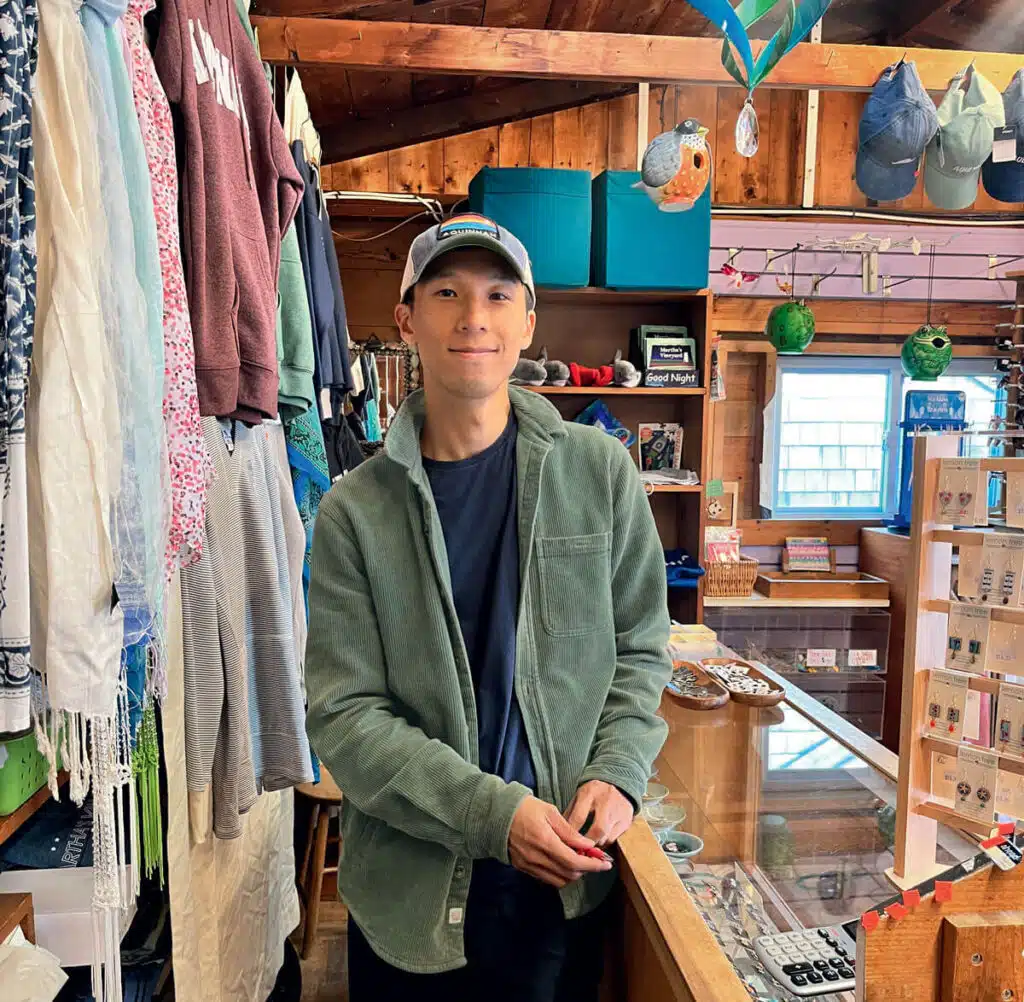
He spoke with us from his home in New York City, where he works as a freelance writer and journalist.
Credit: Courtesy of Joseph Lee
In Conversation With Aquinnah Wampanoag Writer Joseph Lee
You grew up in the suburbs of Boston, but you always went to Martha’s Vineyard in the summer when you were young. What do you remember from those days?
My earliest memories on the Vineyard would be going down there and visiting my grandparents’ house in Aquinnah. They had this old house with all these old books and artifacts, and the house had an interesting layout, with a sort of semi-hidden staircase—it was one of those houses where, as a kid, you can really lean into your imagination. But it was also summer, so I remember spending time running around with my brother and tribal cousins, going to the beach, getting ice cream cones, hanging out, playing outside….
It sounds pretty idyllic.
In many ways, it was perfect.
Going to tribal summer camp on the Vineyard, which ended up being a formative experience for you—what did that look like?
Some of it was like a normal American summer camp: We’d do arts and crafts, go play tag outside, eat some popsicles. But there would be days where we would spend a little more time learning the Wampanoag language, or we’d do something more tribally themed. We’d go walk in the woods and learn about some of the plants. We’d make moccasins.
What was it like to connect with your Wampanoag heritage, as a kid from the city suburbs?
It was mixed. On the one hand, I really valued it, because I knew it was special, and I knew it was something important and unique, and I wanted to learn more. I wanted to care about it. On the other hand, we were kids. We just wanted to go outside and play. It’s summer. I don’t want to be in school learning the language.
You write, too, about staging a big tribal show every summer for a non-Wampanoag audience.
We’d all dress up in traditional regalia and act out what we call “The Legends of Moshup.” It’s the stories of our ancient legendary leader, Moshup. He was a giant, and he led us to Martha’s Vineyard, created the island for us, and created all these various landmarks on the island.
When I was really young, it was just one of those things that we did. But as I got older, I started to think about it. Like, Wait a minute, is it weird performing this thing for outsiders? What is the message that we’re telling these people? I began to wonder if it was confirming some stereotypes for people in the audience, because we were dressed up in the traditional outfits, we were talking about historical events. Were we drawing enough of the line [between the past and present] to understand that this is a modern tribe, we’re still here, we’ve evolved?
Credit: Courtesy of Joseph Lee
One thing you grapple with in the book is reconciling your Wampanoag heritage with the various other strands of your ancestry. Talk to me a bit about your family’s history.
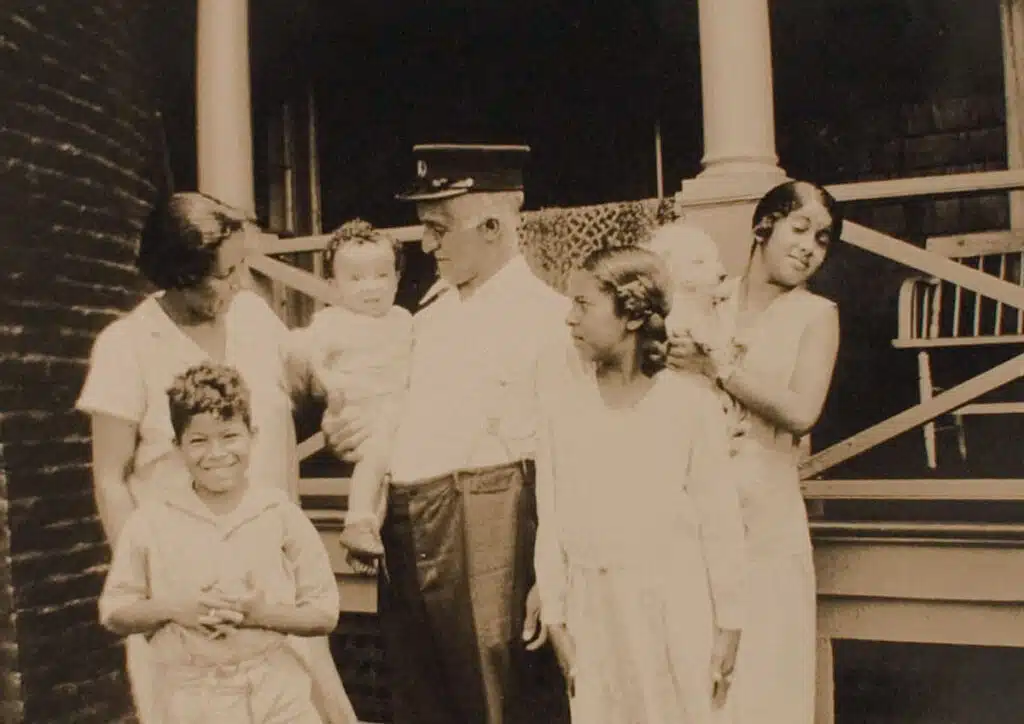
The tribe has been on the island for over 10,000 years—well before written records. We can trace the family tree back through the generations. But what really interested me is that I had always assumed—and this is where even I fall victim to stereotype—that being Indigenous through history means you stayed in one place. I thought my family must’ve always stayed here. Which of course makes no sense. People move around, and especially on an island. They’re seafaring people. My mother was born in Japan, but grew up on and around Martha’s Vineyard, and was always coming and going. My grandfather was born in Aquinnah, but then left and sailed around the world. His father was a lighthouse keeper, famously in what was then Gay Head.
He was the first Wampanoag lighthouse keeper on the island.
Right. But before that, he worked at other lighthouses, because that’s where the work was. So he left. Going back through the family tree, there were always people leaving Martha’s Vineyard, but then always coming back, or always maintaining a connection. That was really important for me to learn, as I tried to figure out my relationship with this place, and how can I navigate being attached and being connected without living there.
There was a great deal of mixing in your family, too. Your father’s family is Chinese. Your mother had a Japanese mother and a Wampanoag father with a mixed background.
That’s another really interesting part. I had told myself really simple versions of colonial stories in which we were here, and then some white people came from Europe, and then it was bad. But it’s a lot more complicated than that. My mom’s last name, and my middle name, is Vanderhoop, which is a really big family in the tribe today. I thought that name probably dated back to 1620 or something like that, but it was from the 1800s. My great-great-great-grandfather William Vanderhoop was a mixed-heritage person coming from the Dutch colony of Suriname, who ended up meeting a Wampanoag woman in New Bedford, and they came back to Martha’s Vineyard. There are all these kinds of twists and turns and interesting wrinkles in the history that I think really complicate the way we think about Indigenous identity and tradition and ancestry.
Credit: Courtesy of Joseph Lee
That sort of diversity is part of the reason you reject a “blood quantum”—the idea that someone needs to be a certain percentage of Indigenous ancestry to be considered part of a tribe. Instead, you argue that the most important thing is choosing to engage with that part of your heritage, and the way in which you engage. But is there a point where someone has so little Wampanoag blood that they’re seen as insufficiently Indigenous?
It’s not to say that anybody could just choose to be Wampanoag. You have to have some sort of family connection. But then it’s up to you how much of that is going to be a part of your life. For our tribe, there’s no blood quantum at all. It’s just a lineal descent. And what’s interesting about that is, we don’t really know for sure how much Wampanoag blood that people even had back through the generations. They could have been intermarrying, mixing. We don’t really know. And I think that’s one of the reasons I’m skeptical of those sorts of pseudoscientific ways of understanding identity.
It’s the same way that I think about Indigenous culture. There’s always this returning-to-tradition, going-back-to-the-past thing. But what tradition are we talking about? If we’re talking about Wampanoag tradition 400 years ago, it’s going to be different from Wampanoag tradition of 500 years ago. It’s a constant evolution.
In the book, your family’s history, your history, and the tribe’s history all come together in the form of your family’s shop, Hatmarcha Gifts, on the cliffs of Aquinnah. You worked there as a teenager, and, similar to the performances at tribal summer camp, you were putting yourself out there, answering questions from customers about the Wampanoag people. Outside the store, it wouldn’t have occurred to people to ask you why you weren’t “dressed” like a Wampanoag. But in that place, behind that counter, you became an exotic.
Yeah, and what’s ironic about it is that in many cases, I’m the one bringing it to their attention. They’re coming in, they’re just trying to buy a T-shirt on Martha’s Vineyard, or a mug or a hat or something, and I’m there telling them, well, hey, you are on Wampanoag land, and all these shops are owned by Wampanoag families.
And then that’s what sparks these weird questions…. People would just straight-up ask, “Aren’t all the Indians dead?” “What are you still doing here?” “You don’t look really Indian.” “Do you live in a real house?” “Why are you wearing those clothes?” One really specific one that I always laugh about is somebody asked, “Do you use iPhones?”
Do you chalk any of that up to naivete, or curiosity, from people who have had no exposure to this culture whatsoever?
I would say with the majority of people, it’s coming from a place of earnestness. They are genuinely interested and they want to learn more, but they lack the tools and the vocabulary to ask better questions. And of course there are people who are less well intentioned, but for the most part, people aren’t trying to be offensive.
How would you describe the Wampanoag people’s relationship to the Vineyard’s tourism industry?
It’s really, really complicated. For Wampanoag people, tourism-adjacent industries are one of the main ways to make a living, whether it’s having a store up at the cliffs, working down-island in a restaurant, renting your home, working in landscaping, working on a charter fishing boat—all of these things are connected to this massive tourism machine. But on the other hand, it is an unceasing invasion every summer, and it’s driving up the cost of living. It’s making it increasingly difficult for Wampanoag people to stay on Martha’s Vineyard.
Talk a bit about your personal journey as you explored your Wampanoag identity. You engaged with that part of yourself as a kid, and then, as you got older, it started to fade.
As we talked about, I grew up spending a lot of time on the island in the summer. But as I got older, in high school, I was on sports teams, so I would spend only part of the summer, and go back for soccer preseason. Then I started getting jobs and internships, and eventually went off to college in New York.
It was this big part of my life—and then it was slowly getting less and less. Which isn’t to say I wanted it to be less. There was more stuff in my life that left less space and time to be on the island and have that tribal connection. There are times where I wondered, Is it going to slowly decrease unless I make the decision to move back there?
What inspired you to reengage?
After college, I went to grad school for creative writing. I did an MFA degree, and I started writing about the tribe and my experiences in the tribe. I think that was my way of trying to tackle these questions I had about what it means to be Wampanoag, and how our community works. I was really trying to unpack that, but it was also my way of figuring out a way for me to have the life I had in New York, while still remaining connected to the island.
It’s an interesting point, because there is the idea that tribal membership is inextricably linked to the land. It wasn’t really an option for you to move to the island, but it did sort of force you to come up with a more complex connection with your Wampanoag identity.
Indigenous identity is inextricably linked to the land, but that’s not the only part of it. Writing about that allowed me to develop other ways of connecting.
It was about finding deeper things to think about beyond my own lived experience. I started trying to learn more about the island. By this point, my grandparents had passed away, and I asked my mom about them. I’d try to dig up old records, I would read old newspaper clippings online, watch old videos, and try to learn as much as I could. That led me on this path to becoming a writer and becoming a journalist.
And then from there I developed so many more questions of things I wanted to learn, things I was trying to figure out. Suddenly I’m talking to native people, Indigenous people from other tribes, from all across the country, and realizing that a lot of the questions that I have, these other people have too. And a lot of our issues are shared issues. That really broadened my understanding of, OK, the thing that I want to do, which is engage with the tribe and try to understand the tribe, I can do in a way that’s not just being there and going to summer camp.
What’s the state of the Aquinnah Wampanoag today?
Right now, we have over 1,000 members in the tribe, but most of those do not live on Martha’s Vineyard. And even of the ones that live on the island, a lot of them don’t live in Aquinnah anymore. So we’re a dispersed people. What does it mean to be such a dispersed community? “Diaspora” is not a word that tends to get used often with Indigenous communities, but I think it should.
The state of Martha’s Vineyard is another challenge. There’s a housing crisis on the island for everybody, but I would say it’s especially acute for Wampanoag folks. You can track the Wampanoag land holdings there, and they get less and less every year.
And even if a Wampanoag family owns land, they still have to pay the taxes.
Sometimes people make this mistake. It’s like, “Oh, Indians get all these free benefits. They don’t pay taxes.” We’re definitely paying taxes, and feeling it every year. It just becomes really, really hard to hold on to land. And it’s also hard to just live on the island. Opportunity is limited. Housing is limited. People leave for education. There’s no college on Martha’s Vineyard. All of these things contribute to Wampanoag folks not living on the island.
What are some good things happening right now with the tribe?
There’s a lot of exciting stuff happening. There’s a lot of hope and optimism. There are new projects happening all the time in education, in our language revitalization. We have the Cultural Center, which is our museum in Aquinnah, but it’s also a cultural hub, and they’ve been doing these culture nights on Fridays.
What do you want visitors to Martha’s Vineyard, and New Englanders in general, to take from your book and from the broader history of the tribe?
At a basic level, I would really like for people to know that the Wampanoag people still exist. We’re still here. We’re real. We’re still fighting for our land, and our rights to protect who we are as a community.
Beyond that, I think it would be nice for people to engage more with the tribe, and listen to the tribe, and think about the ways they could support the tribe. In a place like Massachusetts, there is a lot of interest in wanting to do the right thing—Colonialism is bad; we want to honor the tribe. But people need to push past that and think in terms of specifics and think practically. And I think a lot of that is asking those questions, learning, and coming more prepared to the conversation.
Maybe it starts with people realizing that you guys have iPhones.
Wouldn’t that be nice? [Laughs.] I mean, somebody could give us a bunch of iPhones. We’re not opposed to different forms of reparations—whether it’s an iPhone, or a little bit of land back.
This feature was originally published as “Conversations | Joseph Lee” in the March/April 2026 issue of Yankee.
NewEngland.com is a participant in the Amazon Services LLC Associates Program, an affiliate advertising program designed to provide a means for sites to earn advertising fees by advertising and linking to Amazon.com and affiliated websites.