Citizen Cider | The Making of Burlington, Vermont’s Popular Hard Cider
Yankee senior food editor (and resident apple expert) Amy Traverso chats with Justin Heilenbach, cofounder of Vermont’s homegrown hit, Citizen Cider.
By Amy Traverso|Apr 02 2018|


Citizen Cider’s flagship vintage, Unified Press.
Credit: Courtesy of Citizen CiderCitizen Cider’s flagship vintage, Unified Press.
Credit: Courtesy of Citizen CiderCredit: Courtesy of Citizen Cider
Having lived on both coasts, I’d argue that while good apples and good cider are produced all over the country, there’s something truly special about New England apples. Do you agree?
Absolutely! I would even go so far as to say that our West Coast competitors and colleagues would agree. They recognize a couple of things. First, the apple industry out [west] is young, but the history and culture around orcharding in New England is as old as New England. People here have many generations of oral history within their families around cider. It’s part of why people are drawn to the craft cider movement. Like a lot of things in food and beverage, people are trying to connect with history by consuming something. That really underpins craft cider. We also see this culture in the Upper Midwest, the Mid-Atlantic, and New York, but the first American apple trees were planted here. Secondly, in New England, there’s a large commercial apple crop of varieties not grown anywhere else. There’s a terroir, because apple varieties grown here won’t taste the same if they’re grown in the Middle Atlantic states. We see these distinctions in our cider. The West Coast guys are super-jealous of that, in a healthy way. They have a much bigger crop, a huge crop, but it’s more homogenized. It tends to be early apples, which all have less character, and they have a shorter shelf life. Plus, you need cold nights to get really good ripened fruit. They have that in the Columbia River Gorge, but the majority of that crop is super-commercial. They grow Red Delicious, Yellow Delicious, Honeycrisp, Fuji. I have year-round access to apples that have a real place in cider, like Ida Red, Monroe, Rome, Northern Spy, Rhode Island Greening. I can buy them in abundance.I see more American cider makers working with traditional British and French apples that are too bitter or acidic to eat but lend structure and tannins to cider, making them more complex and winelike. Should New England orchards be planting more of these varieties?
That’s the million-dollar question in the cider community — and in the growing community, because the risks are much higher for them. A grower needs to commit hundreds of thousands of dollars and years on their land to replace commercial apples with varieties that are only good for cider. I’m an active voice in the agriculture community, and our growers are asking us what we think about this. I think you’re going to see something similar to what happened with wine. In the 1970s, there wasn’t a sophisticated American palate for the grape varietals that produce more sophisticated wine. Now there is. You can also look at beer and see the same thing. In the 1990s, the people drinking craft beer styles were such a niche group compared to the whole, but here’s a curious core of consumers and buyers who want to push the boundaries all the time. They’re driving that process. You’ll see some similarities in cider, but it’s going to happen over 40 years, not 10. Steve Wood of Farnum Hill Cider has led the movement to bring these apples to New England. We’re friends and I love to argue with him, because it’s a healthy argument. My personal belief is that I don’t really believe the direction that cider will go in is going to mimic that of Western Europe. Just planting Western European cider varieties is not necessarily the right direction, or the most successful one.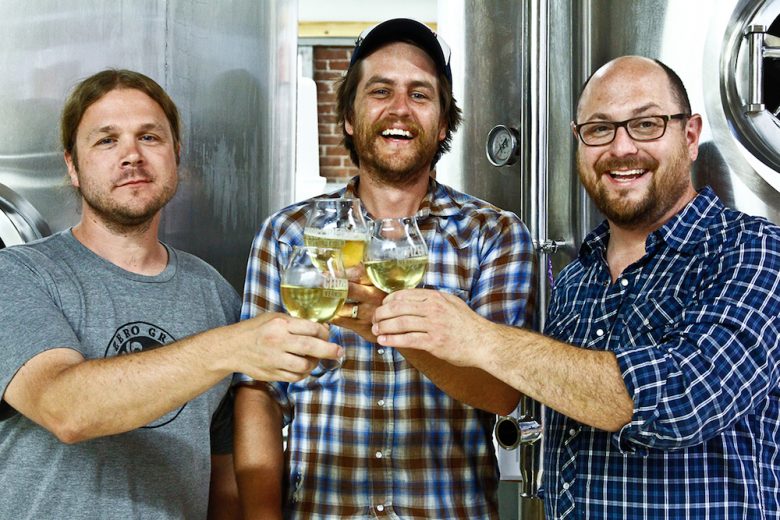
Citizen Cider cofounders (from left) Bryan Holmes, Justin Heilenbach, and Chris Nelson.
Credit: Courtesy of Citizen CiderCredit: Courtesy of Citizen Cider
How do you explain the rapid growth of Citizen Cider relative to other local brands?
What we’ve done is come into the market in the middle. There wasn’t anybody in the middle. It was either high-end stuff or alcoholic soda pop from the mass-market guys. The middle is super-interesting, and there’s a lot that can be done with the current crop and with creative people pushing the boundaries of cider. Now, our challenges are more around making hundreds of thousands of gallons taste the same year-round. We have more control over our growth now. We open markets when we’re ready and invest in those markets in a controlled way, so we know what the outcome’s going to be. In the early days, everything was a surprise.So with the long history of cider in New England and the quality of the apples, shouldn’t cider be the dominant beverage here? Apples grow more readily all over New England than grapes. And we don’t produce enough grain here to supply all the breweries.
You’re touching on why the craft cider category can live on for another 100 years. This is a new journey for consumers, who have only come to really know cider in the past decade or so. But I say this to customers all the time: You can make great beer on the moon if FedEx delivers. It doesn’t matter where you are, because most brewers are working with commodity grain crops. In many cases, the grains aren’t traceable to a single farm. They just need to know the moisture content, color grade, the sugar content. With wine, I just don’t think the value you’re going to get out of a wine made from New England grapes is ever going to compete with Western European or Californian wine in terms of dollars. And it comes down to dollars because consumers are choosy. A $20 bottle of wine from New England is always going to get the doors blown off it by a wine from those regions. With cider, you have a crop that’s extremely well suited to our northern climate. You have the culture and history. If we do a good job, some of the best ciders in the world should come out of New England, the Upper Midwest, and perhaps the Pacific Northwest.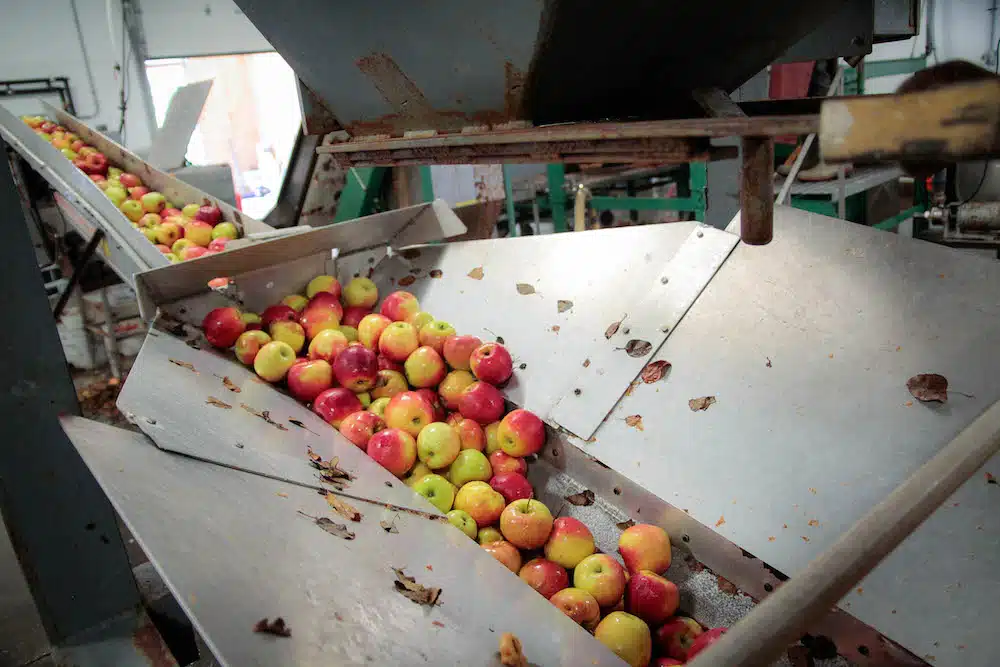
A conveyor belt feeds apples into the pressing machinery as they take their first step toward becoming hard cider.
Credit: Courtesy of Citizen CiderCredit: Courtesy of Citizen Cider
You have a background in farming. How does that play into your role with Citizen Cider?
I’m working with Stan Pratt, the owner of Happy Valley Orchard, to start grafting trees to figure out which apples are the absolute best for New England cider. We’re working with high-density small rootstocks; we’re doing it on old standard rootstocks. Call me in 10 years to see how it works out. But my dream is to have an orchard that is super-appropriate to New England. You can tell after a few years which trees are comfortable here and which aren’t. They start to show their characteristics. Do they grow straight up and never feather out? Do they fall over? Can they handle a drought? How do they handle pests? It’s harder and harder to make a living growing apples, and cider can help remedy that. For example, Stan has a USDA apple poster from the 1960s, and you can see that what was considered a “Super Fancy” apple in the 1960 would only qualify as a utility apple today. The expectation put on growers by large grocery chains is not reasonable, logical, or good for the farmers, the land, or anyone else. They want the rock-hard Red Delicious kinds of varieties that can sit on a warm shelf for two months and not change. No one would spray their apples as much as they do if they weren’t trying to meet those standards. So with cider, we’re trying to create a viable alternative for some portion of the apple crop where growers don’t have to do that.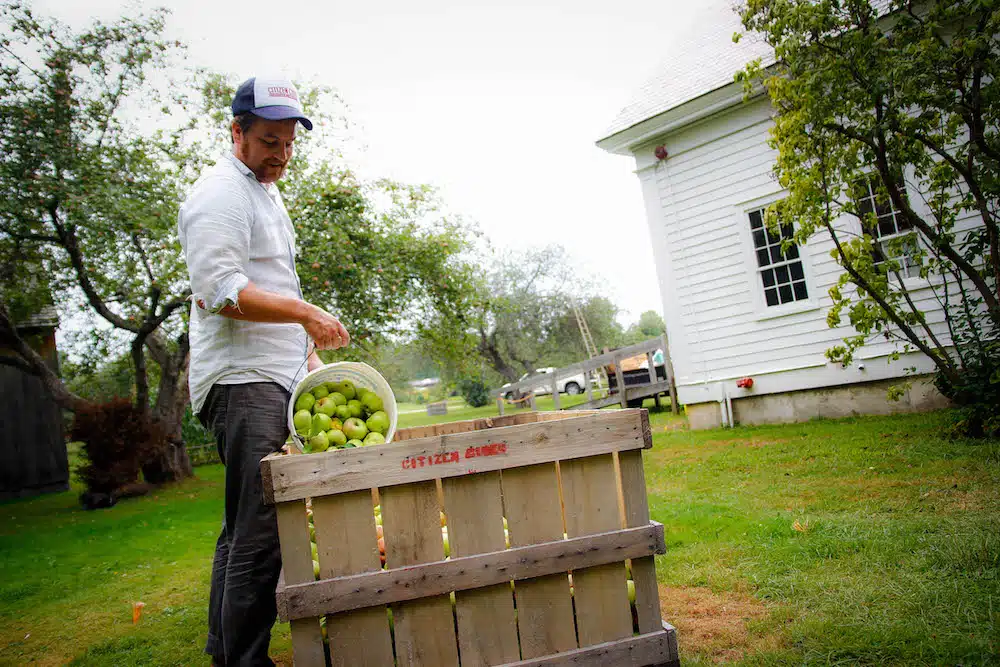
On the grounds of the Shelburne Museum, Citizen Cider’s Justin Heilenbach helps gather heritage apples destined for the limited-edition cider “Elsewhere.”
Credit: Courtesy of Citizen Cider