Why the Newport Folk Festival Is a Music Festival Unlike Any Other
From legendary surprise performances to singalongs by the sea, the Newport Folk Festival is a Rhode Island summer ritual.
By Katherine Keenan|Jun 25 2025|

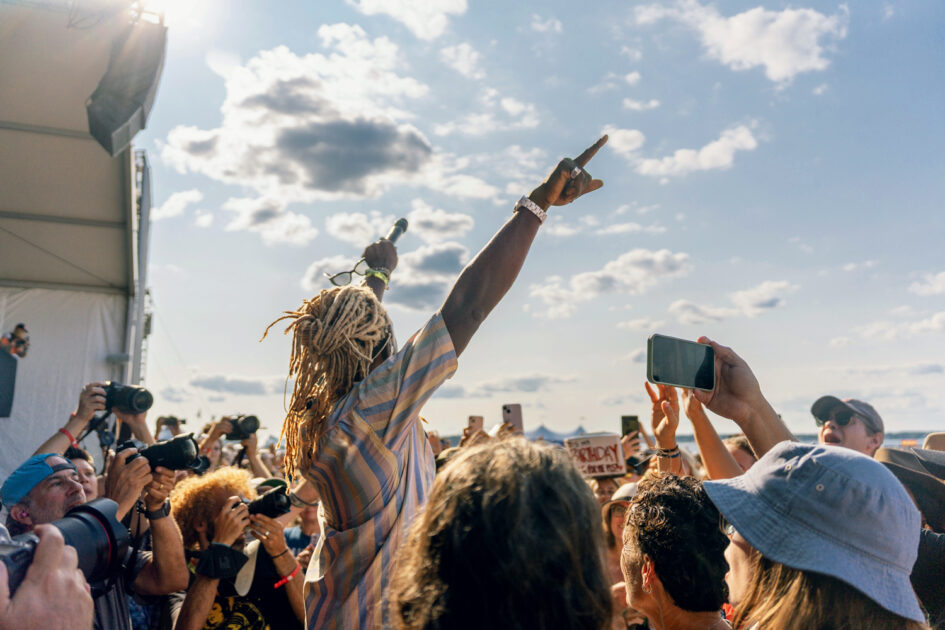
Eric Burton of the Texas rock-soul band Black Pumas performing at the 2024 Newport Folk Festival in Newport, Rhode Island.
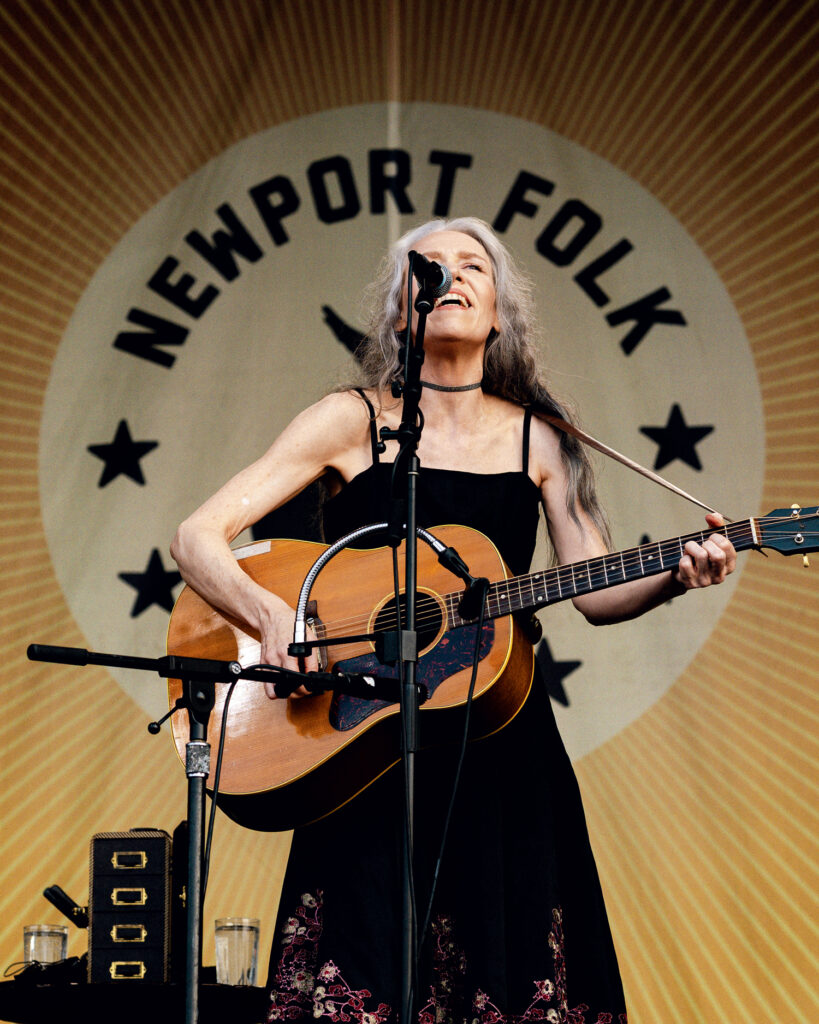
Credit: Katherine KeenanIt was the kind of summer evening you dream about all year. A few thousand of us stood together, our faces tilted toward the stage and the faded-denim blue of Rhode Island’s Newport Harbor at our backs. It had been a hot, marathon day of music, and we were finally at the cooldown: the final set on the second day of the Newport Folk Festival. Some in the audience began to pack their bags. Some even began to leave. But moments later, Gillian Welch and David Rawlings began to play, and, remarkably, the river of people slowed. I watched Rawlings’s fingers move, unhurried, the sunset gilding the hull of his guitar, and took a long, deep breath. I had, in fact, been dreaming about this all year.
Like many of the artists who regularly play Newport Folk, Welch and Rawlings are some of my favorites. Partners in both life and music, they sing timeless, sorrowful songs with lyrics that unfurl slowly, rewarding those who are patient enough to stick around. In many ways, the festival does the same. Newport Folk retains a slowness in a time when digital immediacy has become the norm. Most people who attend buy their tickets in the winter, months before the festival lineup is even announced—and in typical Newport fashion, several lineup slots simply read “TBA” right up until the moment the artist walks onstage.
Credit: Katherine Keenan
“You might not know a single person on that lineup, but you go,” says Sophie Gee, a 30-something who has been attending the festival with her dad for the past decade. “I’ve found there’s been years where I don’t know anyone playing, and I’ve left finding bands that I’ve now traveled the world for.”
Newport Folk unfolds each July over the course of three days, on a small peninsula shaped like a hitchhiker’s thumb, four miles from downtown Newport by road and roughly one mile by water. Sprawled across the grounds of Fort Adams, a retired army base turned state park, the festival welcomes some 10,000 attendees each day to see a lineup of more than 50 musicians play its five stages. It’s not the country’s biggest folk festival, but it is arguably the most important.
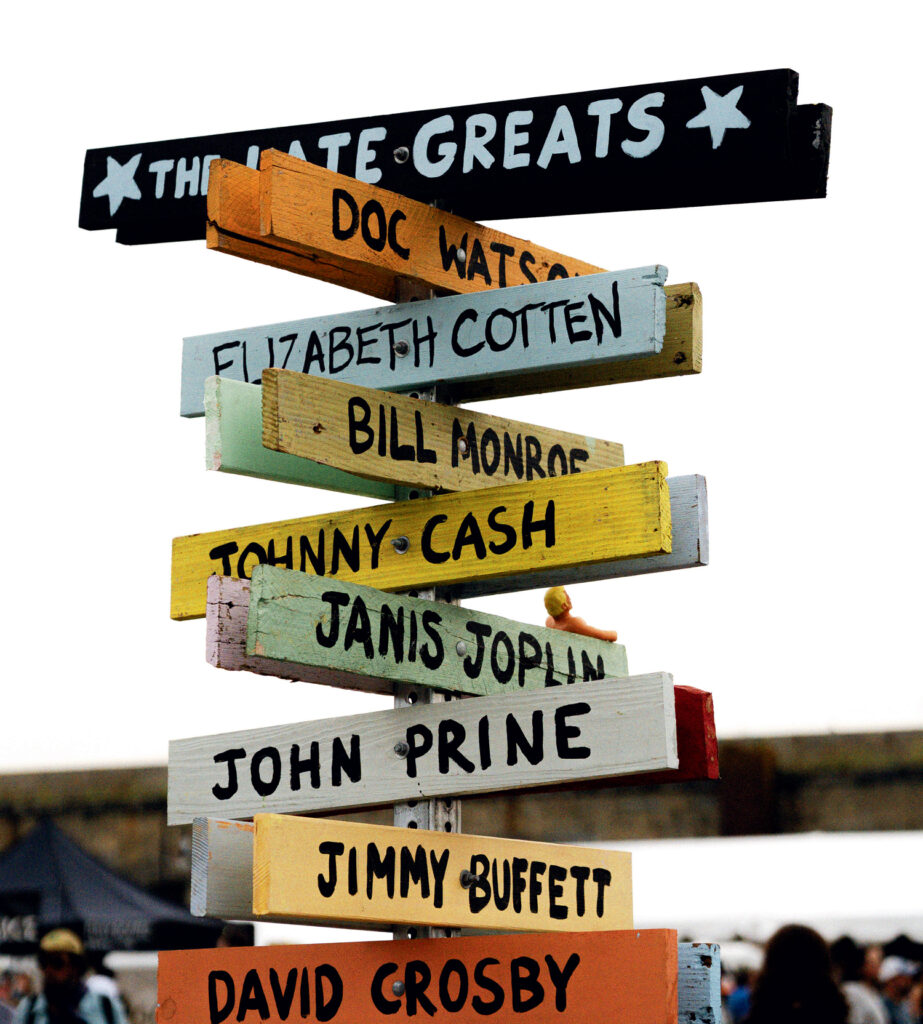
Whether George Wein had such grandiose dreams when he cofounded the festival in 1959 is uncertain. But Wein, a pianist and producer from Massachusetts who had debuted the Newport Jazz Festival five years earlier, did have a sense for the moment. His modest event arrived at the dawn of a new age in folk music, and it certainly played a major role in its rebirth. While forever linked with Bob Dylan’s electric makeover in 1965, Newport Folk also became an important venue for emerging artists to introduce themselves to the wider public. Many now-legendary names made their festival debut at Newport: Joan Baez, James Taylor, Kris Kristofferson, and Alison Krauss, to name a few.
Credit: Katherine Keenan
My own introduction to the festival had come by boat.
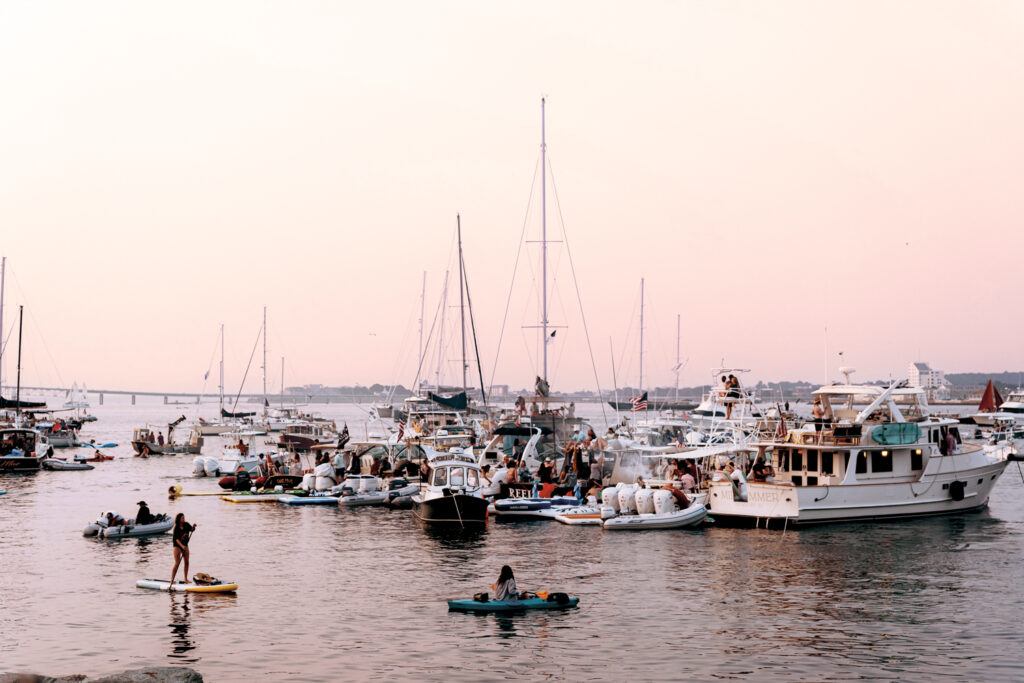
As our ferry splashed through the bay on Friday, the first day of the festival, we passed hundreds of other boats purposely moored within earshot of the festival, coolers stocked and motors off. Anticipation swirled across the harbor. Soon, the sun would begin to warm the day, and the music would start to play.
By noon, the grass at Fort Adams had all but disappeared beneath picnic blankets and lawn chairs. Hat brims of all hues, sizes, and materials overlapped in front of me like a sheet of rainbow sequins. Delicious steam rose from the food carts at my back, and the harbor stretched into the distance.
Credit: Katherine Keenan
Because of Newport’s multiple stages, the weekend involves a fair bit of logistical planning—and walking. One minute I was singing along to Muna at the Quad Stage, and the next I was hurrying to catch Black Pumas at the Fort Stage. I fretted over which Adrianne Lenker songs I might miss during Hozier’s set, and I had no clue how to handle the overlap of Orville Peck and The War on Drugs. But rather than moping about what I missed while stuck in foot traffic, I, alongside thousands of other dusty festival folks, caught the songs I could.
This is the laissez-faire attitude in the wind at Newport Folk. Sure, some are angling for the big fish, banking on a surprise set from James Taylor. But most are simply happy to be here. Even the musicians, who have private areas for watching the sets, often roam the fort grounds and join the audience.
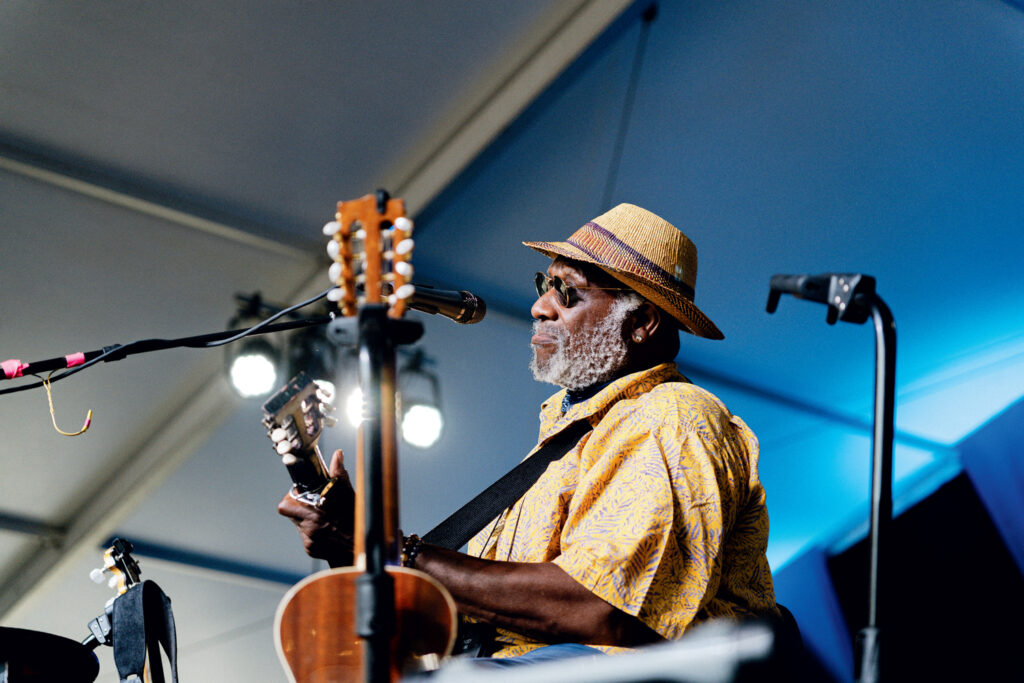
Which is to say: Newport isn’t your typical music festival. First of all, there’s no festival campground. At 8 p.m. every day the crowd goes home to real beds and—more important—real showers. Second, at Newport the drinking is confined to set zones which, notably, are nowhere close to the stages. These “splash-free” areas are clear of abandoned cups or the rowdiness of a concert pit. For most, seeing Taj Mahal up close is worth leaving their beer behind.
Credit: Katherine Keenan
At the end of the day, it’s really all about the music—even for those without tickets. During Hermanos Gutiérrez’s set on Saturday, I spotted a crew of sopping-wet teenagers listening from the other side of the chain-link fence. Behind them, on the rocky shore, sat their fleet of inner tubes.
That evening, Gillian Welch crooned the lyrics to her music-industry elegy, “Everything Is Free,” singing “We’re gonna do it anyway, even if it doesn’t pay,” as the sun—now a soft, orange orb—slid down the sky. For a few moments, nobody made surprise-guest predictions or checked the upcoming schedule. The boats bobbed in the harbor and our heads moved to the sound, which seemed to carry not only across the field of hats and vessels, but all the way out into the saltwater of the vast Atlantic.
Have you ever attended the Newport Folk Festival?
This feature was originally published as “Notes from Newport” in the July/August 2025 issue of Yankee.