



Inside New England’s Presidential Homes, From John Adams to Franklin Pierce
New England’s presidential homes offer rare insight into their famous former occupants—and the real human foundations that shaped their time in office.
By Justin Shatwell|Jun 28 2026|

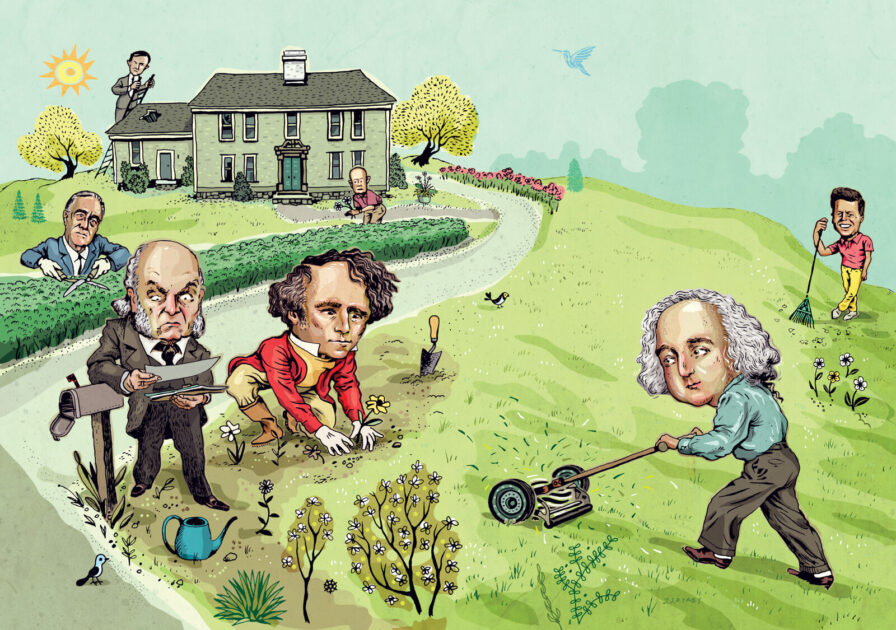
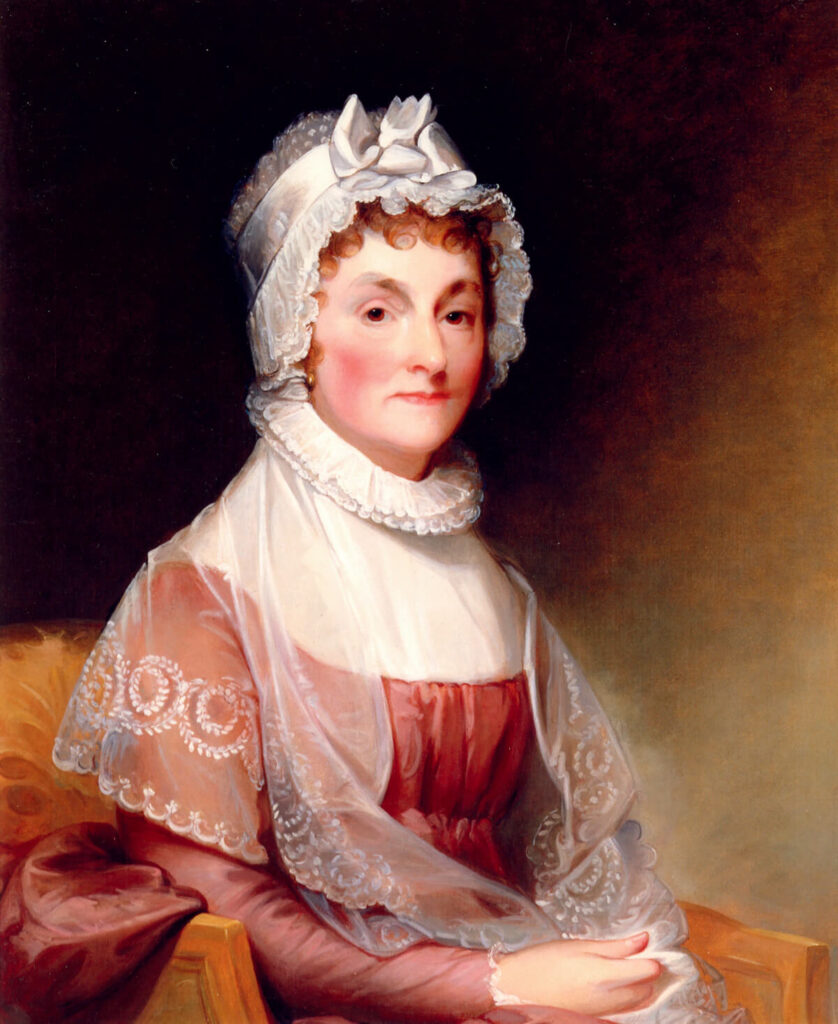
From the top of Penn’s Hill, the British troops are barely visible. It’s June 17, 1775, and Abigail Adams has climbed the summit near her home in what is now Quincy, Massachusetts, to glimpse the Battle of Bunker Hill unfolding 10 miles to the north. Sounds of the battle ripple across the open farmland and beat against the walls of Abigail’s home. That evening, she writes to her husband, John, the future second president of the United States: “The constant roar of the cannon is so distressing that we cannot eat, drink, or sleep.”
Since that fateful moment 251 years ago, countless Americans have lived their lives in the communities around Boston. The quiet farmland that Abigail gazed across has since yielded a crop of family homes, shopping plazas, universities, and highways. Today, it’s hard to imagine someone in Quincy seeing or hearing anything on Bunker Hill, the urban maze around Boston having grown so thick.
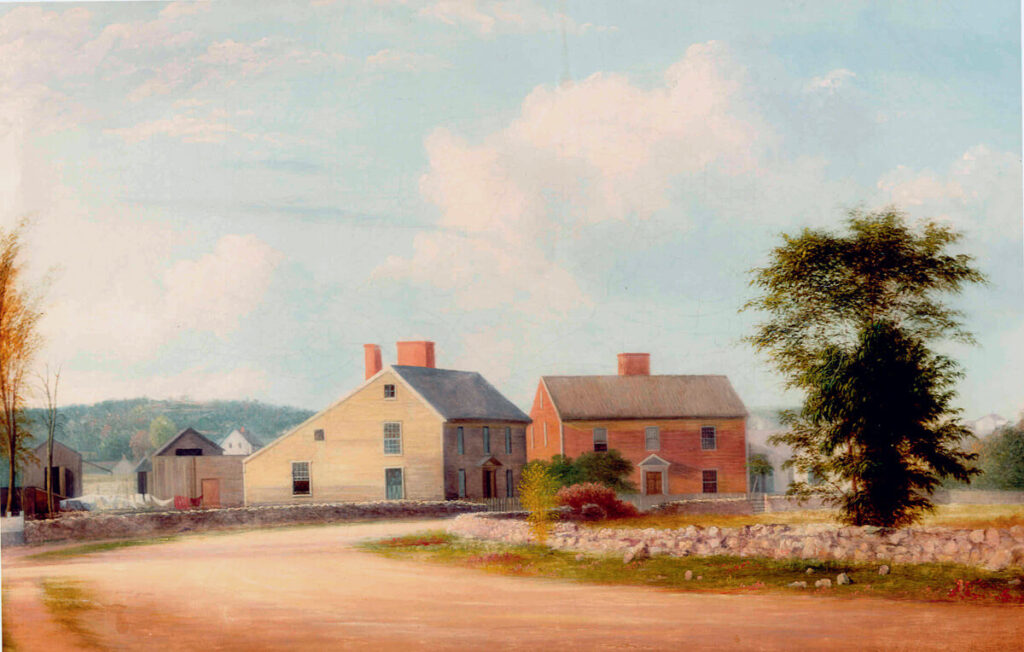
But still, this sea of modernity occasionally parts on a small island of the past—a fleeting glimpse of what the country looked like all those years ago. Abigail and John Adams’s homestead is just such an island. It sits on a small triangular lot in Quincy where two roads meet at a sharp angle. It’s exactly the type of parcel that would hold a gas station if only two presidents had not been born here.
Credit: NPS
The homestead consists of two modest saltbox houses. John Adams was born in one; his son, John Quincy Adams, in the other. They’re in excellent condition in part due to the efforts of Matthew Vigneau, the curator of the Adams National Historical Park. He explains that he rarely gives tours. His job is to ensure that things don’t fall apart. “Preserve the homes, preserve the objects, preserve the landscape,” he says.
The last task is perhaps the most challenging. For anyone standing on the lawn, there is nothing in sight to suggest this once was an apple orchard. Traffic streams past both sides of the parcel, just feet from the homestead. The view from Abigail and John Adams’s back door is a funeral home across the street. The front window looks out on a dentist’s office.
“How do you make someone feel like they’re on a farm?” Vigneau asks, gesturing at the scene. “You’re hearing the roads, you’re hearing the trains.” It’s a question the park asked with increasing urgency as it entered 2026. It’s the nation’s 250th anniversary, and there are sure to be more visitors as Americans reconnect with their roots at places like this.
Credit: NPS
Credit: NPS
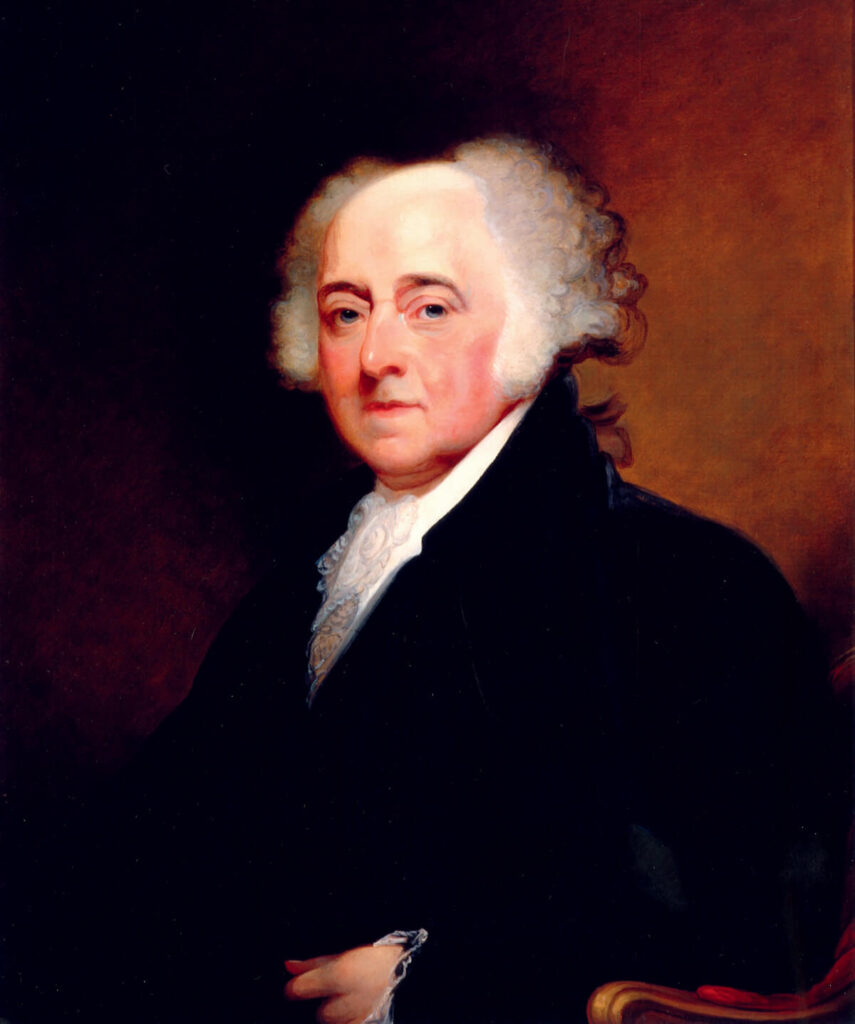
For many, their visit will be the first time they really get to know the two Adamses. The public memory of these men is hazy at best. John Adams was a thinker and orator, not a soldier. He didn’t serve in the army like Washington or Hamilton. Instead, he fought his battles on the floor of the Continental Congress and as a diplomat abroad. When he became president, he was the first pure politician to hold the office, and people loved him accordingly: He was ousted after four years. His term was dominated by efforts to keep America from being sucked into the Napoleonic Wars.
John Quincy Adams’s career followed a similar trajectory. He earned his reputation as a senator and diplomat before becoming the sixth U.S. president. He focused on improving the young nation’s infrastructure, but much of his agenda died in Congressional gridlock. Like his father, he also got one term. Neither man received a monument in Washington, DC, or got his portrait on major currency. These little homes in Massachusetts, lovingly preserved, may be the best testaments we have to them.
Inside, the first Adams birthplace is plainly furnished. There is little on the walls and just a few pieces of furniture. A large hearth dominates the front room. Vigneau talks quickly—he knows the history of the property backward and forward, but he’s most passionate when talking about the place itself. He raves about the health of the clapboards and vents about his hatred of silverfish. He talks about the buildings like they’re living things and would love to see them breathe again as they did when people lived and worked here. “These houses are supposed to be open. Every window, every door open. That hearth running. Just air movement,” he says.
Vigneau stops in his tracks. Some blemish on a ceiling beam has caught his eye. He probes it with his finger a moment, and we continue. “We watch these things like hawks,” he says. “We’re in every one of these buildings seven days a week. Year-round, too.” It strikes me that there is something monastic about Vigneau—not in his temperament, but in his devotion. It’s clear that part of his mind is always cloistered here.
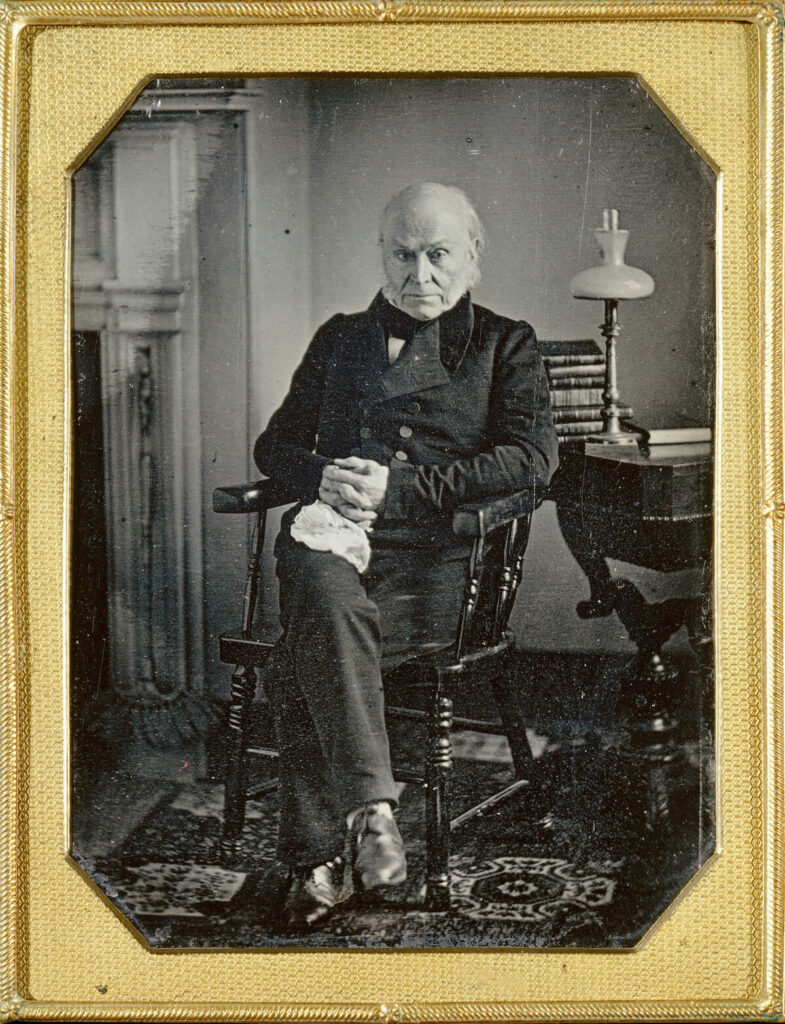
Credit: Gift of I.N. Phelps Stokes, Edward S. Hawes, Alice Mary Hawes, and Marion Augusta Hawes, 1937, Metropolitan Museum of Art
In the John Quincy Adams house, Vigneau invites me to poke my head into the attic. It’s dark and empty, but this is a place to be felt, not seen. The sounds of the road are muffled here. The dome of heat at the top of the house makes the air warm and almost sticky. And in that air there is a perfume of ancient timber and dust that overwhelms me. This space has existed longer than our country, and the air here has aged like wine in a barrel. It’s like smelling the past.
“Unmistakable,” Vigneau says of the scent, and I nod. He wishes he could let guests up here to experience it, too. “You could go on tour here and remember nothing, but if I put this smell in front of you, you’d know it,” he says. “It’s the sensory aspect of it that I think resonates more. It’s the power of place.”
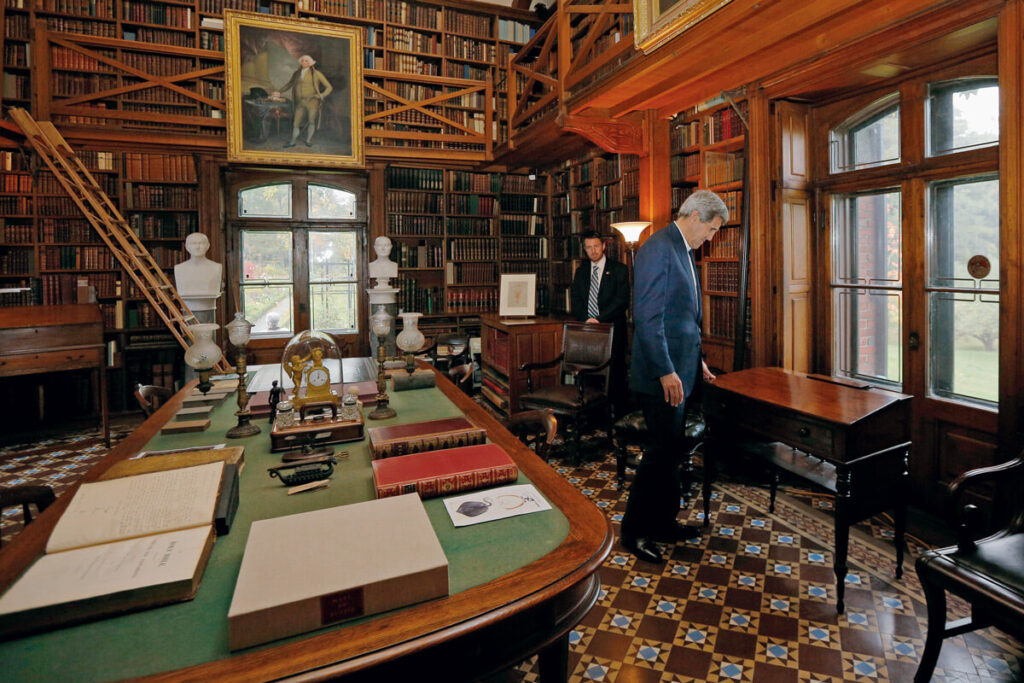
Credit: Reuters/Brian Snyder
Back on the lawn, we have to talk loudly to hear each other. As much as he struggles with the growth of Quincy, Vigneau himself is a product of it. He grew up around here. He and the Adamses were born just miles apart. The stone wall running along the edge of the property was his mother’s bus stop when she was a girl; he got a picture of it framed for her. “That’s how connected I am here,” he says.
We discuss the park’s plans. They’re improving the walkways and planting some trees to screen the view. A small grove of apples will be a nod to the old orchard. It won’t transport the homestead back in time. The town will still be here, but I’m not sure that’s a bad thing. There’s value in this tension between an ever-changing world and a parcel stuck in time. It’s like seeing both ends of the rainbow, where it all started and where we’ve all come. The homesteads, the funeral parlor, the traffic—what we’ve torn down and what we work tirelessly to save—is all part of the same unfolding story.
*****
A world away in the pine forests of southern New Hampshire, another New England president’s home sits by the side of a road. Far fewer cars pass here. Standing by the stone wall at the front of the parking area, I’m greeted not by the roar of traffic but by a chorus of chipmunks hidden among the stones.
Where the public memory of the Adamses is hazy, that of Franklin Pierce is almost extinguished. New Hampshire’s only president was the 14th person to hold the job and is consistently ranked among the worst. To be fair, he was dealt a terrible hand. He was inaugurated in 1853, when the fissure between abolition and slavery ran through every American institution, including Pierce’s own Democratic Party. His name was floated as a compromise candidate at a divided convention. He didn’t particularly want the job and was dumbstruck to learn he had gotten it.
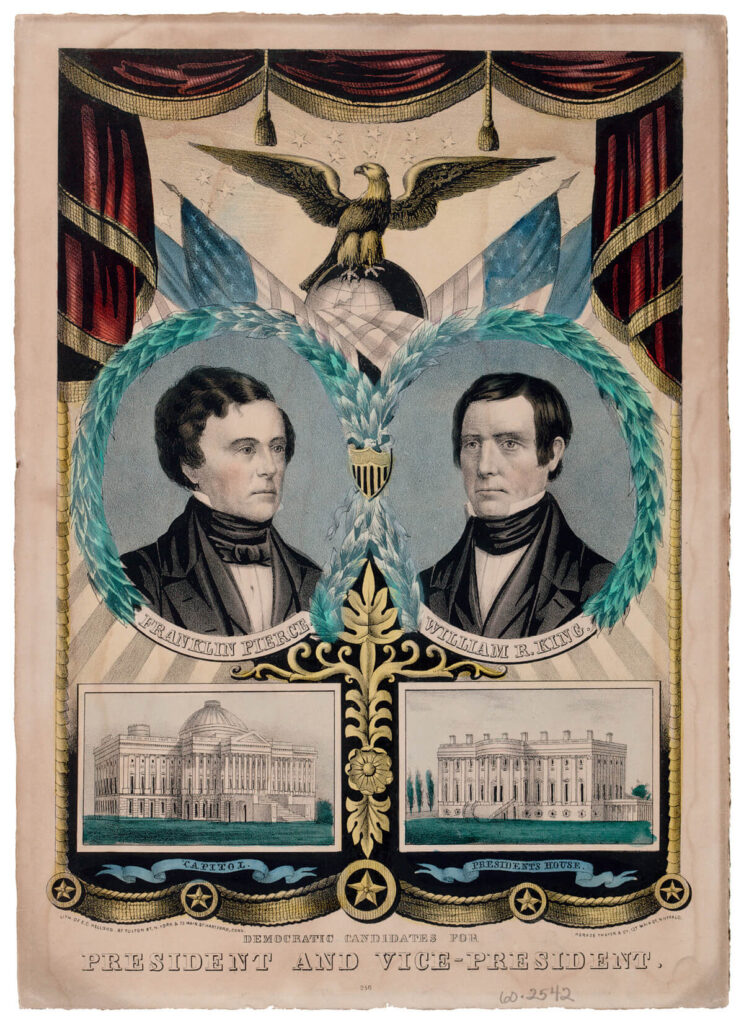
Credit: Harry T. Peters "America on Stone" Lithography Collection/Smithsonian
Pierce’s mandate was clear. His policies were expected to thread a needle that could keep his coalition stitched together. Unsurprisingly, he failed. Americans craved a reckoning on slavery, not more compromise. His generous concessions to slaveholding states alienated his northern supporters. After four years, the nation was closer to rupture and the Democratic Party was in shambles. Delegates at the next convention refused to renominate Pierce, making him the first elected president to be effectively fired by his own party. His only consolation is that James Buchanan, his replacement, is the only president regularly ranked lower than him.
Pierce’s home in Hillsborough is the type you might see in any New England town of a certain age: stately, but unremarkable. Its flat facade faces the road with two symmetrical rows of windows framing a heavy wooden door at the center. Additions ramble off the back like a tail. A large livestock barn attached to the house serves as the visitor center.
The site is state-run, so the displays are humble. No polished orientation film greets visitors, just a few framed photos and text panels. “What we lack in amenities we have to make up for in content,” quips Sara Dobrowolski, the homestead’s manager.
As she gives tours, Dobrowolski seems as stately as the home. The daughter of an Army chaplain, she exudes a kind of disciplined compassion. She sticks to the facts, but it’s clear she’s developed feelings for the family whose story she tells.
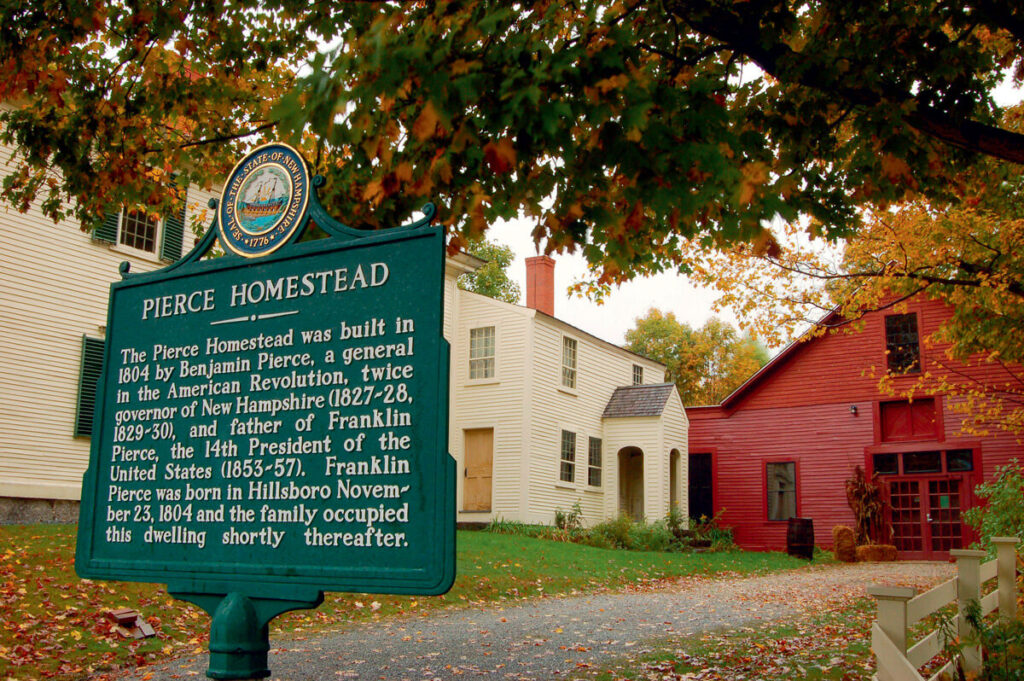
Credit: James Kirkikis/Alamy
Her tour begins not with Franklin, but with his father, Benjamin, who built the house. A Revolutionary War veteran with grand ambitions, he bought this plot because it sat at a crossroads. “This was a particularly busy road,” she says, referencing the now-sleepy lane out front that extends in the direction of the state capital, Concord. “There would be nonstop ox carts and mules hauling wagons back and forth out there.”
At several points during her tour, Dobrowolski gestures out a window and asks visitors to imagine a scene that isn’t there. Unlike at the Adams property, where guests are told to imagine there is less, Dobrowolski urges them to envision more—more buildings, more bustle, more noise, and more people. Especially more people.
“Benjamin was never happy until this place was crammed full,” Dobrowolski says. He designed the house with the intention of opening it to the world. The back rooms were reserved for his wife and nine children. The front rooms he ran as a tavern and, for a short time, an inn. There was space for men to drink, and a well-appointed drawing room for ladies. The second floor was built as an open ballroom with sprung floors so you could hold a town dance without shaking the plaster off the ceiling below.
Benjamin was a jovial backslapper who could make friends with everyone. Once the inn was established, he started dabbling in politics and his charms eventually lifted him to the governorship. Franklin was the child most like his father, and Benjamin paved the way for his son’s success. Franklin received an education and became a lawyer. A meteoric rise through state politics led to stints in the House of Representatives and the Senate. When he ultimately became president, he was the youngest person to be elected, at just 48.
As Dobrowolski continues her tour through the narrow hallways, it’s clear she is more enamored with this house than the White House. Pierce’s presidency is mentioned, of course, but most of her stories are about little domestic events. She talks about how Franklin’s mother, Anna, discouraged the use of the front door so that dust, dirt, and noise from the road wouldn’t flood in, or how after a stroke curbed Benjamin’s socializing he tried his hand at knitting. And she explains how a young, handsome Franklin Pierce shocked the town by marrying a shy and sickly woman because, in his words, no one could have taken better care of her than him.
These are details she’s gleaned from reading countless letters and diaries. She talks enthusiastically about all the research she has done and all the research she wishes yet to do. Franklin Pierce is not widely studied, so she’s sure there are letters buried in dusty collections somewhere, hiding more clues about who he really was. “Every time I catch something like that, it adds another piece to the puzzle, and I can see this whole picture of a family,” Dobrowolski says.
Sometimes people complain about Dobrowolski’s tour because she doesn’t focus on politics. “That’s not what this is about,” she says. She doesn’t want to dwell on things people could just as easily read in a book. Some stories, only a house can tell. “I’m talking about the family because I want you to understand the man and where he came from, and why he behaved the way he did, and what he was really like as a person,” she says.
There’s wisdom in Dobrowolski’s approach. It’s easy to forget that presidents are just people: flawed individuals who lived and learned and loved in some house by a road. Driving home, I pass hundreds of houses. Inside, thousands of lives are playing out. Who’s to say where they will lead? Any house could one day have a plaque out front and tour guide inside piecing together the puzzle of the person who got their start there.
Home Turf Presidential Historic Sites
More New England properties that offer a peek into a president’s life and times.
Credit: Actium/Shutterstock
President Calvin Coolidge State Historic Site
Plymouth Notch, VT
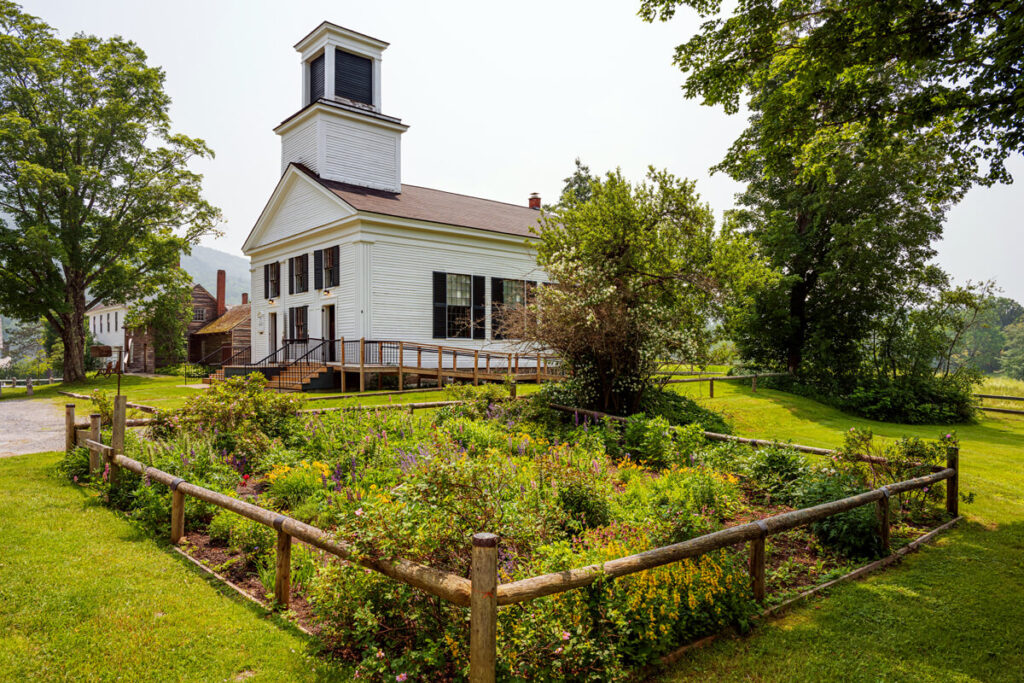
This village remains much as it did on August 3, 1923, when Coolidge took the presidential oath of office by kerosene lamp, following the death of Warren G. Harding. The 600-acre property includes the family home, an 1840 church, and a cheese factory—all shaped by the rugged Vermont austerity that defined Coolidge’s presidency.
Credit: Ken Wiedemann/iStock
Eisenhower House
Newport, RI
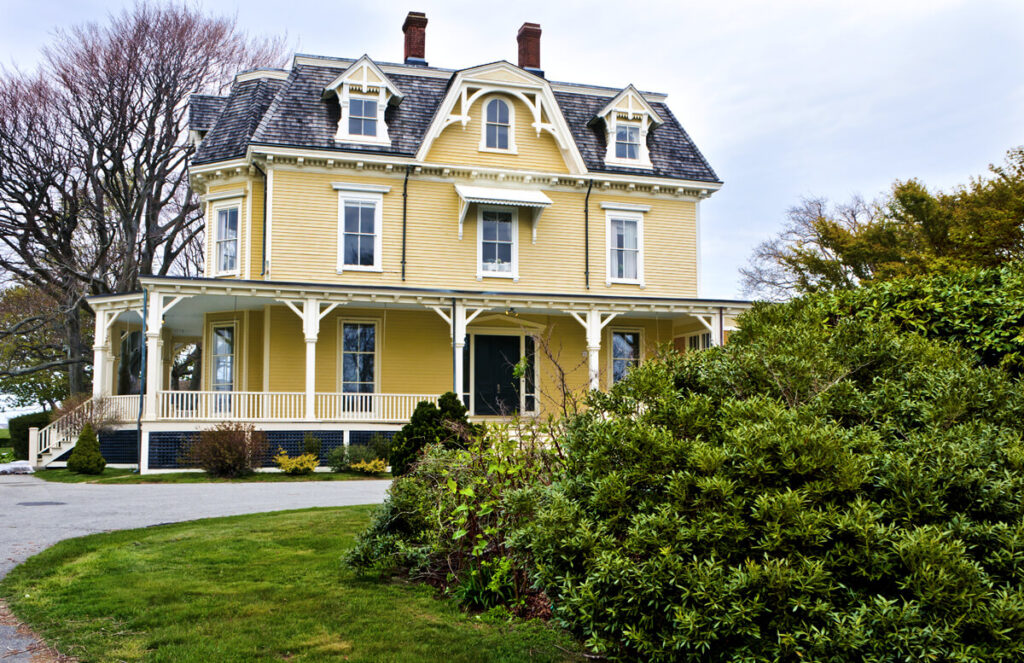
Set within Fort Adams State Park, this Victorian mansion served as Ike’s summer White House. While stellar views of Newport Harbor and Narragansett Bay attracted Eisenhower, the home’s proximity to Newport’s golf courses was no doubt its true selling point. The home today is largely an event venue but occasionally opens for free, self-guided tours.
Credit: Dennis Tangne Jr./iStock
Roosevelt Campobello International Park
New Brunswick/Maine
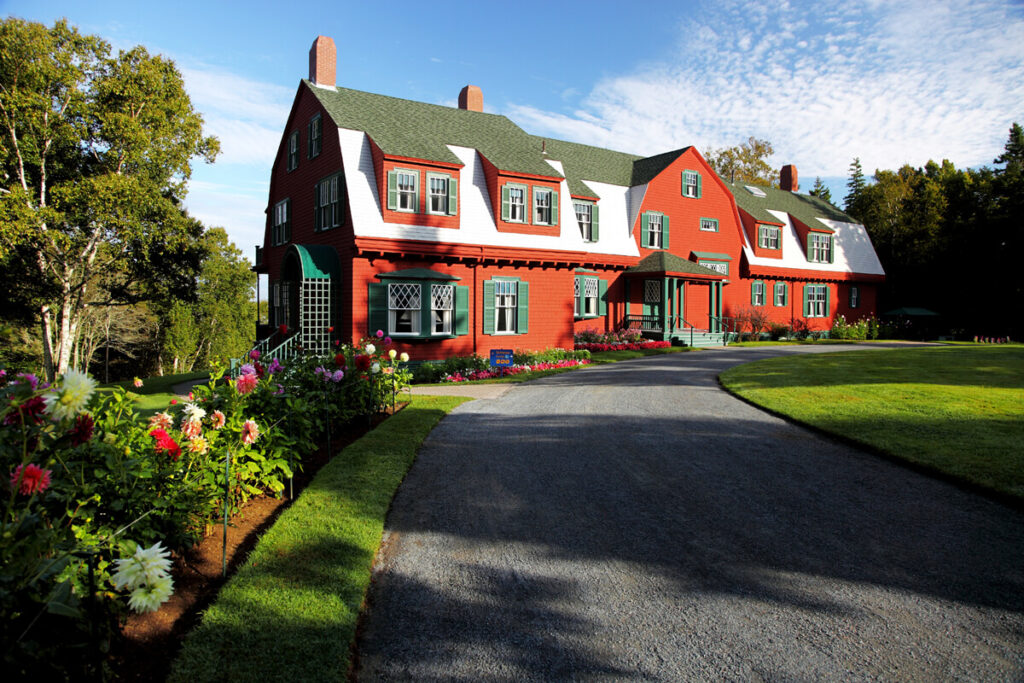
Although technically within the Canadian border, FDR’s summer retreat on an island in the Bay of Fundy is inseparable from the Maine coast and the president’s own love of the sea. Today, the park is a joint U.S.-Canadian venture featuring a museum and nature preserve.
Credit: Heidi Besen/Shutterstock
John Fitzgerald Kennedy National Historic Site
Brookline, MA
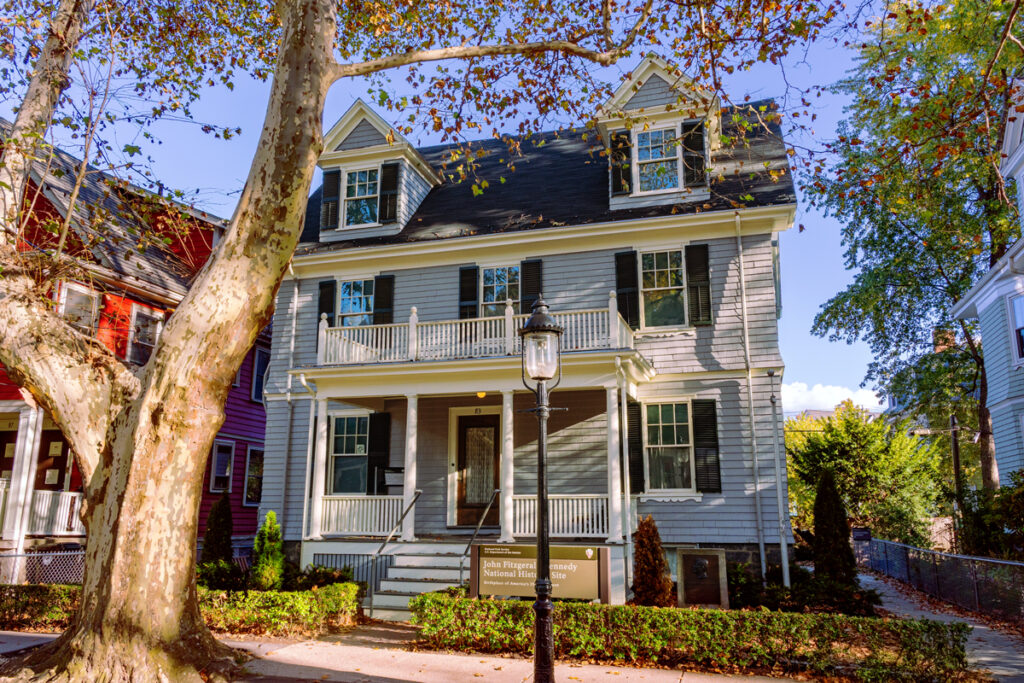
In a tribute to her late son John, Rose Kennedy restored this home to the way it looked when he was born there, in 1917, and donated it to the National Park Service. The property is less a monument to the 35th president and more a portrait of his family’s upper-middle-class life in the early 20th century.
This feature was originally published as “Residential Power” in the July/August 2026 issue of Yankee.



What about Chester A. Arthur’s house in Fairfield, Vermont?
https://www.compass.com/homedetails/4-Windmill-Hill-Rd-Dublin-NH-03444/3N12L_pid/
This one has quite a history listed in Dublin, New Hampshire!
To Justin Shatwell:
What are the 11 buildings that comprise the Adams National Historic Park? Their website does not mention that. I was born and raised in Quincy and have visited Peacefield, the library, First Parish, the birthplaces and the visitors center. I’m really curious about what other buildings are included! Thank you.