On Common Ground | Old Sturbridge Village
The enduring spirit of the people who came before us lives on in the interpreters of Old Sturbridge Village.
By Eileen Terrill|Oct 09 2012|

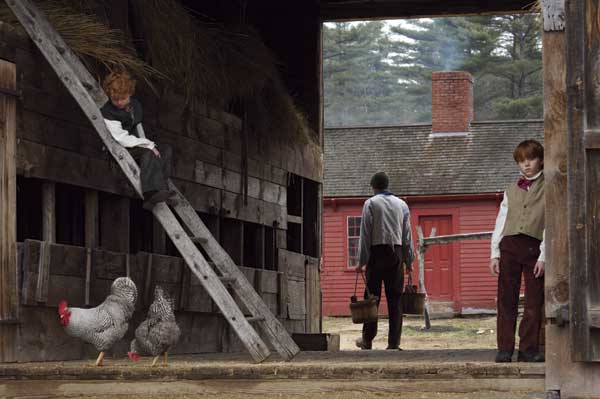
The early-19th-century Freeman homestead remains a working agricultural operation today, following the timeless rhythm of the seasons. The house, built c. 1810 a few miles south of central Sturbridge, was bought in 1828 by Pliny and Delia Freeman. They were in their late forties, and raised the two youngest of their seven children here. Their home was relocated to Old Sturbridge Village in 1950, a century after Pliny had retired from farming. The barn was constructed c. 1840 in neighboring Charlton, Massachusetts, and was moved to the museum's property in 1951.
Credit: Hornick/RivlinAmid the rolling hills of south-central Massachusetts, a cluster of 19th-century homes and shops stand arrayed around a pretty green.

Credit: Hornick/Rivlin

Credit: Hornick/Rivlin
Credit: Hornick/Rivlin
On the crisp air of late fall come the lowing of oxen and the rustle of leaves underfoot; a chorus of voices rises from the meetinghouse and echoes across the common on the thin breeze. The tang of woodsmoke and the warm aroma of baking bread waft over the landscape; as the days grow shorter, harvest season is drawing to a close here in Old Sturbridge Village.
Immersed in the rhythms and rituals of rural New England, this outdoor living-history museum brings to life the everyday culture of an early-19th-century town. It is a working community of the 1830s, preserving the artifacts and experiences of our vanished past. The museum’s interpreters, dressed in period costumes handcrafted on site, invite us to step into history, to peel back the layers of time and discover the resilience of spirit that defied the harsh challenges these early New Englanders faced.

Credit: Hornick/Rivlin

Credit: Hornick/Rivlin

Credit: Hornick/Rivlin

Credit: Hornick/Rivlin
As we touch the worn surfaces of their homes and workrooms, as we read their letters and diaries, the tapestry of their lives opens to us, and we recognize ourselves in them. These relics of a seemingly distant era become a window through which we realize most intensely the familiar, shared traditions and values of our common heritage–and in doing so, we come to a fuller appreciation of the hardships and sacrifices, the ordinary joys and celebrations, of the people who came before us. History becomes an inviting journey into their legacy, a personal encounter that yields a deeper understanding of our own time, as well, and of the people we have now become.

Credit: Hornick/Rivlin

Credit: Hornick/Rivlin

Credit: Hornick/Rivlin

Credit: Hilton/Rivlin
Learn more on the Freemans and their life in Sturbridge as seen through their own family correspondence.
Old Sturbridge Village. 29 Stallion Hill Road (off Route 20), Sturbridge, MA 800-733-1830; osv.org
Special thanks to interpreters Kathy Kime, Howard Forte, Ryan Beckman, Monique Schelegel, Victoria Belisle, Jean Contino, Erica Hout, Deb Knight, Amanda Evans, Katie Wade, Rob Lyon, Derek Heideman, Jeff Friedman, Peter Oakley, William Hood, Benjamin Hood, Rhys Simmons